
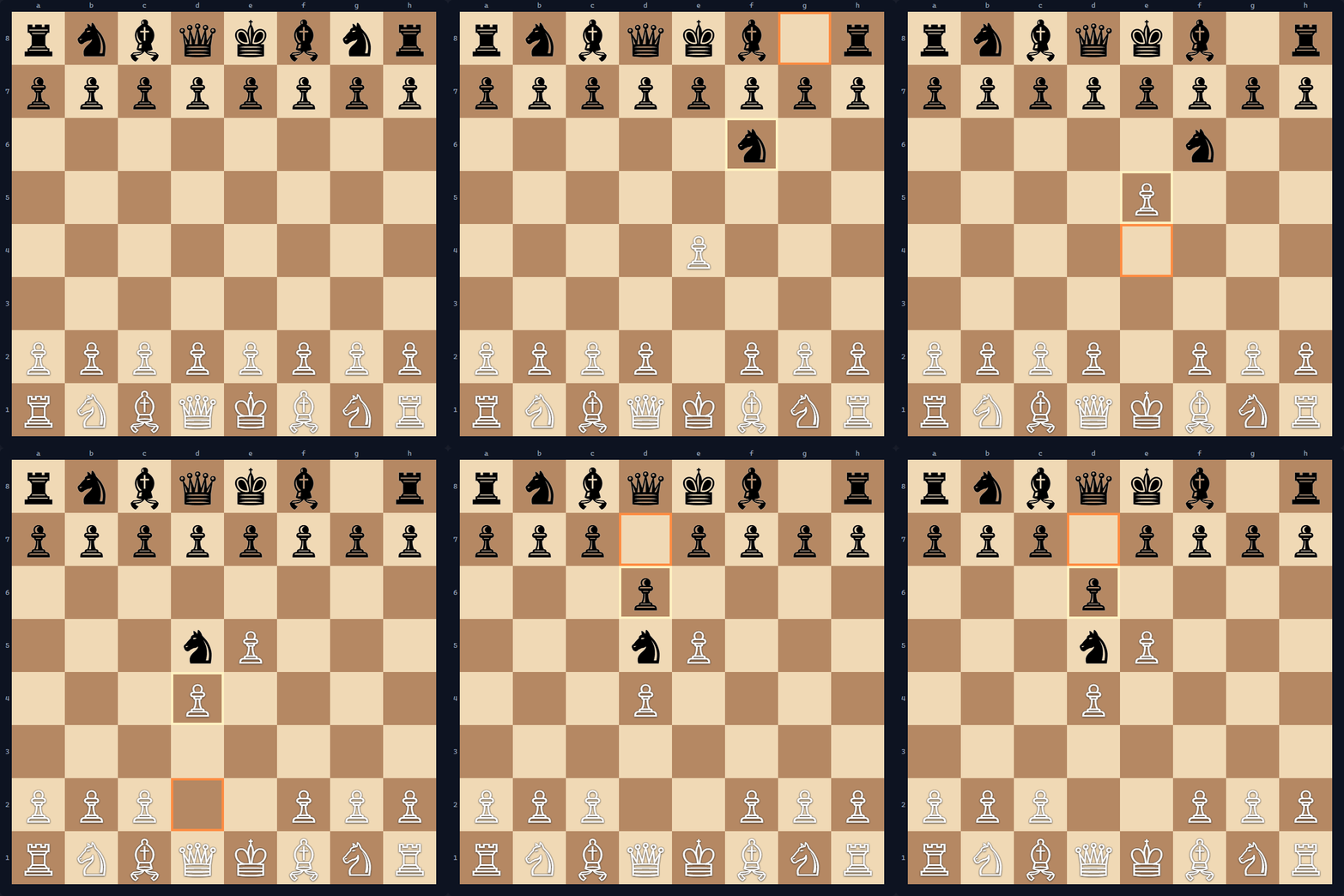
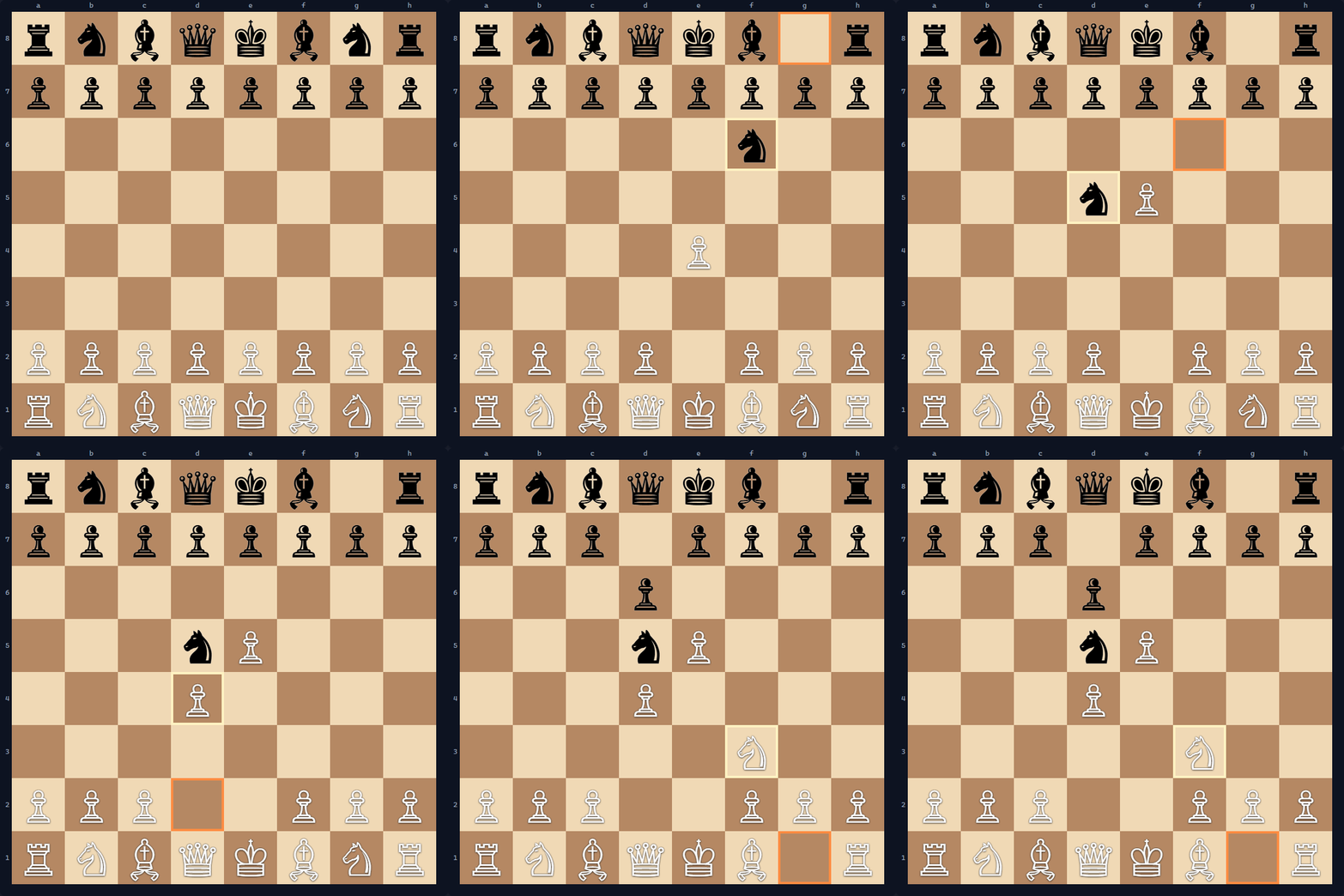
What Is the Alekhine Defense?
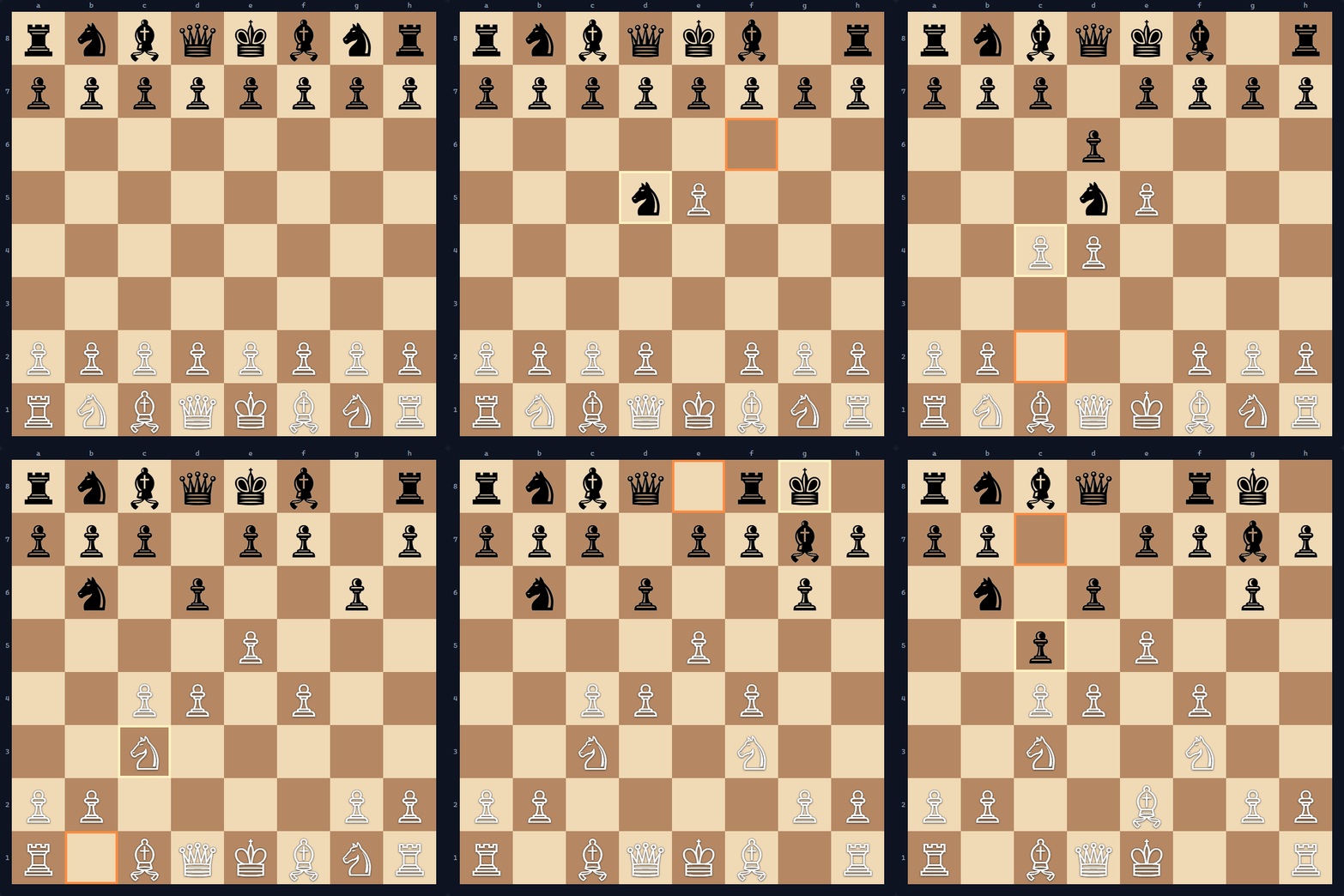
The starting move 1.e4 Nf6 challenges White's central occupation from an unconventional angle. Rather than placing a pawn in the center on move one, Black attacks White's e4 pawn with a knight. White's best response is 2.e5, chasing the knight to d5, followed by 3.d4 d6 — the standard starting position of the Alekhine Defense. As the commercial platform describes it, this is a "hypermodern response to 1.e4" where "Black lets White establish a presence in the center with the goal of proving it overextended."
According to 365chess, typical plans for Black include targeting the center with moves like ...c5 or ...f6, rapid development and castling, and bringing rooks to central files. The opening is named after Alexander Alekhine, the fourth World Chess Champion, who was the first top player to recognize that a piece could attack the center on the first move.

Why play it? The main advantages are the surprise factor — opponents at club level rarely face it — and the unbalanced positions it creates. The Chess World calls it a "highly effective surprise weapon at the club level." The drawbacks are equally clear: White gains central space, Black has to move the knight several times early on, and Black can fall behind in development if not careful.
A Brief History
Alexander Alekhine first played his namesake defense at Budapest in 1921, scoring a win and a draw. He continued playing it through the 1920s. The commercial platform notes that Alekhine did not create the opening — games from the 19th century that begin with 1.e4 Nf6 exist — but his use popularized it.
The opening made its first world championship appearance in 1935, but with a twist: it was Max Euwe playing it against Alekhine. They drew the game. The only other player to use the Alekhine in a classical world championship was Bobby Fischer in 1972. Fischer defeated Boris Spassky with it in Game 13 of their match, a game The Chess World calls "the first game you should study" in the 4...g6 line.
Beyond world championship history, the Alekhine has seen use by top grandmasters. Lev Alburt is one of the few to use it as a main weapon against 1.e4. Nigel Short scored a memorable victory over Jan Timman in 1991 where Short's king walked from h2 all the way to g5 — a stunning demonstration of what happens when White navigates the Alekhine successfully. Magnus Carlsen has also employed the opening from time to time.
The Modern Variation (4.Nf3)
The Modern Variation — 4.Nf3 — is White's most popular choice in the Alekhine Defense. White develops pieces to support the pawn center rather than pushing more pawns forward. Black has three main responses, each fighting for control of the e5 square in a different way.

4...Bg4 (Classical Main Line). This is the most played line, according to 365chess. Black pins the knight that defends e5. The typical continuation is 5.Be2 e6 6.O-O Be7 7.c4 Nb6, with Black preparing the d6-d5 break. The Chess World notes that in this line, White has a nice space advantage but Black's position "usually proves surprisingly robust."
4...g6 (Alburt Variation). Black fianchettoes the bishop to pressure e5 after ...Bg7. This line was adopted by Bobby Fischer in his 1972 match and became fashionable in the 1980s, though its popularity has declined since. The commercial platform gives the Alburt Variation a slight statistical edge over Black's other responses.
4...dxe5 (Larsen Variation). Black captures immediately, and after 5.Nxe5 White has a strong knight in the center. The Chess World explains that at this point, Black aims to play g6, fianchetto the bishop, and execute the c7-c5 break. After this break succeeds, Black ends up with a kingside pawn majority while White gets a queenside majority. Black also has a well-posted knight on d5 that is hard to kick out with c4 because it creates weaknesses.
One tactical trap to note: in the Larsen Variation, Black cannot play 5...Nd7. According to The Chess World, this move runs into 6.Nxf7! Kxf7 7.Qh5+, forcing a draw.
| Variation | Move Order | Black's Idea |
|---|---|---|
| Classical Main Line | 4...Bg4 | Pin the knight, slow build-up, ...d6-d5 break |
| Alburt Variation | 4...g6 | Fianchetto, pressure e5, Fischer's choice |
| Larsen Variation | 4...dxe5 | Immediate capture, knight on d5, c7-c5 break |
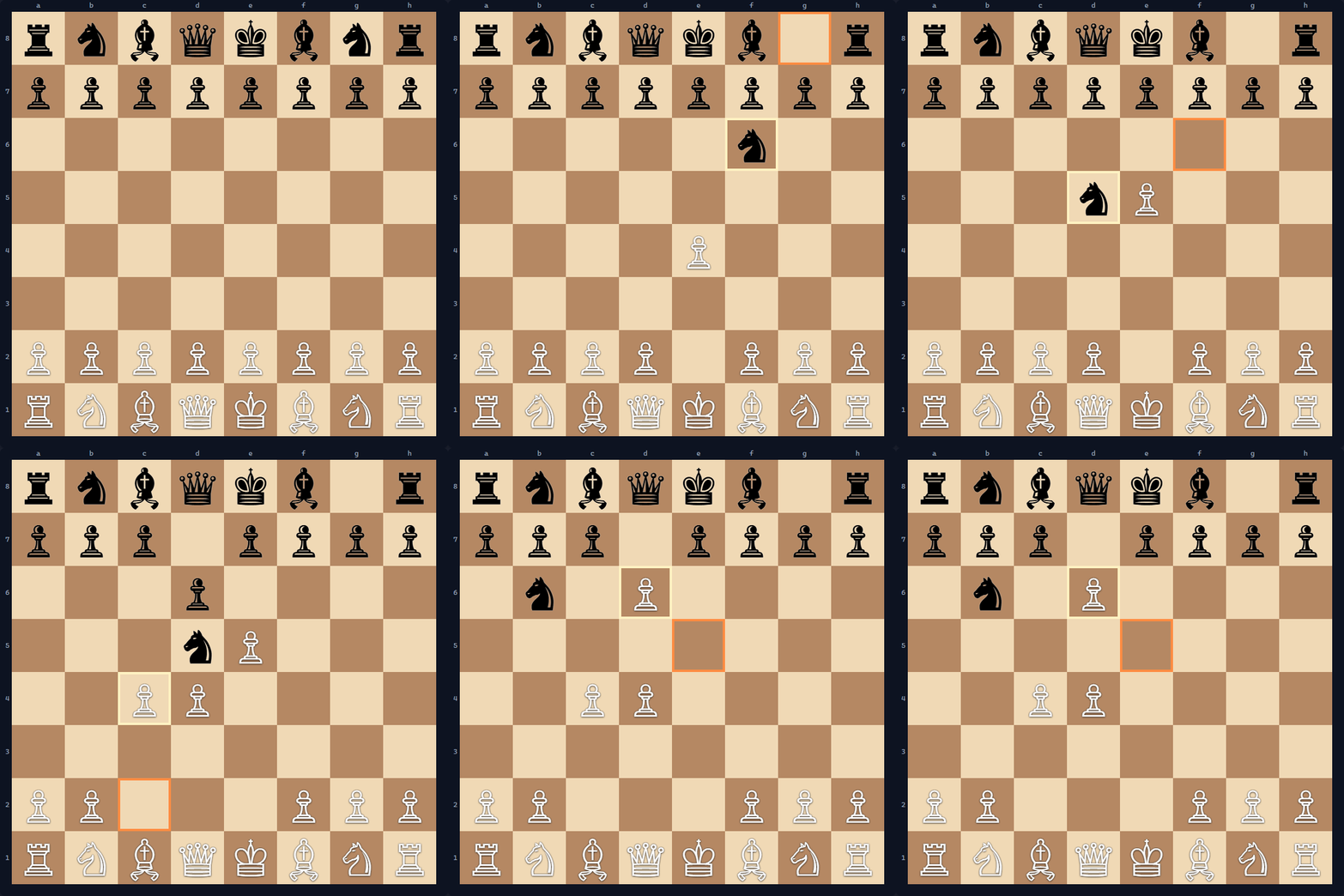
The Exchange Variation (4.c4 Nb6 5.exd6)
After 4.c4 Nb6, White can play 5.exd6 — the Exchange Variation. According to The Chess World, this is the most common variation players face, appearing in roughly half of all Alekhine games (single source). The good news for Black is that "the exchange variation gives no advantage to white if you are well prepared," and Black has reasonable chances to outplay the opponent.
Black has two main ways to recapture. The first is 5...exd6, which maintains a symmetrical pawn structure. The commercial platform reports this leads to more draws (around 31%) due to the symmetry. The second option is 5...cxd6, which creates an imbalanced position and gives Black a central pawn majority. Both recaptures are about equally popular, with a slight edge to the c-pawn recapture.
The Exchange Variation is also where Bent Larsen — namesake of the Larsen Variation — demonstrated typical Alekhine ideas in his game against Eleazar Jimenez Zerquera, reinforcing why learning this line well pays dividends.
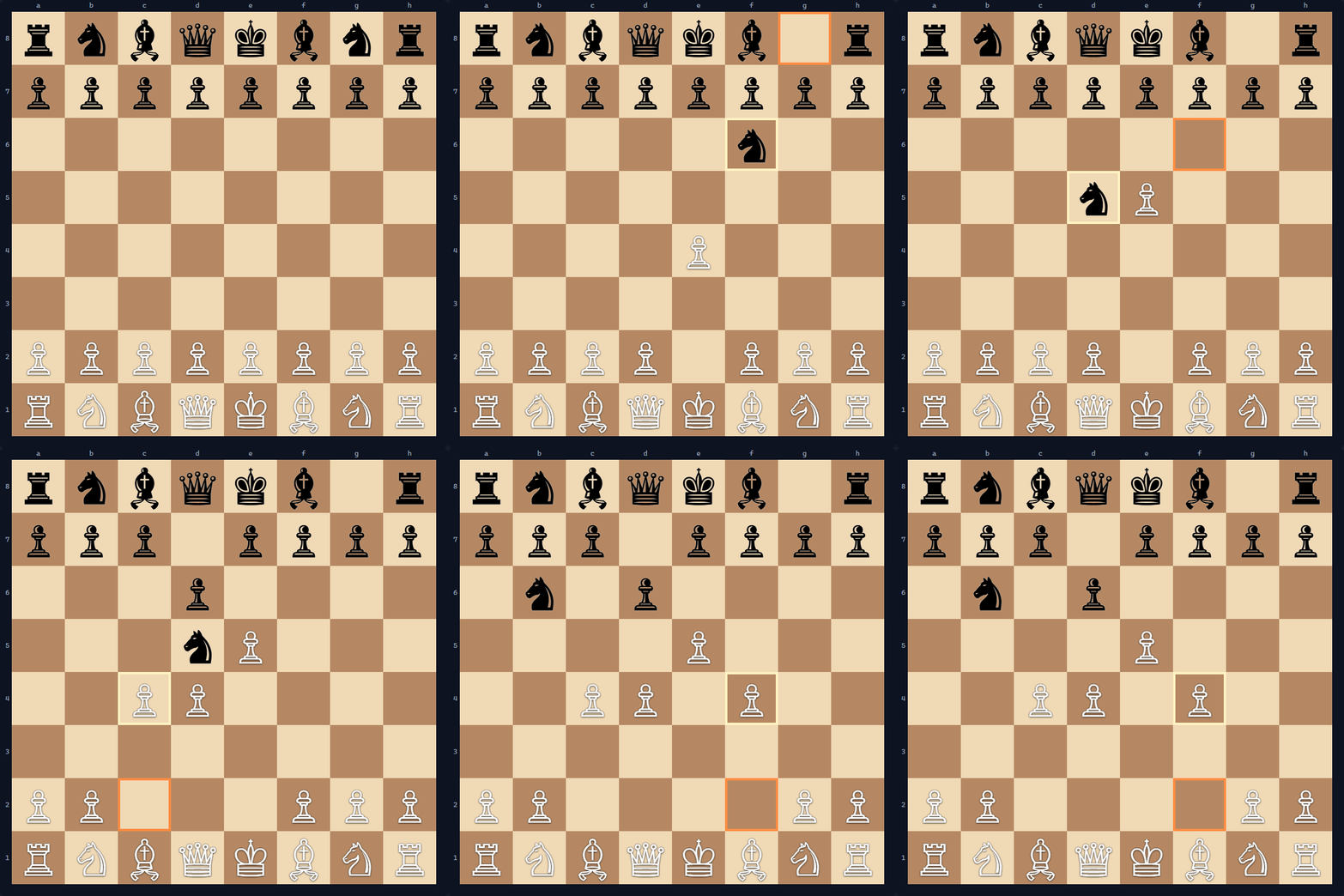
The Four Pawns Attack (4.c4 Nb6 5.f4)
If the Exchange Variation is the most common, the Four Pawns Attack (5.f4) is the sharpest. White establishes four pawns on the fourth rank, building a massive center that the commercial platform calls "White's most confrontational response to Alekhine's Defense." The Chess World describes it as "the antithesis of Alekhine's defense" — White punishes Black for not putting pawns in the center.
The main continuation is 5...dxe5 6.fxe5, but the commercial platform notes that Black scores better statistically with 5...Bf5 (the Trifunovic Variation) or 5...g6. The Chess World adds that sidelines like 6...g5 and 6...c5 are "venomous but not easy to refute during a game."
A key strategic theme in the Four Pawns is that Black frequently uses counterattacks on the d4 knight to prevent having the b4 knight driven away. According to The Chess World, "the ability to accurately time the counterattack is important in Alekhine's defense. One can go as far as to say that the whole premise of the opening is to counterattack."
The Four Pawns Attack is also the most important variation in Alekhine theory: as the commercial platform puts it, "If it were crushing for White, the entire opening would be dubious."
Other Notable Variations
Beyond the three main branches, White has several other options. The Two Pawns Attack (3.c4 Nb6) is an alternative White third move. Instead of playing 3.d4 immediately, White pushes the c-pawn first. The commercial platform notes that 4.c5 Nd5 "performs well for Black, with the d5-knight now untouchable by White's pawns."
The Chase Variation (3.c4 Nb6 4.a4 a5) is a less common but intriguing attempt at queenside play, listed by 365chess. The Samisch Attack (3.Nc3) is not very testing — White can recapture either way after 3...Nxc3, but the variation does not challenge the core idea of the Alekhine.
For completeness, White has passive options too: the Maroczy Variation (2.d3) is extremely passive and scores poorly, while the Brooklyn Variation (2...Ng8) exists as a curiosity but is "too provocative to be recommended," according to the commercial platform.
Common Traps and Tactical Motifs
The Alekhine Defense is rich with tactical opportunities for both sides. The most concrete trap comes in the Larsen Variation: after 1.e4 Nf6 2.e5 Nd5 3.d4 d6 4.Nf3 dxe5 5.Nxe5, Black should not play 5...Nd7. As noted by The Chess World, 6.Nxf7! wins a pawn because 6...Kxf7 7.Qh5+ forces a draw at minimum.
In the Exchange Variation, the move 5...Qxd6 is unpopular. The commercial platform explains why: the fork 6.c5 does not actually win a piece because 6...Qe6+ gives the knight time to escape while checking the king.
In the Four Pawns Attack, Black must watch for knight forks and double attacks. The Bauer versus Sergeev model game from The Chess World demonstrates how Black can navigate these tactical minefields by sacrificing on f3 to open the king and activate the queen for a decisive attack.
Key Strategic Ideas
The Alekhine Defense is not primarily a tactical opening — it is a strategic weapon. The hypermodern philosophy means Black must understand when to counterattack and when to consolidate. According to 365chess, Black's typical plans include central breaks with ...c5 or ...f6, rapid development with castling, and bringing rooks to the e-file or c-file.
Pawn structure understanding is essential. After the c7-c5 break in the Modern Variation, Black gets a kingside pawn majority while White gets a queenside pawn majority. The Chess World explains this is a favorable trade for Black, especially with a well-posted knight on d5 that is difficult to dislodge. Black can follow up with a minority attack using a7-a5-a4 to create weaknesses in White's queenside.
In the Exchange Variation, the choice between 5...exd6 (symmetrical) and 5...cxd6 (imbalanced) determines the entire character of the game. The commercial platform reports that the symmetrical structure leads to around 31% draws, making 5...cxd6 the better choice if Black needs a decisive result.
For club players: what to learn first. Start with the Exchange Variation — it appears most often at club level, and preparing for it gives you the best return on study time. Then learn one Modern Variation response: 4...Bg4 is the most solid and well-established, while 4...g6 (the Alburt) gives you Fischer's own choice. Do not try to learn all three Modern lines at once. The Four Pawns Attack is sharp but rare — a few model games will be enough to handle it.
Is the Alekhine Defense Right for You?
Whether it is suitable for beginners is debated. USCF Sales considers it an advanced opening, while The Chess World calls it "a great choice for a player of any level." The truth is somewhere in between: the strategic concepts are accessible, but the opening punishes inaccurate play more harshly than solid alternatives like the Caro-Kann or the French Defense.
What is clear is that the Alekhine Defense remains a viable weapon at every level. Its appearance in world championship matches, its use by players from Fischer to Carlsen, and its proven track record as a surprise weapon make it a valuable addition to any player's repertoire.
FAQ
Is the Alekhine Defense good for beginners? — Opinions differ. The Chess World recommends it for any level, while USCF Sales considers it advanced. It works best for players who understand hypermodern strategy and are comfortable defending without central space.
What is the main line of the Alekhine Defense? — The main line is 1.e4 Nf6 2.e5 Nd5 3.d4 d6 4.Nf3 (Modern Variation), with Black choosing between 4...Bg4, 4...g6, or 4...dxe5.
Did Bobby Fischer play the Alekhine Defense? — Yes. Fischer defeated Boris Spassky with the Alekhine Defense in Game 13 of the 1972 World Championship match, one of the most famous games in opening history.
What is the Four Pawns Attack? — It is White's most aggressive response: 1.e4 Nf6 2.e5 Nd5 3.d4 d6 4.c4 Nb6 5.f4. White builds a massive pawn center and challenges Black to prove it overextended.
How should White play against the Alekhine Defense? — The Modern Variation (4.Nf3) is White's most popular and most successful choice. It focuses on developing pieces to support the center rather than pushing more pawns.
Sources
- Chess.com — Alekhine's Defense: https://www.chess.com/openings/Alekhines-Defense. Used for move order, variations, pros/cons, history, and Fischer-Spassky/Short-Timman model games.
- 365Chess — Alekhine's Defense Guide: https://www.365chess.com/chess-openings/Alekhines-Defense. Used for key plans, advantages/disadvantages, most played line, and B02 sub-variants.
- The Chess World — Alekhine Defense: Complete Guide: https://thechessworld.com/articles/openings/alekhine-defense-complete-guide/. Used for three main lines (I/II/III), Exchange Variation, Four Pawns Attack, model games (Jimenez-Larsen, Letelier-Fischer, Bauer-Sergeev), and strategic commentary.
- USCF Sales — Alekhine's Defense: Is It Right For You: https://www.uscfsales.com/blogs/chess-openings/alekhines-defense-is-it-right-for-you. Used for master-level statistics (2% popularity, 37% White win rate) and beginner suitability discussion.
- Chessworld.net — Alekhine Defense: https://www.chessworld.net/alekhine-defense.asp. Used for pawn structure diagrams and strategic setup references.