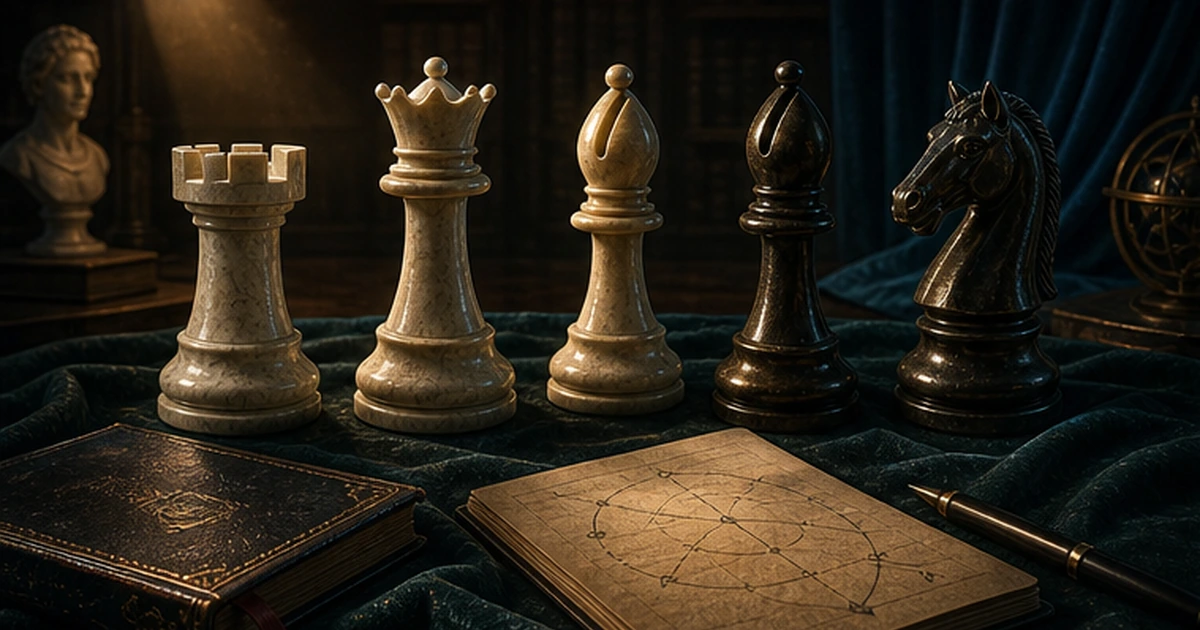
Look at the difficulty order: automate queen and rook mates first, then two bishops, and leave bishop + knight until the end.
King + Rook Checkmate — The Box Method
The king + rook checkmate is the first serious endgame pattern most players learn — and for good reason. It appears regularly in games once beginners start trading pieces efficiently. The core idea is simple: the friendly king blocks territory and traps the opponent's king on a rank or file, while the rook delivers the final checkmate.
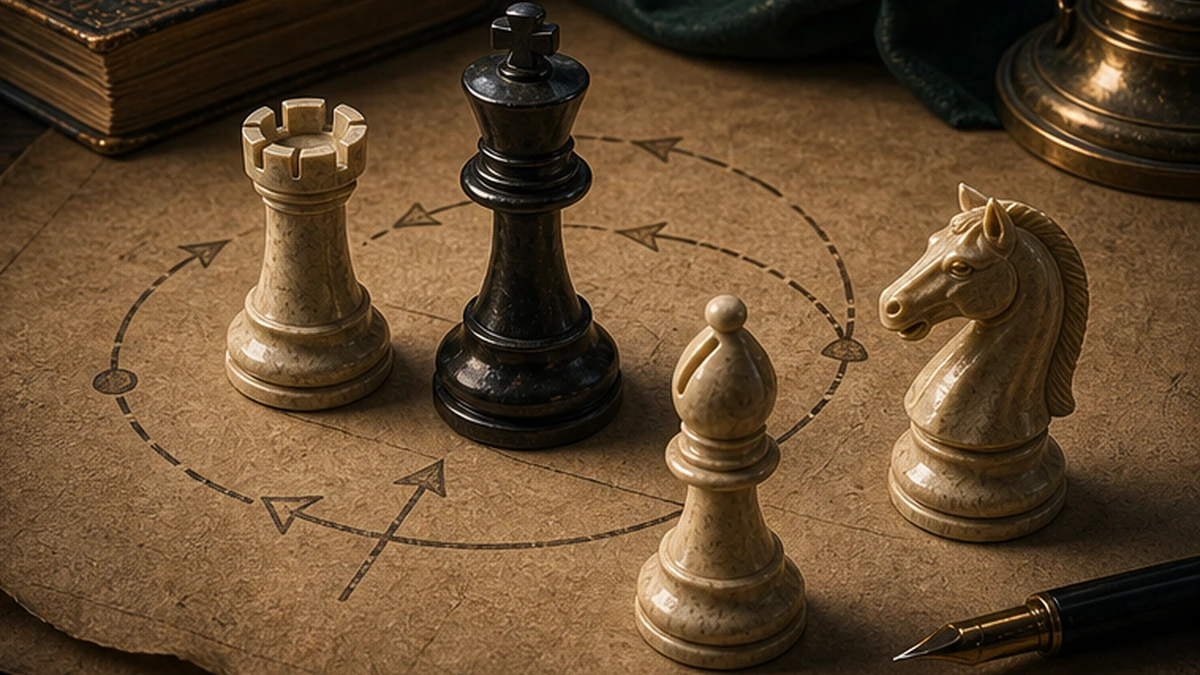
The standard technique is called the box method. Imagine an invisible box around the enemy king created by your rook. On each turn, you shrink that box. The rook moves closer to the enemy king along a rank or file, supported by your own king. When the enemy king tries to escape the shrinking box, your king steps in to block the escape route.
A practical rule of thumb recommended by the Silver Knights Chess Academy: on each turn, ask yourself two questions. Can I shrink the box around my opponent's king without losing my rook? If yes, move the rook closer. If no, move the king to better defend the rook. This simple decision tree eliminates the paralysis that beginners often feel in this position.
Both pieces must work together. The rook cuts off access to one rank or file at a time, while the king keeps the enemy king from running around the rook. A common beginner mistake is hiding the own king in a corner instead of bringing it into the action. The rook cannot finish the job alone — the king must be an active participant.
The final checkmate pattern is always along the edge of the board. The enemy king is pushed to the last rank or file, your king stands two squares away preventing escapes in two directions, and the rook delivers check along the edge. Ladder checkmate (using two rooks) is a related pattern that follows the same shrinking-territory logic, but with one rook it is the king that fills the gap.
King + Queen Checkmate
The queen is the most powerful piece on the board, and checkmating with king + queen is the easiest of the patterns covered here. The queen alone can force the enemy king to the edge of the board — the friendly king simply prevents the lone king from running back toward the centre.

The technique is straightforward. Place the queen a knight's move away from the enemy king — not directly adjacent, not too far. From this distance, the queen controls a large swath of squares while remaining safe from capture. Each move, the queen adjusts position to push the enemy king closer to the edge. The friendly king follows at a safe distance, cutting off escape routes.
The biggest danger in queen + king checkmate is stalemate. Beginners often place the queen directly next to the enemy king, forgetting that the king must have at least one legal square to move to. The safest method is to keep the queen a knight's move away until the enemy king is on the edge of the board, then bring the friendly king close to cover the remaining escape squares, and finally deliver checkmate with the queen.
If you have two queens (from promotion), the staircase method is recommended — one queen gives check while the other covers the next rank, creating a step-by-step descent that forces the enemy king to the edge. Always give check with each move when using two queens; this eliminates any risk of accidental stalemate.
Two-Bishops Checkmate
Two bishops with the king form a surprisingly effective checkmating team. Bishops are long-range pieces — they do not need to be on specific squares as long as they control the key diagonals. One bishop attacks, while the friendly king and the other bishop prevent the enemy king from escaping.
The side-by-side pattern is the proven technique for two-bishops checkmate. Place both bishops next to each other, forming a diagonal barrier. Bring the king in to support them. Then comes the key move: step back with the inner bishop (the one closer to the enemy king) and move the king into the square that bishop just vacated. This advances the barrier one step closer to the corner.
Repeat this pattern — bishops side by side, king advances, inner bishop steps back, king fills the gap — until the enemy king is pushed three squares from the board's edge. At this point, the bishops and king are close enough to deliver the final checkmate in the corner.
There is an important subtlety here. Before the final checkmate, you may need to play a waiting move — a quiet bishop move that does not give check but passes the turn to the opponent. This forces the enemy king to a square where the final mate becomes possible. Without this waiting move, you risk giving stalemate instead of checkmate — a frustrating outcome when you are a full two pieces up.
Learning the two-bishops checkmate is valuable beyond this specific pattern. It builds understanding of bishop pair dynamics — how two bishops working together can control diagonals across the entire board. It also prepares you for more advanced patterns like Boden's Mate, a checkmate pattern where two bishops on crossed diagonals deliver checkmate against a castled king.
Bishop + Knight Checkmate — The Hardest
The bishop + knight checkmate deserves its reputation. The commercial platform describes it as "one of the most difficult checkmating patterns" and notes that even grandmasters have failed to win games with only these pieces remaining. According to ChessKid's estimate, this checkmate occurs roughly once every 6,000 games — rare enough that many experienced players have never needed to execute it in a rated game.
The fundamental constraint is that the bishop can only control squares of one colour. This means the enemy king must be forced to a corner that matches the bishop's colour. If the bishop controls light squares, the checkmate must happen in a light-squared corner. This is non-negotiable — trying to force checkmate in a wrong-coloured corner is impossible under perfect defence.
Three key principles govern the bishop + knight checkmate:
- The knight leads the way, followed by the king, then the bishop. The knight almost always moves first in each phase of the pattern.
- The knight always moves in a V-shape (changing colour with each move) except on its last move before delivering checkmate.
- Complementary coverage — the bishop controls squares of one colour, while the knight controls the other. Together they form a net that the enemy king cannot escape.
The most reliable learning method is the "W" pattern (also called the "M" pattern), popularised by Coach Jessica on ChessKid. The knight traces a W-shaped path across the board, gradually forcing the enemy king toward the correct corner. The starting position requires the knight in front of the friendly king, with the bishop controlling the diagonal in front of the enemy king — this creates an initial barrier that prevents the lone king from running to the wrong corner.
The 50-move rule is a real concern here. If fifty moves pass without a capture or pawn push, the game is declared a draw. Under perfect play, the bishop + knight checkmate can be forced in well under fifty moves, but a learner who wastes moves can easily cross the threshold.
Honest advice for beginners: prioritise the other three checkmates first. Bishop + knight is exceptionally rare and genuinely hard. Learn it once you are comfortable with rook, queen, and two-bishops mates. When you do practise it, set up the starting position on a board and repeat the W pattern until it becomes muscle memory.
Checkmate Difficulty Comparison
| Checkmate Type | Difficulty | Core Technique | Practical Frequency | Key Risk |
|---|---|---|---|---|
| King + Queen | Easiest | Queen forces king to edge; king covers escapes | Very common | Stalemate if queen crowds too close |
| King + Rook | Moderate | Box method — shrink the box each move | Common | King not supporting the rook |
| Two Bishops | Hard | Side-by-side bishops; king fills the gap | Rare (both bishops needed) | Stalemate before final move |
| Bishop + Knight | Hardest | W-pattern; force king to correct-colour corner | ~1 in 6,000 games | 50-move rule; wrong-corner trap |
Common Mistakes and How to Avoid Them
All four checkmate patterns share certain pitfalls. Recognising them in advance saves you from the frustration of turning a winning position into a draw.
Stalemate is the most frequent error, especially in queen + king and two-bishops checkmates. The solution is simple: keep your attacking pieces at a slight distance from the enemy king until the final move. The queen should stay a knight's move away. The bishops should leave at least one diagonal gap. Only on the final checkmating move do the pieces come in close.
Wrong-corner trap applies specifically to bishop + knight. Beginners chase the enemy king toward any corner, only to realise that the bishop cannot deliver checkmate in the wrong-coloured corner. Before starting, identify which corner matches your bishop's colour and orient your play toward it.
Passive king is the hallmark error in rook + king checkmate. Beginners hide their king in a corner, treating it as a piece to be protected rather than an active participant. The rook cannot deliver checkmate alone — the king must cut off the enemy king's escape. Bring it into the action.
Impatience is the enemy of the two-bishops checkmate. Trying to rush the final position usually results in stalemate or allowing the enemy king to escape back to the centre. Slow down, repeat the side-by-side pattern, and use the waiting move when needed.
How to Practice Basic Checkmates
Knowing the theory and being able to execute it under time pressure are two different skills. A structured practice plan builds both.
Step 1: Set up the position. Use the custom position setup on the open-source platform or the commercial platform. Place the pieces in a realistic starting position — for example, your king on e1, rooks on a1 and h1, and the enemy king somewhere in the centre. Practise against a computer set to low strength or a friend.
Step 2: Progressive drilling. Master one checkmate type at a time. Start with king + queen — it is the easiest and builds confidence. Practise until you can deliver checkmate in under 15 moves every time. Then move to king + rook (the box method), then two bishops, and finally bishop + knight.
Step 3: Add the clock. Once you can deliver each checkmate reliably with unlimited time, set a chess clock. Give yourself five minutes for each attempt. This simulates the time pressure of a real game and forces you to internalise the pattern rather than thinking through every move.
Step 4: Test against resistance. A computer opponent that actively tries to keep its king in the centre is more useful than one that cooperates. Most chess platforms let you set the skill level. Start at a low level and increase as you improve.
The open-source platform practice modules for the knight-bishop mate and two-bishops checkmate are excellent free resources. They provide interactive, step-by-step training with immediate feedback.
Frequently Asked Questions
What is the easiest basic checkmate to learn?
King + queen is the easiest. The queen is powerful enough to force the enemy king to the edge of the board largely on its own, while the friendly king prevents escapes. The only risk is accidentally stalemating the enemy king by placing the queen too close.
How do you avoid stalemate in the two-bishops checkmate?
Before delivering the final checkmate, play a waiting move — a quiet bishop move that passes the turn without giving check. This forces the enemy king to a square where the final mate is possible. Without it, you risk giving stalemate, which turns a winning position into a draw.
Why is the bishop + knight checkmate so difficult?
The bishop controls only one colour, and the knight moves in short L-shaped hops. Together they must coordinate to force the enemy king into a corner matching the bishop's colour — a precise process requiring careful piece coordination. Even grandmasters have failed to execute it in tournament games.
How often does the bishop + knight checkmate occur in real games?
According to ChessKid's estimate, roughly once every 6,000 games. It is rare enough that many club players have never needed to execute it in a rated game. This is why most coaches recommend learning the other three checkmates first.
Which checkmate should a beginner learn first?
Start with king + queen (easiest and most common), then king + rook (the box method), then two bishops (side-by-side pattern). Save bishop + knight for last — it is the hardest and rarest pattern.
Knowing these four basic checkmate patterns turns a winning material advantage into a full point. Practise them in order of difficulty, and soon they will become automatic.
Sources
- Chess.com — Bishop and Knight Checkmate (https://www.chess.com/terms/bishop-knight-checkmate)
- Chess.com — Checkmate With Two Bishops (https://www.chess.com/terms/checkmate-two-bishops-chess)
- ChessKid — Bishop and Knight Checkmate by Coach Jessica (https://www.chesskid.com/learn/articles/you-want-to-checkmate-with-only-a-bishop-and-knight)
- Chess Academy by Silver Knights — King and Rook Checkmate by Emily Maxwell (https://chessacademy.com/blogs/chess-lessons/chess-basics-king-and-rook-checkmate)
- Next Level Chess — Basic Checkmates by GM Noël Studer (https://nextlevelchess.com/checkmate/)