
What Is the Berlin Defense?
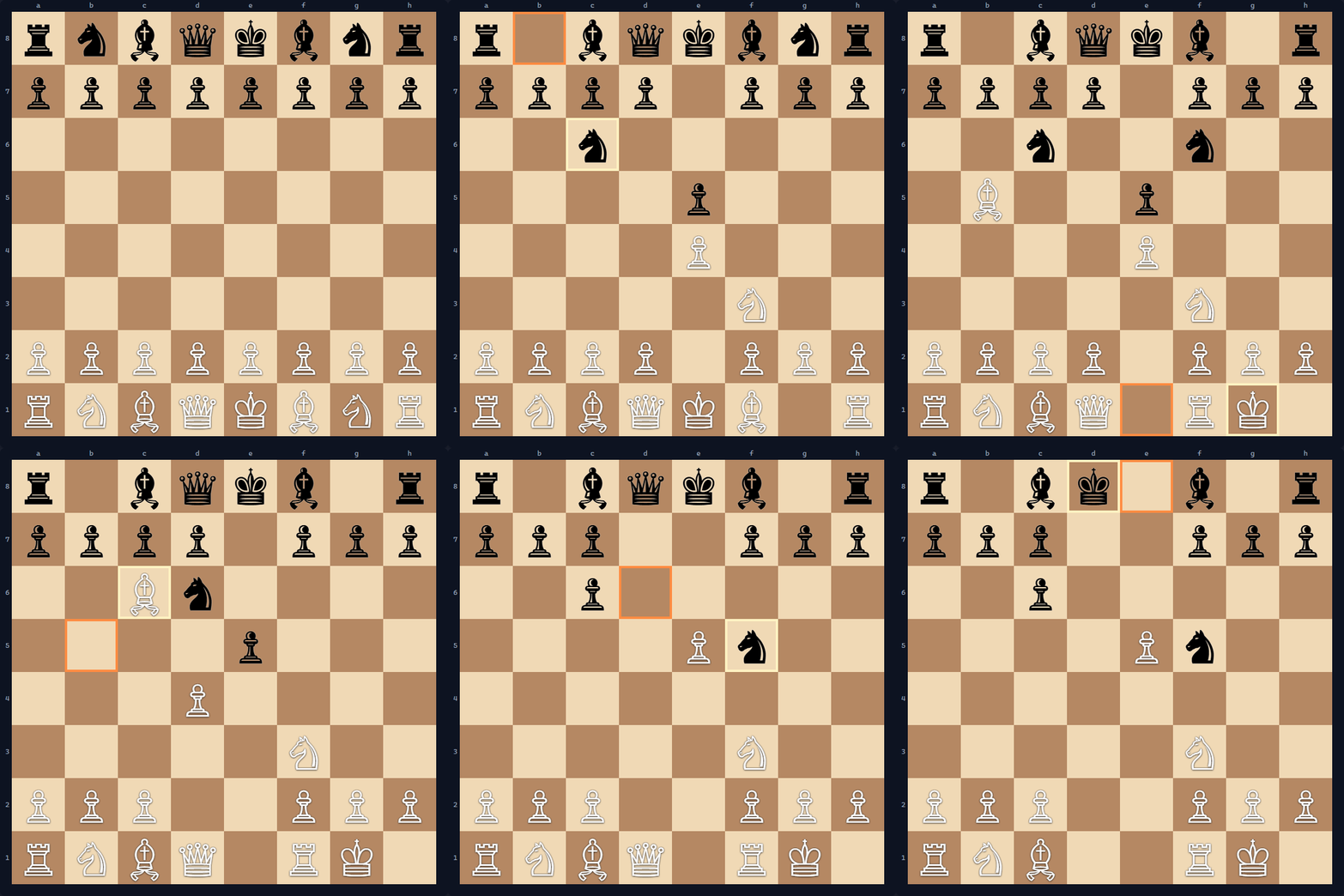
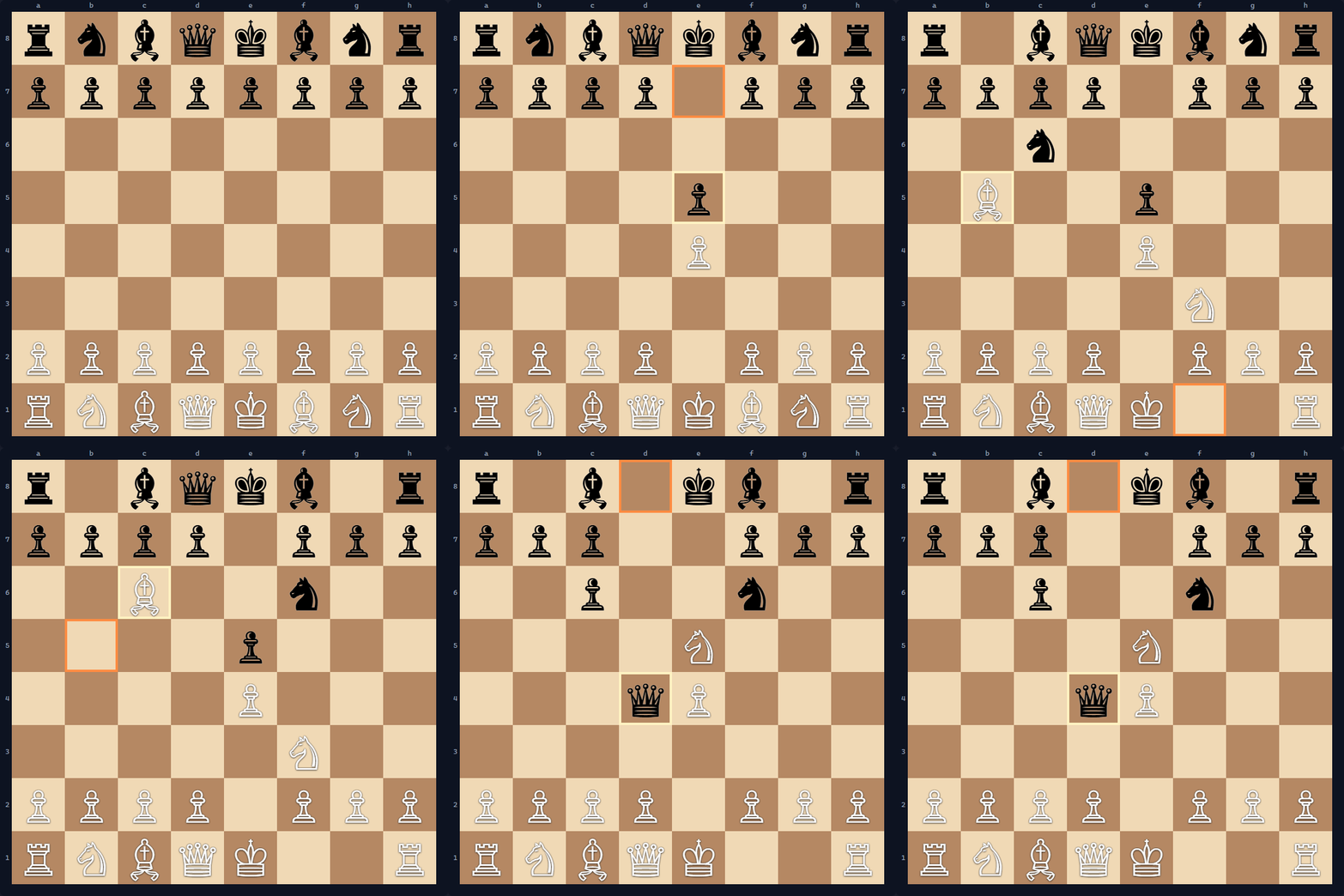
The Berlin Defense arises on the third move of the Ruy Lopez. After 1.e4 e5 2.Nf3 Nc6 3.Bb5, Black plays 3...Nf6 — developing the kingside knight to its most active square and attacking the undefended e4-pawn. It is a natural, classical way of meeting the Ruy Lopez, according to the commercial platform.
According to Chessklub, the Berlin is the second most popular variation of the Ruy Lopez. It has a reputation as a "drawing weapon" at the elite level, with Chessklub reporting a 44.5% draw rate (White wins 33.1%, Black wins 22.4%). The commercial platform's own database shows a 43% draw rate. This solid, hard-to-break character has made the Berlin a staple in grandmaster repertoires.

The commercial platform notes that 3...Nf6 predates the currently more popular 3...a6 (the Morphy Defense) by about 40 years in historical databases. The opening is classified under ECO code C65.
A Brief History of the Berlin Defense
According to Chessklub, the Berlin Defense was first analyzed in-depth in the 19th century and derived its name from its defensive, drawish nature — a comparison to the Berlin Wall.
For much of the 20th century, the Berlin was rarely seen at the highest levels. As The Chess World notes, it was considered a dubious opening about 20 years ago. Everything changed in 2000. Vladimir Kramnik adopted the Berlin as his main weapon against Garry Kasparov in the World Chess Championship match in London. Kramnik drew all five Berlin games and went on to dethrone Kasparov, as Chessable records. The Chess World reports that even Kasparov — one of the greatest attacking players of all time — could not crack the opening.
Since that match, the Berlin has become a fixture at the top. Chessklub lists additional model games, including Viswanathan Anand vs Magnus Carlsen from the 2013 World Championship and Judit Polgar vs Veselin Topalov from the 2005 FIDE World Championship tournament.
The Berlin Endgame: Main Line
Move Order and Position
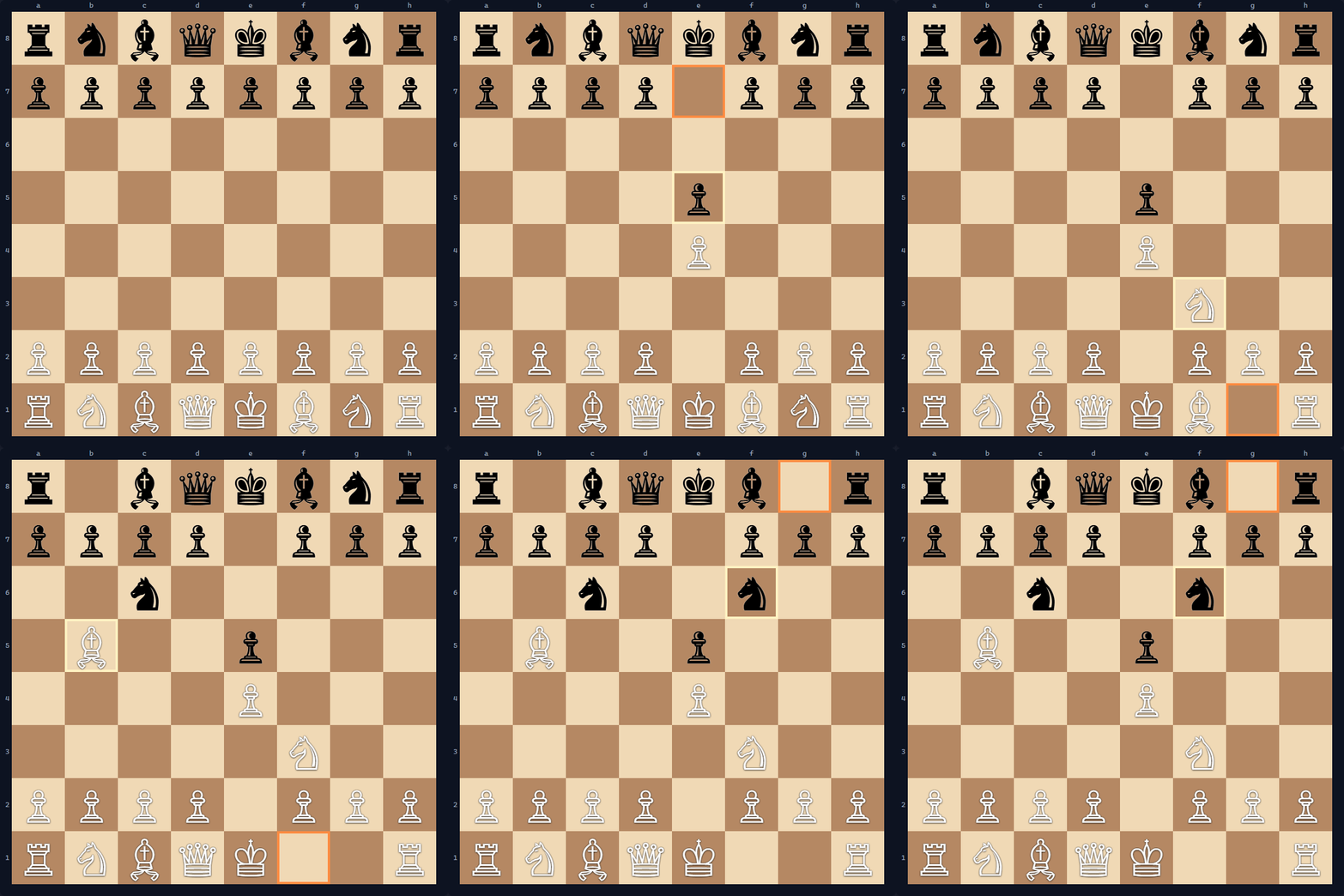
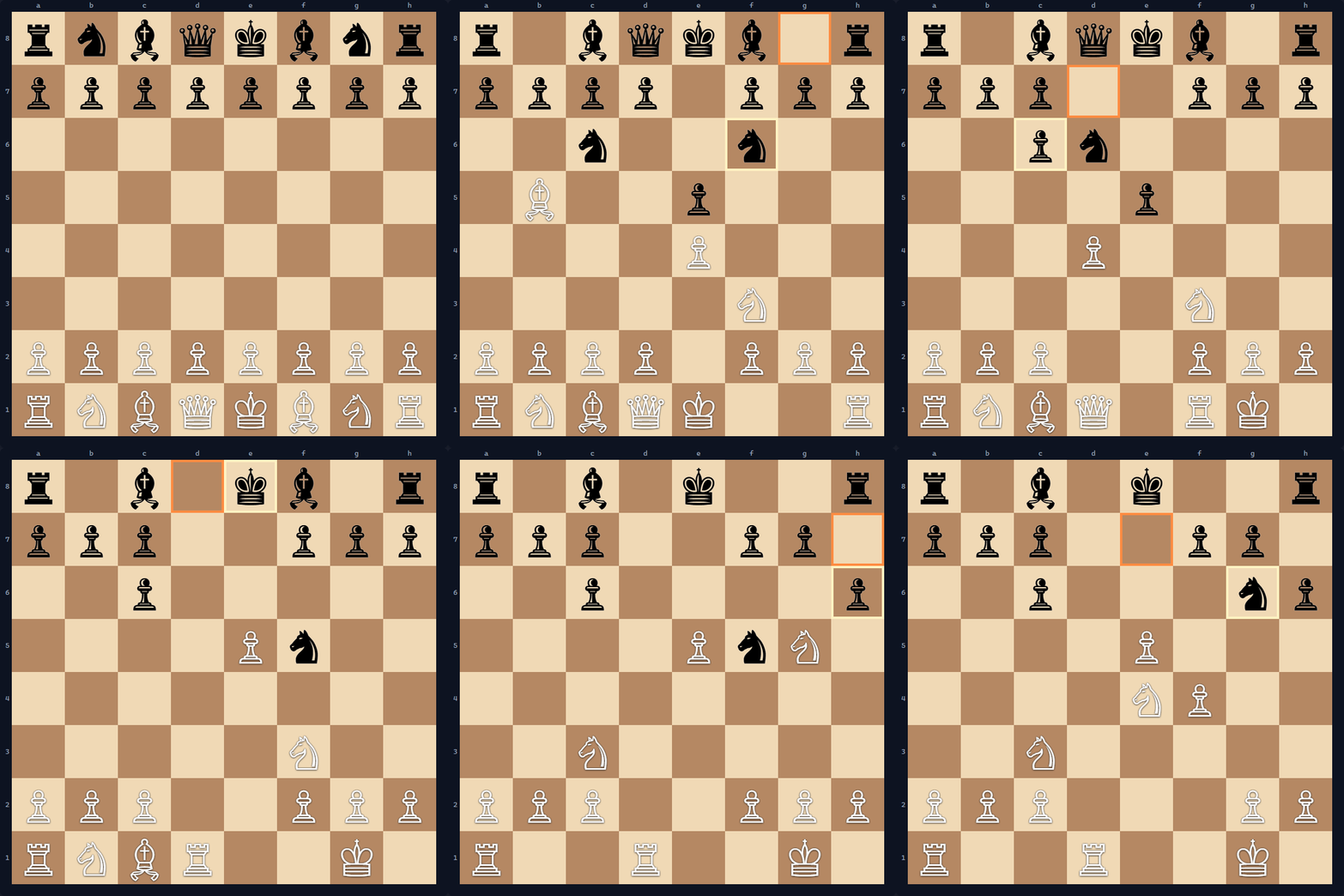
The defining line of the Berlin Defense is the queen-exchange endgame, reached after these moves:

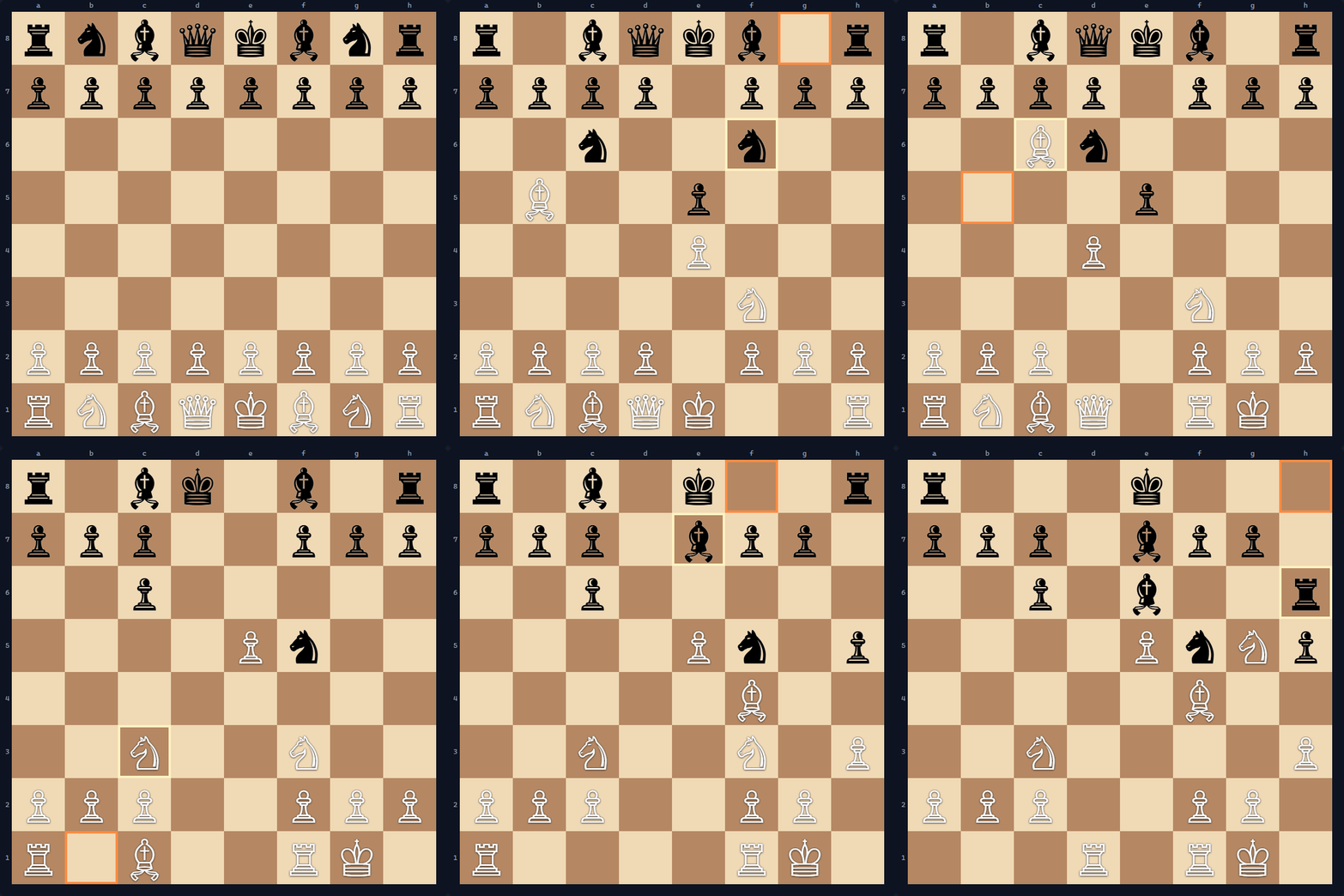
1.e4 e5 2.Nf3 Nc6 3.Bb5 Nf6 4.O-O Nxe4 5.d4 Nd6 6.Bxc6 dxc6 7.dxe5 Nf5 8.Qxd8 Kxd8
Black grabs the e4-pawn on move four rather than defending it. White recaptures with 5.d4, and after a forced sequence, the queens come off the board on move eight. The Chess World calls this the "Absolute Main Line." the commercial platform refers to it as the l'Hermet Variation; other sources call it the Berlin Wall or simply the Berlin Endgame.
Evaluating the Resulting Position
At first glance, White looks better: a lead in development, a kingside pawn majority, and Black's king is stuck in the center with doubled c-pawns. But chess is not that simple. Chessable points out that Black's main compensation is the two bishops — especially the unopposed light-squared bishop, which becomes a tremendous defensive and attacking piece. The doubled c-pawns, surprisingly enough, can prove an advantage rather than a hindrance, Chessable adds. The Chess World agrees, calling the position "harmless for Black."
Strategic Plans
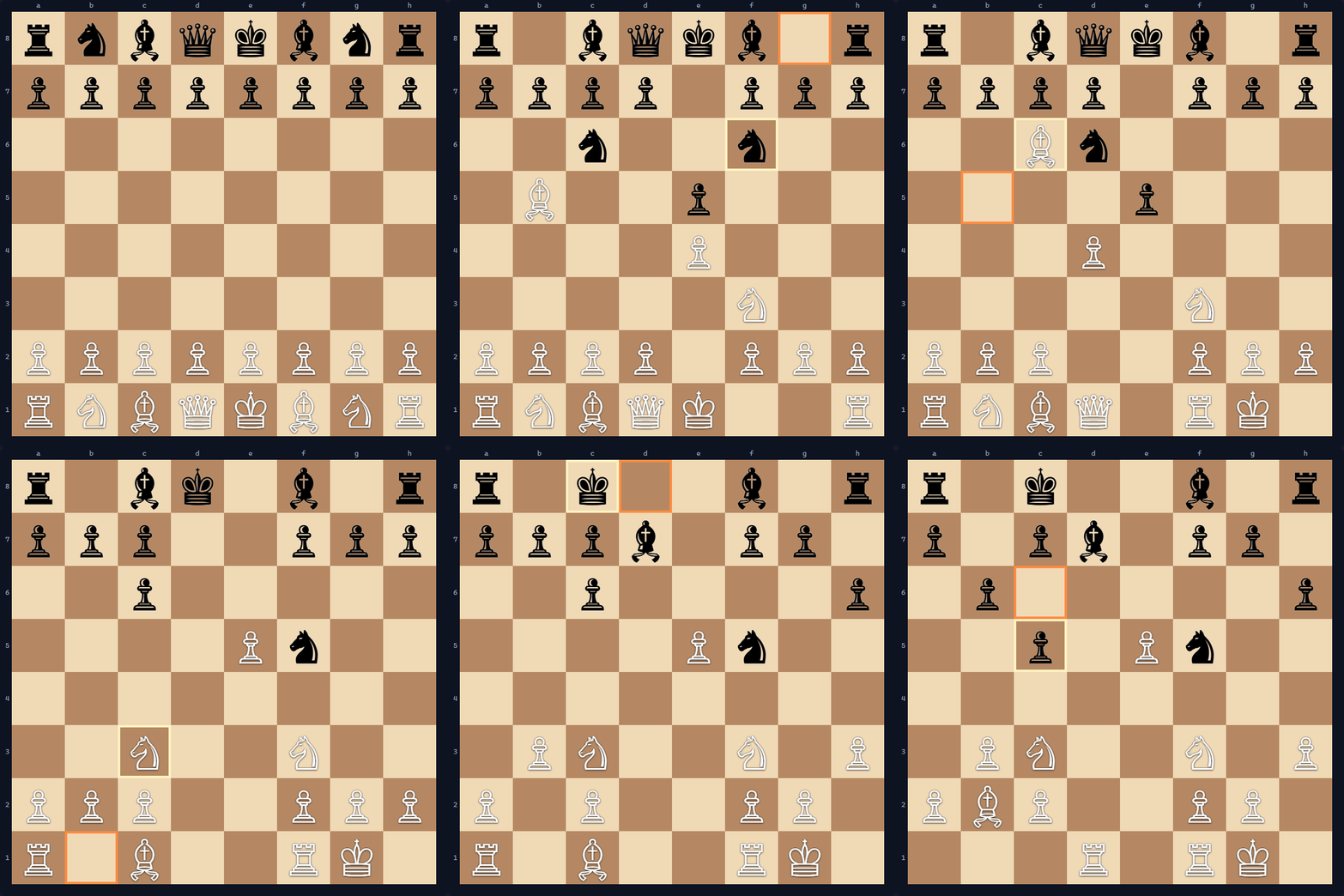
White's main plan is to advance the kingside pawn majority and create a passed pawn. The Chess World highlights Black's most popular response: playing ...h7-h5 to block White's pawn expansion before it starts. A typical continuation runs 9.Nc3 Ke8 10.h3 h5 11.Bf4 Be7 12.Rad1 Be6 13.Ng5 Rh6 — a position reached in more than 100 master games.
Black has two other well-known plans. The first is to transfer the king to the queenside for safety — the plan Kramnik used against Kasparov. After 9.Nc3, Black plays 9...Bd7, followed by ...Kc8, ...b6, and ...c5. Chessable gives a sample line: 9.Nc3 Bd7 10.h3 h6 11.b3 Kc8 12.Bb2 b6 13.Rad1 c5. The second, more modern plan noted by The Chess World involves playing ...Be7 with the idea of trading knights on h4, reducing White's attacking potential.
The 9.Rd1+ Alternative
White can also play 9.Rd1+ instead of 9.Nc3. According to Chessable, this check stops Black's king from finding shelter on the queenside. Black has no real option other than 9...Ke8 (9...Bd7 is powerfully met by 10.Ng5). The game then continues 10.Nc3 Be7 11.Bg5 Bxg5 12.Nxg5 h6 13.Nge4 Ne7 14.f4 Ng6. Black's light-squared bishop remains a key defensive piece, preventing the white pawns from advancing on the kingside.
The Rio de Janeiro Variation
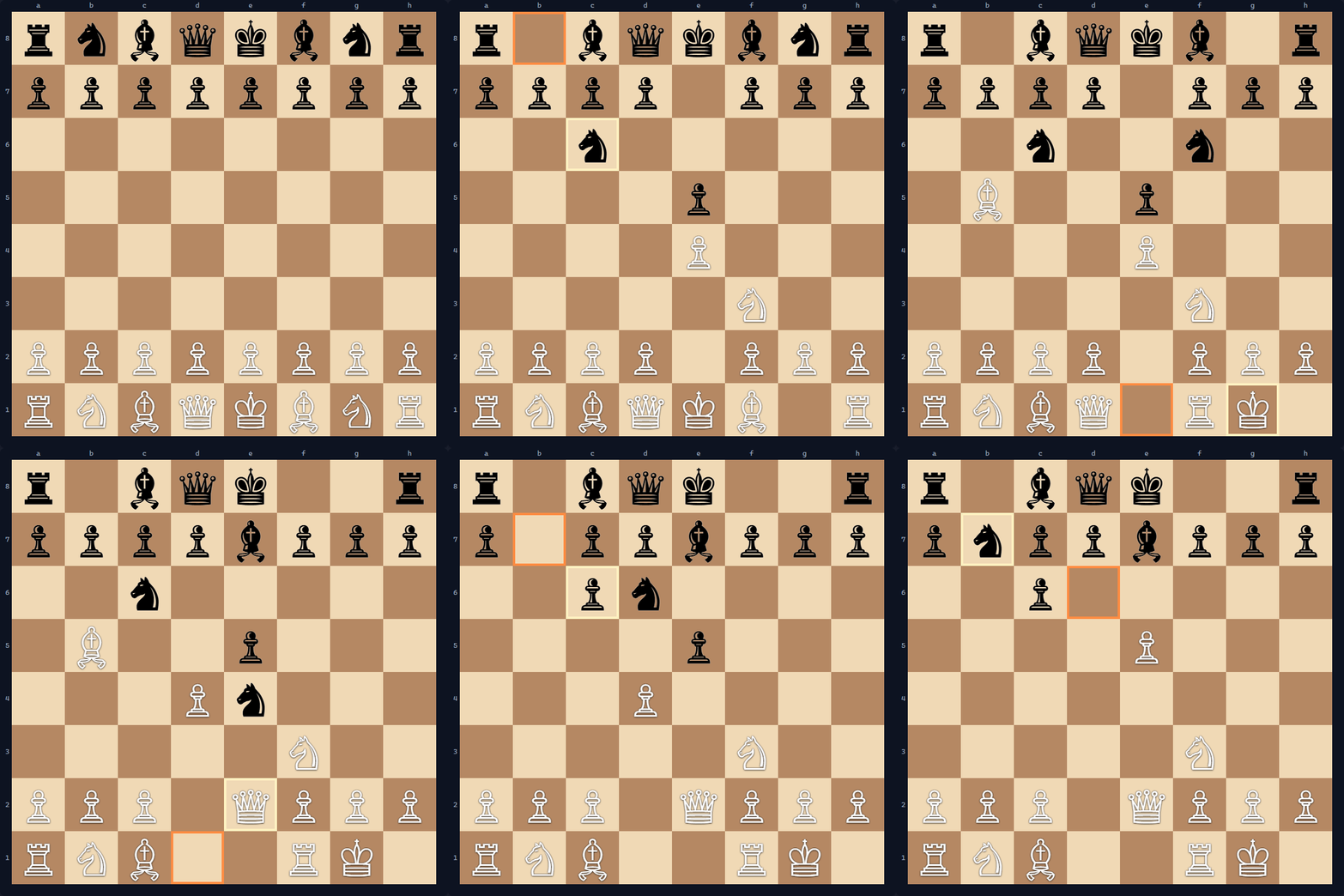
After 4.O-O Nxe4 5.d4, Black has a choice between 5...Nd6 (the more common move, according to The Chess World) and 5...Be7. The latter leads to the Rio de Janeiro Variation, named after the city where it was first analyzed.
The sequence runs: 5...Be7 6.Qe2 Nd6 7.Bxc6 bxc6 8.dxe5 Nb7. White avoids the queen exchange on d8, keeping queens on the board. The Chess World notes that Black's knight will be relocated from b7 to e6 via c5, where it becomes a strong centralized piece. This variation leads to a different type of middlegame compared to the standard Berlin Endgame, with more pieces remaining on the board.
Sidelines After 5...Nd6
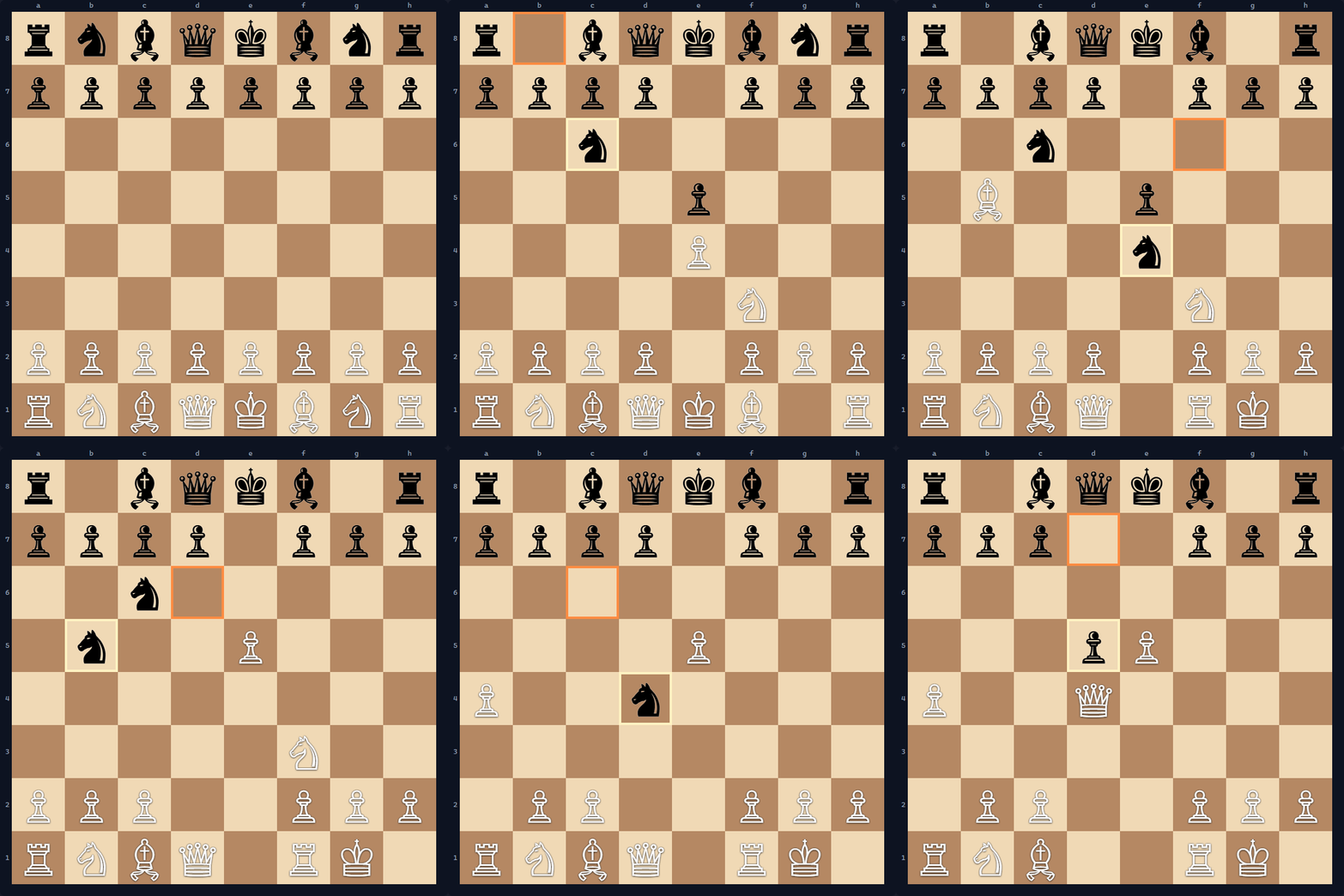
When Black plays the more common 5...Nd6, interesting possibilities arise. The Chess World describes an intriguing idea: 6.dxe5, which looks like a blunder hanging the bishop on b5. After 6...Nxb5 7.a4, White traps the knight on the edge of the board. The typical continuation is 7...Nbd4 8.Nxd4 Nxd4 9.Qxd4 d5. The position is roughly equal — White has more space but Black enjoys the pair of bishops.
White can also avoid the queen exchange entirely by playing 8.Qe2 instead of 8.Qxd8. Chessable notes this option keeps more pieces on the board: after 6.Bxc6 dxc6 7.dxe5 Nf5 8.Qe2, White retains the queen and a different middlegame ensues.
Anti-Berlin Systems
Not every White player wants to enter the Berlin Endgame. Three main anti-Berlin options exist, each leading to different types of play.
| Anti-Berlin choice | Game type | Practical warning |
|---|---|---|
| 4.d3 | Closed structure; White supports e4 and delays the queen trade. | Black can answer actively with ...Bc5 or a ...d5 break. |
| 5.Re1 | Petroff-style symmetry after White regains the pawn. | The position is balanced rather than a free attacking try. |
| 5.Qe2 / 4.Nc3 | Keeps more pieces or transposes to Four Knights structures. | Know whether you are avoiding Berlin theory or entering another opening. |
4.d3 (Closed System)
The most popular alternative to 4.O-O is 4.d3. According to the commercial platform, 39% of games with 4.d3 end in a draw, compared to 47% with 4.O-O. White supports the e4-pawn and keeps the position closed.
Black's most active reply is 4...Bc5, preparing ...Nd4 (confirmed by Chessable and The Chess World). A standard continuation is 4...Bc5 5.c3 O-O 6.O-O Re8 7.Nbd2 d6 8.d4 exd4 9.cxd4 Nxd4 10.Bxe8 Qxe8 — an exchange sacrifice Black can survive with active piece play.
The Chess World reports a latest trend: 5...O-O 6.O-O d5!?, played by elite grandmasters including Viswanathan Anand, Sergey Karjakin, Wesley So, and Anish Giri. This aggressive pawn break immediately challenges White's center. Black can also slow the game with 4...d6, as Magnus Carlsen did against Alireza Firouzja at Tata Steel 2020.
5.Re1 (Petroff Style)
After 4.O-O Nxe4, White can play 5.Re1, a direct way of regaining the pawn. According to Chessable and The Chess World, this leads to symmetrical positions reminiscent of the Petroff Defense: 5...Nd6 6.Nxe5 Be7 7.Bf1 Nxe5 8.Rxe5 O-O 9.d4. Black chooses between 9...Bf6 and 9...Ne8. The position is balanced and offers both sides chances in a more open game.
5.Qe2
Chessable describes 5.Qe2 as another anti-Berlin try — White hopes to regain the pawn while keeping the light-squared bishop. After 5...Ng5 6.Nxg5 Qxg5 7.d4 Qe7 8.dxe5 a6, Black has a solid position. Alternatively, Black can play 8...Nd4, winning a center pawn after 9.Qd3 Qxe5.
4.Nc3 (Four Knights Transposition)
The developing move 4.Nc3 defends the e4-pawn and transposes to the Four Knights Game, as the commercial platform notes. Black has two main options: 4...Bb4 (the Spanish Four Knights) and 4...Nd4 (the Rubinstein Variation). This line avoids the Berlin structure entirely but requires separate preparation from both sides.
<div class="callout"><strong>Practical Tip:</strong> If you are a Black player looking to build a Berlin repertoire, start with the endgame variation (4.O-O Nxe4 5.d4 Nd6). It is the most forcing line and the one you will face most often. Study the 9.Nc3 plans first, then explore 9.Rd1+ as a secondary variation. Reserve the Rio de Janeiro and 4.d3 lines for later study — they arise less frequently but understanding them will make you a complete Berlin player.</div>
Key Traps in the Berlin Defense
The Mortimer Trap
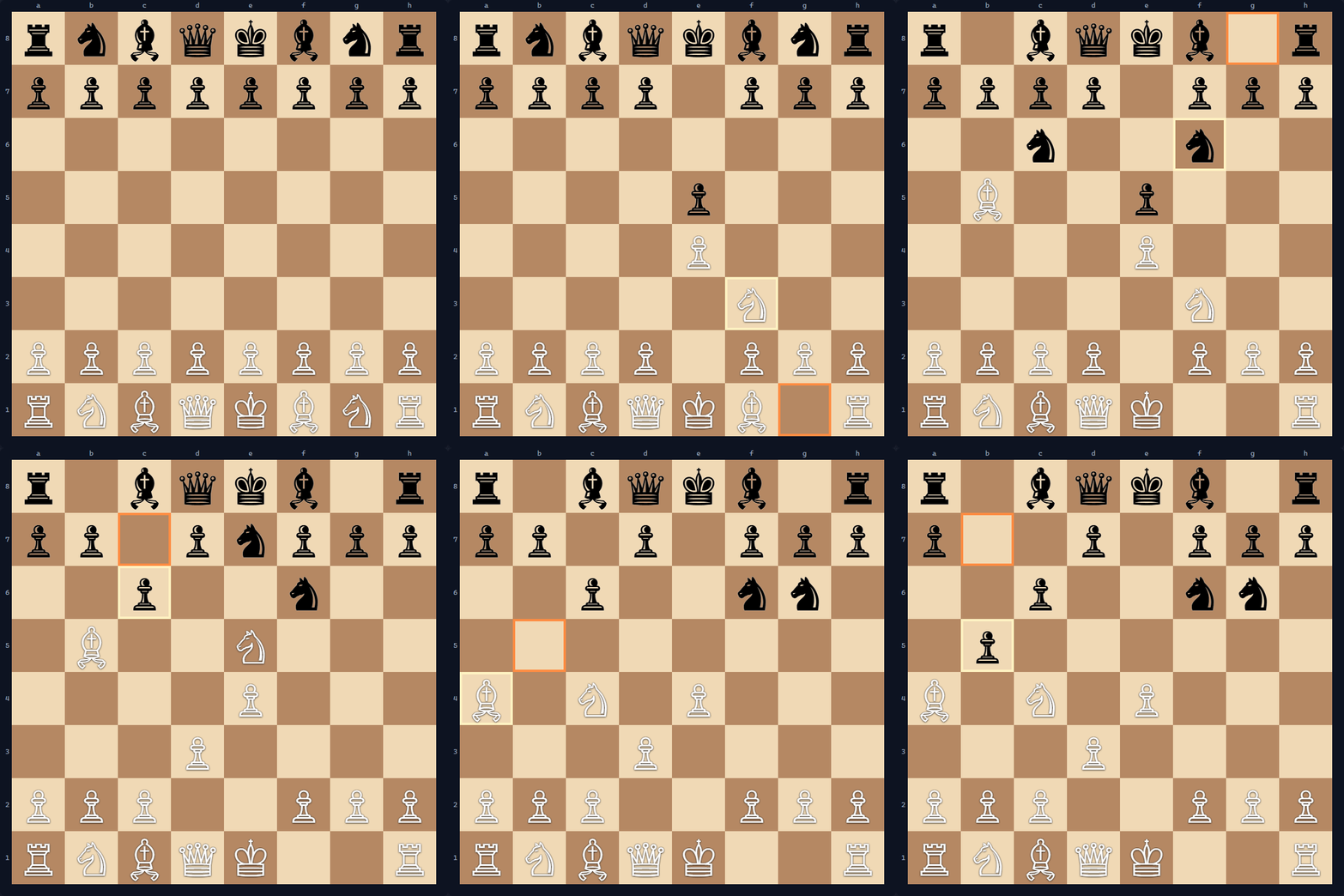
Named after James Mortimer (Chessklub), this trap arises in a sideline of the Berlin. The moves are: 1.e4 e5 2.Nf3 Nc6 3.Bb5 Nf6 4.d3 Ne7 5.Nxe5 c6 6.Nc4 Ng6 7.Ba4 b5.
White's knight on c4 threatens a smothered mate on d6 (Nd6#). However, Black's ...b5 fork of the bishop and knight wins material. The e4-pawn is also left hanging. This trap is a good illustration of why the Berlin requires alertness from both sides.
4.Bxc6 Does Not Win a Pawn
The Chess World warns that a tempting capture — 4.Bxc6 dxc6 5.Nxe5 — does not win a pawn. Black plays 5...Qd4, forking the knight on e5 and the pawn on e4. Black wins the pawn back immediately and emerges with a comfortable position.
FAQ
What is the Berlin Defense?
The Berlin Defense is a variation of the Ruy Lopez that starts 1.e4 e5 2.Nf3 Nc6 3.Bb5 Nf6. Instead of defending the e5-pawn with a pawn move or the Morphy Defense (3...a6), Black immediately develops the knight and attacks White's e4-pawn.
Why is the Berlin called the "Berlin Wall"?
According to Chessklub, the opening derived its name from its defensive and drawish nature, compared to the Berlin Wall. The solid, hard-to-crack endgame position — where even Garry Kasparov could not break through — reinforced this nickname.
Is the Berlin Defense good for beginners?
The Berlin requires solid positional understanding and endgame technique. It is better suited to players rated 1200 and above who are comfortable in simplified positions. Beginners may find the closed lines arising from 4.d3 more manageable.
How do you counter the Berlin Defense as White?
White has three main alternatives to the standard endgame line: 4.d3 (the Anti-Berlin, which keeps the position closed), 5.Re1 (leading to Petroff-style symmetry), and 5.Qe2 (keeping the bishop on b5). The 4.O-O Nxe4 5.d4 main line is perfectly playable for White but requires patience.
What is the main line of the Berlin Defense?
The absolute main line is 4.O-O Nxe4 5.d4 Nd6 6.Bxc6 dxc6 7.dxe5 Nf5 8.Qxd8 Kxd8, leading to the famous Berlin Endgame. White has a kingside pawn majority and lead in development; Black relies on the two bishops and the surprising solidity of the doubled c-pawns.
Summary
The Berlin Defense transformed from a neglected sideline into one of the most respected responses to 1.e4. Its defining moment — Kramnik's victory over Kasparov in 2000 — proved that solid, positional play could neutralize even the most aggressive attacking style. The Berlin Endgame offers Black excellent defensive resources: the two bishops, the flexible doubled c-pawns, and several clear strategic plans. Whether you choose the main line endgame, the Rio de Janeiro Variation, or one of the closed Anti-Berlin systems, the Berlin rewards deep understanding over sharp tactics. It remains a reliable, time-tested weapon at every level of chess.
Sources
- Chess.com — Ruy López Opening: Berlin Defense overview: https://www.chess.com/openings/Ruy-Lopez-Opening-Berlin-Defense. Used for main line PGN, pros/cons, key variations.
- Chessable — Berlin Defense guide by Shaun Sedice (2022): https://www.chessable.com/blog/berlin-defense/. Used for history, Anti-Berlin, Four Knights, Berlin Wall.
- Chessklub — Berlin Defense guide by prashanth, reviewed by GM Marian Petrov (2024): https://chessklub.com/chess-openings/berlin-defense/. Used for Mortimer Trap, Rio de Janeiro Variation.
- The Chess World — Berlin Defense guide: https://www.thechessworld.com/articles/openings/berlin-defense-complete-guide/. Used for Berlin endgame analysis and model games.
- 365chess — ECO C65 database reference: https://www.365chess.com/eco/C65_Ruy_Lopez_Berlin_defence. Used for sub-variant coverage and master-level statistics.