The main beginner idea: you need an opening that brings you into a clear middlegame without a critical mistake in the first ten moves, not the trendiest line.
Why Openings Matter for Beginners
Many new players think chess openings are mainly about memorizing long sequences of moves. In practice, most beginners gain more from understanding good opening principles than from memorizing exact move orders.
At the USCF-unrated-to-1200 level, what matters more is understanding why you move a piece to a certain square, not how deeply you remember a Grandmaster line.
The openings you choose as a beginner shape the kinds of positions you will play. Some openings lead to open, tactical battles. Others produce quieter, more strategic games. Neither is better — but knowing the difference helps you pick an opening that fits your style. The goal is to reach a playable middle game without making a critical mistake in the first ten moves.
Opening Principles Every Beginner Should Know
Before looking at specific openings, learn the four principles that apply to almost every good opening move. These come from centuries of chess practice and are more important than any memorized line.
Control the center. The four central squares — e4, d4, e5, d5 — are the most important real estate on the board. A piece in the center controls more squares than a piece on the edge. Your first one or two moves should fight for these squares, either by occupying them or by attacking them from a distance.
Develop your minor pieces. Knights and bishops need to leave their starting squares early. A common beginner mistake is moving the same piece twice in the opening or pushing too many pawns while the pieces stay at home. Aim to develop a knight or bishop with each of your first few moves.

Castle early. King safety matters more than any temporary material gain. Once your king is castled, it sits behind a wall of pawns and is much harder to attack. Most beginners should aim to castle within the first ten moves, usually kingside.
Do not move the same piece twice (unless you must). Every time you move a piece that is already developed, you waste a tempo — a turn you could have used to develop another piece or strengthen your position. There are exceptions (when you are attacking or defending a threat), but as a rule, develop each piece once and leave it where it does useful work.
Top 3 Simple Openings for White
According to 365chess.com, three White openings stand out as beginner-friendly because they are easy to learn and produce playable positions without requiring deep theory.
Italian Game: 1.e4 e5 2.Nf3 Nc6 3.Bc4
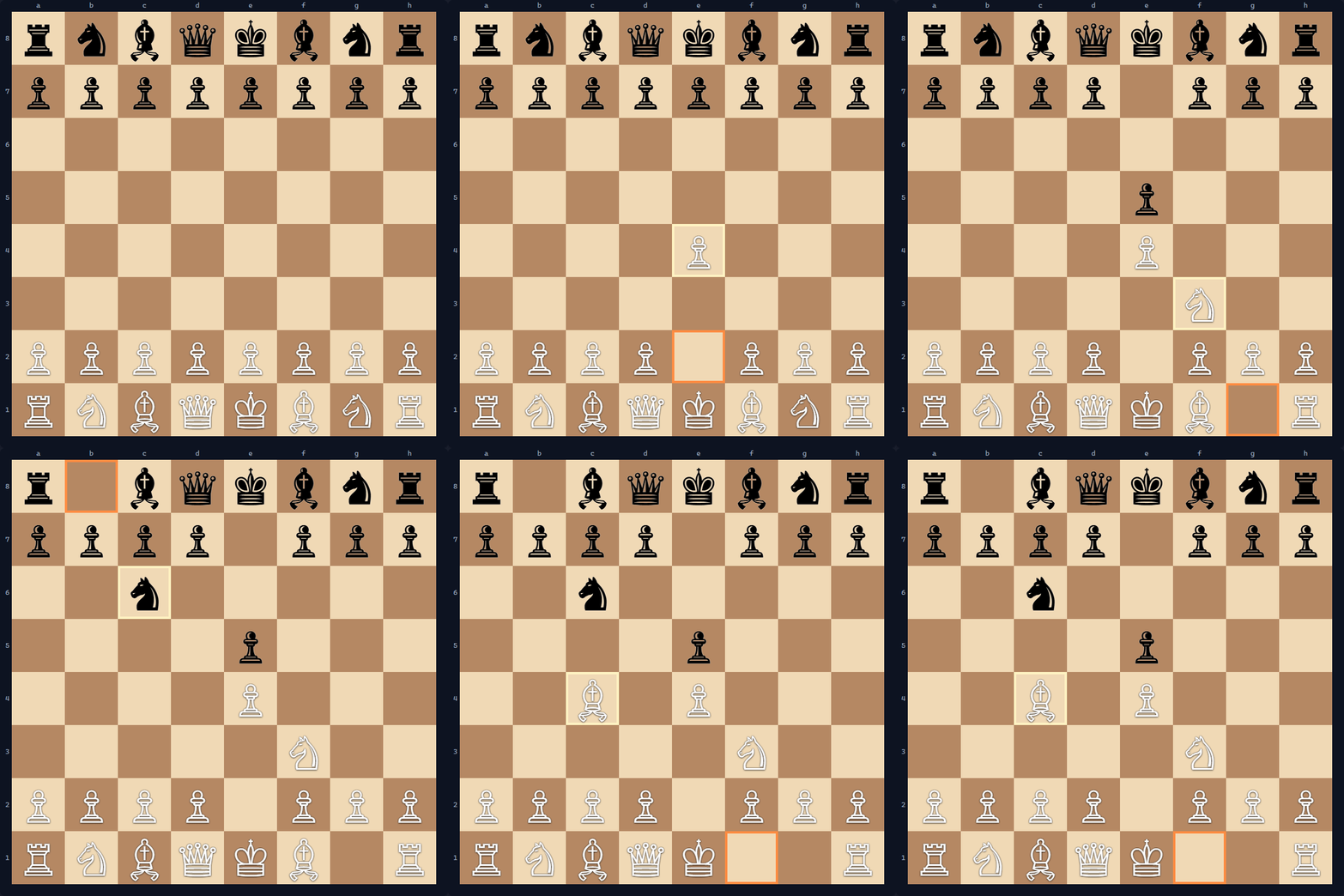
The Italian Game follows opening principles so naturally that it practically teaches them on its own. You push a pawn to the center (1.e4), develop a knight toward the center (2.Nf3), and bring out a bishop to an active diagonal (3.Bc4). According to 365chess.com, when you play the Italian you only have two or three main lines to learn, which makes it a very accessible opening.
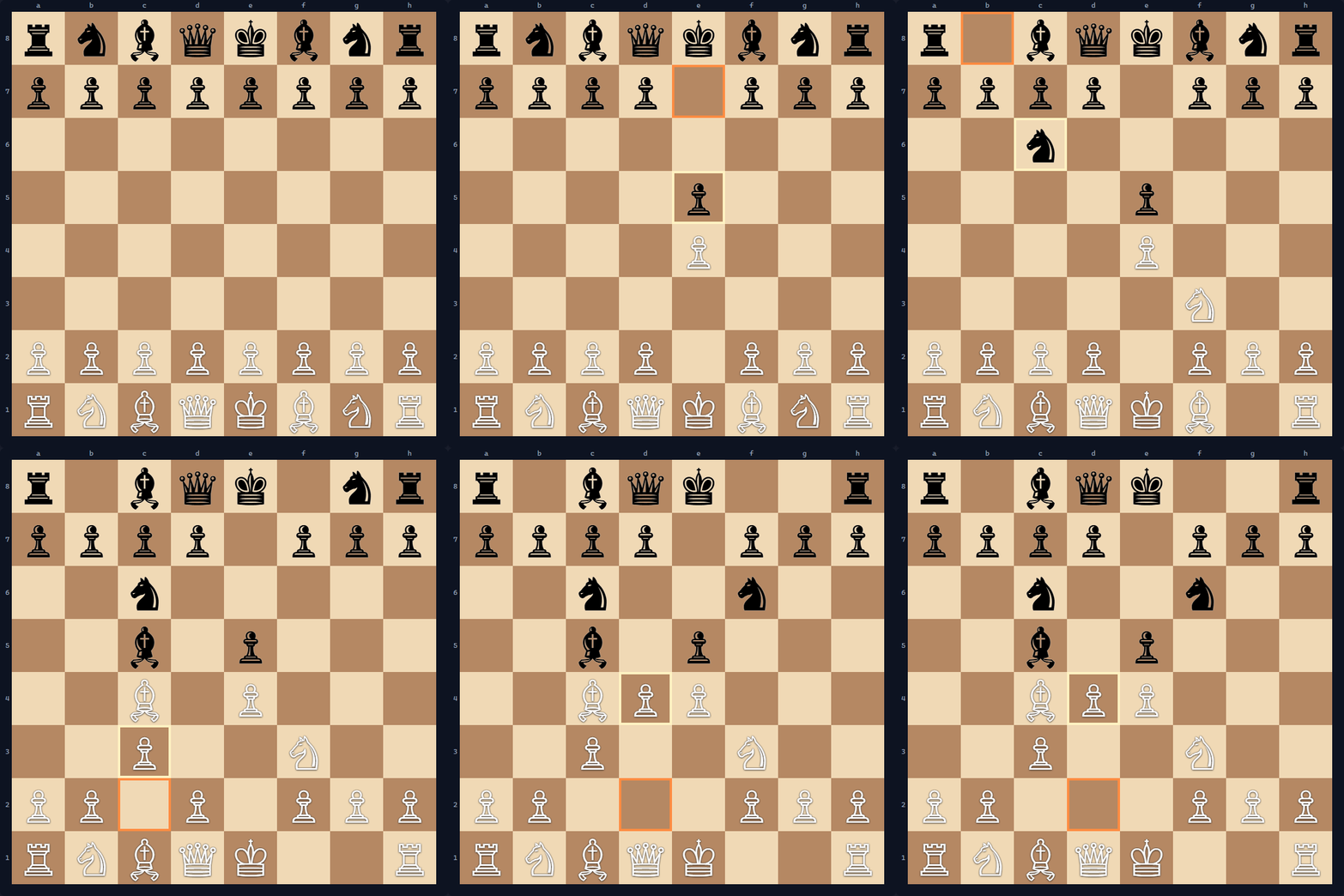
A typical Italian Game continues with 4.c3 (preparing d2-d4 to take more center space) followed by 5.d3 and 6.O-O. Black has many possible replies, but White's plan stays simple: castle, bring the other knight to d2 or c3, and put a rook on the e-file. The positions that arise tend to be open and tactical, which is excellent practice for learning piece coordination.
London System: 1.d4 d5 2.Bf4
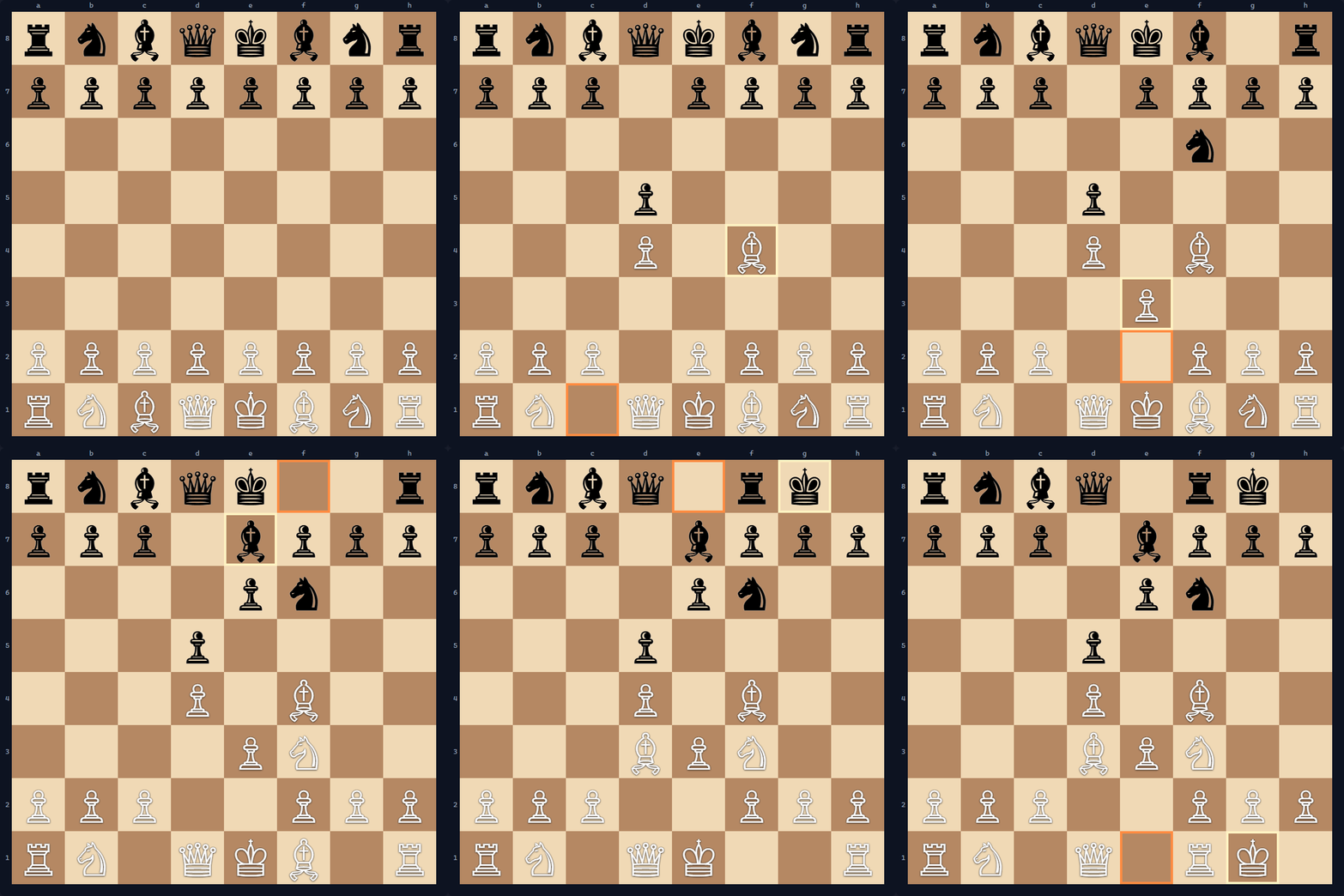
The London System is popular among beginners and club players because White can play nearly the same setup against almost anything Black does. After 1.d4 and 2.Bf4, White develops the dark-squared bishop outside the pawn chain, then follows with e3, Nf3, Bd3, and O-O in most games.
According to 365chess.com, the London System is extremely easy to play for beginners because the player with White can pretty much play the same structure over and over again with good results. A typical London line is 1.d4 d5 2.Bf4 Nf6 3.e3 c5 4.c3 Nc6 5.Nd2 Bf5 6.Ngf3 e6. White's development plan barely changes whether Black plays d5, Nf6, g6, or something else.
King's Indian Attack: 1.Nf3 Nf6 2.g3 d5 3.Bg2
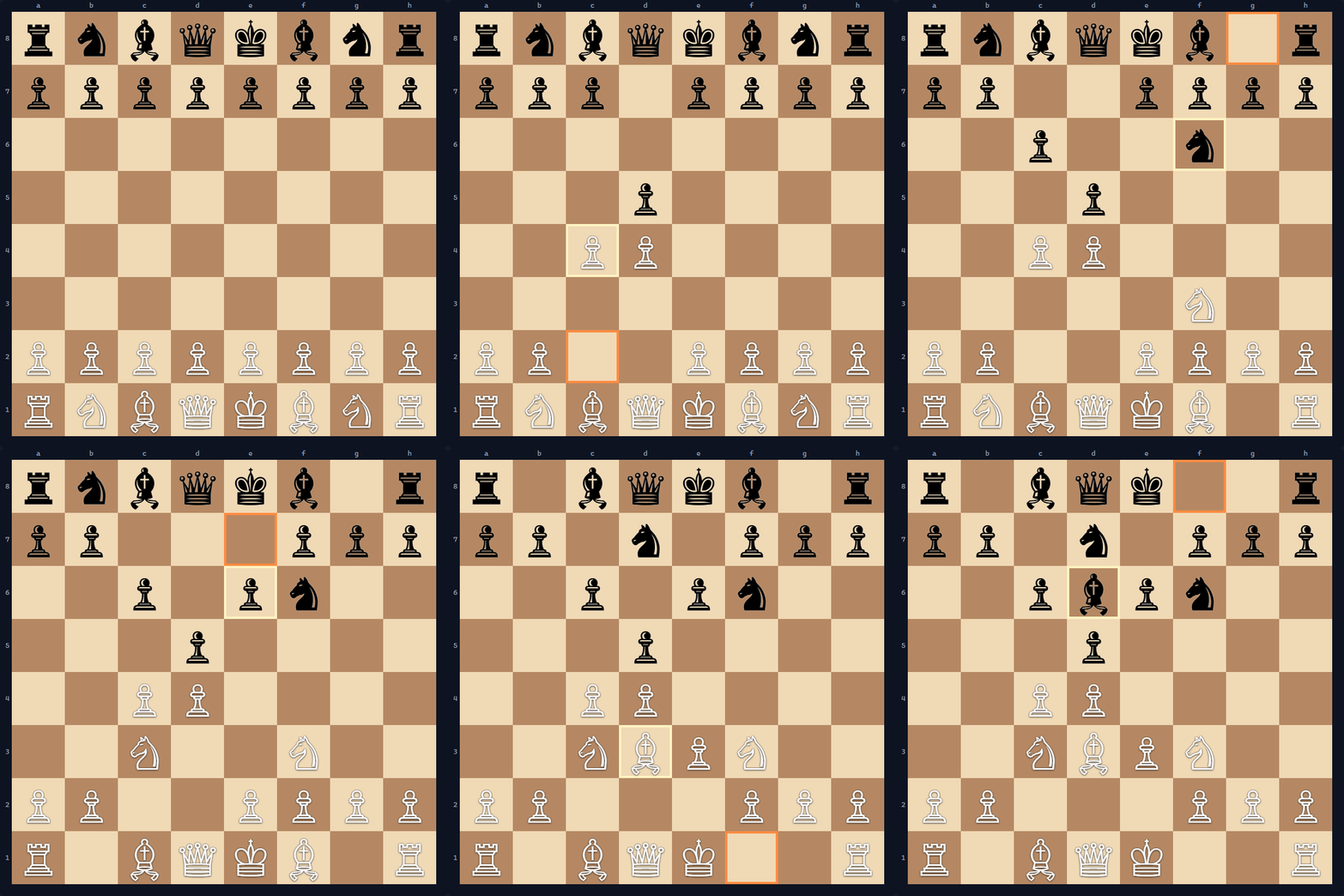
The King's Indian Attack (KIA) is a flexible system. White starts with 1.Nf3, then fianchettoes the king's bishop with g3 and Bg2. According to 365chess.com, the KIA can be played against virtually everything your opponents decide to do. The setup works the same way whether Black plays d5, c5, e5, or something else.
A typical KIA continues 1.Nf3 Nf6 2.g3 d5 3.Bg2 c6 4.O-O Bg4 5.d3 Nbd7 6.Nbd2 e5 7.e4. Notice how White delays committing the central pawns until the kingside pieces are developed. This makes the KIA a good choice for beginners who want a reliable system rather than memorizing responses to every Black move.
White Openings at a Glance
| Opening | First Moves | Best For | Key Strength |
|---|---|---|---|
| Italian Game | 1.e4 e5 2.Nf3 Nc6 3.Bc4 | Players who want open, tactical games | Teaches natural development and center control |
| London System | 1.d4 d5 2.Bf4 | Players who want a repeatable setup | Nearly the same structure against any Black response |
| King's Indian Attack | 1.Nf3 Nf6 2.g3 d5 3.Bg2 | Players who want to delay central commitment | Flexible — works against almost any setup |
Top 3 Simple Defenses for Black
Playing Black is different from playing White because Black must respond to White's first move. According to 365chess.com, three defenses give beginners reliable answers against both 1.e4 and 1.d4.
Scandinavian Defense: 1.e4 d5
The Scandinavian is the most straightforward way for Black to fight 1.e4. After 1.e4 d5, White usually captures the pawn: 2.exd5 Qxd5. Black brings the queen out early, which violates a general principle (develop your queen late), but in this specific line the queen is safe enough on d5. White then gains time by attacking the queen with 3.Nc3, and Black retreats to a5.
The main line runs 1.e4 d5 2.exd5 Qxd5 3.Nc3 Qa5. Black's queen stays active on the queenside while Black develops naturally. The Scandinavian is a good choice for beginners because it forces the game into a specific, easy-to-learn structure. Black rarely gets a bad position from the opening, and the ideas are clear — develop, castle, and challenge White's center.
Petroff Defense: 1.e4 e5 2.Nf3 Nf6
The Petroff Defense is an answer to White's most common second move (2.Nf3). Instead of defending the e5 pawn with 2...Nc6 (as in the Italian or Ruy Lopez), Black counterattacks White's e4 pawn. According to 365chess.com, the Petroff is easy to learn and great for playing a quiet game instead of an eruptive one.
The main line is 1.e4 e5 2.Nf3 Nf6 3.Nxe5 d6 4.Nf3 Nxe4. Both sides have captured a pawn and need to regain it. The resulting positions are balanced and often lead to a quick exchange of pieces, reducing the chance that White can launch a devastating attack in the first fifteen moves. For a beginner who wants a safe, solid response to 1.e4, the Petroff is an excellent choice.
Slav Defense: 1.d4 d5 2.c4 c6
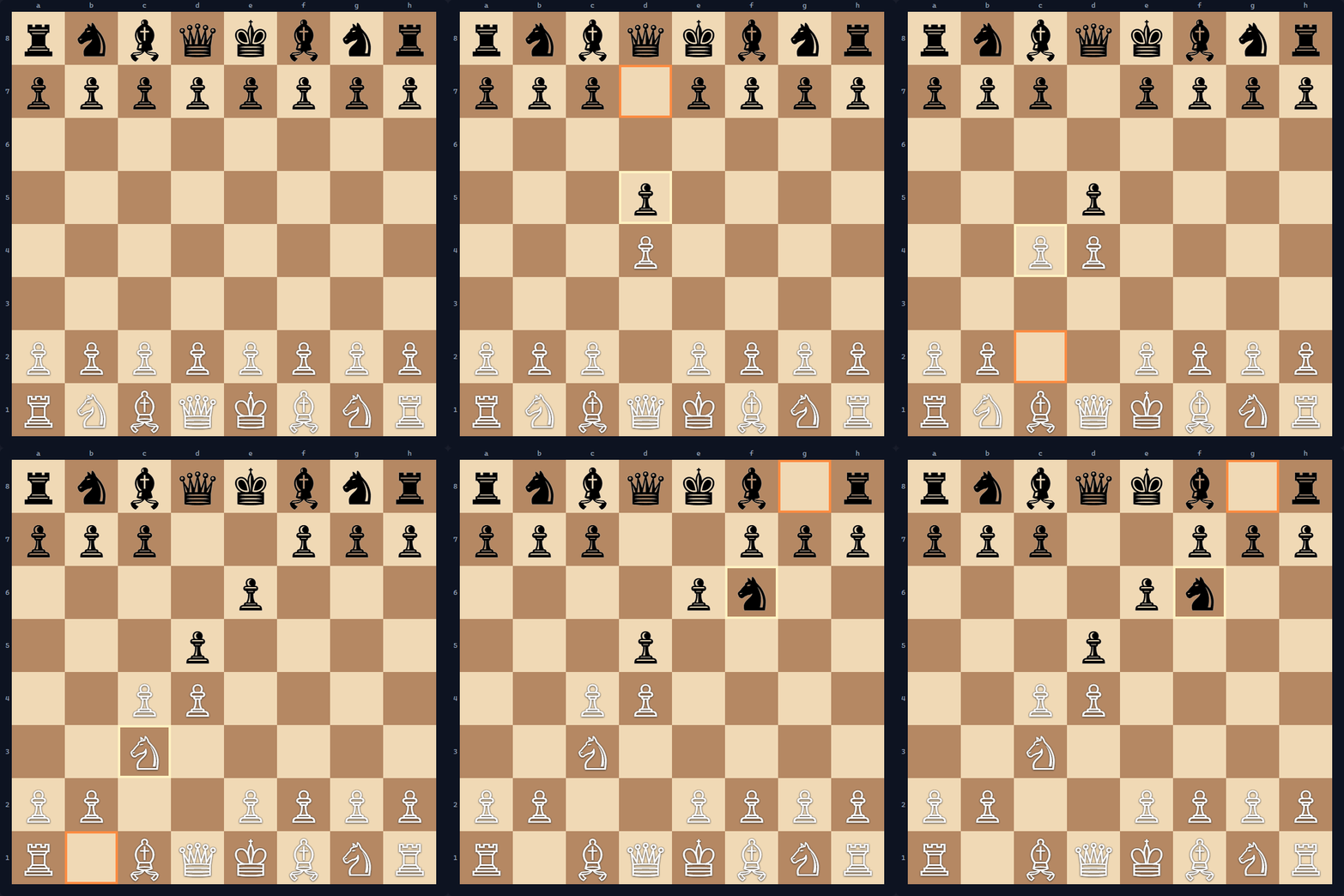
When White opens with 1.d4, the Slav Defense gives Black a solid and natural way to respond. White typically plays 2.c4 (the Queen's Gambit), attacking Black's d5 pawn. Black supports it with 2...c6, creating a strong pawn duo on d5 and c6. According to 365chess.com, the Slav Defense is one of the best choices against the Queen's Gambit.
A typical Slav line is 1.d4 d5 2.c4 c6 3.Nf3 Nf6 4.Nc3 e6 5.e3 Nbd7 6.Bd3 Bd6. Black's pawn structure is solid and difficult to break. Unlike some other defenses to 1.d4, the Slav rarely produces dangerous tactics against Black in the opening. This makes it suitable for beginners who want to reach a playable middle game without memorizing many sharp lines.
Black Defenses at a Glance
| Defense | First Moves | Response To | Key Strength |
|---|---|---|---|
| Scandinavian | 1.e4 d5 | 1.e4 | Forces a specific structure; clear plan for Black |
| Petroff | 1.e4 e5 2.Nf3 Nf6 | 1.e4 followed by 2.Nf3 | Safe, symmetrical, leads to quiet games |
| Slav | 1.d4 d5 2.c4 c6 | 1.d4 (Queen's Gambit) | Solid pawn structure; hard for White to break |
How to Build Your First Repertoire
For club players: what to actually learn first. Do not learn all six openings at once. Build one opening for White plus one defense for Black, then follow this concrete plan.
For White, start with the London System. It is the most repeatable of the three White openings. You can play 1.d4, 2.Bf4, 3.e3 against almost anything Black does, and you will rarely be worse after ten moves. Once you are comfortable with the London (after 20-30 games), you can add the Italian Game if you want more tactical practice.
For Black against 1.e4, start with the Scandinavian Defense. It is straightforward and forces the game into a narrow set of lines. After 1.e4 d5 2.exd5 Qxd5 3.Nc3 Qa5, you know exactly what to do. The Petroff is also a solid choice and many coaches recommend it, but it requires a bit more care in the early moves.
For Black against 1.d4, learn the Slav Defense. Follow 1.d4 d5 2.c4 c6 and develop naturally. The Slav is forgiving — even if you make a minor mistake, Black's pawn structure remains solid.
Do not try to learn all branches of an opening at once. Learn the main line (the most common response from White). Play it ten times. Then add one variation at a time. The goal is not theoretical mastery — it is reaching move 15 with a playable position and a plan.
Frequently Asked Questions
How many opening moves should a beginner memorize?
One basic beginner guide puts it plainly: most beginners do not need to memorize exact opening moves. Focus on principles — center control, development, and king safety — instead of deep memorization. Knowing the first four to six moves of your chosen opening is enough to start playing real games.
Should I learn openings for both 1.e4 and 1.d4 as White?
Not at first. Pick one — the London System (1.d4) or the Italian Game (1.e4) — and play it in every game. Playing the same opening repeatedly builds experience faster than switching between different systems.
Is the Sicilian Defense good for beginners?
The Sicilian Defense (1.e4 c5) is widely played, but beginner guides usually treat it as more theory-heavy than the simpler options covered here. Many coaches recommend starting with 1...e5 against 1.e4 before moving to the Sicilian later.
What if my opponent plays something I have not studied?
This happens in almost every beginner game. Apply your opening principles — control the center, develop pieces, castle. If your opponent plays an unusual move, they are often violating those same principles, which gives you a chance to take the advantage.
How do I practice openings without a coach?
Play online games with a longer time control (at least 15 minutes per player). After each game, review the opening moves with a chess engine or an opening database. Look for the moment where you stopped following your plan. Major online platforms offer opening explorers that show the most common moves in any position.
Sources and further reading
- chess.com — The Best Chess Openings for Beginners: https://www.chess.com/article/view/the-best-chess-openings-for-beginners. Used for: beginner opening principles, Italian Game, Sicilian Defense, French Defense, Ruy Lopez, Slav Defense recommendations.
- 365chess.com — Best Chess Openings for Beginners: https://www.365chess.com/view/best-chess-openings-for-beginners/. Used for: top-3 simple White openings (Italian Game, London System, King's Indian Attack) with full PGNs, top-3 simple Black defenses (Scandinavian, Petroff, Slav).
- 365chess.com — Chess Openings: Complete Mega Index: https://www.365chess.com/chess-openings/. Used for: opening categories organized by 1.e4, 1.d4, 1.c4, 1.Nf3.
- shop.worldchess.com — Top Chess Openings for White: https://shop.worldchess.com/blogs/news/best-chess-openings-for-white. Used for: White-side beginner opening principles.
- dwheeler.com — A Beginner's Garden of Chess Openings: https://dwheeler.com/chess-openings/. Used for: hypermodern flank openings and comprehensive 1.e4 / 1.d4 coverage.