The practical conclusion is simple: with Black, one reliable answer to 1.e4 and one clear answer to 1.d4 are more useful than many systems without a plan.
The Tempo Challenge — Why Black Needs an Opening Plan
White opens every chess game with a head start. That one extra tempo — the ability to occupy the center before Black can react — gives White a persistent advantage . Black only needs opening knowledge and sound principles that neutralize White's theoretical edge.
The principles of Black's opening play are the same regardless of which defense you pick. According to Ragchess and Chessify, Black should control the center, develop minor pieces toward active squares, castle within the first ten moves, avoid moving the queen too early, and enter the middle game with a plan.
The specific opening you choose matters. Against 1.e4, the difference between the Caro-Kann and the Sicilian shapes the middlegame. Against 1.d4, the Queen's Gambit Declined and the King's Indian produce radically different kinds of chess.
Best Openings Against 1.e4
Black has dozens of ways to meet 1.e4, but three defenses are widely recommended. Each offers a distinct trade-off between safety and counterplay.
Caro-Kann Defense (1.e4 c6)
The Caro-Kann is the most solid and reliable answer to 1.e4 for club players. By playing 1...c6 and then 2...d5, Black challenges White's central pawn while keeping a compact pawn structure. Unlike the French Defense, the light-squared bishop is not locked behind its own pawns, which solves a common development problem.
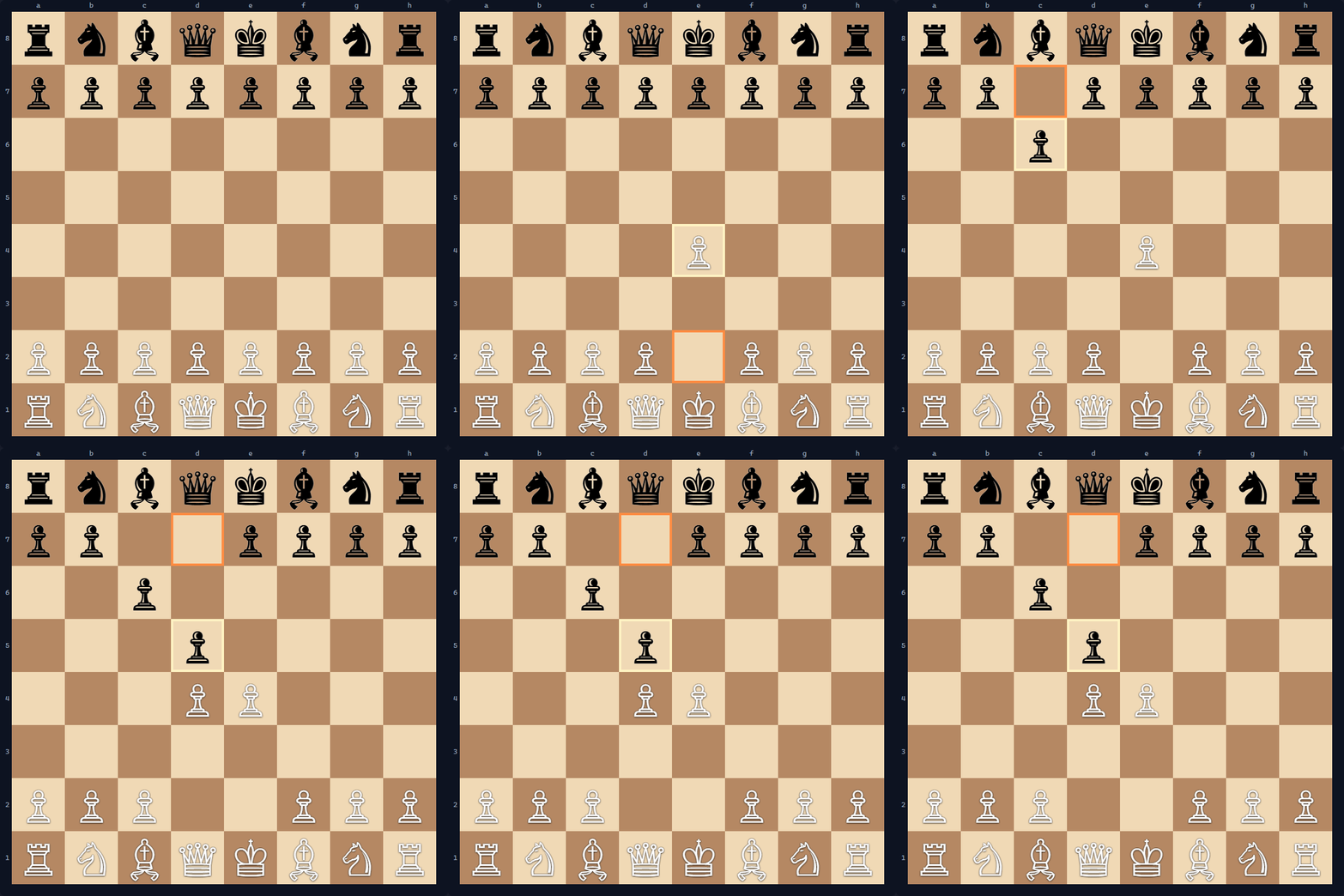
According to WholesaleChess, citing data from an open opening explorer, the Caro-Kann is the highest-scoring response to 1.e4 across all player levels and time controls. It appears in only about 7% of games, meaning club players who study it are likely to be better prepared than opponents. One beginner guide calls the Caro-Kann "a reputable opening and a great choice for beginners" with "a simple piece development plan." Shop.worldchess.com describes it as "solid, reliable" and notes it makes it "really hard for White to actually get an advantage."

The main variations — Advance (3.e5), Exchange (3.exd5 cxd5), and Classical (3.Nc3 dxe4 4.Nxe4) — cover the vast majority of club-level games. The resulting positions reward strategic understanding over rote memory.
French Defense (1.e4 e6)
The French Defense (1.e4 e6, followed by 2...d5) locks Black's light-squared bishop behind the pawn chain — its greatest drawback and its hidden strategic strength. The bishop is passive and often requires freeing maneuvers like ...b6 and ...Bb7. The compensating strength is that White's space advantage is difficult to convert; Black's solid pawn chain resists easy breaks, and White's king can become vulnerable when overextending.
The French suits players who enjoy closed positions and strategic maneuvering. High-level players including Gata Kamsky, Viktor Korchnoi, and Hikaru Nakamura have relied on it. Shop.worldchess.com lists the French as a "solid and strategic" option for Black.
Sicilian Defense (1.e4 c5)
The Sicilian Defense is a popular choice for aggressive Black players at many levels. By playing 1...c5 rather than 1...e5, Black immediately imbalances the position. According to WholesaleChess, the Sicilian scores Black 47 points per 100 games at master level.
The Sicilian is not a single opening but a family of systems. The main branches include:
- Najdorf Variation (5...a6): The most theoretically demanding and ambitious, favored by Bobby Fischer and Garry Kasparov.
- Dragon Variation (5...g6): Sharp and double-edged, with opposite-side castling leading to brutal attacks.
- Classical Variation (5...Nc6): A balanced approach that avoids the wildest tactical lines.
- Scheveningen Variation (5...e6): A flexible setup that can transpose into other variations.
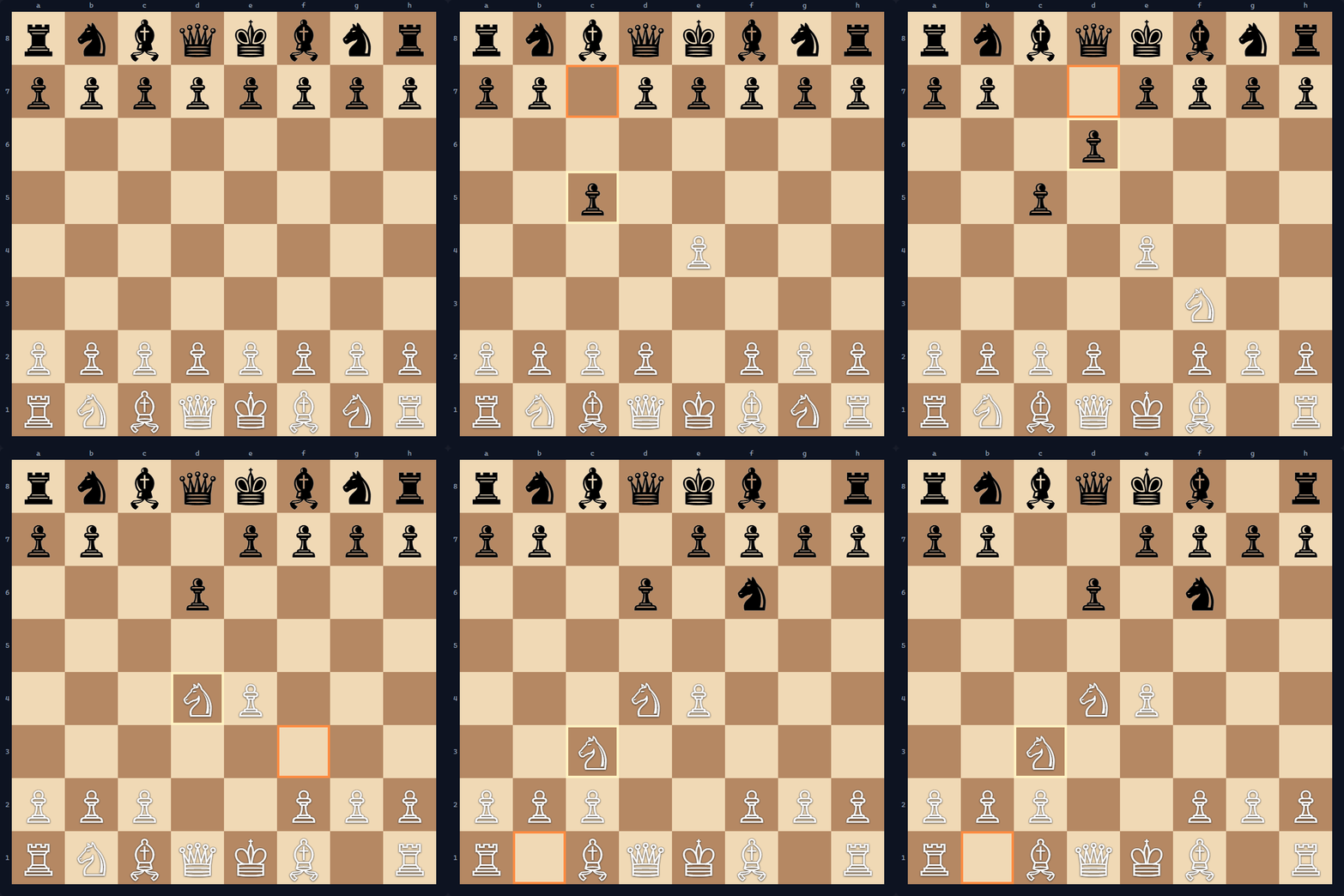
Chessable's ten-best list includes all four Sicilian variations, signaling both the opening's importance and its breadth. For club players, the Sicilian requires more study than the Caro-Kann or French. The rewards are real — unbalanced positions where the stronger player tends to prevail — but the cost is significant time spent on theory.
Comparison Table: 1.e4 Defenses
| Defense | Main Moves | Style | Theory Required | Best For |
|---|---|---|---|---|
| Caro-Kann | 1.e4 c6 | Solid, positional | Low | Club players who want safety and consistency |
| French | 1.e4 e6 | Strategic, closed | Moderate | Players who prefer maneuvering over tactics |
| Sicilian | 1.e4 c5 | Tactical, unbalanced | High | Aggressive players willing to study |
The takeaway: the Caro-Kann is the most pragmatic choice for the majority of club players. The French works well if you prefer closed positions. The Sicilian is the best option only if you have the time to maintain a working knowledge of its many branches.
Best Openings Against 1.d4
When White opens with 1.d4, Black faces a different kind of challenge. Where 1.e4 games tend to open up quickly, 1.d4 openings remain closed longer, rewarding positional understanding over sharp calculation. Several reliable defenses have stood the test of time.
Queen's Gambit Declined (1.d4 d5 2.c4 e6)
The Queen's Gambit Declined (QGD) is the classical answer to 1.d4. Black accepts a cramped but resilient position, developing pieces behind the pawn chain before breaking free with ...c5 or ...e5 at the right moment. Shop.worldchess.com recommends the QGD as a "classical control" option, and it appears on every major list of best Black openings, including Chessable and 365chess.
The QGD's main strength is reliability. Black's pieces go to familiar squares: Nf6, Be7, O-O, Nbd7, then ...b6 or ...c5 depending on White's setup. There are few early tactical traps, and the resulting middle-game positions are among the best-documented in opening theory. The QGD was the foundation of many world champions' repertoires, including José Raúl Capablanca and Anatoly Karpov.
Slav Defense (1.d4 d5 2.c4 c6)
The Slav Defense is the QGD's cousin with one crucial difference: Black plays 2...c6 instead of 2...e6, keeping the light-squared bishop free. This avoids the QGD's primary weakness — bishop confinement — while maintaining a solid pawn structure.
Chessable lists the Slav as one of the ten best Black openings, and Ragchess recommends it as a top beginner-friendly defense. The Semi-Slav (2...e6 followed by 3...c6) combines elements of both structures and is a major opening at grandmaster level.
Nimzo-Indian Defense (1.d4 Nf6 2.c4 e6 3.Nc3 Bb4)
The Nimzo-Indian is the premier Indian defense against 1.d4. Black develops quickly and pins White's knight, challenging center control indirectly. The fight revolves around dark squares, doubled c-pawns, and the bishop pair advantage when White captures on c3.
Chessable's top-10 list includes the Nimzo-Indian as an essential Black opening. It pairs naturally with the Queen's Indian (1.d4 Nf6 2.c4 e6 3.Nf3 b6), forming the Nimzo-Indian / Queen's Indian complex.
King's Indian Defense (1.d4 Nf6 2.c4 g6)
The King's Indian Defense (KID) is the most aggressive Indian option. Black allows White a broad center and then attacks it with ...d6, ...Nbd7, ...e5, and a kingside pawn storm. The KID was a favorite of Bobby Fischer and Garry Kasparov.
Shop.worldchess.com describes the KID as the "aggressive vs. d4" option. It requires a willingness to play sharp, attacking chess with Black and tolerance for being squeezed before the counterattack arrives. It is not for players who want a quiet game.
Comparison Table: 1.d4 Defenses
| Defense | Main Moves | Style | Theory Required | Best For |
|---|---|---|---|---|
| Queen's Gambit Declined | 1.d4 d5 2.c4 e6 | Solid, classical | Low | Club players seeking reliability |
| Slav | 1.d4 d5 2.c4 c6 | Solid, flexible | Low | Players who want active bishops |
| Nimzo-Indian | 1.d4 Nf6 2.c4 e6 3.Nc3 Bb4 | Strategic, indirect | Moderate | Positional players |
| King's Indian | 1.d4 Nf6 2.c4 g6 | Aggressive, sharp | High | Attacking players |
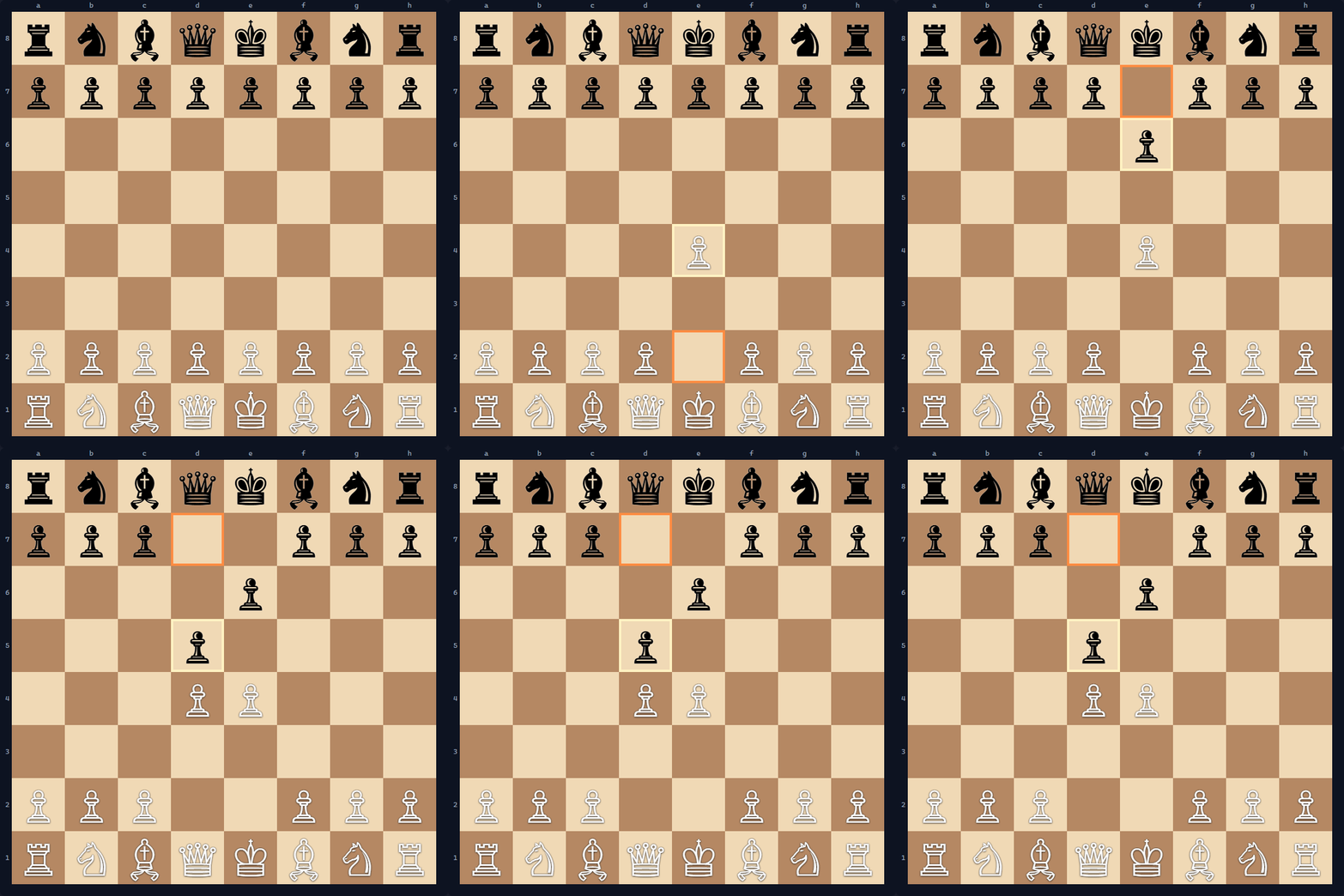
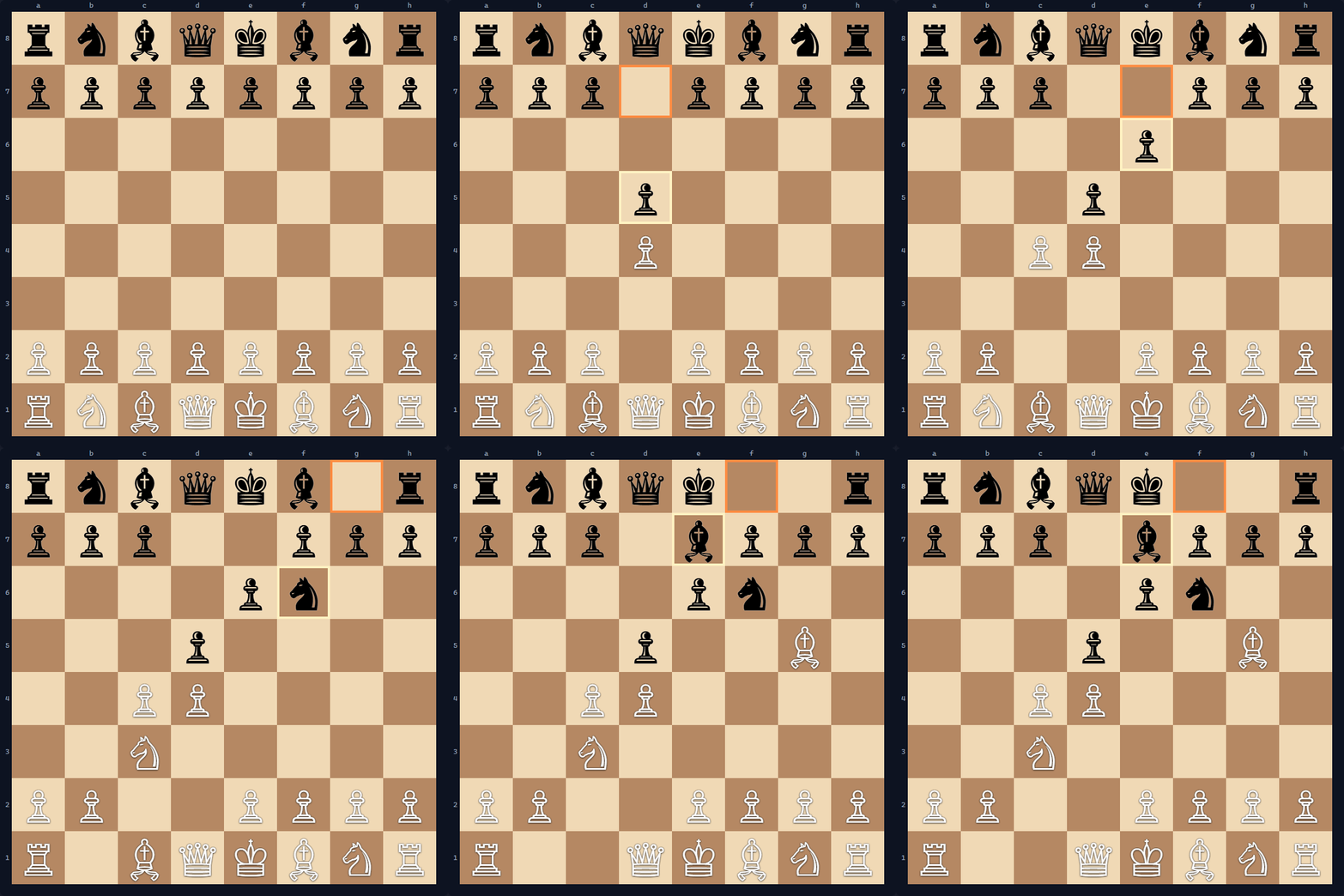
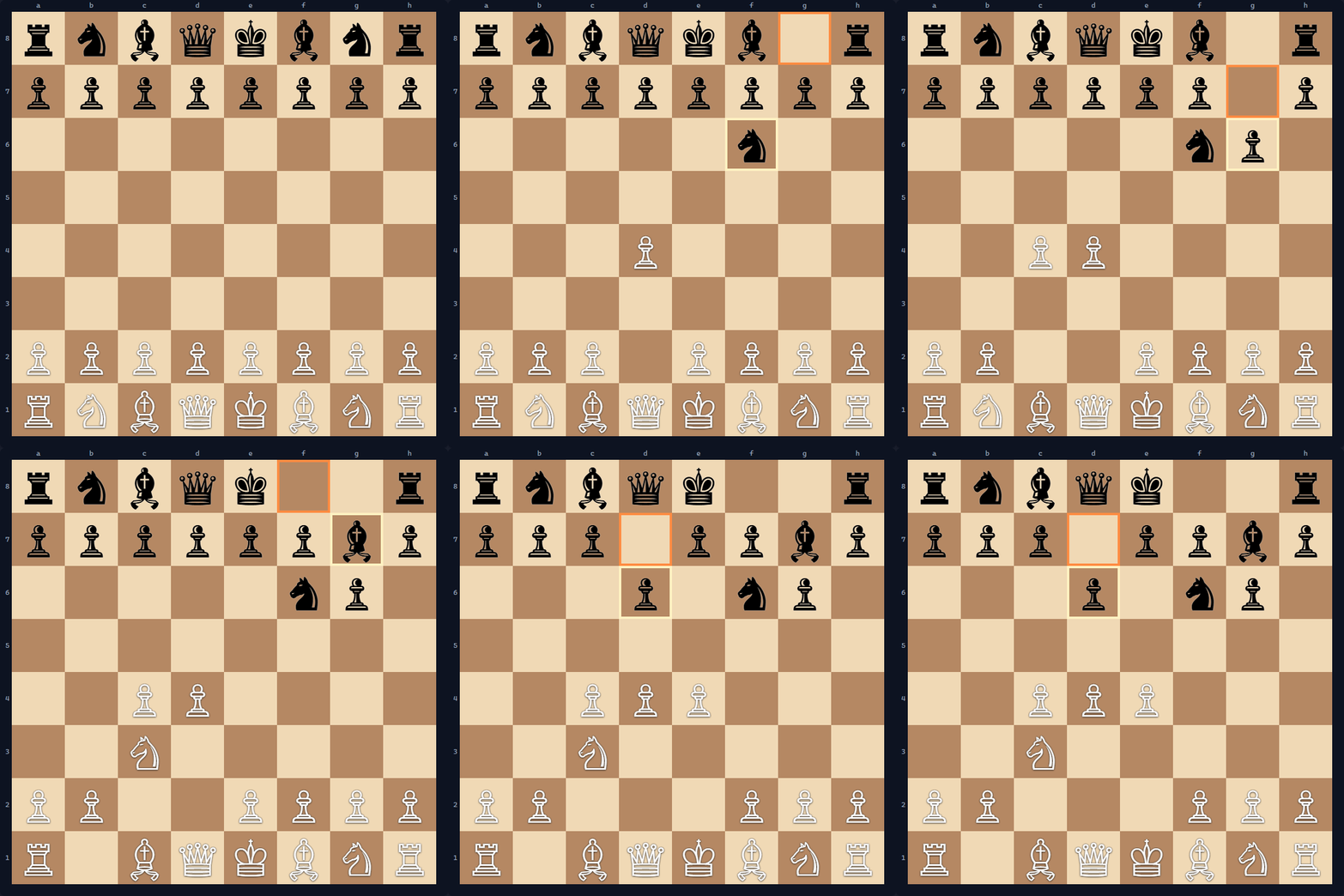
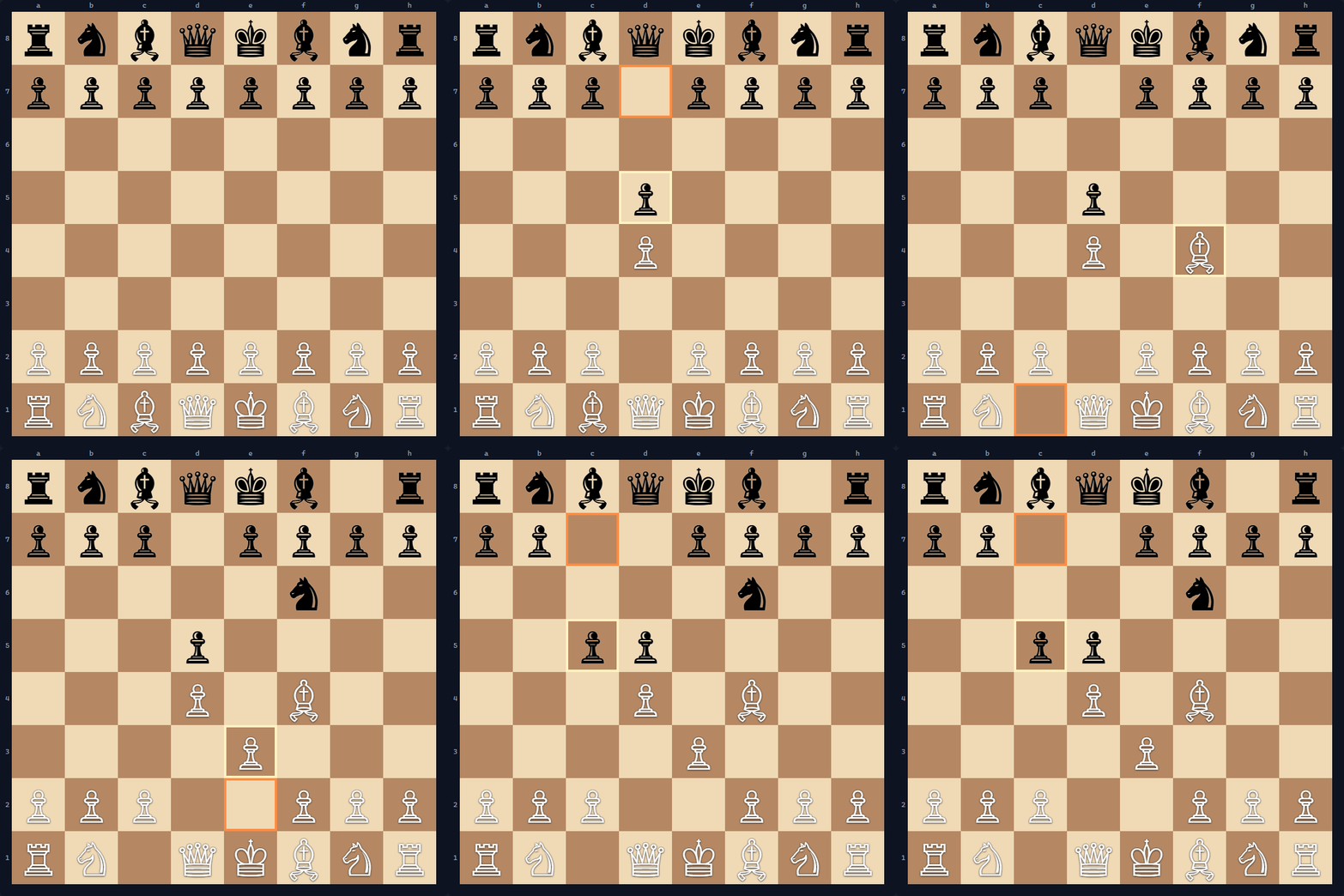
The pattern mirrors the 1.e4 chart: solid and reliable options on the left, sharp and demanding options on the right.
A Simple Starter Repertoire for Club Players
For club players who want the quickest path to a playable opening, a two-opening repertoire covers both of White's most common first moves.
Against 1.e4: Caro-Kann Defense. Learn the main lines after 1.e4 c6 2.d4 d5 — specifically the Advance (3.e5), Exchange (3.exd5 cxd5), and Classical (3.Nc3 dxe4 4.Nxe4). These three variations cover the responses you are most likely to meet early on, and the opening is forgiving enough that an imprecise move order still leaves a playable position.
Against 1.d4: Queen's Gambit Declined. Learn 1.d4 d5 2.c4 e6, followed by 3.Nc3 Nf6 4.Bg5 Be7. Against the London System (1.d4 d5 2.Bf4), the simplest plan is 2...Nf6 followed by ...c5 at the earliest opportunity.
This repertoire is recommended by multiple sources including the cited database, 365chess, and shop.worldchess.com. It requires roughly one-tenth the study time of a full Sicilian repertoire and produces positions where sound chess principles, not opening traps, decide the game.
Common Mistakes When Playing Black
Memorizing moves instead of understanding plans. This is the single most common mistake. Knowing the first ten moves of the Caro-Kann is useless if you have no plan when White plays a sideline. Study the pawn structures and typical middle-game plans, not just the move orders.
Playing too passively. Extreme passivity allows White to build an overwhelming space advantage. The commercial platform's beginner guide emphasizes that Black should look for timely counterplay: a pawn break like ...c5 in the QGD or ...e5 in the Caro-Kann is essential, not optional.
Choosing openings based on grandmaster reputations rather than personal fit. A club player with a few hours a week for study is better served by the Caro-Kann and QGD than by the Grünfeld. As the cited database notes, the best opening is the one you understand, not the one with the highest reputation.
Neglecting system moves by White. At the club level, the London System, Colle, and Trompowsky appear regularly. A generic development scheme — d5, Nf6, e6, Be7, O-O, Nbd7 — works against many of these, but knowing the specific response saves time on the clock.
Frequently Asked Questions
What is the easiest opening for Black to learn?
The Caro-Kann against 1.e4 and the Queen's Gambit Declined against 1.d4 are the most straightforward options. Both rely on clear pawn structures and logical piece placement rather than sharp tactical lines. The commercial platform, 365chess, and shop.worldchess.com all recommend this combination.
Is the Sicilian Defense too difficult for club players?
Not necessarily, but it requires significantly more study than the Caro-Kann or French. According to WholesaleChess, the Sicilian scores 47 points per 100 games at master level, but achieving that requires maintaining knowledge of multiple variations. Club players with limited study time may prefer the Caro-Kann.
Can I play the same type of position against both 1.e4 and 1.d4?
Not the exact same opening, but you can aim for similar structures. The ...e6 / ...d5 setup appears in both the French (1.e4 e6) and the QGD (1.d4 d5 2.c4 e6). This gives your repertoire a unified theme.
How much opening theory do I need to know as a club player?
For a two-opening repertoire (Caro-Kann + QGD), learning the first 8-10 moves of the three or four most common White responses is sufficient — roughly 40-50 lines. The key is understanding the plans, not memorizing the moves.
What should I play against the London System?
After 1.d4 d5 2.Bf4, play 2...Nf6 followed by ...c5 at the right moment. Aim for a standard QGD-style setup with ...Nc6, ...e6, and ...Be7.
Sources and Further Reading
- chess.com — Black Chess Openings for Beginners: https://www.chess.com/article/view/black-chess-openings-for-beginners. Used for Caro-Kann, Scandinavian, Slav, and QGD recommendations.
- chessable.com — The 10 Best Chess Openings for Black: https://www.chessable.com/blog/the-10-best-chess-openings-for-black/. Used for the master list of ten recommended Black openings.
- chessify.me — Best Chess Openings for Black Against 1.e4: https://chessify.me/blog/best-chess-openings-for-black-against-e4. Used for 1.e4-specific opening structure and principles.
- 365chess.com — Best Chess Openings for Black: https://www.365chess.com/view/best-chess-openings-for-black/. Used for per-variation beginner-friendly descriptions of French, Sicilian, Italian, and Petroff.
- wholesalechess.com — 10 Best Chess Openings for Black: https://www.wholesalechess.com/blogs/chess-openings/10-best-chess-openings-for-black. Used for statistical claims (Caro-Kann scoring, Sicilian master-level scoring); treated as single-source hedged data citing Lichess explorer.
- shop.worldchess.com — Best Chess Openings for Black: https://shop.worldchess.com/blogs/news/best-chess-openings-for-black. Used for long-form descriptions of Caro-Kann, French, KID, and QGD.
- ragchess.com — Best Chess Openings to Learn for White and Black: https://www.ragchess.com/best-chess-openings/. Used for cross-source curated list of openings and opening principles.