Opening Principles: The Foundation
Every strong opening for White rests on the same core ideas. Understanding these principles helps you evaluate any opening, not just the ones listed here.
Control the center. The squares e4, d4, e5, and d5 are the most important on the board. Openings that control these squares give your pieces the most scope and restrict Black's options.
Develop pieces early. Bring knights and bishops out before moving pawns. Each piece should participate in the fight for the center before you commit to a pawn structure.
Castle early, preferably kingside, before move eight. Getting the king to safety protects against sudden attacks and connects the rooks for the endgame.
Avoid moving the same piece twice early. If you move a knight twice to reach one square, Black has gained tempi to develop freely.
Do not bring the queen out too early. The queen is too valuable to expose to attacks by minor pieces. Early queen moves invite Black to chase it and waste your development tempo.
Top Openings After 1.e4
The two main first moves after 1.e4 are the Ruy Lopez and the Italian Game. Both aim to control the center and develop harmoniously, but they take different strategic paths.

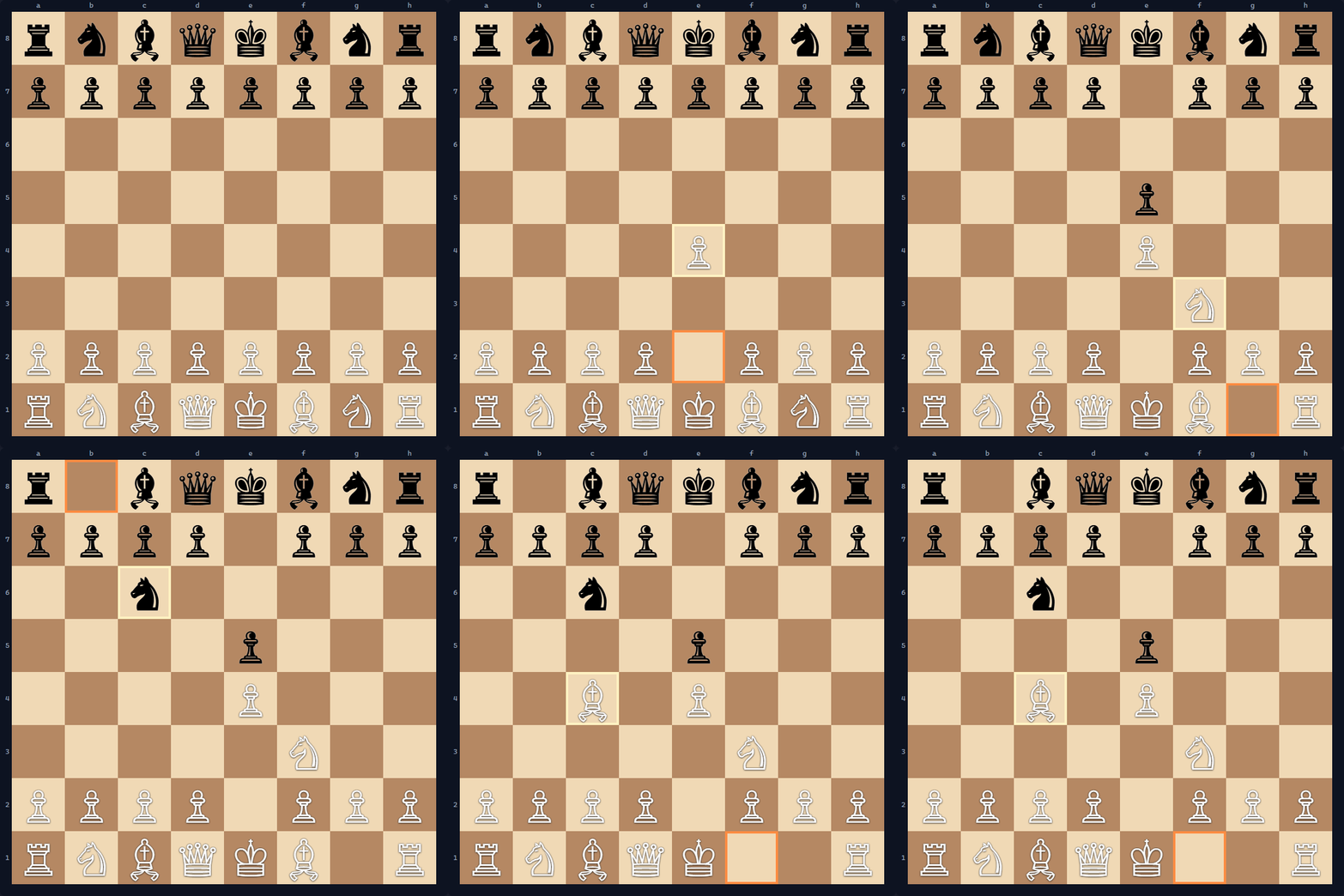
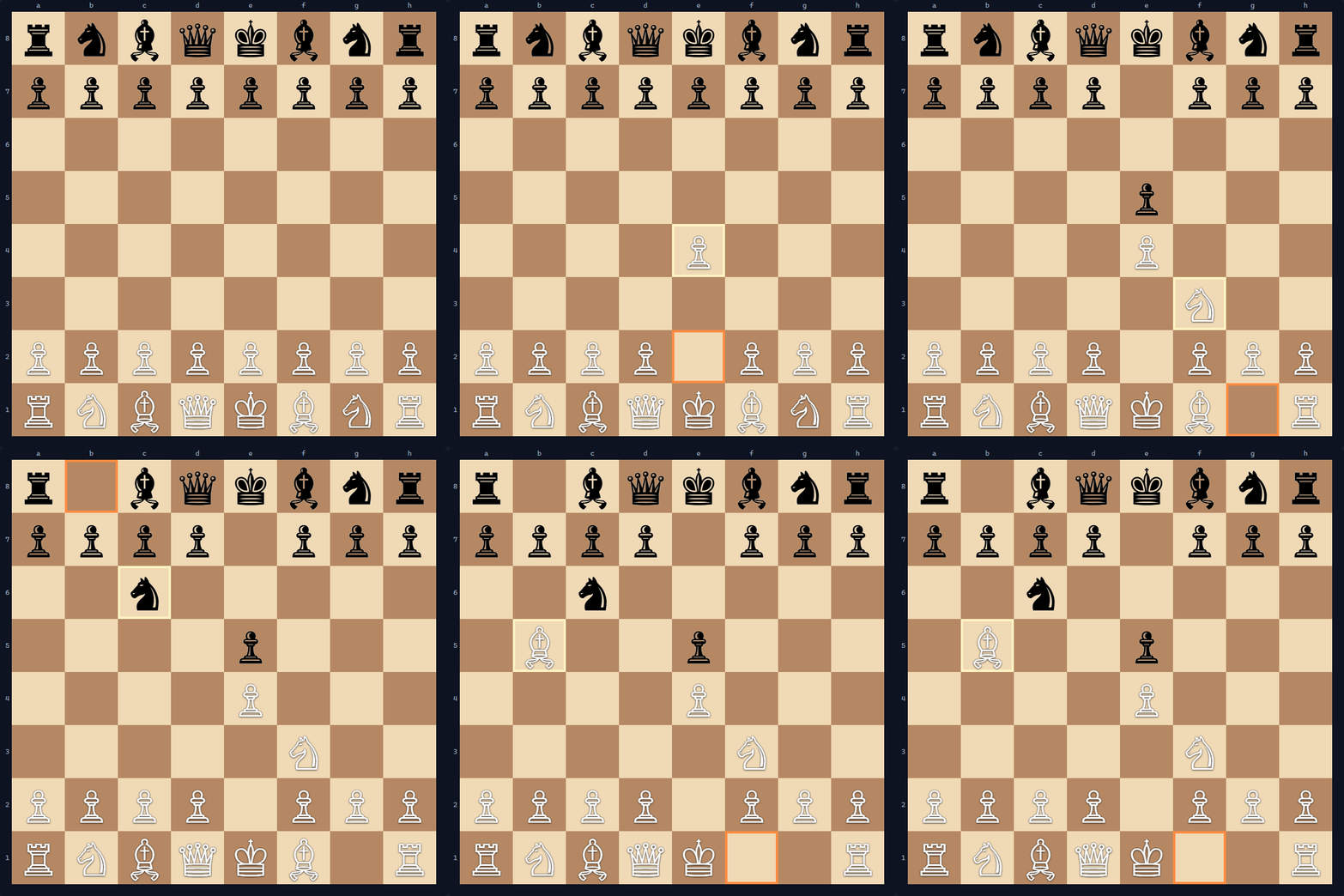
Ruy Lopez (1.e4 e5 2.Nf3 Nc6 3.Bb5)
The Ruy Lopez is one of the oldest and most analyzed openings in chess. After 3.Bb5, White attacks Black's c6-knight, which defends the e5-pawn. This indirect pressure builds a sustained initiative that rewards precise play. The Ruy Lopez suits players who enjoy long, strategic battles and is recommended for intermediate to advanced players who want to study classical chess ideas.
Italian Game (1.e4 e5 2.Nf3 Nc6 3.Bc4)
The Italian Game follows 3.Bc4, placing the bishop outside the pawn chain immediately. White targets the f7-pawn directly, creating immediate tactical tension. This opening is simpler than the Ruy Lopez and accessible to beginners while remaining theoretically deep. The Italian Game suits players who enjoy open, tactical positions.
Scotch Game (1.e4 e5 2.Nf3 Nc6 3.d4)
The Scotch opens lines immediately with 3.d4 exd4 4.Nxd4. White gains rapid development and avoids the heavy theory of the Ruy Lopez. The Scotch Game is recommended for beginners and tactical players who want quick, sharp positions without memorizing deep lines.
Top Openings After 1.d4
The 1.d4 openings tend to be more solid and positional. They give White a stable central advantage and long-term strategic plans.
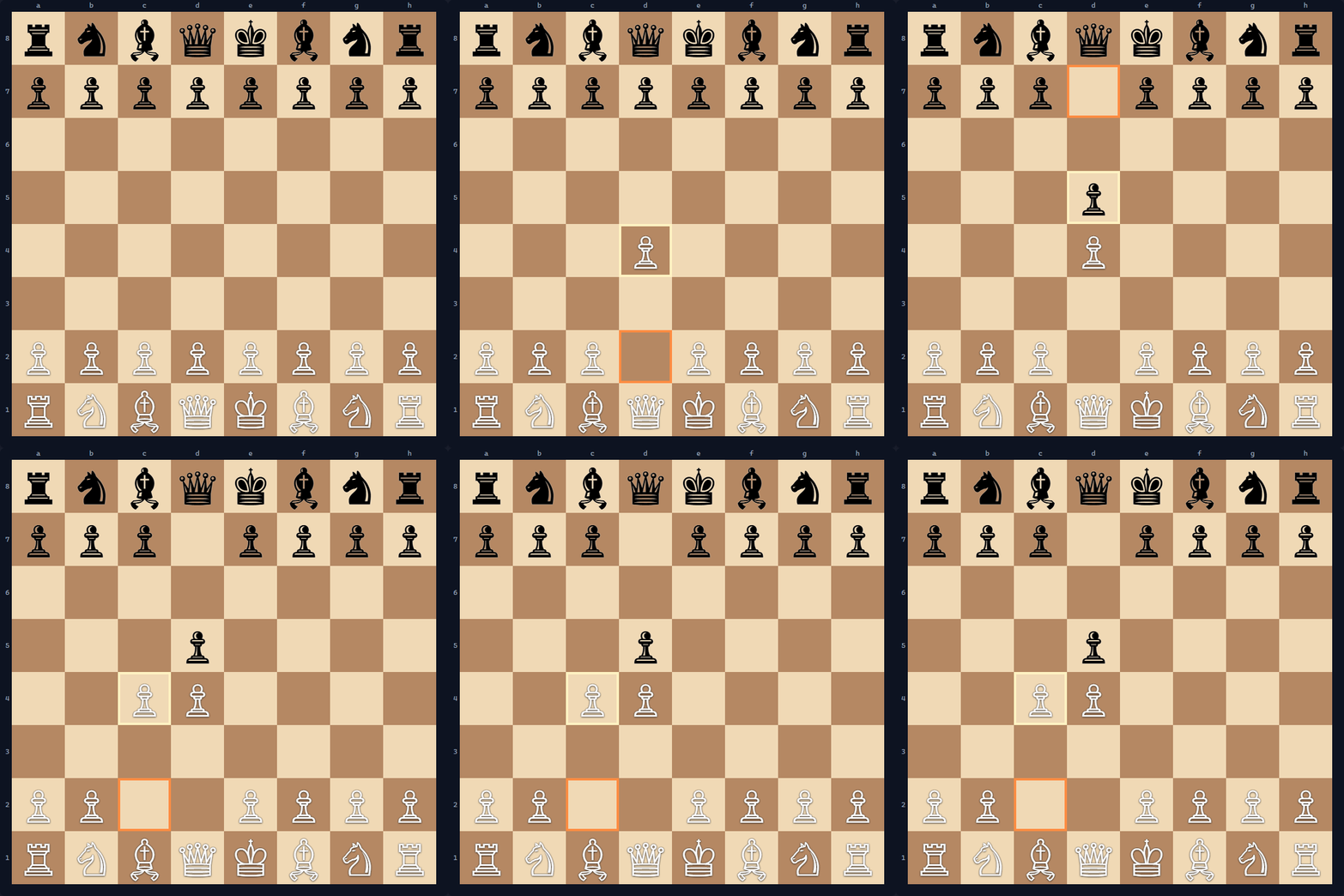
Queen's Gambit (1.d4 d5 2.c4)
The Queen's Gambit is White's most popular 1.d4 opening. White offers the c4-pawn to Black, challenging them to accept or decline. If Black accepts with 2...dxc4, White regains the pawn with favorable piece activity. If Black declines with 2...e6 or 2...Nf6, White builds a solid central pawn structure. According to houseofstaunton.com citing lichess master-level data (the source does not state the exact sample size but references approximately 200,000 master games), White scores 33% wins with 49% draws in the Queen's Gambit — a reliable opening for all levels.
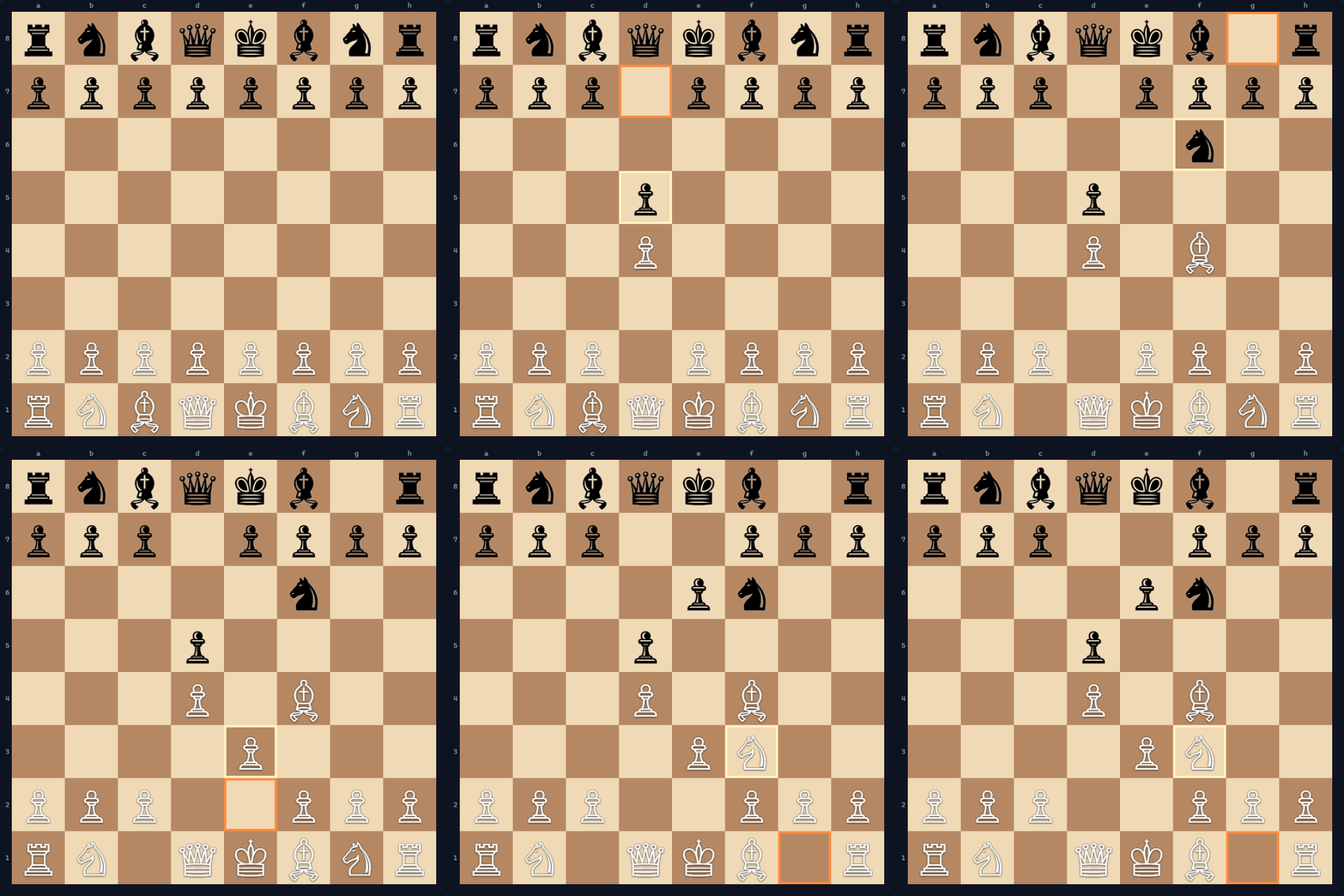
London System (1.d4 d5 2.Nf3 Nf6 3.Bf4)
The London System is the most beginner-friendly of the major openings. White follows the same development pattern regardless of Black's setup:Nf3, Bf4, e3, Bd3, O-O. This consistency lets players focus on general principles rather than specific variations. The London is recommended for players who want a solid, reusable opening against virtually any Black response.
Aggressive Openings for White
Some players want to seize the initiative immediately. These openings sacrifice material or position for rapid activity.
King's Gambit (1.e4 e5 2.f4)
The King's Gambit offers the f4-pawn for open lines and central control. This is one of the oldest openings in chess, famously featured in the Immortal Game (Anderssen vs. Kieseritzky, 1851). The King's Gambit suits aggressive players who enjoy calculation and don't mind if the opponent knows theory. It requires precise play from Black to defend.
Danish Gambit (1.e4 e5 2.d4 exd4 3.c3)
The Danish Gambit sacrifices two pawns for extreme piece activity. White opens the center dramatically and attacks before Black can castle. This opening is most effective in blitz and rapid games. In classical play, deep preparation is required because Black has several reliable defensive systems. Playing the Danish Gambit without preparation usually leads to a quick defeat.
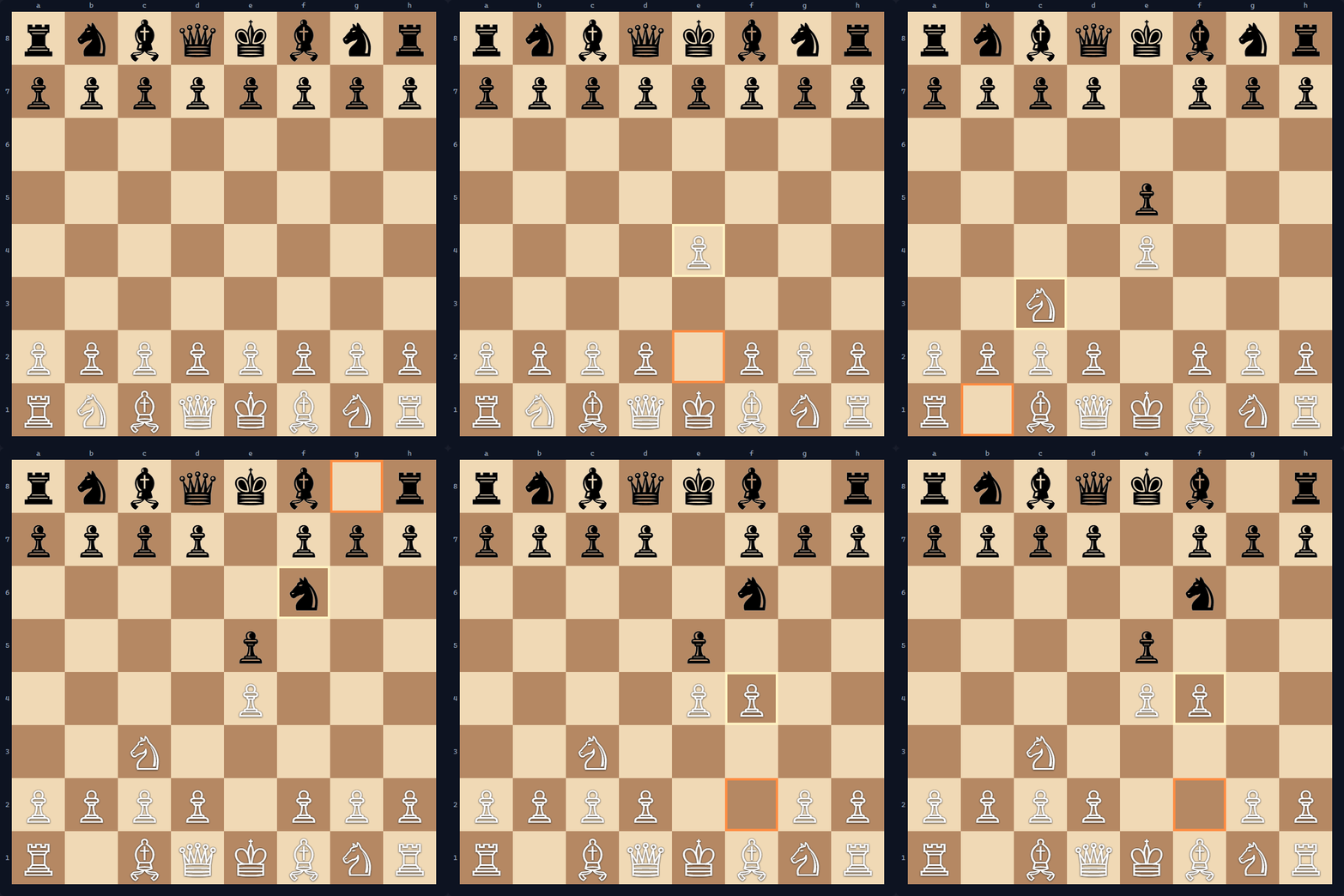
Vienna Game (1.e4 e5 2.Nc3)
The Vienna Game (1.e4 e5 2.Nc3) is a flexible system where White develops the knight to c3 before committing the bishop or pawns. From here, White can enter the King's Gambit with 2...Nf6 3.f4, play conservatively with 2...Nf6 3.Nf3, or aim for a reversed Sicilian with 2...Nc6. The Vienna is less sharp than the Italian or Ruy Lopez but gives White many plans to choose from.
Evans Gambit (1.e4 e5 2.Nf3 Nc6 3.Bc4 Bc5 4.b4)
The Evans Gambit offers a pawn after the Italian Game moves 4.b4. White distracts Black's bishop, dominates the center, and opens lines for attack. At club level, it remains dangerous because Black must know specific defensive moves. At master level, it is seen less often.
Advanced and Flank Openings
For experienced players, these openings offer flexibility and surprise value.
Catalan Opening (1.d4 Nf6 2.c4 e6 3.g3)
The Catalan uses a combination of the Queen's Gambit structure and a fianchettoed bishop on g2. White builds long-term pressure rather than immediate threats. Top players like Kramnik, Carlsen, and Giri have used the Catalan to score wins with the white pieces.
English Opening (1.c4)
The English Opening (1.c4) is a flank opening that avoids the heavily analyzed 1.e4 and 1.d4 lines. It leads to numerous transpositions but also creates independent positions where White's extra space on the queenside matters. The English suits experienced players who value flexibility over immediate confrontation.
Reti Opening (1.Nf3 d5 2.c4)
The Reti is a hypermodern opening where White controls the center with pieces rather than pawns. The opening avoids fixed pawn structures in favor of piece flexibility and unusual plans. It rewards deep positional understanding and is popular in master-level play.
Why Opening Principles Matter
The five principles listed above — control the center, develop pieces, castle early, avoid moving the queen early, and avoid moving the same piece twice — are not rules carved in stone. They are guidelines that apply in most positions. Understanding why they work makes you a better player than memorizing them.
Control of the center gives your pieces maximum scope. A knight on d4 or e5 controls eight squares and influences both sides of the board. A knight on a1 or h8 controls only two or three. Every opening choice should serve the goal of getting your pieces to active squares quickly.
Castling before move ten is a practical guideline, not a law. Sometimes delaying castling is justified if the position offers greater benefits. But in general, castling early protects the king and connects the rooks. In the Italian Game and Ruy Lopez, for example, castling kingside gives White a safe haven while maintaining central pressure.
Memorization without understanding is the most common mistake among club players. Learning move orders is useful, but understanding why each move is played matters more. When your opponent plays something unexpected, understanding lets you find the right response. Memorization fails when the position differs from what you studied.
Choosing Your Opening
Consider three factors when selecting your main opening as White.
Skill level: Beginners should start with the London System or Italian Game — openings with clear plans and limited theory. Intermediate players can explore the Ruy Lopez and Queen's Gambit. Advanced players have the widest range.
Playing style: Aggressive players suit the King's Gambit, Danish Gambit, or Evans Gambit. Positional players prefer the Ruy Lopez, London System, or Catalan. Tactical players often choose the Scotch or Italian Game.
Time control: Openings like the Danish Gambit require deep preparation and suit longer games. Systems like the London System are easier to play on the fly and work well in blitz.
| Player need | Good first choice | Why it fits |
|---|---|---|
| Beginner structure | London System or Italian Game | Clear plans, limited theory, and repeated development patterns. |
| Tactical play | Scotch Game or Italian Game | Open positions appear quickly without the deepest Ruy Lopez theory. |
| Positional growth | Ruy Lopez, Queen's Gambit, or Catalan | They teach long-term pressure, pawn structure and patient improvement. |
Frequently Asked Questions
What is the best chess opening for White?
The most recommended openings for White are the Ruy Lopez, Italian Game, Queen's Gambit, and London System. Each suits different skill levels and playing styles. The best choice depends on your experience and preferences.
Is the Queen's Gambit better than the Ruy Lopez?
Neither is objectively better. The Ruy Lopez offers sharper play and deeper theory. The Queen's Gambit is more flexible and works well against any Black response. Both are used at the highest levels.
What are the best openings for beginners as White?
The London System and Italian Game are the most beginner-friendly. Both have clear plans, limited required theory, and teach fundamental chess principles effectively.
How do I choose the right opening?
Evaluate your skill level, preferred playing style (aggressive or positional), and the time control you play most. Start with one opening and master it before expanding your repertoire.
What is the London System in chess?
The London System is a flexible opening where White plays 1.d4, 2.Nf3, 3.Bf4 regardless of Black's setup, followed by e3 and Bd3. It is called a "system" because the move order works against virtually any Black response. It is popular among beginners and club players because it requires little specific preparation while maintaining sound opening principles.
Practical takeaway: one well-understood White opening is worth more than a long list of fashionable systems without real games behind them.
Sources
- shop.worldchess.com — Best Chess Openings for White: https://shop.worldchess.com/blogs/news/best-chess-openings-for-white. Used for: opening principles, Ruy Lopez, Italian Game, Queen's Gambit, London System, King's Gambit, common mistakes.
- 365chess.com — Chess Openings for White: Full Guide: https://www.365chess.com/view/chess-openings-for-white-full-guide/. Used for: systematic breakdown of e4, d4, c4, Nf3, b3 openings.
- ragchess.com — Best Chess Openings: https://www.ragchess.com/best-chess-openings/. Used for: massive reference covering both colors.
- houseofstaunton.com — Best High Percentage Chess Openings for White: https://www.houseofstaunton.com/blogs/chess-openings/the-best-chess-openings-for-white. Used for: Queen's Gambit master-level stats (lichess data).
- wholesalechess.com — 10 Best Chess Openings for White: https://www.wholesalechess.com/blogs/chess-openings/10-best-chess-openings-for-white. Used for: ranked openings by performance and learnability.
- chessable.com — Chessable's Guide to Chess Openings: https://www.chessable.com/blog/opening-guide/. Used for: e4/d4/flank categorization.
- chessworld.net — Top 50 Aggressive Chess Openings: https://www.chessworld.net/chessclubs/openingguide/top50chessopeningsforaggressiveplayers.asp. Used for: aggressive opening list, King's Gambit.
- chess.stackexchange.com — Examples of very aggressive openings: https://chess.stackexchange.com/questions/75. Used for: community Q&A on aggressive lines.