
Defining the Classical Variation
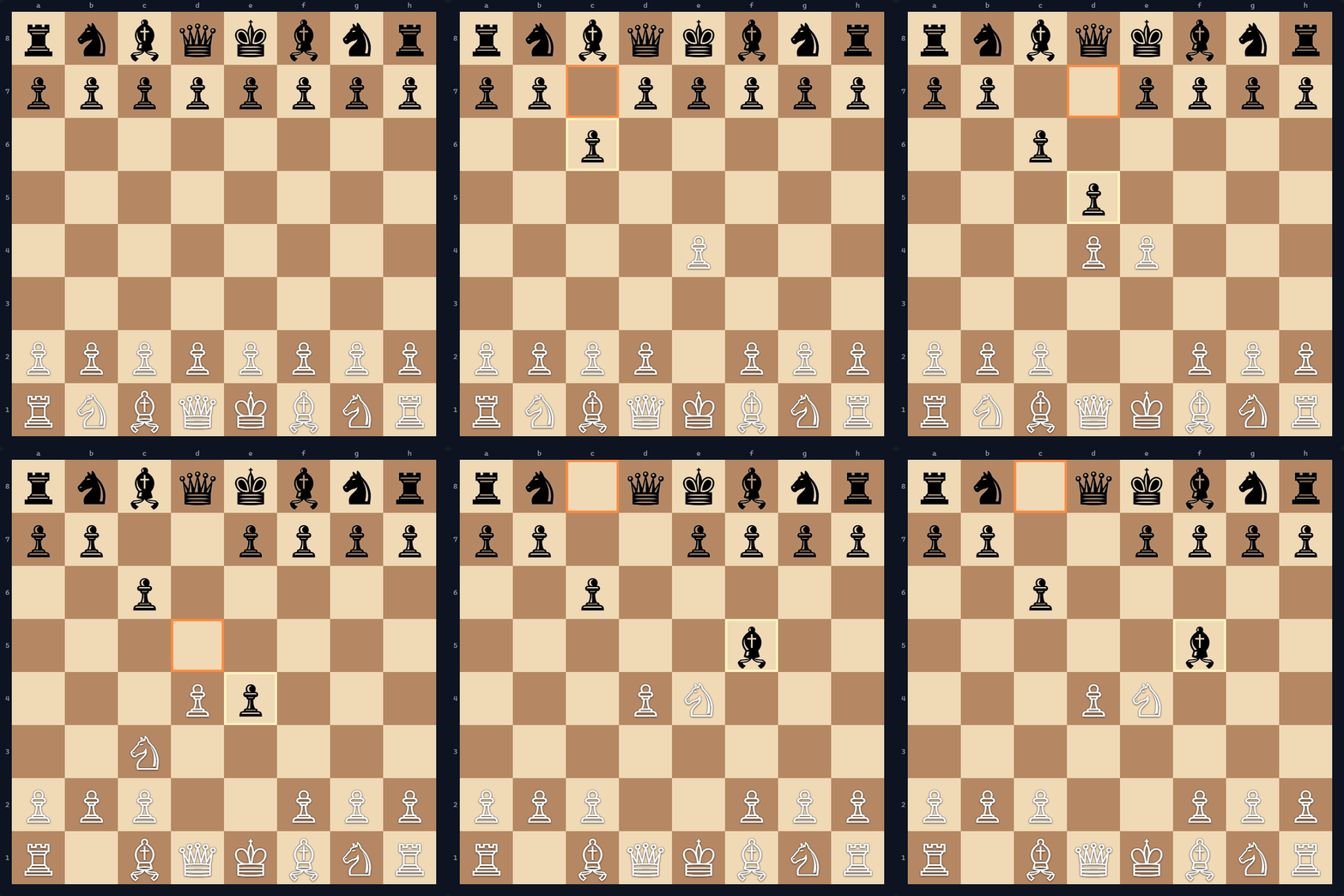
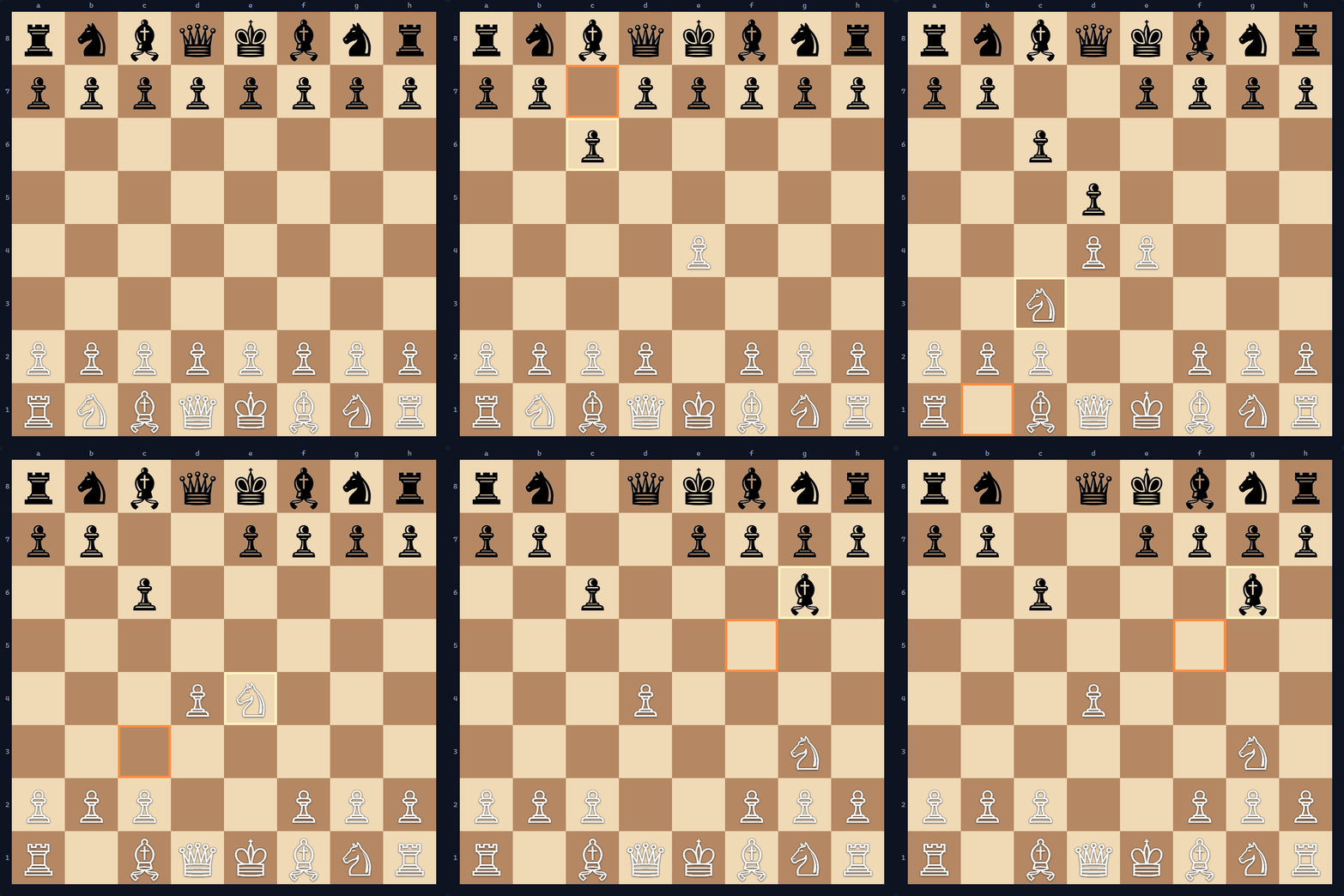
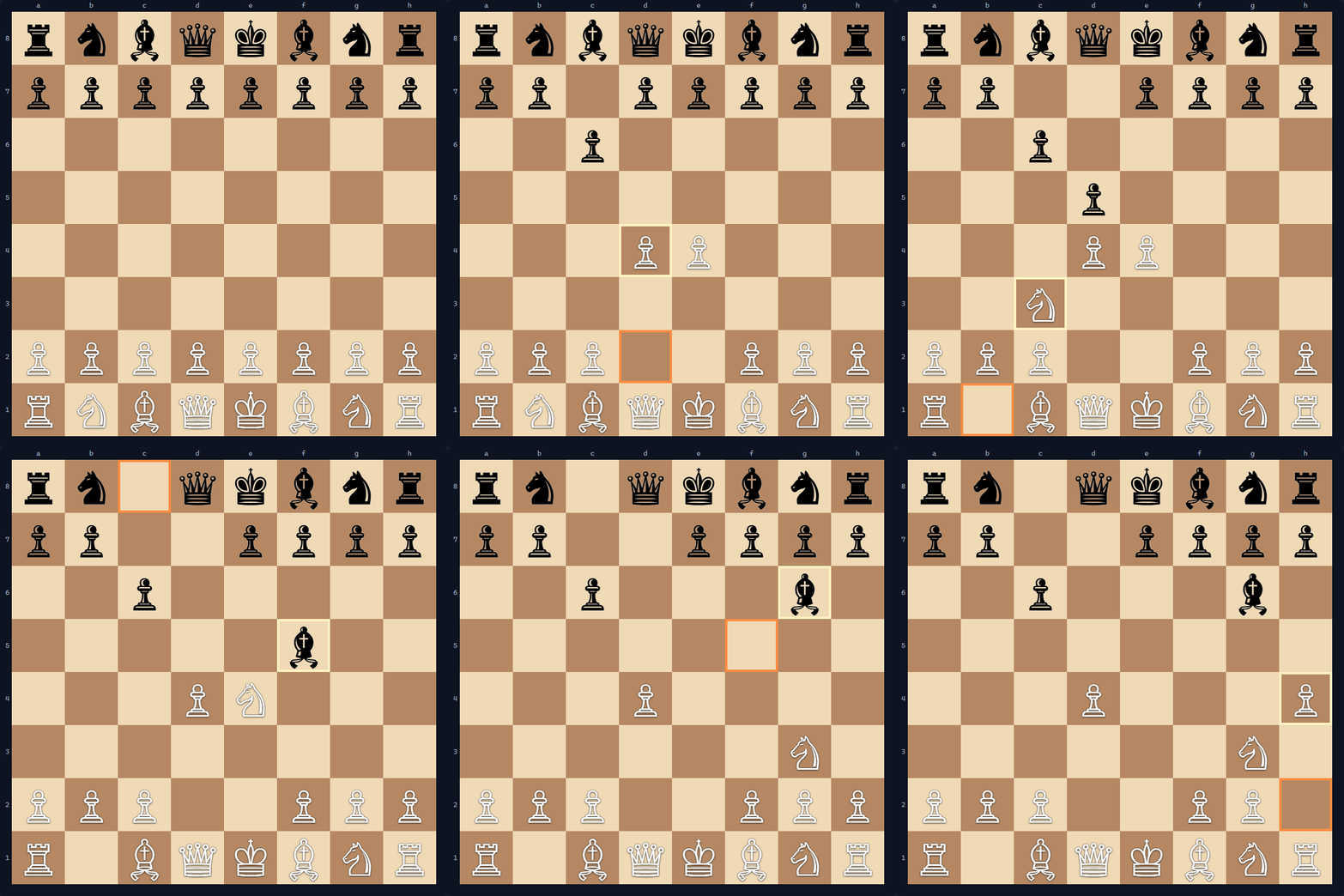
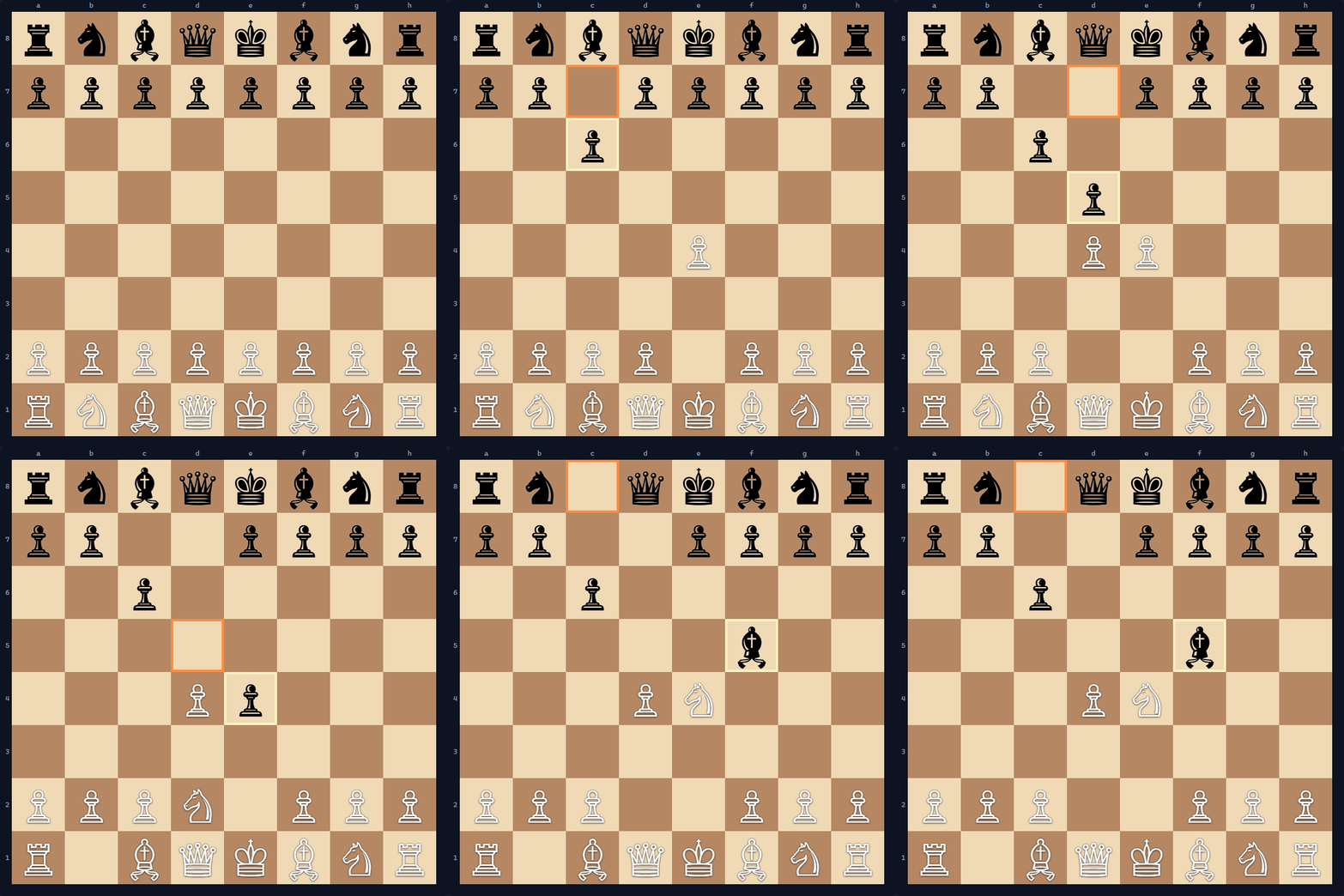
The Classical Variation of the Caro-Kann Defense begins with the familiar Caro-Kann opening moves 1.e4 c6 2.d4 d5. What distinguishes the Classical from other lines is that White captures on e4 immediately after developing the knight: 3.Nc3 (or 3.Nd2) dxe4 4.Nxe4. According to 365chess.com, this variation is "the most popular line among players" and is also referred to as the Capablanca Variation, a nod to the legendary Cuban world champion who employed it with great effect.
After 4.Nxe4, Black's most common and principled continuation is 4...Bf5. This move develops the light-squared bishop outside the pawn chain before playing ...e6 — a key strategic idea in the Caro-Kann that avoids the bishop being trapped behind its own pawns. The resulting position is solid yet flexible: Black's pawns on c6, d5, and e6 form a resilient backbone, while the bishop on f5 exerts pressure on White's central knight and prepares a timely ...c5 break to challenge White's centre.

One major opening encyclopedia describes the Classical Variation as offering Black "free play for black pieces" and "sound development" among its pros, while noting the cons include "some very sharp, theoretical lines" and "attacking chances for White on the kingside." This duality — solidity with latent sharpness — is what makes the Classical Variation a favourite from club level to the world championship stage.
The Main Line After 4...Bf5
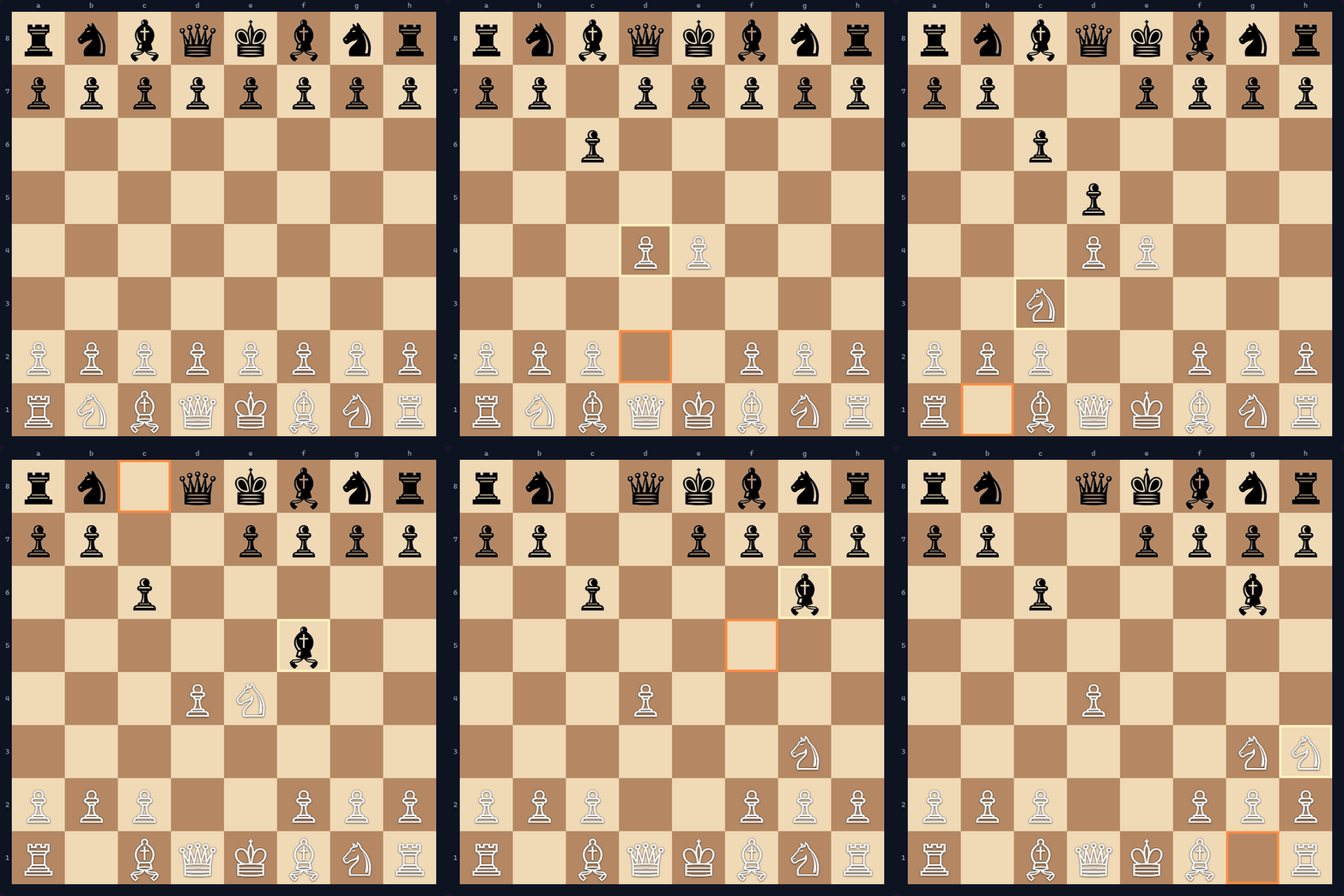
Once the position after 4...Bf5 is reached, White faces a critical choice. In one large master-game database, the overwhelming favourite is 5.Ng3, appearing in over 22,000 games. The knight retreats to g3, attacking the bishop and forcing it to decide where to go. The same database shows a balanced outcome: 33% White wins, 40% draws, and 27% Black wins from this position — a testament to the variation's fundamental soundness for both sides.
White has several alternatives:
- 5.Nc5 (881 games) — A provocative move that centralises the knight. The statistics are almost dead-even: 38% White wins, 39% draws, 22% Black wins.
- 5.Qf3 (212 games) — An immediate threat against f5, though somewhat premature. 32% White wins, 43% draws.
- 5.Ng5 (87 games) — The sharpest try, threatening Nxf7. The statistics swing dramatically: 43% White wins but also 46% Black wins, with only 11% draws, indicating a double-edged battle.
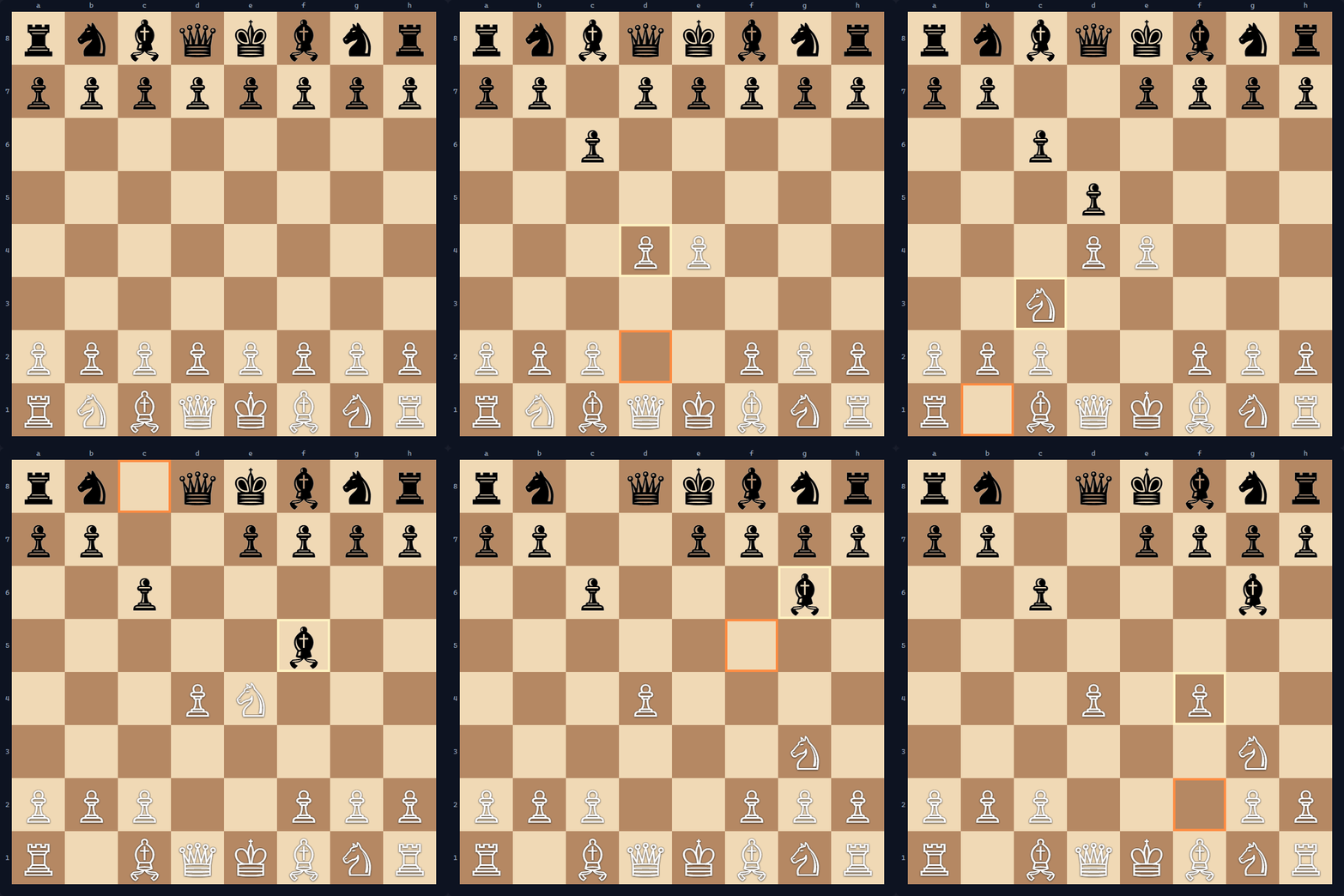
After the main continuation 5.Ng3 Bg6, White can choose among several set-ups. The classical approach involves h4, Nh3, and a later f4, but specific sub-variants branch from here — covered in the next section on ECO B18.
ECO B18 and Its Sub-Variants
The Classical Variation is classified under ECO B18 — the Encyclopaedia of Chess Openings code assigned to the Caro-Kann Classical line. According to 365chess.com's ECO B18 page, the base position is defined by the moves 1.e4 c6 2.d4 d5 3.Nc3 dxe4 4.Nxe4 Bf5. From here, several named sub-variants branch off:

- Flohr Variation (ECO B18 sub-variant): 5.Ng3 Bg6 6.Nh3 — Named after Czech grandmaster Salo Flohr, this line prepares to reroute the knight to f4 via g1-h3-f4, targeting the weakened d5 square.
- Maroczy Attack (ECO B18 sub-variant): 5.Ng3 Bg6 6.f4 — A sharp, aggressive approach named after Géza Maróczy, aiming to seize space on the kingside and open lines for the rook on f1.
- 6.h4 (ECO B18 sub-variant): 5.Ng3 Bg6 6.h4 — The most direct attempt to challenge the bishop immediately, threatening to win a piece with h5.
Each of these sub-variants offers White a different strategic orientation: positional (Flohr), aggressive (Maroczy), or directly tactical (6.h4). Black must know how to respond to each, though at club level the general ideas — maintaining the bishop on the h7-b1 diagonal or retreating to h7 — suffice for a playable game.
Practical Tip: Navigating the Classical Tabiya — At club level (under 2000 Elo), the single most important thing is to know the critical position after 4...Bf5 and to understand White's main reply 5.Ng3. You do not need to memorise every sub-variant. Focus on the pawn structure: Black's c6-d5-e6 chain is the same regardless of whether White chooses Flohr, Maroczy, or 6.h4. If you keep this pawn structure intact and aim for the ...c5 break at the right moment, you will almost always reach a playable middlegame. Deep theory matters more at master level; at club level, understanding the strategic ideas is worth more than rote memorisation.
Transpositions: 3.Nc3 vs 3.Nd2
One of the most common sources of confusion about the Classical Variation is the move order after 1.e4 c6 2.d4 d5. White can play either 3.Nc3 or 3.Nd2, and both can lead to the Classical.
When White plays 3.Nc3, the game is firmly in Classical territory after 3...dxe4 4.Nxe4 Bf5. When White plays 3.Nd2 (the Karpov Variation move order), the situation is more nuanced. After 3...dxe4 4.Nxe4, Black can choose:
- 4...Bf5 — This transposes directly into the Classical Variation. The position is identical to the 3.Nc3 line.
- 4...Nd7 — This stays within the Karpov Variation, a different system with its own strategic themes.
So 3.Nd2 is not a Classical Variation move per se, but it can become one if Black chooses 4...Bf5. This transposition matters because some players adopt the Karpov move order to avoid certain lines (like the Flohr or Maroczy), but Black can steer back into the Classical simply by developing the bishop to f5. According to 365chess.com, the structure of the Classical Variation explicitly lists both 3.Nc3 and 3.Nd2 as move-order options, confirming they converge on the same position.
Why "Capablanca Variation"?
The Classical Variation is also widely known as the Capablanca Variation. José Raúl Capablanca, the third World Chess Champion (1921–1927), was famous for his seemingly effortless positional play and immaculate endgame technique. The Caro-Kann Classical suited his style perfectly: solid, strategically clear, and demanding precise play from the opponent.
According to 365chess.com's coverage, the Classical Variation "offers a balance between active piece play and defensive solidity" and "lends itself well to multiple middlegame strategies" — qualities that align closely with Capablanca's approach to chess. While the exact origin of the name "Capablanca Variation" is not precisely documented in a single source, the association is strong enough that many databases and opening references list the two names interchangeably.
Other top players who have championed the Classical include Anatoly Karpov (who also has his own named Caro-Kann variation — the Karpov Variation with 3.Nd2 Nd7), Viswanathan Anand, and Fabiano Caruana, per 365chess.com's general Caro-Kann guide.
International Names of the Classical Variation
Chess openings are known by different names in different languages, and the Caro-Kann Classical is no exception. A Portuguese-language study titled "Defesa Caro Kann" breaks down the variation as follows:
- "Variante Clássica" — The direct Portuguese translation of "Classical Variation."
- "Variante Clássica - Bispo" — "Bishop Classical Variation," referring to the main line with 4...Bf5 (bispo = bishop).
- "Variante Clássica - Cd8" — A reference to a sub-line where ...Nd8 is played (C = cavalo = knight), a regrouping manoeuvre in certain Classical lines.
The same Portuguese study labels related lines in ways that may confuse English-speaking players: "Variante das Trocas" (Exchange Variation), "Ataque Panov-Botvinik" (Panov-Botvinnik Attack), and "Variante do Avanço" (Advance Variation).
This naming variation matters for practical study. A player searching for resources on the "Variante Clássica" — whether in a Portuguese-language study or in Spanish, French, or Russian databases — is looking at the same opening lines under a different label. Recognising these equivalences helps players access a wider pool of training material and avoid confusion when browsing international chess content.
Classical vs Other Caro-Kann Lines
How does the Classical Variation compare to the other main branches of the Caro-Kann? Each major line offers a fundamentally different type of game:
- Advance Variation (3.e5): White immediately seizes space and clamps down on Black's position. The game becomes a slow, strategic grind where Black must engineer ...c5 and ...f6 breaks to challenge White's pawn chain. The Classical, by contrast, clears the centre early and leads to more open piece play.
- Exchange Variation (3.exd5 cxd5): White exchanges on d5, leading to symmetrical pawn structures. This can result in isolated queen's pawn (IQP) positions if White follows up with c4 (Panov-Botvinnik Attack). The Classical avoids the IQP structure entirely in its main lines.
- Panov-Botvinnik Attack (3.exd5 cxd5 4.c4): This is the sharpest version of the Exchange Variation, often leading to open, tactical battles with an IQP for White. The Classical is more controlled and positional in character.
- Karpov Variation (3.Nd2 dxe4 4.Nxe4 Nd7): While related through the same move order (3.Nd2), the Karpov avoids ...Bf5 in favour of ...Nd7 and ...Ngf6, aiming to challenge White's knight more directly. The Classical is more flexible, developing the bishop outside the pawn chain first.
| Caro-Kann branch | Main structure | How the Classical differs |
|---|---|---|
| Advance Variation | White gains space with 3.e5 and Black must engineer pawn breaks. | The Classical clears the centre earlier and gives the pieces more open play. |
| Exchange / Panov-Botvinnik | Symmetry can become an IQP battle after c4. | The Classical avoids the IQP structure in its main lines. |
| Karpov Variation | Black uses ...Nd7 and ...Ngf6 to challenge White's knight. | The Classical develops the bishop outside the pawn chain with ...Bf5 first. |
According to 365chess.com's guide, the Classical Variation "is considered less aggressive than some other lines," but its "consistent logic and solid structure make it an excellent choice for methodical, strategic players." This assessment underscores why the Classical has remained a staple for over a century.
Notable Practitioners of the Classical Variation
The Classical Variation has been played by a remarkable roster of chess talent. According to one top-players list for this opening, the most prolific exponent is Anatoly Karpov with 336 games, followed by Gata Kamsky (259 games), David Anton Guijarro (236 games), and Hikaru Nakamura (234 games). Alexander Donchenko leads in recent usage with 233 games, while Alexei Shirov (209 games), Viswanathan Anand (200 games), and Alireza Firouzja (185 games) round out the top cohort.
The same reference lists Alexei Dreev as a "Famous Practitioner" of the Classical Variation, and the data confirms that top grandmasters of very different styles — from the positional mastery of Karpov and Anand to the tactical dynamism of Shirov and Firouzja — have all found the Classical Variation a reliable weapon. This breadth of adoption speaks to the opening's universality: it rewards strategic understanding while offering ample room for individual creativity.
Frequently Asked Questions
What is the difference between the Classical Variation and the Capablanca Variation?
They are the same opening. The Classical Variation (1.e4 c6 2.d4 d5 3.Nc3 dxe4 4.Nxe4 Bf5) is also known as the Capablanca Variation, after José Raúl Capablanca. Databases and opening books use both names interchangeably.
Is 3.Nd2 a transposition to the Classical Variation?
It can be. After 3.Nd2 dxe4 4.Nxe4, Black can play 4...Bf5, which transposes directly to the Classical. If Black plays 4...Nd7 instead, the game enters the Karpov Variation — a related but distinct system.
What is ECO B18?
ECO B18 is the code assigned to the Caro-Kann Classical Variation in the Encyclopaedia of Chess Openings. Its sub-variants include the Flohr Variation, the Maroczy Attack, and the 6.h4 line.
How do I face 5.Ng3 as Black in the Classical Variation?
After 5.Ng3, Black's standard reply is 5...Bg6, retreating the bishop along the h7-b1 diagonal. From there, White can choose among the Flohr Variation (6.Nh3), the Maroczy Attack (6.f4), or the immediate 6.h4. Black's core strategic goal remains consistent: keep the pawn chain intact and prepare ...c5.
What is the Flohr Variation in the Caro-Kann Classical?
The Flohr Variation, named after Salo Flohr, arises after 1.e4 c6 2.d4 d5 3.Nc3 dxe4 4.Nxe4 Bf5 5.Ng3 Bg6 6.Nh3. White reroutes the knight to f4 via h3, targeting the d5 square. It is a sub-variant of ECO B18 listed on 365chess.com's ECO page.
Sources
- 365chess — "The Complete Guide to Mastering the Caro-Kann Defense": https://www.365chess.com/chess-openings/Caro-Kann-Defense. Classical Variation coverage, pros/cons, main plans.
- 365chess ECO B18 — "ECO B18: Caro-Kann, classical variation": https://www.365chess.com/eco/B18_Caro-Kann_classical_variation. Sub-variant definitions: Flohr, Maroczy, 6.h4.
- Chess.com — "Caro-Kann Defense: Classical Variation": https://www.chess.com/openings/Caro-Kann-Defense-Classical-Variation. Main line PGN, top player stats, game count.
- Lichess — Classical study with full annotations: https://lichess.org/study/guq0Oh9i/VNEWf4Sz. Covers 3.Nc3, 3.Nd2, 4...Bf5/4...Nf6 lines, Anand-Carlsen 2013.