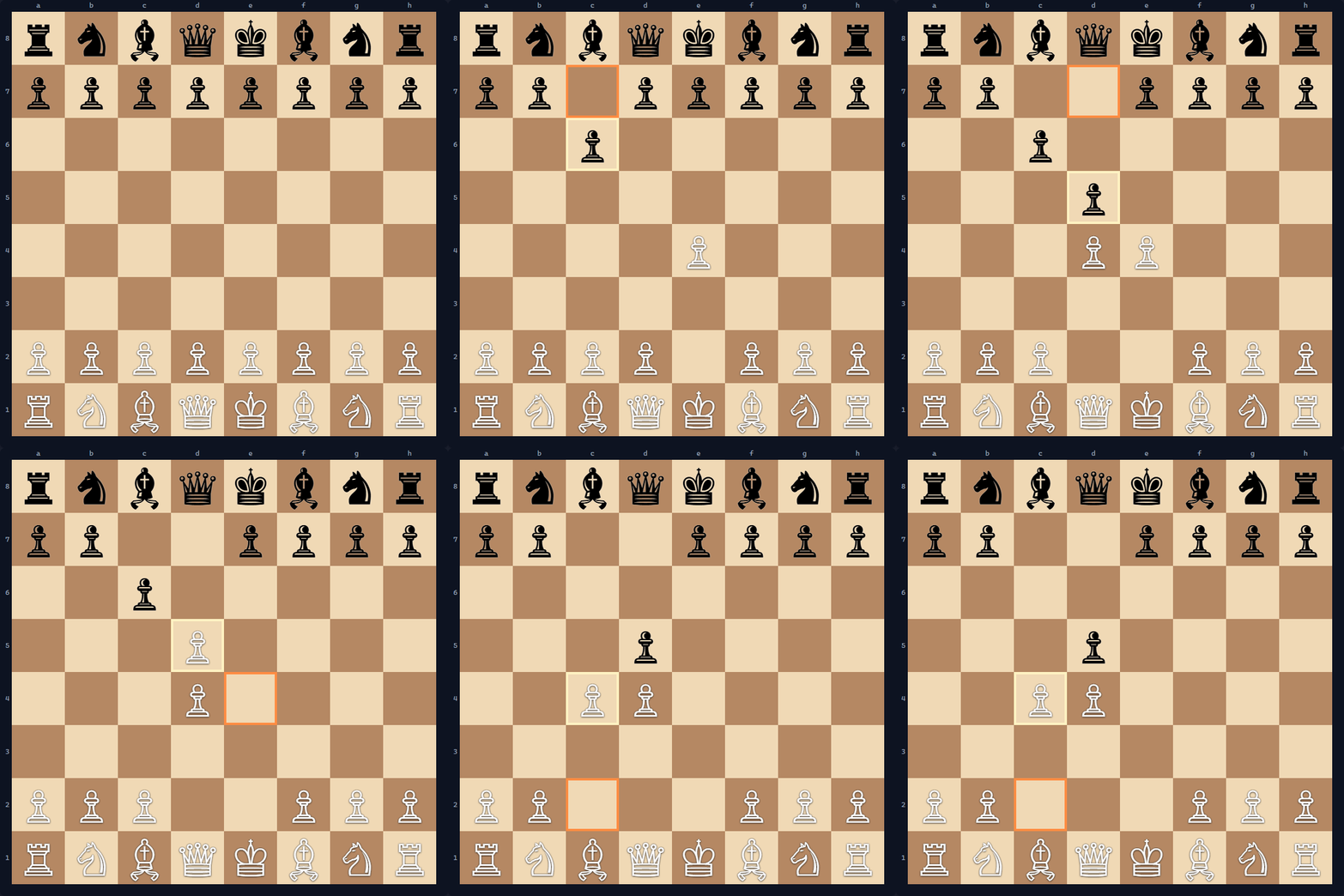
Look at the structural core: Black gets ...d5 without trapping the c8-bishop. Most of the Caro-Kann plan grows from that one benefit.
What the Caro-Kann Defense is and who should play it
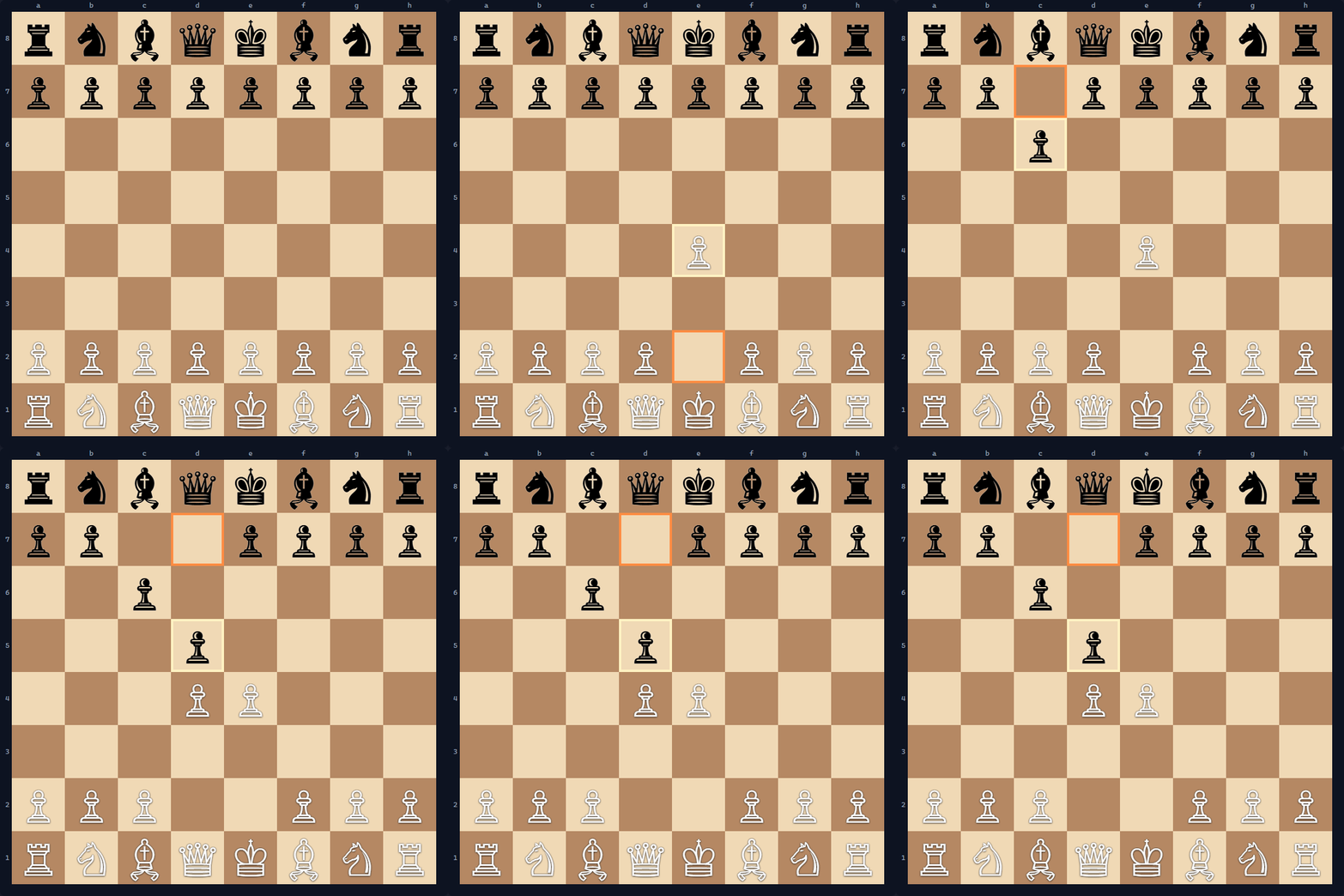
The defining idea of the Caro-Kann is structural: by playing 1...c6 on move one, Black avoids the French Defense's main drawback of locking in the c8-bishop. After 1.e4 c6 2.d4 d5 the bishop is still able to come out to f5 or g4 before Black plays ...e6, which is why the opening is sometimes described as "the French with a working bishop." That single design choice shapes the resulting positions: Black gets a slightly cramped early game but a robust pawn structure and long-term piece coordination.
Historically the opening is named after Horatio Caro and Marcus Kann, two 19th-century players whose analysis of 1.e4 c6 was published in the 1880s. The first published game in the opening dates to 1845, and the opening became a World-Championship weapon in the 20th century: Mikhail Botvinnik used it in his 1958 rematch with Vasily Smyslov, Tigran Petrosian used it to defend his title against Boris Spassky in 1966, and Magnus Carlsen used it against Viswanathan Anand in the 2013 WCh.
The Caro-Kann is best suited to positional players who value safe structures and clear plans. If you are the kind of player who likes to absorb a small early-space disadvantage in exchange for long-term piece activity and a healthy endgame, the Caro-Kann is a natural fit.
Base moves and main plans for Black
The base moves are 1.e4 c6 2.d4 d5. After 2.d5, White has four main third-move options, and Black's choice of response depends on which one White picks:
- 3.Nc3 (Classical). The most common move by a narrow margin. Black almost always captures 3...dxe4 4.Nxe4, and from there Black's two main choices are 4...Bf5 (Classical Variation proper) and 4...Nd7 (Karpov Variation).
- 3.e5 (Advance). White locks the center and grabs space. Black's two main responses are 3...Bf5 (solid) and 3...c5 (Botvinnik-Carls Defense, a counter-gambit).
- 3.exd5 (Exchange). A quieter option; Black recaptures 3...cxd5 and a symmetrical structure follows.
- 3.f3 (Fantasy). A sharp, tactical line where White prepares to recapture ...dxe4 with the f-pawn.
Learning all four is a long project; most club players start with one or two responses and add more as needed.
Three strategic themes define every Caro-Kann position: develop the light-squared bishop actively to f5 or g4 before playing ...e6 (the bishop is the opening's most important piece, and getting it out early is what differentiates the Caro-Kann from the French); maintain the c6-d5-(e6) pawn triangle (a solid chain that gives Black safe piece play and clear plans); and use the ...c5 break against the Advance pawn chain (when White plays 3.e5, Black's c-pawn often becomes the equalizer — either as a one-shot break 3...c5 or after a preparatory move 3...Bf5 then ...c5).

Variations to learn first
Classical (Capablanca) Variation: 3.Nc3 dxe4 4.Nxe4 Bf5
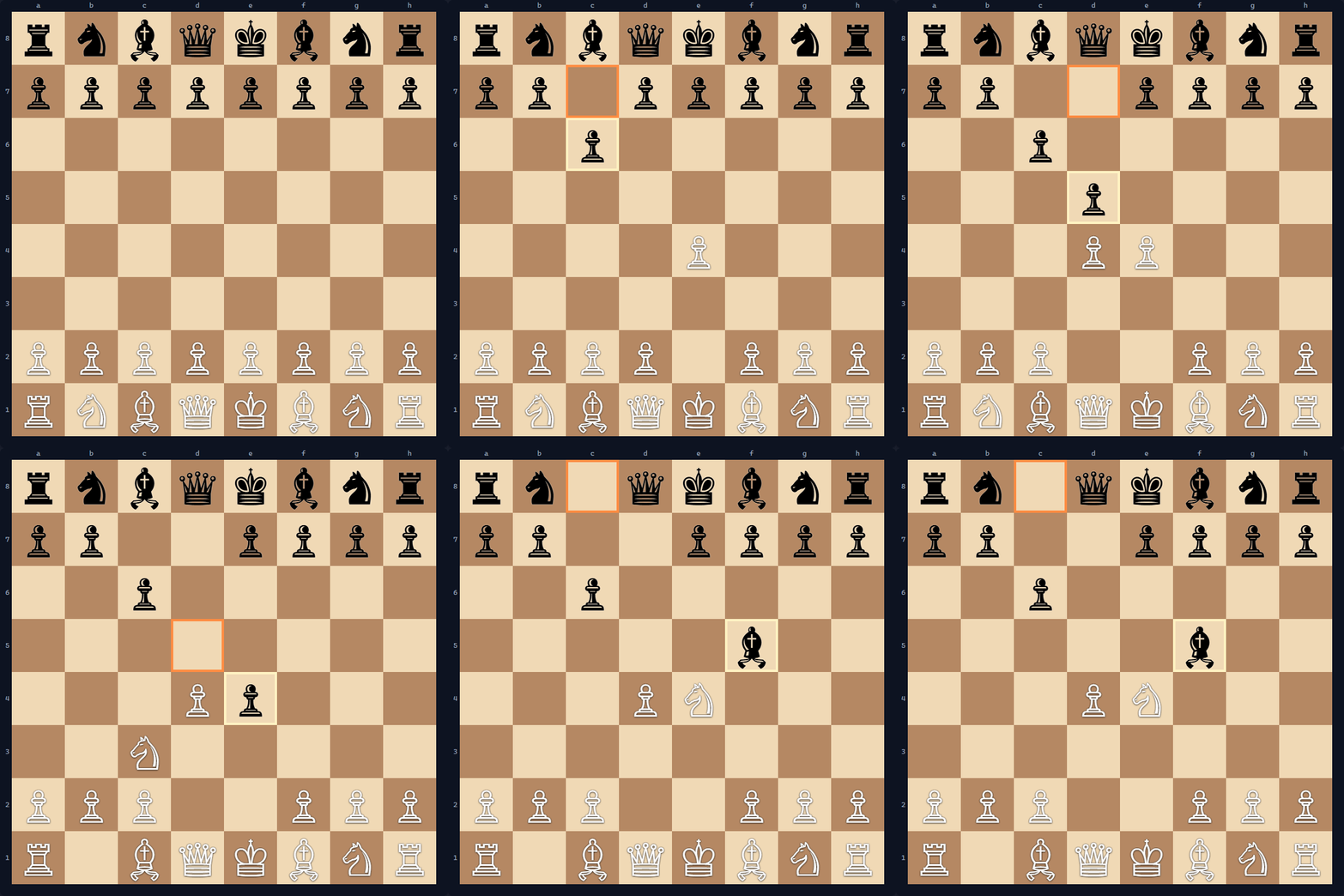
This is the move order most club players should start with. After 1.e4 c6 2.d4 d5 3.Nc3 dxe4 4.Nxe4 Black plays 4...Bf5, developing the light-squared bishop outside the pawn chain before committing to ...e6. The position is solid for Black and offers clear piece-play plans: develop naturally, castle, and look for the ...c5 break or the ...Nd7 maneuver. This is the most common position in serious Caro-Kann practice, and most model games you will study from the Karpov era come from this structure.
Advance Variation: 3.e5
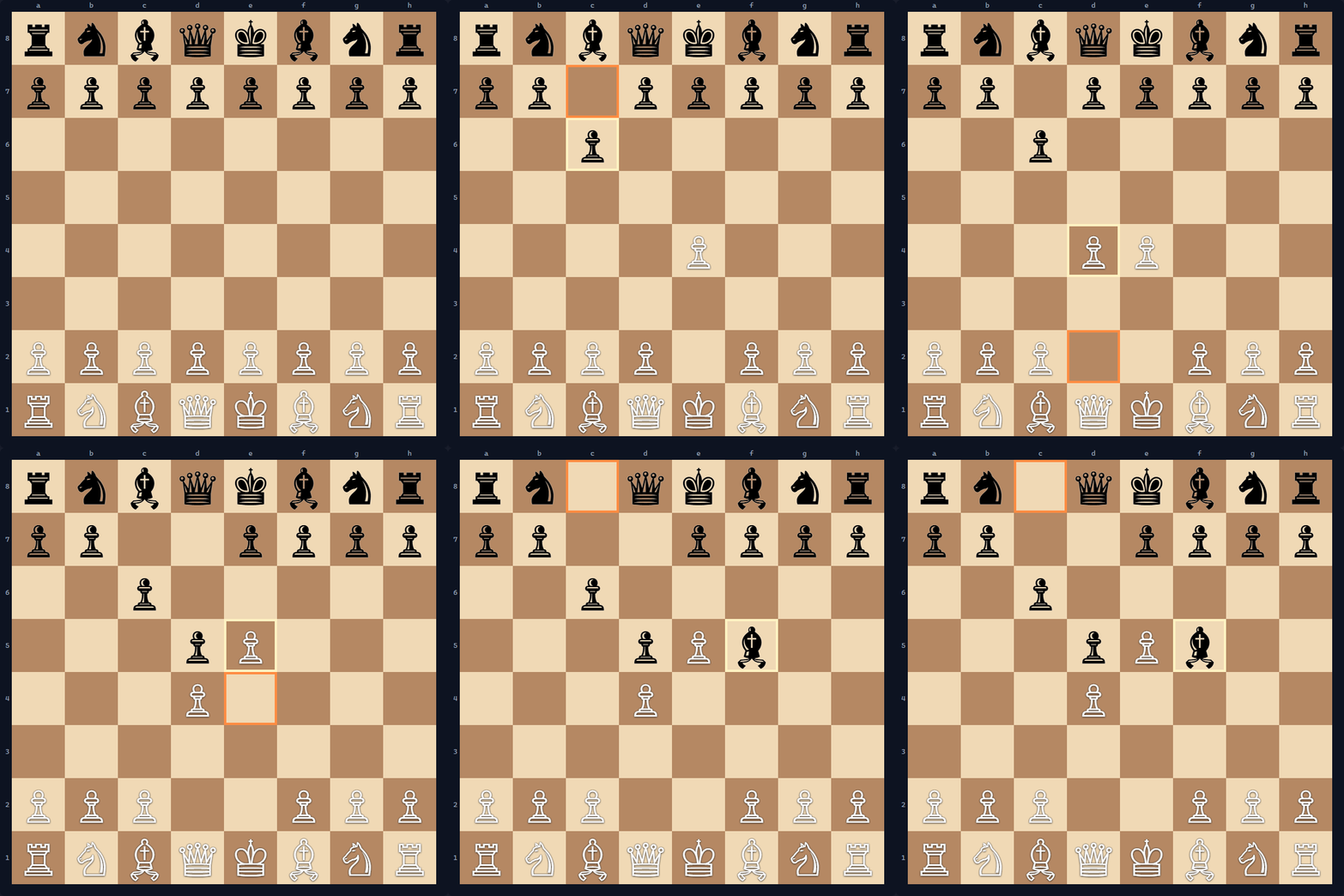
White's 3.e5 is the most ambitious third move. Black's two main responses are 3...Bf5 (solid; the bishop comes out naturally) and 3...c5 (the Botvinnik-Carls Defense, a counter-gambit named after Mikhail Botvinnik). According to the cited database, in about 42% of online games White responds to the Advance with 3.e5, and in roughly half of those games White refuses the gambit by playing the inferior 4.c3 — a line where Black has strong options with 4...Nc6.
If you only learn one response to 3.e5, start with 3...Bf5: it is sound, easy to understand, and teaches the typical light-squared-bishop development. Add 3...c5 later as a second weapon, especially if you face 3.e5 often in tournament play.
Exchange Variation: 3.exd5 cxd5 4.Bd3
The Exchange is the most "drawish" of the main lines. After 3...cxd5 the position becomes symmetrical, and Black's healthy structure means White has only a small pull. According to the cited master database, the Exchange Variation shows roughly 43% White / 30% draw / 30% Black at master level — a small but real edge for White, but far from a refutation. The Exchange is a sensible choice if you face opponents who want quiet positions and who may not know the long theory of the Advance.
Fantasy Variation: 3.f3
White's 3.f3 is a sharp, tactical attempt to maintain the strong pawn center by recapturing ...dxe4 with the f-pawn. Black's main responses are 3...e6 (a solid setup) and 3...Qb6 (a trickier line). According to the cited database, Fantasy shows roughly 44% White / 33% draw / 33% Black, so White has a real edge here — but it is also the line where a precise repertoire is most valuable for Black.
A useful practical rule: do not play 3...dxe4 followed by 4...e5 (which gives White the strong center he wants); instead develop cleanly with 3...e6 and prepare to trade the f-pawn later.
Karpov Variation: 3.Nc3 dxe4 4.Nxe4 Nd7
Named after Anatoly Karpov, the Karpov Variation plays 4...Nd7 instead of the more common 4...Bf5. The knight on d7 supports ...Ngf6 later and keeps the option of recapturing the e4-knight on f6 with the g-pawn (Bronstein-Larsen Variation) or the e-pawn (Tartakower Variation). The Karpov Variation is a quieter positional choice that fits the long-game style the Caro-Kann is famous for.
Common traps, beginner mistakes, and model games
The Fantasy Variation is the home of the Caro-Kann's most famous traps. Two are worth memorizing.
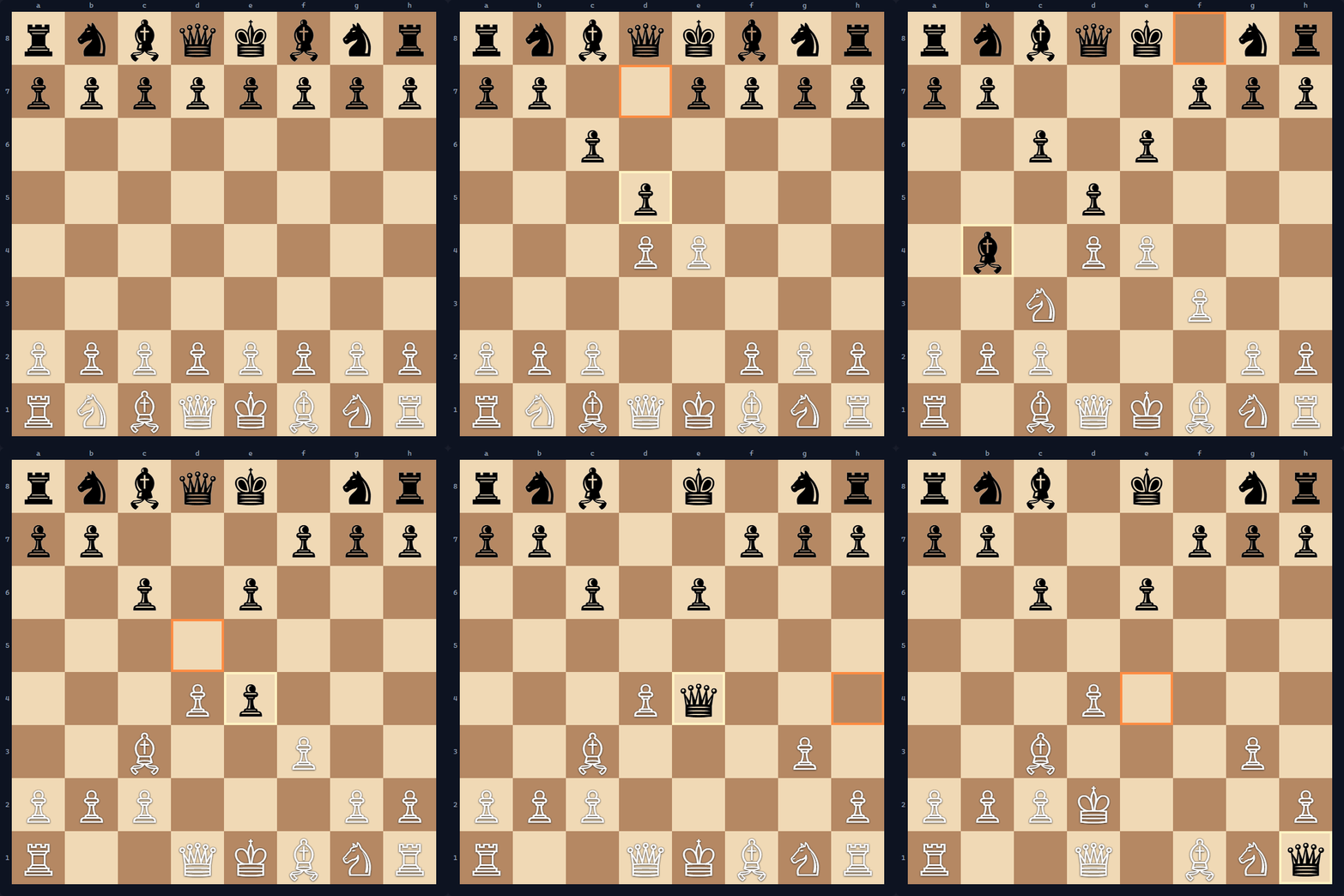
The checkmate-in-seven trap. After 1.e4 c6 2.d4 d5 3.f3 e5 4.dxe5 Bc5 5.Nc3 Qb6 6.Nge2 Bf2+ 7.Kd2 Qe3#, Black delivers checkmate. The white king gets exposed in the Fantasy Variation and Black's queen-bishop battery finishes the game quickly if White is not careful.
The Qh4+ trap. After 1.e4 c6 2.d4 d5 3.f3 e6 4.Nc3 Bb4 5.Bd2 Bxc3 6.Bxc3 dxe4 7.fxe4? Qh4+ Black wins the e4-pawn with a fork. If White plays 8.g3?? Black plays 8...Qxe4+ 9.Kd2 Qxh1 and is up a rook. The practical lesson: in the Fantasy Variation, do not grab the e4-pawn casually with the f-pawn — Black's queen and bishop are poised to strike.
A separate beginner mistake to avoid: in the Advance Variation, White often plays 4.Bd3, and the natural-looking recapture 4...Bxd3 trades Black's "bad" bishop for White's more active one. The resulting positions favor Black because of the simplified structure. The simplifychess article on the Caro-Kann makes the same point: do not put the bishop on d3 in the Advance if you want to play for the win.
Capablanca vs Nimzowitsch, New York 1927. A clean demonstration of the Advance Variation with 3...Bf5. Capablanca's positional technique is on full display — a model of how the Caro-Kann should be played at the highest level.
Bronstein vs Bakulin, 1965. A model game of the 4...Nf6 / 5...gxf6 (Bronstein-Larsen Variation) recapture pattern. According to the cited database, the choice of recapture has a meaningful effect on draw rates — 5...exf6 draws 38% of the time vs 27% for 5...gxf6 — and this game shows Black's attacking chances with the open g-file.
Petrosian vs Tal, 1973. A model game of the Karpov Variation, in which Petrosian's ultra-defensive style was ideally suited to the position.
Studying the critical moments of these games is the most efficient way to absorb the opening's character.
How to add the Caro-Kann to your repertoire
For most club players, the practical learning path looks like this:
Start with the Classical (3.Nc3 dxe4 4.Nxe4 Bf5). It is sound, it teaches you the typical light-squared-bishop development, and it converts into reliable middlegame positions without requiring you to memorize 15 moves of theory.
Add the Advance (3.e5 Bf5) as a second weapon. The Advance is the line you will face most often from White in club play, and 3...Bf5 is the safest and most principled response.
Decide on a single response to 3.f3 Fantasy. The Fantasy is the sharpest line White can play, and you should know one solid response (3...e6 is the conventional choice) before the Fantasy catches you off-guard in a tournament.
Finally, do not try to memorize 20 moves of theory in a single sitting. The Caro-Kann is a long-term repertoire, and most of its value comes from understanding the typical structures (the c6-d5-e6 triangle, the Advance pawn chain, the IQP positions from the Panov-Botvinnik) rather than from rote variation memory.
Comparison: which Caro-Kann variation should I learn first?
| Variation | Starting moves | Pawn structure | Tactical character | Study time |
|---|---|---|---|---|
| Classical (Capablanca) | 3.Nc3 dxe4 4.Nxe4 Bf5 | c6-d5-e6 triangle | Quiet, piece-play | Medium |
| Advance (Botvinnik-Carls) | 3.e5 c5 | Black plays ...c5 vs White's e5 wedge | Sharp, counter-attacking | High |
| Exchange | 3.exd5 cxd5 4.Bd3 | Symmetrical c6-d5 structure | Very quiet | Low |
| Fantasy | 3.f3 e6 | Closed, light-square tension | Very sharp | High |
Practical callout for club players
If you only learn one Caro-Kann system, learn Classical (3.Nc3 dxe4 4.Nxe4 Bf5). It is sound, it teaches you the typical light-squared-bishop development, and it converts into reliable middlegame positions without requiring you to memorize 15 moves of theory. Add the Advance (3.e5 Bf5) as your second weapon, and you will have a complete, club-level repertoire for the most common White third moves.
Frequently asked questions
Is the Caro-Kann Defense good for beginners?
Yes. The plans are clear, the pawn structure is healthy, and the opening rewards the kind of careful positional play that beginners should learn anyway. Houseofstaunton reports, in their piece on the King's Pawn Opening, that the Caro-Kann scores a club-level 49% win rate for Black among 1000-1600 rated players in the open-source explorer — close to even, and well within Black's preparation if you know the lines.
What is the difference between the Caro-Kann and the French Defense?
Both prepare ...d5 in response to 1.e4. The French plays 1...e6, which blocks in the light-squared bishop; the Caro-Kann plays 1...c6, which keeps the c8-bishop able to develop. The Caro-Kann is generally considered the more reliable of the two at the top level.
Is the Caro-Kann passive?
No. The Caro-Kann is solid, not passive. Black's plans are not just to defend; they include active breaks (...c5 against the Advance, ...d5 in the Exchange, piece activity against the IQP in the Panov-Botvinnik). The opening rewards positional play, not passivity.
What is White's best response to the Caro-Kann?
There is no single refutation. At master level, the Advance Variation (3.e5) and the Fantasy Variation (3.f3) score well for White, but both are well within Black's preparation if you know your lines. The Classical Variation (3.Nc3) is the most common at the top level.
Which Caro-Kann variation should I play first?
The Classical (Capablanca) Variation. It is the most common position in serious Caro-Kann practice, and most of the great games you will study from the Karpov era come from this structure.
Sources and further reading
For deeper study, the chess.com Caro-Kann page is the cleanest single reference for variation structure and Famous Games. The 365chess Caro-Kann guide gives the most complete prose treatment of each variation. Chessreps is a useful spaced-repetition trainer if you want to drill the canonical PGN. Houseofstaunton is the cleanest source for the two Fantasy traps. Modern-chess covers the modern 3.d3 system and the Ivic-Pultinevicius model game in the Fantasy.
For romantic-era study, the Wikipedia article on the Caro-Kann and the chesshistory.com page on the opening's 19th-century history are useful.
For a club-level next step, the lichess study MBQ3N0F8 ("The Caro Kann Defence: Complete Repertoire" by Shreksify) covers the opening in 59 chapters, including a Botvinnik-Carls module, a Karpov Variation module, and ten instructive-game chapters (Gelfand-Morozevich, Kasparov-Ivanchuk, Karpov-Korchnoi, Carlsen-Firouzja, and others).