What a chess opening is for
A chess opening is the first phase of the game — typically the first ten to twenty moves — in which both players develop their pieces, fight for central control, and prepare to castle. The opening is not a memorization exercise. It is a plan that fits your style.
One major opening database lists more than 3,000 named openings, but the realistic repertoire for any given player is small: one opening for White, and one or two responses each to 1.e4 and 1.d4 for Black.
The opening matters because it shapes the middlegame. A good opening gives you a playable position with clear plans; a bad one leaves you cramped, behind in development, or facing an attack you don't understand. But no opening wins games by itself. Time spent studying middlegame tactics and endgames pays off more than time spent memorizing move 17 of the Sicilian Najdorf.
One large opening explorer, tracking millions of games, shows that White's win rate is roughly 39% for both 1.e4 and 1.d4 — a difference of fractions of a percent. The opening you choose matters less than the way you play the resulting middlegame.
The 1.e4 family
White's most popular first move, 1.e4, claims the center and opens lines for the queen and the f1-bishop. Black's options split into three categories.
The first is the Open games (1...e5), where Black mirrors White's central pawn. The most-played responses are the Italian Game (1.e4 e5 2.Nf3 Nc6 3.Bc4), the Ruy López (3.Bb5), the Scotch Game (3.d4), the King's Gambit (1.e4 e5 2.f4), and the Vienna Game (2.Nc3). These lines tend to produce open, tactical middlegames with clear attacking chances for both sides.
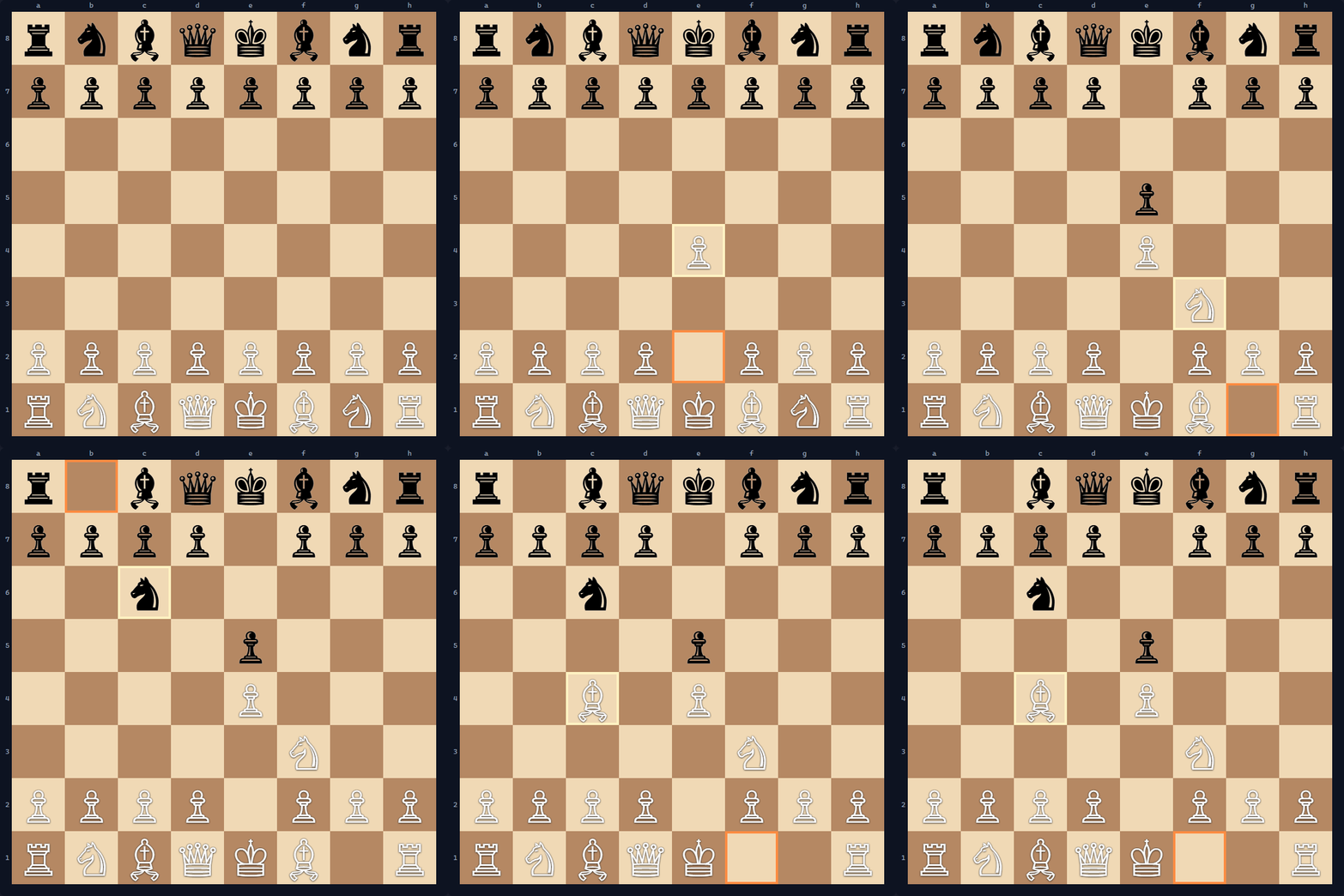
The second is the Semi-open games, where Black declines to play 1...e5 and instead strikes the center from the flank. The most popular is the Sicilian Defense (1...c5), the single most-played response to 1.e4 at every level. The Caro-Kann Defense (1...c6) is a solid, structural alternative; the French Defense (1...e6) is closed and positional; the Scandinavian Defense (1...d5) is direct. Each of these has its own theory and a different pawn structure.

The third is the Hypermodern responses, where Black lures White into building a large center, then attacks it with pieces. The Alekhine's Defense (1...Nf6), the Modern Defense (1...g6), and the Pirc Defense (1...d6) all fall into this category. These are provocative lines that require White to know what they are doing.
The 1.d4 family
White's alternative to 1.e4 is 1.d4. The 1.d4 family is more closed and more positional than the 1.e4 family, and Black's responses split into two main systems.
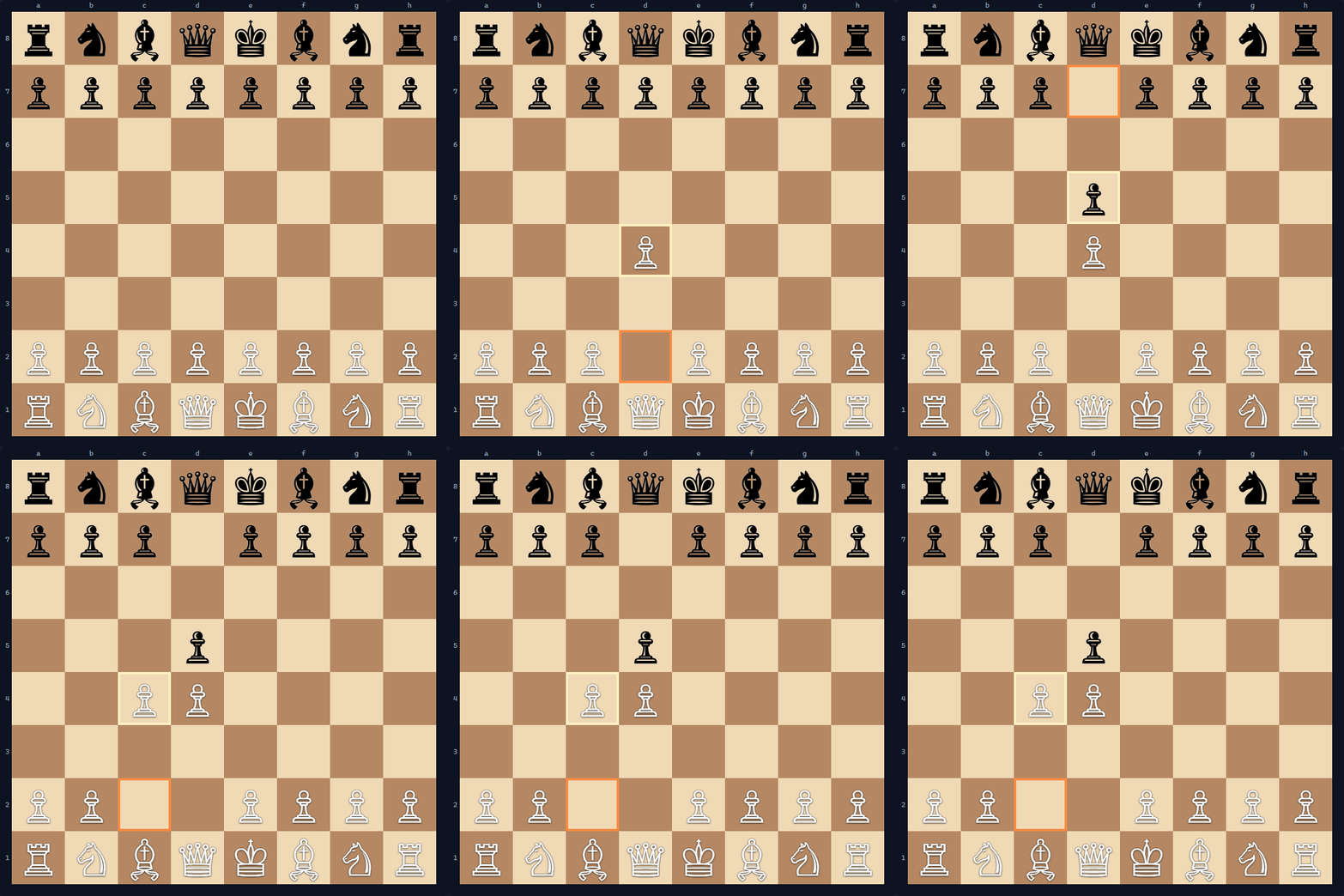
The first is 1...d5 systems, where Black mirrors White's central pawn. The most-played is the Queen's Gambit (1.d4 d5 2.c4), an opening with a 500-year history and ten named sub-variations after 2...e6. The Slav Defense (1...d5 2.c4 c6) is a separate opening with its own theory.
The second is 1...Nf6 Indian systems, where Black develops the knight to f6 and fights for the center with pieces. The King's Indian Defense (1.d4 Nf6 2.c4 g6 3.Nc3 Bg7 4.e4 d6) is counterattacking and produces sharp, double-edged middlegames. The Nimzo-Indian Defense (2...e6 3.Nc3 Bb4) puts immediate pressure on White's c3-knight. The Queen's Indian Defense (2...e6 3.Nf3 b6) controls the light squares. The Catalan Opening (2...e6 3.g3) is a long-term pressure system used heavily by Vladimir Kramnik and Magnus Carlsen. The Grünfeld Defense (2...g6 3.Nc3 d5) is a dynamic counterplay system.
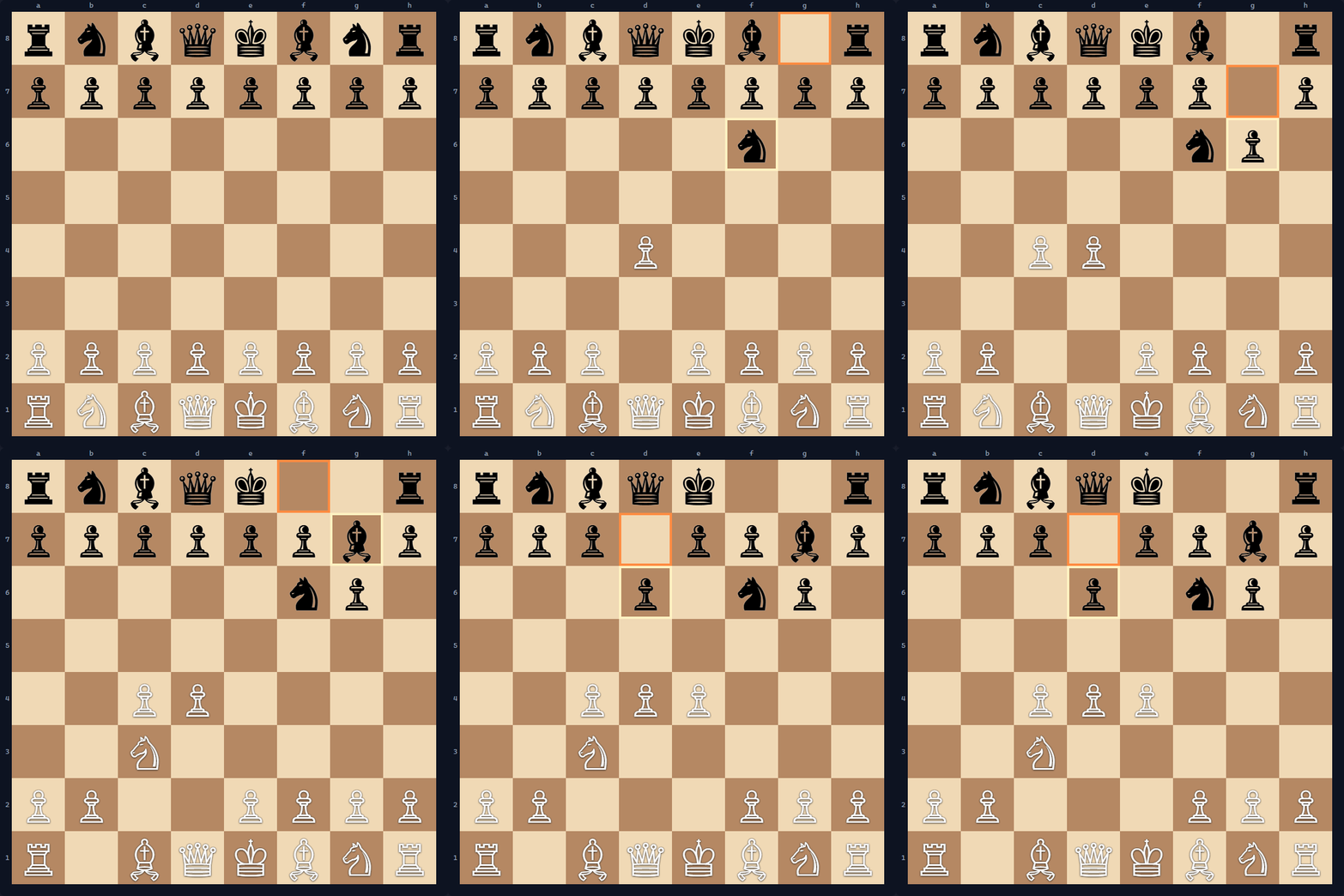
There are also other 1.d4 systems that do not fit neatly into either bucket. The London System (1.d4 d5 2.Bf4) is a system opening that has been used at the top level by Magnus Carlsen, Gata Kamsky, and Ding Liren. The Dutch Defense (1...f5) is an unorthodox kingside fianchetto. The Trompowsky Attack (1.d4 Nf6 2.Bg5) is a surprise weapon.
Flank and other first moves
A small group of strong players prefer to start with a flank move rather than occupy the center immediately with a pawn. The Réti Opening (1.Nf3) is a hypermodern system that aims to control the center with pieces rather than pawns. The English Opening (1.c4) is a flexible flank move that can transpose into many different structures, including 1.d4 systems, King's Indian setups, and Catalan-like positions. Other flank moves — 1.b4 (Polish), 1.f4 (Bird), 1.g3 (King's Fianchetto) — are less common but fully playable.
For most club-level players, flank systems are a third repertoire rather than a first one. Start with 1.e4 or 1.d4, and add a flank system later if you want variety.
How to choose an opening
The decision tree below is based on the strategic grouping that several major opening references use to describe the same opening families.
| If you are | Then as White, consider | Then as Black, against 1.e4, consider | Then as Black, against 1.d4, consider |
|---|---|---|---|
| Tactical / counterattacking | King's Gambit, Vienna | Sicilian Defense, Benko Gambit | King's Indian Defense, Grünfeld |
| Positional / strategic | Queen's Gambit, Ruy López | French Defense, Caro-Kann | Queen's Gambit Declined, Nimzo-Indian |
| Want a system with one repeatable setup | London System | Caro-Kann (1...c6) | Slav Defense (1...c6) |
| Limited study time | Italian Game | Caro-Kann | Queen's Gambit Declined |
There is no single best opening. In one large database, the first-move distribution is roughly even between 1.e4 and 1.d4, with both around a 39% win rate for White. The honest answer is to try both 1.e4 and 1.d4 and pick the one whose games you enjoy playing. The opening you stick with is the one that produces positions you find interesting.
A common mistake is to switch openings every few weeks. Stick with one for at least fifty games before deciding whether to change. The opening is yours once you have played it enough times that you recognize typical positions without thinking about the move order.
The five most-played White openings
The five first-move + setup combinations that show up most often in tournament and club play are:
| Opening | Starting moves | Difficulty | Key idea |
|---|---|---|---|
| Italian Game | 1.e4 e5 2.Nf3 Nc6 3.Bc4 | Beginner-friendly | Classical development, kingside attack |
| Ruy López | 1.e4 e5 2.Nf3 Nc6 3.Bb5 | Intermediate–advanced | Positional pressure on Black's e5-pawn |
| Queen's Gambit | 1.d4 d5 2.c4 | All levels | Central control via c4, strategic |
| Scotch Game | 1.e4 e5 2.Nf3 Nc6 3.d4 | Beginner-friendly | Aggressive central tension, tactical |
| London System | 1.d4 d5 2.Nf3 Nf6 3.Bf4 | All levels | Universal system, low theory, solid |
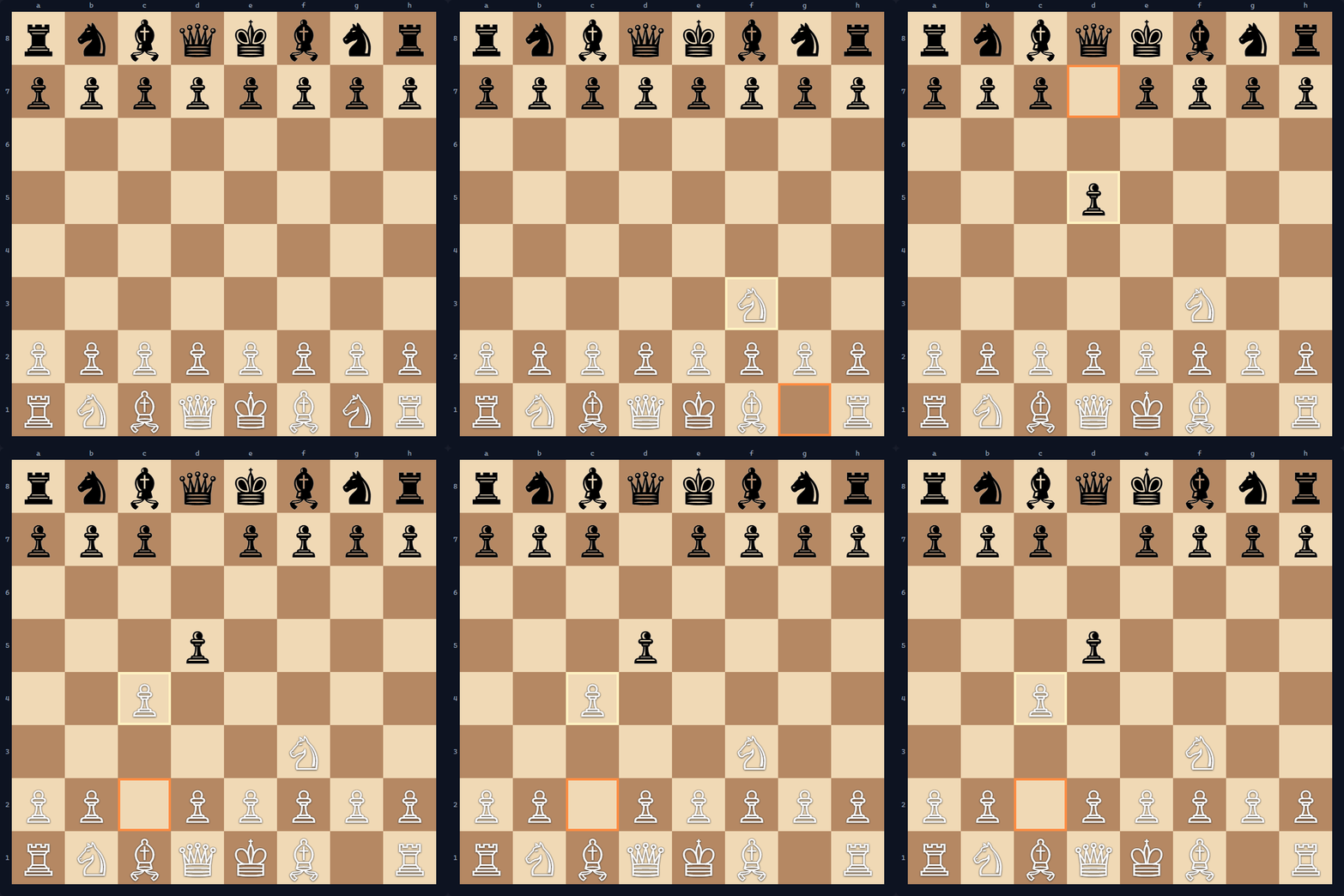
Each of these has its own dedicated article. The Queen's Gambit and the London System are both covered in this series. The Italian Game, the Ruy López, and the Scotch Game are the workhorses of the 1.e4 family.
How much should you memorize?
The honest answer is: less than you think. The most common beginner mistake is to memorize long opening lines without understanding the typical middlegame plans. The result is that you reach move 15 in your preparation, deviate by one move, and have no idea what to do next. A better approach is to learn the typical plans of your chosen opening — where the pieces go, which pawn breaks are common, which tactical motifs recur — and then use the first ten moves of theory to reach positions you understand.
System openings (London, Italian) require less theory than sharp openings (Sicilian Najdorf, King's Indian Sämisch) because the move set is more repeatable. If you are short on study time, choose a system opening. If you are playing a sharp opening, plan to spend more time on theory — but recognize that the time is on understanding the positions, not on rote memorization.
Famous games to study
Three model games illustrate the openings discussed in this article. Studying a few classical games in your chosen opening is one of the best ways to learn it.
- Kamsky vs Shankland, 2014 — a London System kingside attack by Gata Kamsky. The game shows how the London setup can transition into a sharp attack when Black plays passively.
- Carlsen vs Ding Liren, 2020 rapid — Magnus Carlsen introduced a novelty with 7.Bxd6, sacrificing a pawn for a long-term positional advantage.
- Alekhine vs Lasker, 1934 — a Queen's Gambit Declined game showing the classical Orthodox setup.
For each opening discussed in this article, the dedicated article includes additional famous games in PGN.
Build your repertoire in five steps
The fastest way to build a working repertoire is to keep it small and play it often. Pick one opening as White and one response each to 1.d4 and 1.e4 as Black. Start with three openings total. Play twenty games with each before adding anything new. After each game, review with an engine and identify the move where you diverged from known theory. Add a second opening only after the first one is stable. Re-evaluate your repertoire every three months.
For club players: what to actually learn first. Don't try to learn everything. Pick one White opening and one Black response. Play them for fifty games. Then expand. A focused repertoire of three openings that you actually understand is better than a sprawling one that you only half-know.
Where to go next
The dedicated articles in this series cover the major openings in detail:
1.d4 family
- Queen's Gambit
- London System
- King's Indian Defense
- Slav Defense
- Nimzo-Indian Defense
- Queen's Indian Defense
- Catalan Opening
- Grünfeld Defense
1.e4 family
- Caro-Kann Defense
- King's Gambit
- Sicilian Defense
- French Defense
- Italian Game
- Ruy López
- Scotch Game
Sources
This article draws on the following pages, accessed 2026-06-30:
- chess.com — Chess Openings and Book Moves: https://www.chess.com/openings. The 3000+ opening taxonomy, first-move distribution, and the opening-explorer widget.
- World Chess — Best Chess Openings for Black: https://shop.worldchess.com/blogs/news/best-chess-openings-for-black. The three strategic approaches for Black (Symmetrical / Counterattacking / Solid and flexible) and the FEN strings.
- World Chess — Top Chess Openings for White: https://shop.worldchess.com/blogs/news/best-chess-openings-for-white. The five "best for White" openings with FENs after 3 moves, plus the "Common Mistakes to Avoid" guidance.
- chessreps.com — King's Indian Defense: https://www.chessreps.com/opening/kings-indian-defense. The KID standard move order and the Fischer / Kasparov attribution.
- chessable.com — The Caro-Kann: How to Play It as White and Black: https://www.chessable.com/blog/caro-kann-defense/. The Caro-Kann naming and 1886 origin, and the broader history of the opening.
- chess.com — Queen's Gambit: https://www.chess.com/openings/Queens-Gambit. The starting definition, master win rates, and the April 2021 top-10 GM list.
- chess.com — London System: https://www.chess.com/openings/London-System. The 1922 London Congress naming and the Carlsen / Kamsky / Ding Liren attribution.
- modern-chess.com — A Comprehensive Guide to the London System (by GM Michael Roiz): https://www.modern-chess.com/opening/london-system/. The 2023 WCC Ding Liren Game 6 attribution.