What Is Chess Strategy?
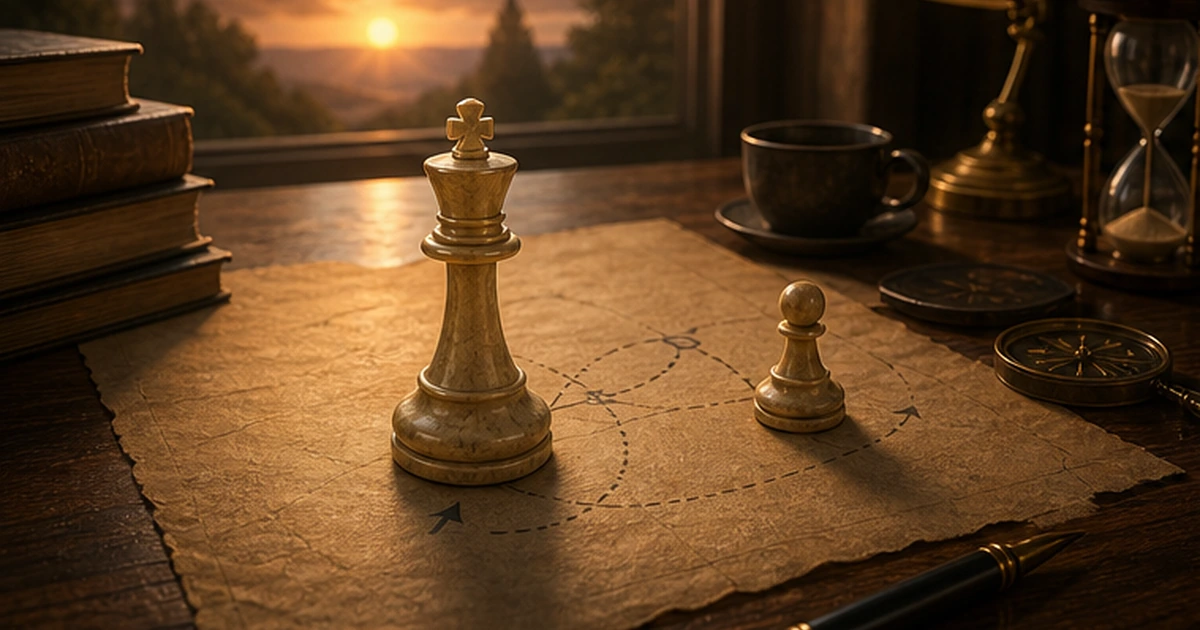
First, understand the difference between a tactic and a strategy. According to Daniel Schipper of House of Staunton, a tactic is usually one move that gains some sort of advantage — it wins material, improves your position, or leads to checkmate. A classic example is the fork: a knight attacks the king and an undefended queen at the same time. That is a tactic.
A strategy, by contrast, is deeper than one move. It is the overall plan that guides your decisions across the opening, middlegame, and endgame. As Schipper puts it, if you see the possibility of a fork a few moves from your current position, that vision can become your strategy. Strategy sets the direction; tactics execute it.
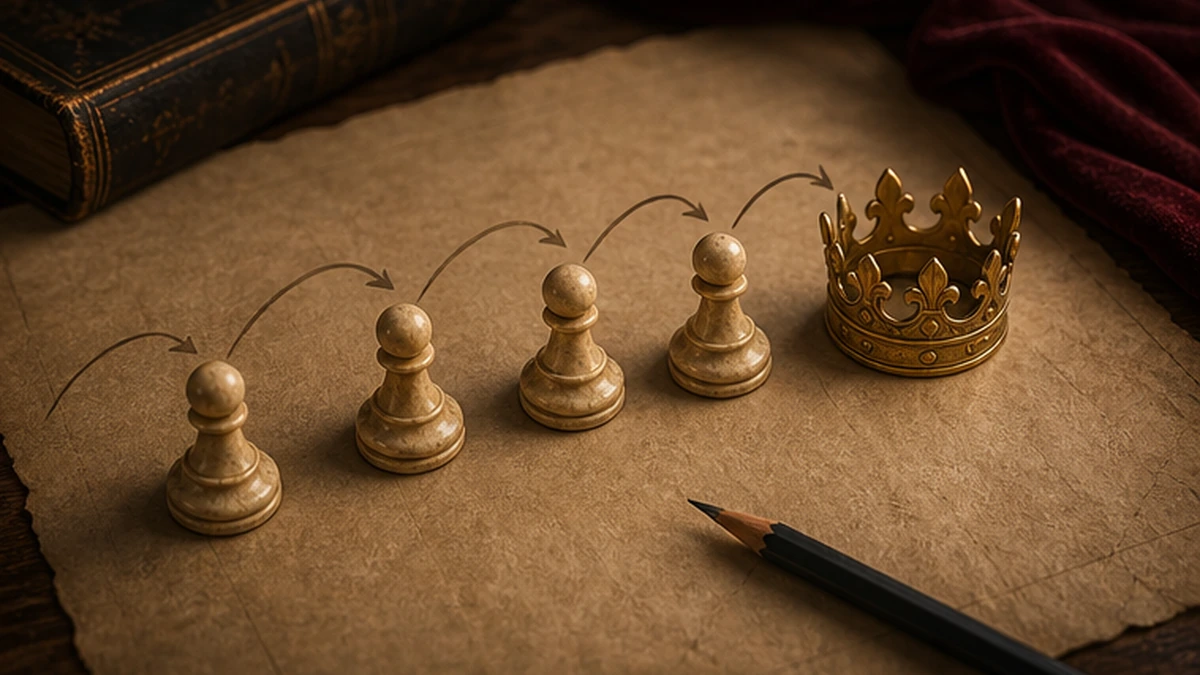
The good news is that beginners do not need complex grandmaster plans. A few simple strategies, applied consistently, will dramatically improve your results.
The #1 Strategy for Beginners: Stop Blundering
No chess knowledge saves you if you constantly hang pieces. One blunder can lose the game even after fifty good moves. This is why Daniel Schipper argues that the very best strategy for a beginner is simply to not blunder.
If you lose to missed threats, focus on one habit above all: ask yourself what your opponent will play. Before every move, consider all forcing moves and checks your opponent could make. Tunnel vision — thinking only about your own plans — is the root cause of most beginner blunders. If your opponent can capture your hanging queen, move it. Obvious, yet easy to overlook in the heat of a game.
Once you have reduced the blunders, you can start building a proper game plan.
Opening Strategy: Build a Strong Foundation
The opening sets the stage for everything that follows. Beginners who follow three simple principles will reach the middlegame with a solid position almost every time.
Control the Center
Chess is a battle for the middle of the board. Pieces have more mobility from the center, and pawns there restrict your opponent's options. The best way to control the center is by putting a pawn on e4 or d4 — the two most common opening moves, as House of Staunton notes. From there, support your central pawns with your other pieces.
Develop Your Pieces
After the first pawn move, your priority is development. TheChessWorld recommends this order: pawn move first, then knight, then bishop, then rook (or castle), then queen. Do not move the same piece twice in the opening unless you have a concrete reason, such as winning material. Moving the same piece repeatedly wastes time and leaves your other pieces sitting on their starting squares.
Castle Early
Once your knights and bishops are developed, get your king to safety. Castling moves the king two squares toward the rook, and the rook jumps to the other side. It tucks your king behind a wall of pawns and activates the rook at the same time. Castling early dramatically reduces the chance of annoying tactics against your exposed king.
Two common beginner mistakes: do not accept random pawn sacrifices in the opening, especially as black — you may gain material but get checkmated before developing. Also, avoid developing your queen too early — the opponent attacks it with minor pieces and develops with tempo.
| Opening Principle | What to Do | What to Avoid |
|---|---|---|
| Control the center | Play e4 or d4 | Neglecting the central squares |
| Develop pieces | Knights then bishops, one move each | Moving the same piece twice |
| King safety | Castle within the first 10 moves | Leaving the king in the center |
| Queen | Bring out after minor pieces | Developing the queen early |
Middlegame Thinking: Have a Plan and Improve Your Pieces
The middlegame is where beginners feel most lost. The opening is done, the endgame far away. This is where having a plan matters most.
Always Have a Plan
TheChessWorld puts it bluntly: playing with a bad plan is better than no plan at all. Without one, you drift, reacting instead of directing the game. Your plan can be simple — "I want to put my rook on the open file" or "I want to trade my bad bishop for their good knight." Even a modest plan gives your moves purpose.
Active Pieces Are Happy Pieces
When you are unsure what to do, look for ways to improve your pieces. Rooks belong on open files — files with no pawns. An open file gives a rook targets and mobility. If you see an open file, get your rook there first.
Knights are at their best in the center. The old saying "knights on the rim are dim" is true — a knight on the edge attacks only half as many squares as one in the center.
Bishops need open diagonals. A bishop stuck behind its own pawns is a "bad bishop" with little scope. If your bishop is bad, try a pawn break to open lines, or trade it for an active opponent piece.
According to TheChessWorld, the knight is stronger in the center (a short-range piece that works best close to the action), while the bishop is stronger on the flank (a long-range piece that performs best from a distance). Keeping both bishops — the bishop pair — is a significant advantage. As a general rule, if you are unsure whether to trade a bishop for a knight, keep the bishop — it gains value as the board opens up.
| Your Piece | Best Home | Why |
|---|---|---|
| Knight | Center of the board | Controls more squares, close to action |
| Bishop | Open diagonal, flank | Long-range, needs open lines |
| Rook | Open file or 7th rank | Exerts pressure on clear lines |
| King (endgame) | Middle of the board | Becomes a fighting piece |
Endgame Fundamentals Every Beginner Must Know
Endgames are often the hardest part for beginners. As House of Staunton's Daniel Schipper explains, endgame positions look simple but are deceptively complex. The reduced material means every move matters more, and a single mistake can turn a win into a draw or a draw into a loss.
The good news: you do not need to memorize hundreds of theoretical positions. A handful of fundamental principles will carry you through most of the endgames you will face as a beginner.
Activate Your King
The king hides in the opening and middlegame. In the endgame, it fights. Your king is crucial in the endgame — bring it to the center, as active as possible. An active king can support pawns, attack enemy pawns, and restrict the opponent's king. Many beginners forget this and leave their king on the back rank while their opponent's king marches forward and decides the game.
Push Passed Pawns
A passed pawn — a pawn with no opposing pawns on its file or adjacent files — is one of chess's most powerful assets. It has a clear path to promotion. If you have one, push it. Schipper notes that many players sit in winning endgames but shuffle instead of advancing their passed pawn. A passed pawn forces your opponent to divert pieces to block it, and if they cannot stop it, it becomes a queen.
Rook Activity Is Worth a Pawn
TheChessWorld offers a practical guideline: in the endgame, an active rook is usually worth about a pawn. Place your rook on the 7th or 8th rank (or the 2nd or 1st if you are Black), where it can attack enemy pawns from behind and restrict the opponent's king. A rook on the seventh rank is a powerful weapon at any level.
When to Trade and When Not To
One of the most common endgame mistakes is trading into a losing position. If you are down a pawn in the endgame, avoid exchanging pieces. Trading down leads to a king and pawn endgame where your opponent's extra pawn is decisive. By keeping pieces on the board, you create chances for counterplay — your opponent may miss a tactic or blunder their advantage away.
Conversely, if you are up material, use that material. Schipper points out that many students try desperately to checkmate with just their queen when they are also up two rooks. Use your extra pieces. The more material you have, the easier the conversion.
Special Endgame Patterns Worth Knowing
Two specific endgame patterns are so common that every beginner should recognize them.
Opposite-Bishop Endgames
When each side has only one bishop on opposite-colored squares, the drawing margin is enormous. Even a pawn down, an opposite-bishop endgame is usually a draw. The bishops cannot attack each other, and the extra pawn often cannot force through. This knowledge can save you many half-points.
King and Pawn Endgames
King and pawn endgames are the purest form of chess calculation. Concepts like opposition (forcing the opponent's king to give way) and the rule of the square (can a king catch a passed pawn?) become critical. Even ChessBase co-founder Frederic Friedel has presented endgame challenges showing how precise play — like 1.Re6 in the Ragozin study — is the only way to win. While that example is advanced, it shows how one inaccurate move can turn a win into a draw.
For club players: what to actually learn first Do not jump into advanced endgame studies. Start with the basics in this order: 1. King + queen vs. king — the most basic checkmate pattern. 2. King + rook vs. king — the second most common basic checkmate. 3. King and pawn endgames — learn opposition and the rule of the square. These appear constantly. 4. Rook endgames — rook and pawn vs. rook positions are the most common endgame in real play. 5. Opposite-bishop endgames — understand when you can draw from a lost position. Master these before moving on to anything else.
How to Practice Endgames Effectively
Knowing the principles is one thing; applying them under pressure is another. The best way to bridge this gap is through deliberate practice.
Use Online Endgame Trainers
According to House of Staunton, using an online endgame trainer is one of the fastest ways to improve. Websites like a commercial endgame trainer, 365chess.com, and Chesstempo offer adaptive endgame puzzles that adjust to your level. These platforms pull positions from real games, so you are practicing scenarios that actually occur. Schipper notes that drilling basic endgames this way can easily add hundreds of Elo points to your rating.
Analyze Your Own Games
Every game you play is a learning opportunity. After each game, review the endgame phase. Ask yourself:
- Did I activate my king when the pieces were traded off?
- Did I push my passed pawns?
- Did I miss a chance to trade into a winning endgame — or avoid a losing one?
Use a chess engine to check your assumptions, but spend most of your time thinking without one. The goal is to develop your own endgame judgment.
Frequently Asked Questions
What is the difference between a chess tactic and a strategy?
A tactic is usually a single move or short sequence that wins material or forces checkmate. A strategy is a deeper plan that guides your decisions over many moves. As House of Staunton explains, tactics execute the plan that strategy creates.
What is the most important thing for a beginner chess player to focus on?
Avoiding blunders. One bad move can erase fifty good ones. Before every move, ask yourself what your opponent will play, and look at all forcing moves and checks.
How do I get better at chess endgames?
Practice the basic checkmates first (king + queen, king + rook), then move to king and pawn endgames, then rook endgames. Use online trainers like a commercial endgame trainer, 365chess.com, or Chesstempo. Consistent, focused practice with real-game positions is the fastest path to improvement.
What is a passed pawn and why does it matter?
A passed pawn is a pawn with no opposing pawns blocking its path to the eighth rank. It is incredibly strong because only enemy pieces can stop it, and those pieces must abandon other duties to do so. Push your passed pawns — they are your ticket to promotion.
Keep Playing, Keep Learning
Chess strategy for beginners does not require memorizing hundreds of opening lines or studying grandmaster games. It starts with the basics: do not blunder, follow opening principles, activate your pieces, and learn the essential endgame patterns. Practice them consistently, and you will see your results improve game by game.
The most important strategy of all is simply to keep playing. Every game teaches you something. Review your losses, celebrate your wins, and come back to the board ready to learn more.
Sources
- TheChessWorld — Yury Markushin, "24 Chess Tips and Tricks You Must Know" (updated 2024): https://thechessworld.com/articles/training-techniques/basic-chess-tips/
- House of Staunton — Daniel Schipper, "The Best Chess Strategy for Beginners" (2025): https://www.houseofstaunton.com/blogs/chess-strategies/the-best-chess-strategy-for-beginners
- ChessBase — Frederic Friedel, "Chess Endgame Challenge" (October 2025): https://en.chessbase.com/post/chess-endgame-challenge-2
- Chessify — "Chess Tricks to Win Fast": https://chessify.me/blog/chess-tricks-to-win-fast
- Chess.com — "The Move That Always Wins": https://www.chess.com/article/view/the-move-that-always-wins
- 365chess.com — Endgame training from real-game positions (platform)
- Chesstempo — Adaptive endgame puzzle training (platform)