
What Is the Dutch Defense?
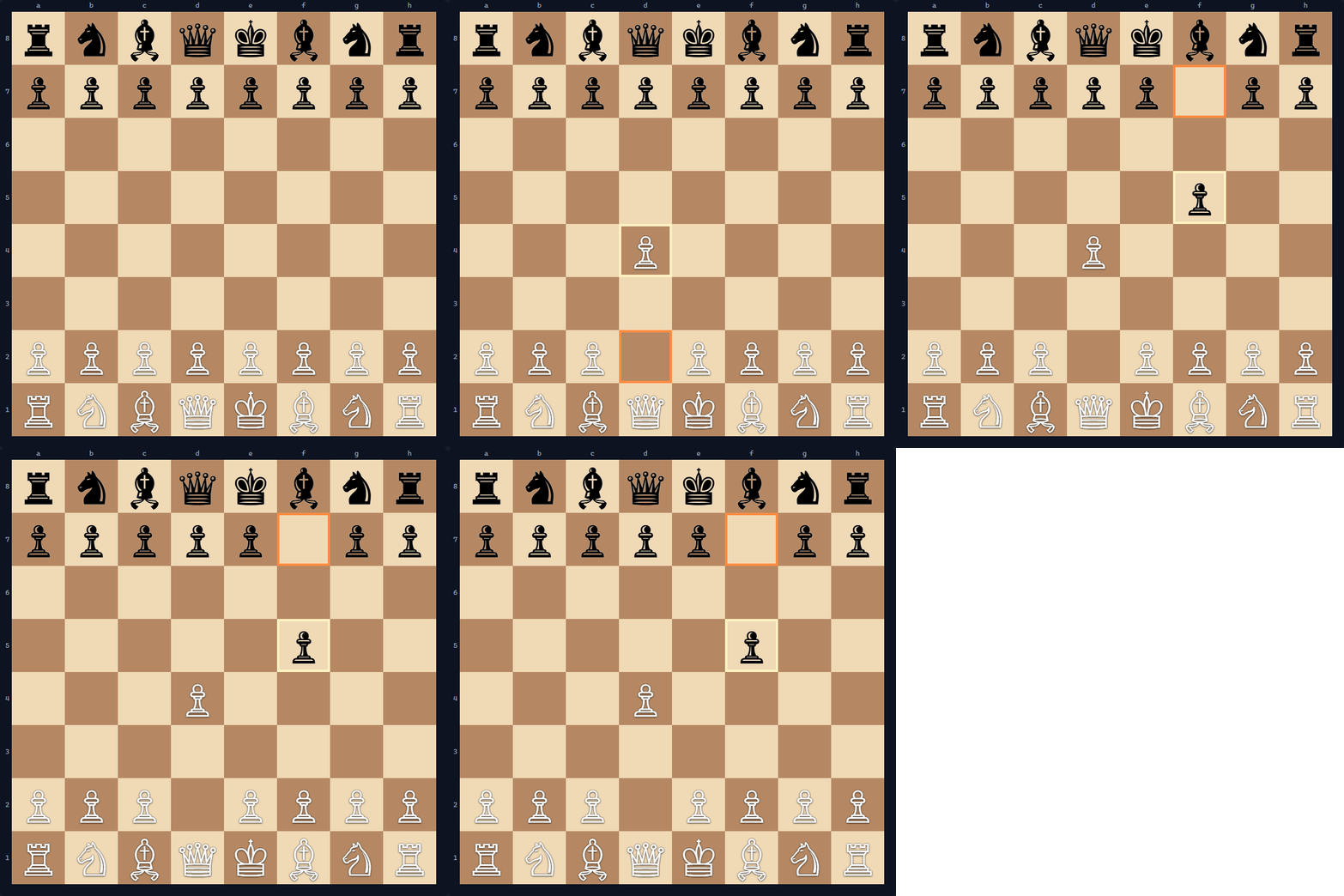
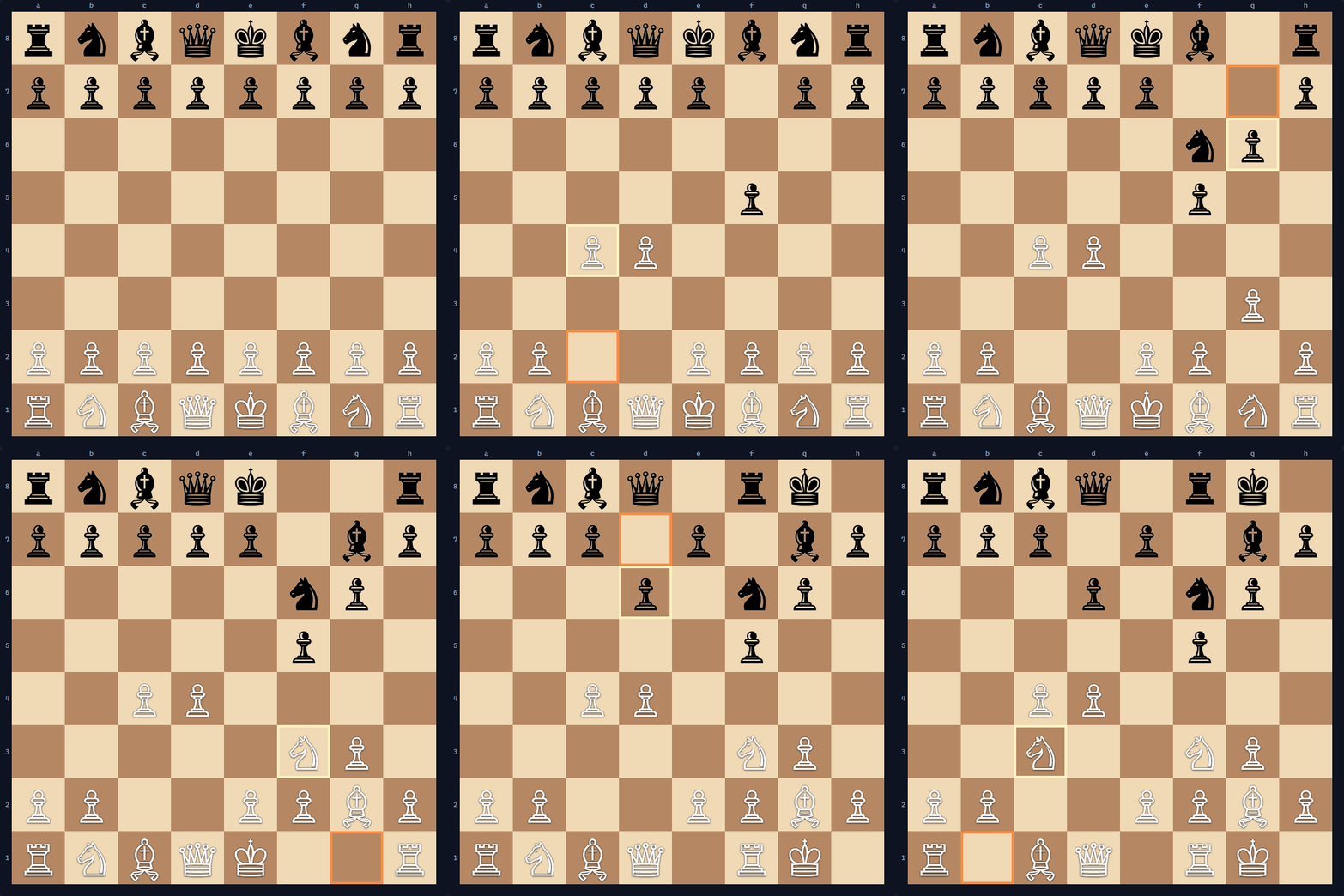
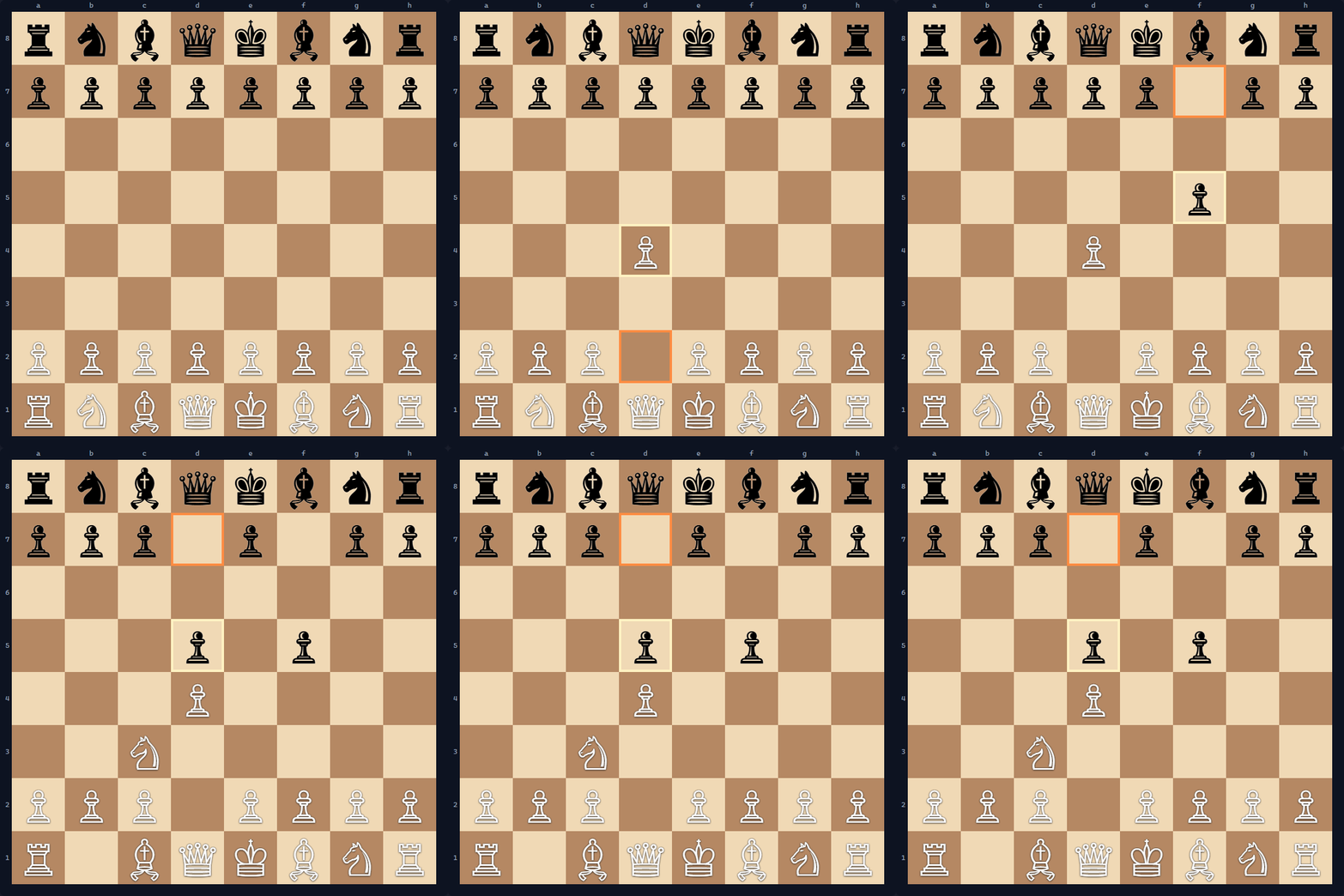
The Dutch Defense is a chess opening for Black that begins with the moves 1.d4 f5. Unlike symmetrical replies such as 1…d5 or 1…Nf6, the Dutch is an asymmetrical flank opening where Black uses a wing pawn (the f-pawn) to challenge the center. The main idea behind 1…f5 is to control the e4 square, preventing White from occupying it with a pawn and preparing Black's own kingside attack.
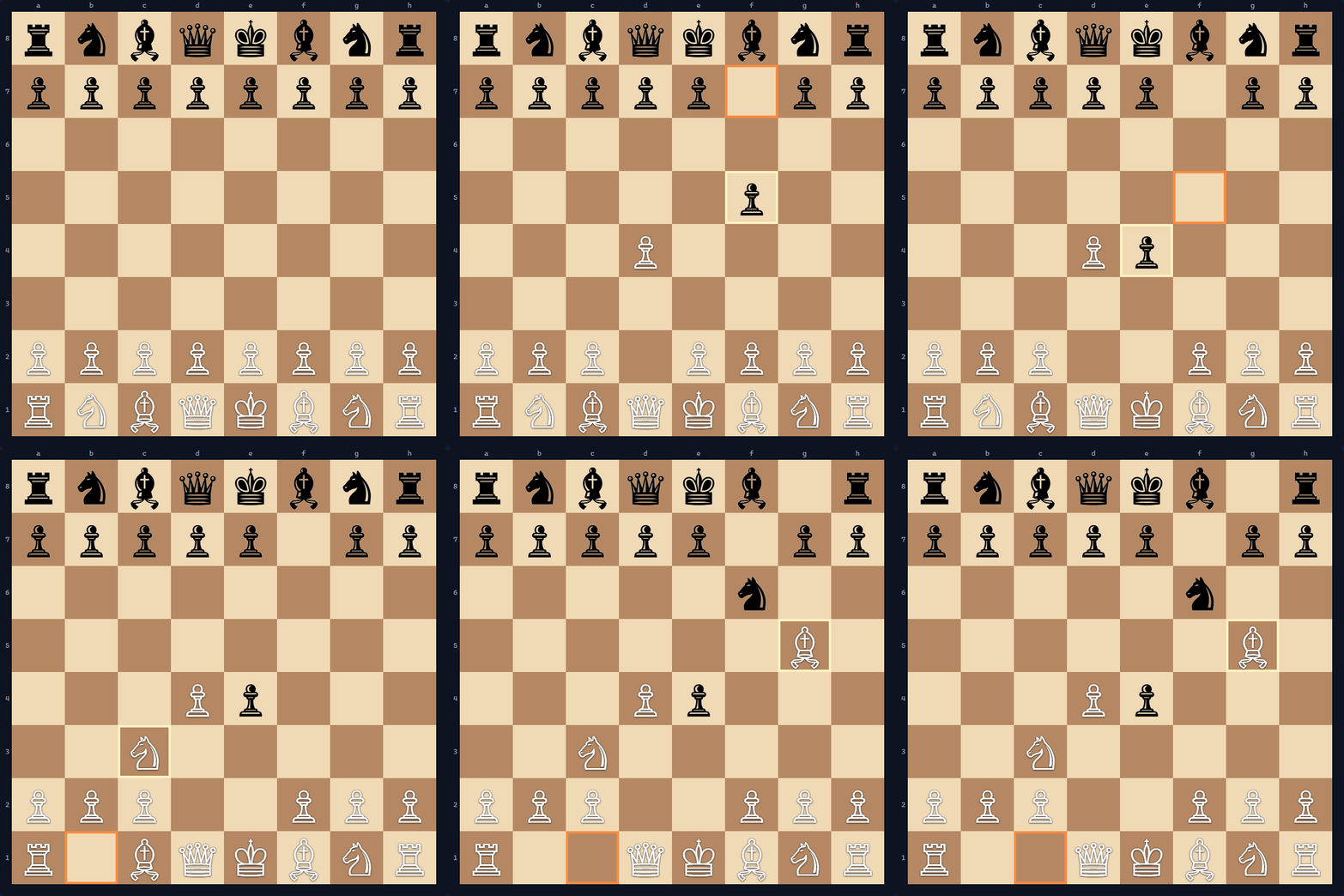
The Dutch is characterized by opposite-side play: Black attacks on the kingside, while White typically expands on the queenside. This clash of plans creates rich, double-edged positions that reward strategic understanding over rote memorization. The opening is considered a riskier proposition than the Sicilian Defense, because 1…f5 opens the f-file and diagonal to Black's own king — a trade-off that every Dutch player must learn to manage.

The opening's name dates back to 1789, when Elias Stein published a book in The Hague suggesting that 1…f5 was the best reply to 1.d4. The Dutch has been played by world champions Paul Morphy and Mikhail Botvinnik, and more recently by Magnus Carlsen, Hikaru Nakamura (127 games in the commercial platform database, according to the commercial platform's opening page), and Ian Nepomniachtchi.
Core Move Order: 1.d4 f5
The starting position of the Dutch Defense is simply 1.d4 f5. From here, White has several ways to respond, and the choice often determines which variation arises.
``` [FEN ""]
- d4 f5
```
White's most common reply is 2.g3 (the Fianchetto Attack), appearing in roughly 43% of master games according to the 365Chess database. The fianchetto prepares to meet Black's setup with a kingside fianchetto of White's own, leading into the main lines of the Leningrad, Stonewall, or Classical variations. Other frequent responses include 2.c4 (often transposing to the same positions as 2.g3), 2.Nf3, and the sharper sidelines we will cover later.

Players who want to avoid certain aggressive lines, particularly the Staunton Gambit (2.e4), can reach the Dutch via an alternative move order: 1.d4 e6 2.c4 f5. This transposition deprives White of the chance to play 2.e4 on the first move and is a common practical choice.
The Leningrad Dutch
The Leningrad Dutch is the most popular and most dynamic setup Black can choose against 1.d4. It is characterized by a kingside fianchetto: Black develops the dark-squared bishop to g7, combined with a pawn on d6 and the defining f5 pawn.
The main move order runs:
`` 1.d4 f5 2.c4 Nf6 3.g3 g6 4.Bg2 Bg7 5.Nf3 O-O 6.O-O d6 7.Nc3 ``
The Leningrad setup closely resembles the King's Indian Defense, but with the pawn on f5 instead of f7. This gives Black additional kingspace and attacking chances, while the fianchettoed bishop on g7 exerts pressure along the long diagonal.
After 7.Nc3, Black has two primary options. The Warsaw Variation (7…c6) blunts White's fianchettoed bishop and makes it harder for White to push d5. The alternative 7…Qe8 keeps more flexibility and prepares to transfer the queen to the kingside. Both lines have been tested extensively at the grandmaster level.
The Leningrad is best suited for players who enjoy sharp, tactical battles with clear attacking plans. Black's kingside initiative can be dangerous if White does not respond accurately.
The Stonewall Dutch
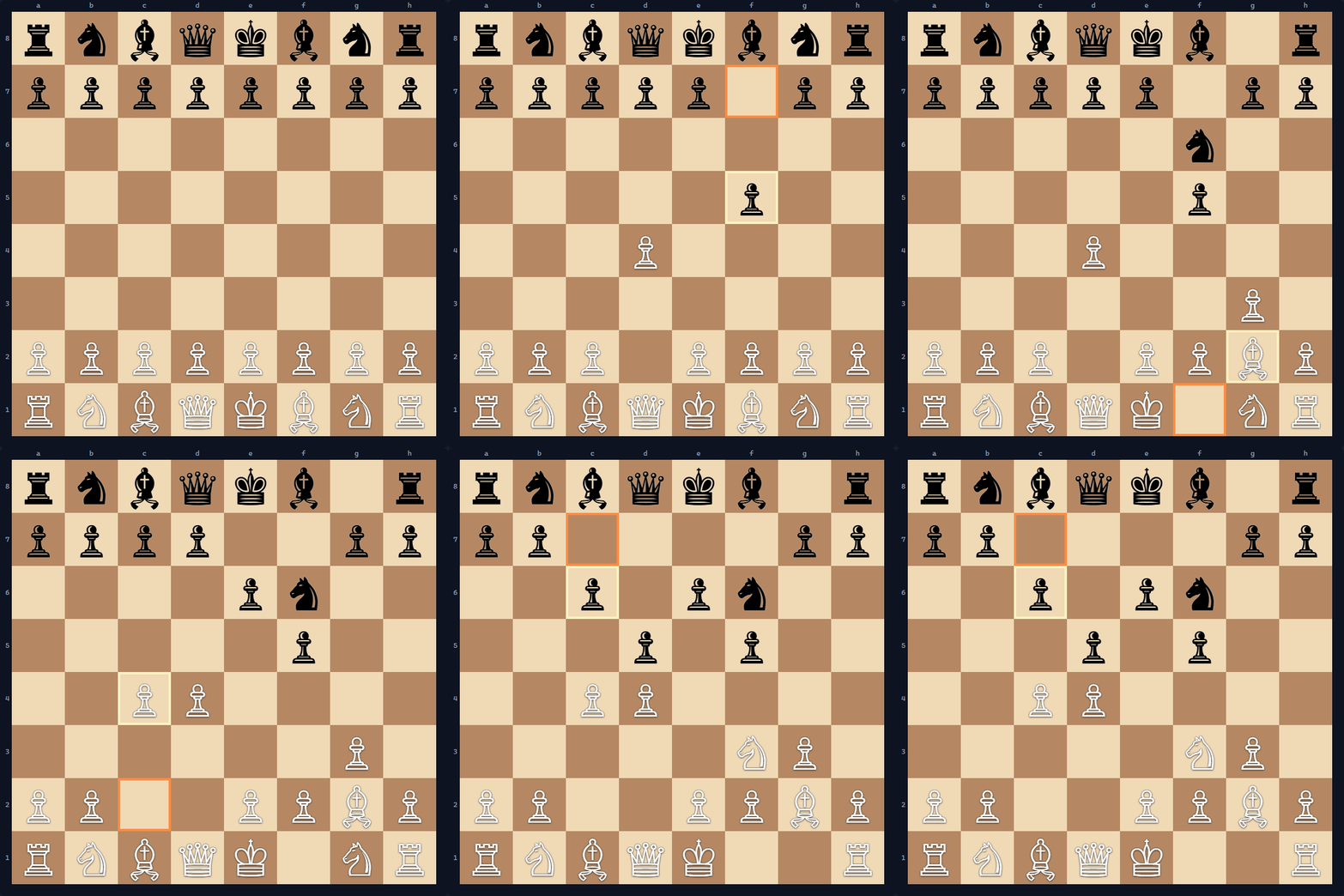
The Stonewall Dutch is defined by a distinctive pawn chain: f5, e6, d5, and c6 — Black's pawns occupy light squares while the pieces control the dark squares. This structure gives Black a solid, space-gaining setup that is hard to break down.
The typical Stonewall move order:
`` 1.d4 f5 2.g3 Nf6 3.Bg2 e6 4.c4 d5 5.Nf3 c6 ``
Black's best piece in this structure is the dark-squared bishop on d6, which supports the attack and controls important dark squares. White often tries to exchange this bishop via Ba3, so Black should be prepared to meet that plan.
The biggest weakness in the Stonewall is the e5 square — a permanent outpost for White's knight. White will try to install a knight on e5 and use it to pressure Black's position. In exchange, Black gets a clear attacking plan: bring the queen to h5 (via e8), plant a knight on e4, and double rooks on the f-file before swinging one to h6 for a direct kingside assault.
For many years, the Stonewall had a reputation as a solid but slightly passive system at the master level. That changed when Magnus Carlsen began scoring impressive wins with it, including victories over world-class opposition. Carlsen proved the Stonewall is not only solid but can be venomous in the right hands.
The Classical Dutch (Ilyin-Zhenevsky Variation)
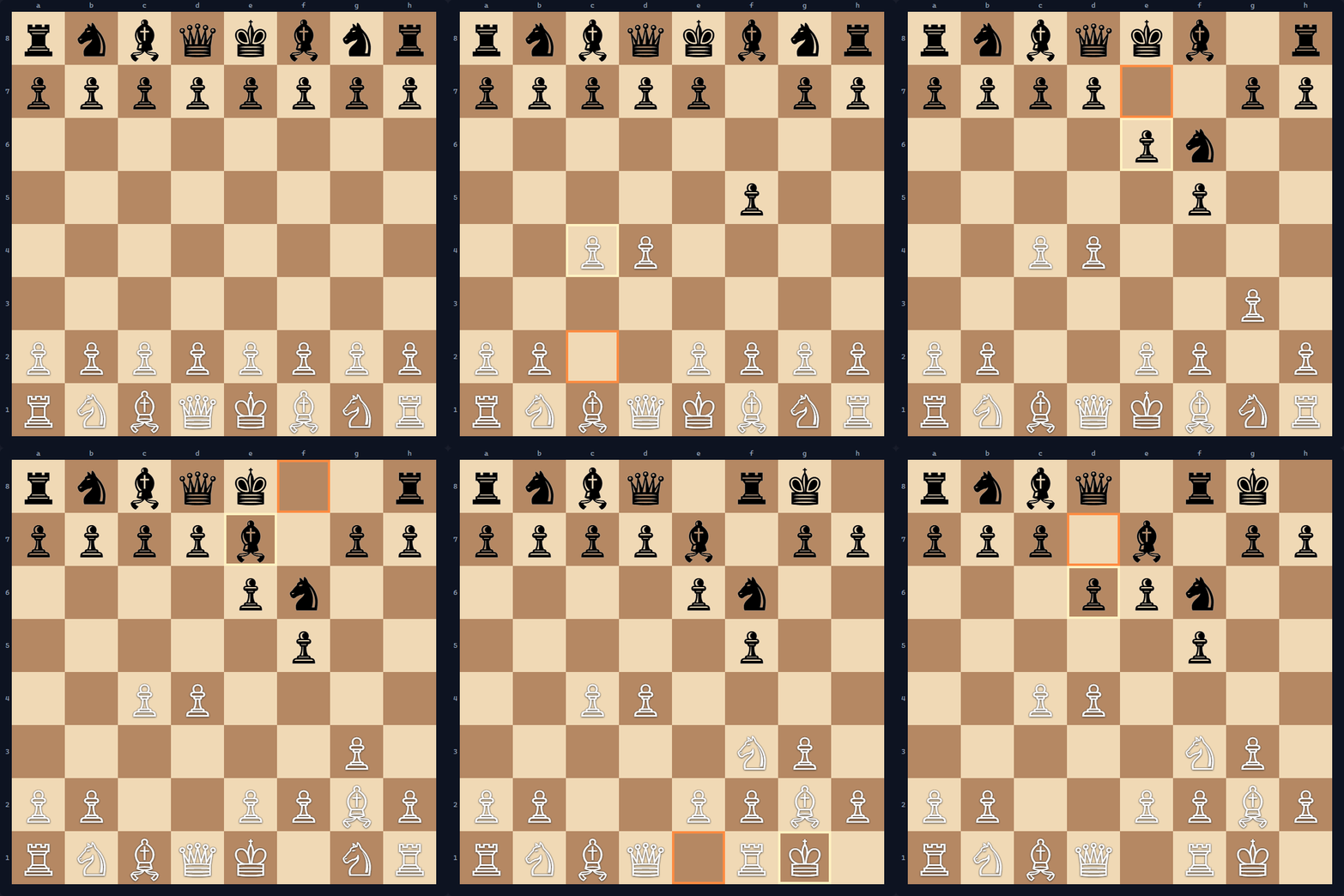
The Classical Dutch offers a more flexible approach than either the Leningrad or the Stonewall. Black develops without committing to a fianchetto or a fixed pawn chain, keeping the options open for dynamic play.
The Classical Dutch move order:
`` 1.d4 f5 2.c4 Nf6 3.g3 e6 4.Bg2 Be7 5.Nf3 O-O 6.O-O d6 ``
This variation is also called the Ilyin-Zhenevsky Variation, named after the Soviet master who pioneered its modern treatment. Some sources consider it the least popular of the three main lines, but it remains a fully viable system.
Black's typical plans in the Classical Dutch include transferring the queen to h5 for kingside pressure or preparing the e6-e5 pawn break to challenge White's center. Without the rigid pawn structures of the Leningrad or Stonewall, Black enjoys greater flexibility but must also be more precise in piece coordination.
Comparison Table: Leningrad vs Stonewall vs Classical
| Variation | Pawn Structure | Key Idea | Best Piece | Biggest Weakness | Notable Players |
|---|---|---|---|---|---|
| Leningrad | d6, g6, f5 | Fianchetto pressure on long diagonal | Dark-squared bishop on g7 | Loose kingside dark squares | Nakamura, Nepomniachtchi |
| Stonewall | d5, e6, f5, c6 | Solid light-square control | Dark-squared bishop on d6 | The e5 square | Carlsen, Tartakower |
| Classical | d6, e6, f5 | Flexible piece play, e6-e5 push | Queen on h5 or e8 | Slower development | Botvinnik, Giri |
Staunton Gambit and Other White Sidelines
Before reaching the main lines, White has several aggressive options to throw Black off balance. The most famous is the Staunton Gambit.
Staunton Gambit (2.e4)
The Staunton Gambit begins with 1.d4 f5 2.e4, a direct attempt to open the center and exploit the h5-e8 diagonal created by 1…f5. The main line continues:
`` 1.d4 f5 2.e4 fxe4 3.Nc3 Nf6 4.Bg5 ``
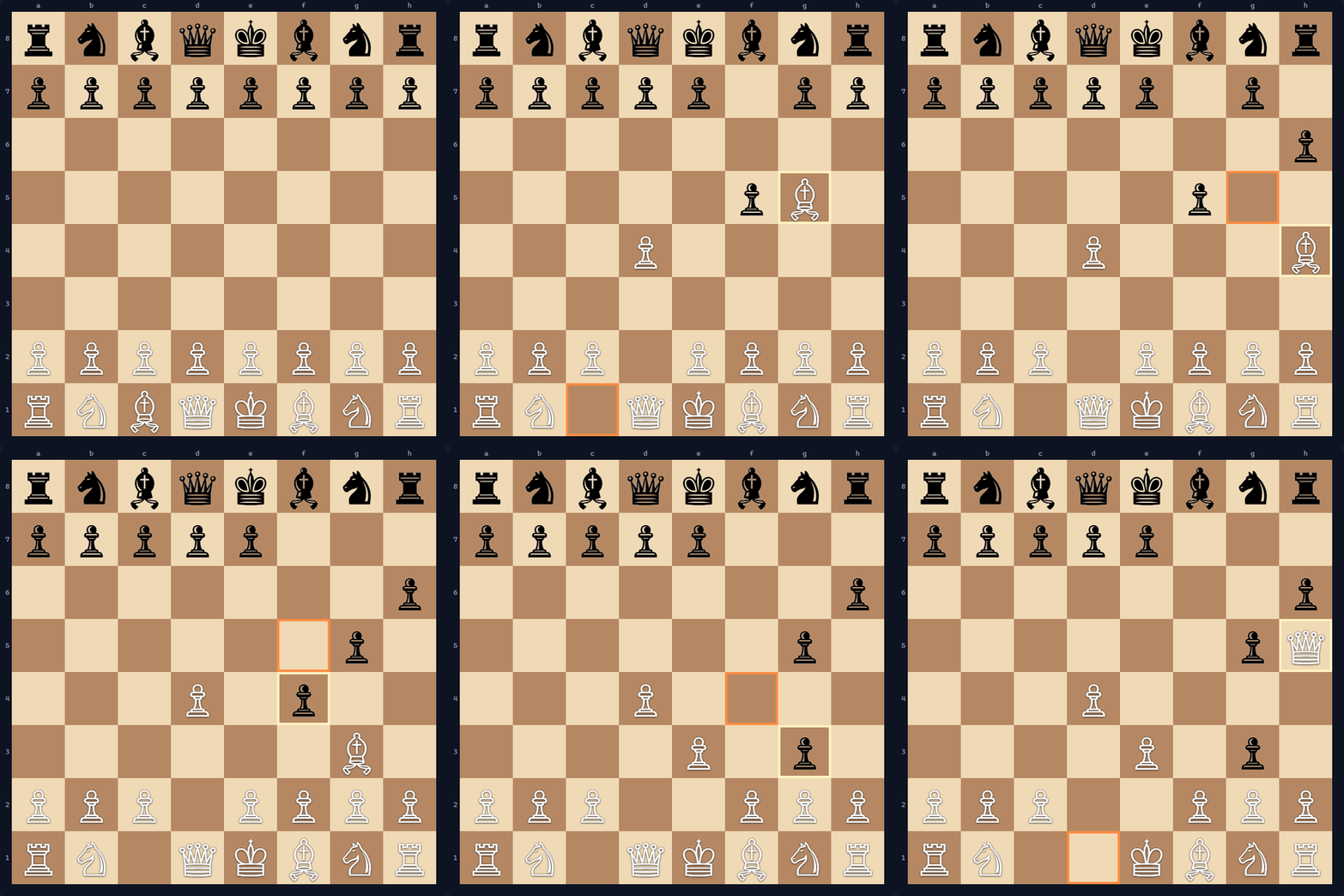
Opinions on the Staunton Gambit's soundness differ. Some sources note it "doesn't score well for White anymore," while others describe it as a "divisive" line where the evaluation is roughly equal. For practical purposes, Black can handle it comfortably with accurate play. Alternatively, players who want to sidestep the gambit entirely can use the 1…e6 move order to reach the Dutch.
Hopton Attack (2.Bg5)
The Hopton Attack (1.d4 f5 2.Bg5) aims to pin or eliminate Black's knight if it develops to f6, preventing Black from establishing the Stonewall's e4 outpost. Black can respond with natural development, but must be careful not to fall into a famous trap (covered in the next section).
Raphael Variation (2.Nc3)
The Raphael Variation (1.d4 f5 2.Nc3) prepares e4 without gambiting the pawn. Black stops 3.e4 with either 2…d5 or 2…Nf6, maintaining a solid position. This line is less threatening than the Staunton Gambit but still requires careful handling.
Common Tactical Traps in the Dutch Defense
The most famous trap in the Dutch Defense occurs in the Hopton Attack. White can set a quick checkmate if Black is careless:
`` 1.d4 f5 2.Bg5 h6 3.Bh4 g5 4.Bg3 f4 5.e3 fxg3?? 6.Qh5# ``
Black avoids this by playing 5…h5 or 5…Bg7 instead of grabbing the bishop on g3. This trap is a good reminder that every move in the Dutch carries consequences — the f5 advance is a double-edged sword.
Practical Training Plan for the Dutch Defense
If you want to add the Dutch to your repertoire, here is a straightforward approach:
1. Pick one variation to start. The Leningrad is ideal for players who enjoy dynamic, attacking positions similar to the King's Indian Defense. The Stonewall suits those who prefer a solid structure with clear attacking plans. The Classical is best for players who value flexibility.
2. Study model games. Key games to know include Tartakower's famous Stonewall win against Maroczy (Teplitz-Schönau, 1922), Carlsen's modern Stonewall victories, and Nakamura's Leningrad games (according to the commercial platform's database, he has 127 Dutch games). Analyzing these games will teach you the typical middlegame plans.
3. Learn the critical responses. Make sure you know how to handle the Staunton Gambit (2.e4) and the Hopton Attack (2.Bg5). These sidelines appear frequently at the club level and can decide the game in the first few moves.
4. Practice in blitz and rapid. The Dutch is an opening where understanding the plans is more important than memorizing long theoretical lines. Play rapid and blitz games to develop your intuition for the positions that arise.
Practical tip: According to the 365Chess database, the Dutch Defense has 40.1% White wins, 29.2% draws, and 30.7% Black wins across over 41,000 games. The relatively low draw rate and competitive Black score make the Dutch an excellent practical weapon at the club level.
Is the Dutch suitable for everyone? Some resources advise against the Dutch for beginners, recommending 1…d5 as a more principled starting point. The Dutch requires understanding of sharp, asymmetrical positions and exposes the king — a risk that needs to be managed. For players rated 1400 and above who want a fighting opening with winning chances, however, the Dutch Defense is a reliable and rewarding choice.
Frequently Asked Questions
1. Is the Dutch Defense sound? Yes, the Dutch Defense is playable at all levels, including World Championship matches. It has a lower draw rate than most 1.d4 replies, making it an excellent practical weapon. The main risk is Black's weakened kingside after 1…f5, but this is balanced by active piece play and attacking chances.
2. Is the Dutch Defense good for beginners? Most resources recommend that beginners start with 1…d5 before exploring the Dutch. The opening requires understanding of sharp, asymmetrical positions and comes with inherent king safety risks. It is best suited for players rated 1400+ who want a fighting reply to 1.d4.
3. What is the most popular variation? The Leningrad Dutch is the most popular setup among modern grandmasters. It features a King's Indian-style fianchetto and offers the most dynamic play. The Stonewall has seen a significant revival thanks to Magnus Carlsen, while the Classical (Ilyin-Zhenevsky) is the least common but fully playable.
4. How do I counter the Staunton Gambit? Accept the gambit with 2…fxe4, develop naturally with Nf6, and maintain solid piece coordination. The gambit does not score well for White in practice. To avoid it entirely, reach the Dutch via the 1…e6 move order.
5. Which top players use the Dutch Defense? Magnus Carlsen, Hikaru Nakamura, and Ian Nepomniachtchi are notable modern practitioners. Historically, Mikhail Botvinnik employed the Dutch in his 1951 World Championship match against David Bronstein, and Paul Morphy also played it when facing 1.d4.
Sources
- Chess.com — "Dutch Defense" opening page. https://www.chess.com/openings/Dutch-Defense
- 365Chess.com — "Dutch Defense" opening guide with database statistics. https://www.365chess.com/chess-openings/Dutch-Defense
- Lichess.org — "Dutch Defense" study. https://lichess.org/study/cNbjiU16/oluZCGjJ
- Chessable Blog — "Dutch Defense" by Matthew Astle. https://www.chessable.com/blog/dutch-defense/
- TheChessWorld — "Dutch Defense: The Complete Guide" by IM Zaur Tekeyev. https://thechessworld.com/articles/openings/dutch-defense-the-complete-guide/
- Simplify Chess — "Dutch Defense" beginner-oriented guide. https://www.simplifychess.com/dutch-defense/index.html
- Chess Teacher (Remote Chess Academy) — "Dutch Defense Chess Opening" by GM Igor Smirnov. https://chess-teacher.com/dutch-defense-chess-opening/