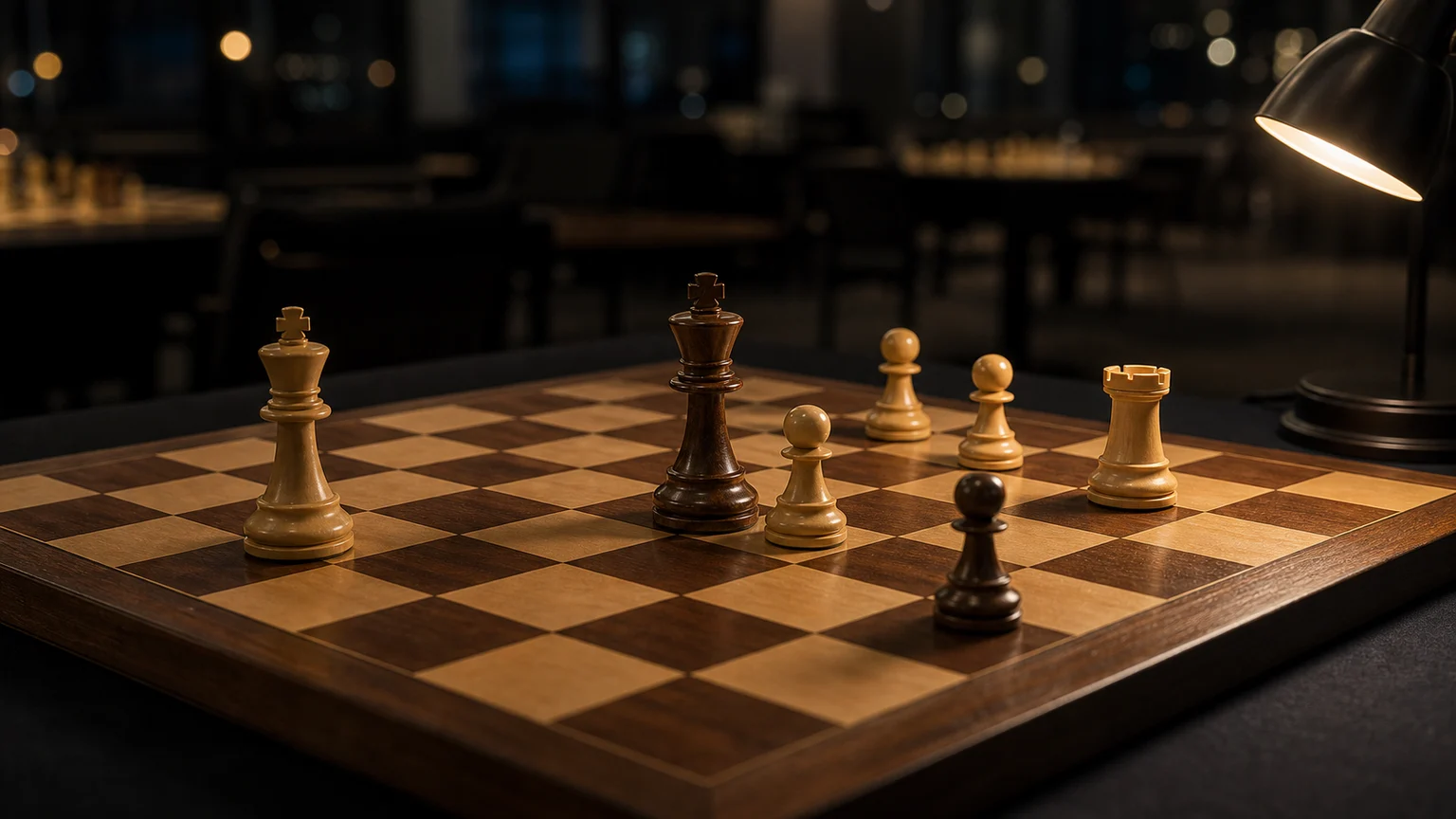
In the endgame the board is empty, but the responsibility of each move increases
If in the middlegame your inaccurate knight move can be compensated for by subsequent defense or a counter tactical threat, then in the endgame one minor mistake leads to instant disaster. There is no opportunity to hide behind the backs of other figures. The chess ending is a region of absolute precision, where one wrong move by the king turns a won position into a draw, and a drawn position into a hopeless loss.
The secret to playing confidently in the endgame lies in knowing the key theoretical positions and basic geometric laws of the board. You don't have to calculate millions of options in your head. It is enough to know how the square rule works, how to occupy the opposition with the king and why your rook must be behind the passed pawn. This simple endgame math will save you dozens of rating points and allow you to win endings against opponents who are used to relying only on tactical blunders.
Which endgames to know first
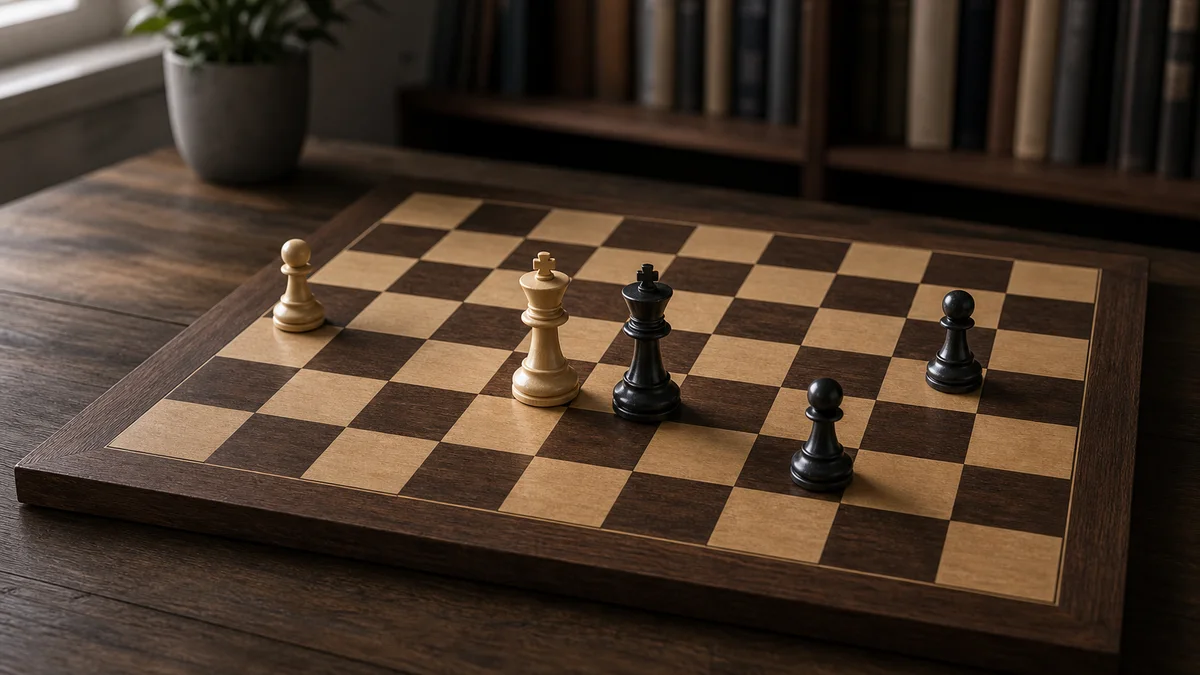
For a stable increase in chess rating, you must first master three types of endings: pawn (square rule, key squares and opposition of kings), rook (positions of Lucena and Philidor, the principle of an active rook) and the basic rules of checkmate (with a lone queen and rook).Understanding these theoretical schemes allows you to realize a material advantage or save difficult positions in time trouble.
The study of the endgame should be strictly practical. Don't try to memorize complicated five-figure studies. Focus on those positions that appear in every third of your real games.
Below is a detailed guide to key ending types.
King and pawn versus king
The pawn endgame is the foundation of all chess endings. Any exchange of pieces on the board ultimately leads to a pawn fight. The most basic and common situation is when you have one extra pawn left and you need to queen it against your opponent's lone king.
The fate of this pawn depends on two concepts:
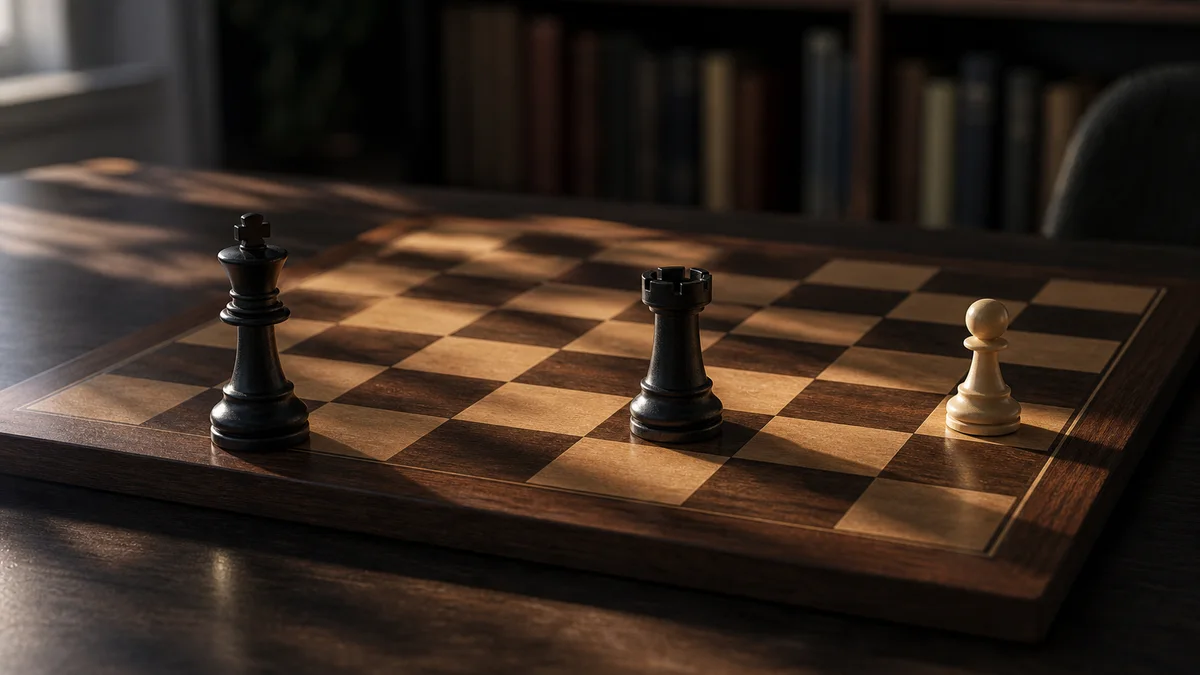
- Rule of the Square: A simple geometric way to find out if the enemy king will have time to catch up with your pawn without the help of his king. Mentally construct a square where the side is equal to the distance from the pawn to the promotion square. If the enemy king can advance into this square during his move, he will catch up with the pawn. If not, the pawn passes on its own.
- Opposition of kings: Opposition of kings on the same line through one square (for example, white king on e4, black on e6).The king who makes a move at this moment is forced to give way to his opponent. Occupying the opposition with your king in front of the pawn is the key to winning the pawn ending.
If your pawn reaches the seventh rank without check, supported by the king in front of the pawn, you win. If the pawn moves forward with check, the position ends in stalemate and a draw.
Rook endgames: an active rook is more important than a beautiful pawn
Rook endings are the most common in chess practice (about 50% of all endgames).The main law of the rook endgame was formulated by the great Siegbert Tarrasch: “The rook must stand behind a passed pawn - it doesn’t matter whether it’s yours or someone else’s.”
A rook standing behind its pawn protects it all the way forward and remains active. The rook is behind someone else's pawn - it continuously attacks it, forcing the opponent's king to be tied to defense.
Remember: in a rook endgame, the activity of your rook is more important than the extra pawn. A passive rook, locked in defense at the edge of the board, dooms you to slow defeat. It is better to sacrifice a pawn, but free up the rook to attack enemy pawns from the rear, than to stubbornly cling to material in a dead position.
Lucena and Philidor as guidelines, not as magic words
There are two classic positions in rook endings that every rated player should know:
Lucena's position is “a bridge to victory.” A situation where you have an extra pawn on the 7th rank, your king is locked in front of it, and the opponent's rook cuts off your king. To win, you need to build a “bridge” with the rook on the 4th rank (or 5th) to shield the king from your opponent’s side checks and advance the pawn to the queen.
The Philidor position is the gold standard of defense. A way to hold a draw without a pawn. You place your rook on the 6th rank (or 3rd for Black), preventing your opponent's king from moving forward. As soon as the opponent moves his pawn forward, you immediately move the rook to the rear on the last line and begin to endlessly check the opponent's king from behind, fixing a draw.
Queen endgames and perpetual check
Queen endings are extremely dynamic and cunning. Due to the enormous range of queens on an empty board, there is always a risk of missing a perpetual check, even with a colossal material advantage.
Queen endgame rules:
- Safety of your own king: Hide your king behind your own pawns from your opponent's continuous checks.
- Queen Activity: Your queen should occupy the central squares, controlling the diagonals and protecting her pawns.
- Passed Pawn Movement: Your passed pawn should move forward under the protection of the queen. Never relax in a queen ending until your opponent's king is completely cut off from the check squares.
How not to lose a won endgame under time pressure
Most endgames are played in the last minutes or even seconds of the game. Time pressure turns precise calculation into chaos. To avoid losing your advantage, follow the rules of time pressure hygiene:
- Go to simple solutions mode: Don't try to find the most beautiful maneuver, choose reliable incremental moves.
- Use the 50-move rule and repeat three times: If you are defending a worse position, aim to secure a draw according to the formal FIDE rules (50 moves without captures or pawn movements, or repeat the position three times).
- Keep the king active: In the endgame, the king is the attacking piece. Take him to the center of the board towards your opponent's pawn weaknesses.
Table of priorities for studying chess endings
The table below contains key theoretical endings and their priority for training:
| Endgame type | Key Law/Position | Difficulty of learning | Impact on rating growth | Rules source |
|---|---|---|---|---|
| Linear checkmate | Checkmate with rook/queen to the lonely king | Very low (1 day) | Basic hygiene, eliminates stalemates | FIDE Laws of Chess |
| Pawn | Square rule, opposition | Average (3 days) | High (teaches accurate calculation) | FIDE handbook |
| Rook | Positions of Lucena and Philidor | High (7 days) | Very high: rook endings are common and require technique | the commercial platform Terms / the open-source platform Practice |
| Queen | Protection from the eternal check | Very high | Average (less common) | ECO chess theory |
Note: All rules and draw conditions (stalemate, triple repetition, 50 moves) have been verified according to the current version of the FIDE Handbook.
Finale: the place where the rating returns the debt for patience
The endgame is where the true class of a chess player is revealed. Weak players love the opening fuss and tactical complications, but quickly become overwhelmed when the board empties. Strong players, on the contrary, are happy to move into the endings, knowing that there their accuracy and understanding of the laws will bring them easy points.
Learning the endgame requires patience. This does not bring instant vivid emotions, like tactical checkmate in 15 moves. But in the long run, it is knowledge of the endgame that will become your main advantage. When your opponent, under time pressure, begins to panic and make chaotic moves with his rook, you can calmly build a Lucena “bridge” or occupy the opposition with the king, taking away well-deserved rating points in front of your surprised opponent.
Practical Toguz Arena links
- Play a rated game on Toguz Arena: use the shared play entry and review the late-game decisions afterward.
- Open the chess blog hub: pair endgame work with tactics, openings, time control and defeat analysis.
- Check the chess fair-play policy: tablebase or engine help belongs after the game, not during rated play.
Sources and verification notes
- Verification Date: 2026-06-26
- Endgame theory checked: Lucena Position, Philidor Position, King and Pawn vs King opposition logic, rule of the square are presented in complete alignment with classic endgame manuals (e.g., Dvoretzky's Endgame Manual) and FIDE standards.
- FIDE rules context: FIDE Laws of Chess effective from 1 January 2023 is used for stalemate, repetition, 50-move and game-termination context.
- Rating context: Mark Glickman, Example of the Glicko-2 system is used only as context for platform-specific rating movement and uncertainty.
- Limitation: endgame study improves decision quality over time, but this article does not promise a fixed number of rating points.