Do not file it under passive openings just because the center is closed. The French is a structured counterpunch: Black accepts one bishop problem to get a durable pawn chain and clear plans.
What the French Defense is and why it matters
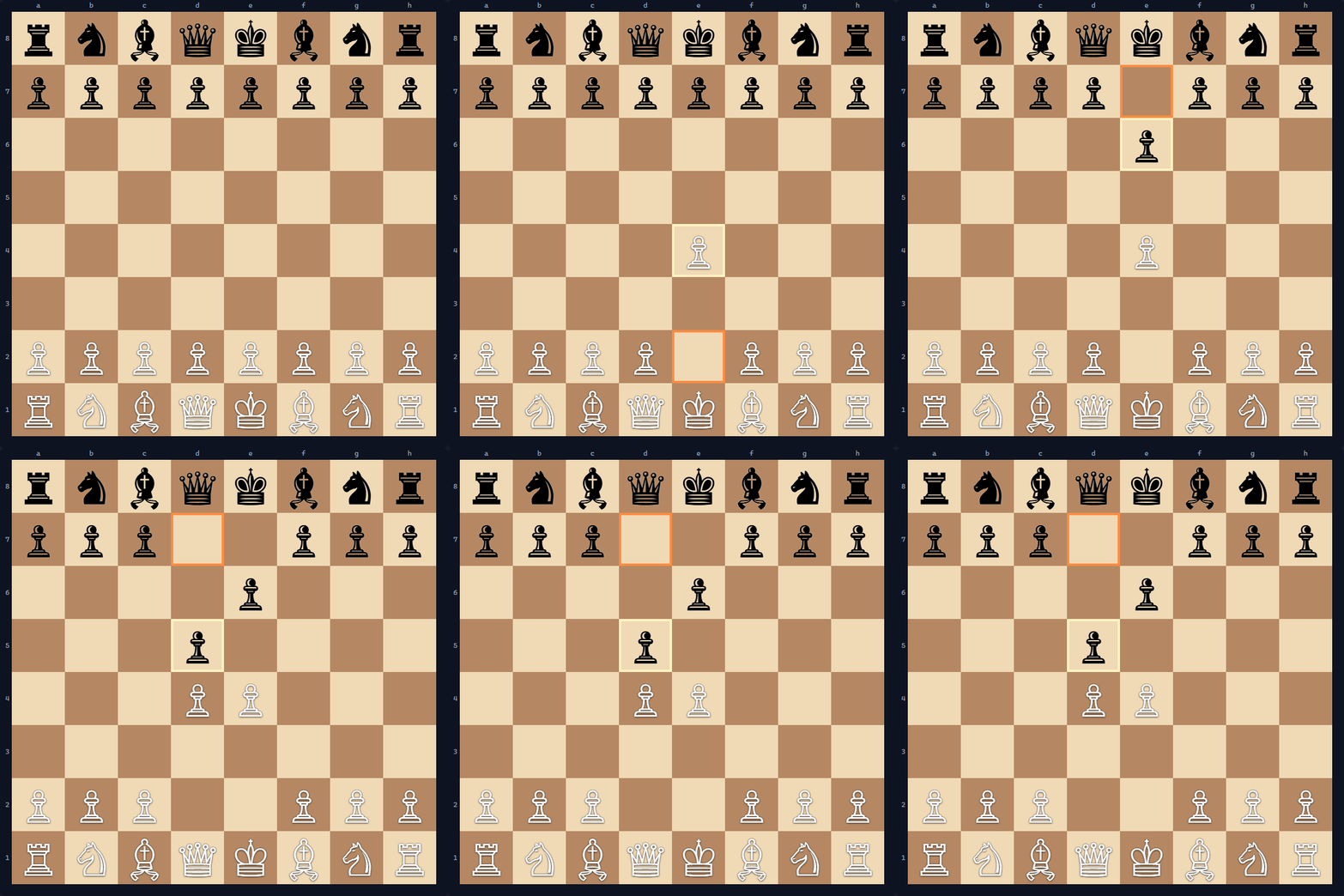
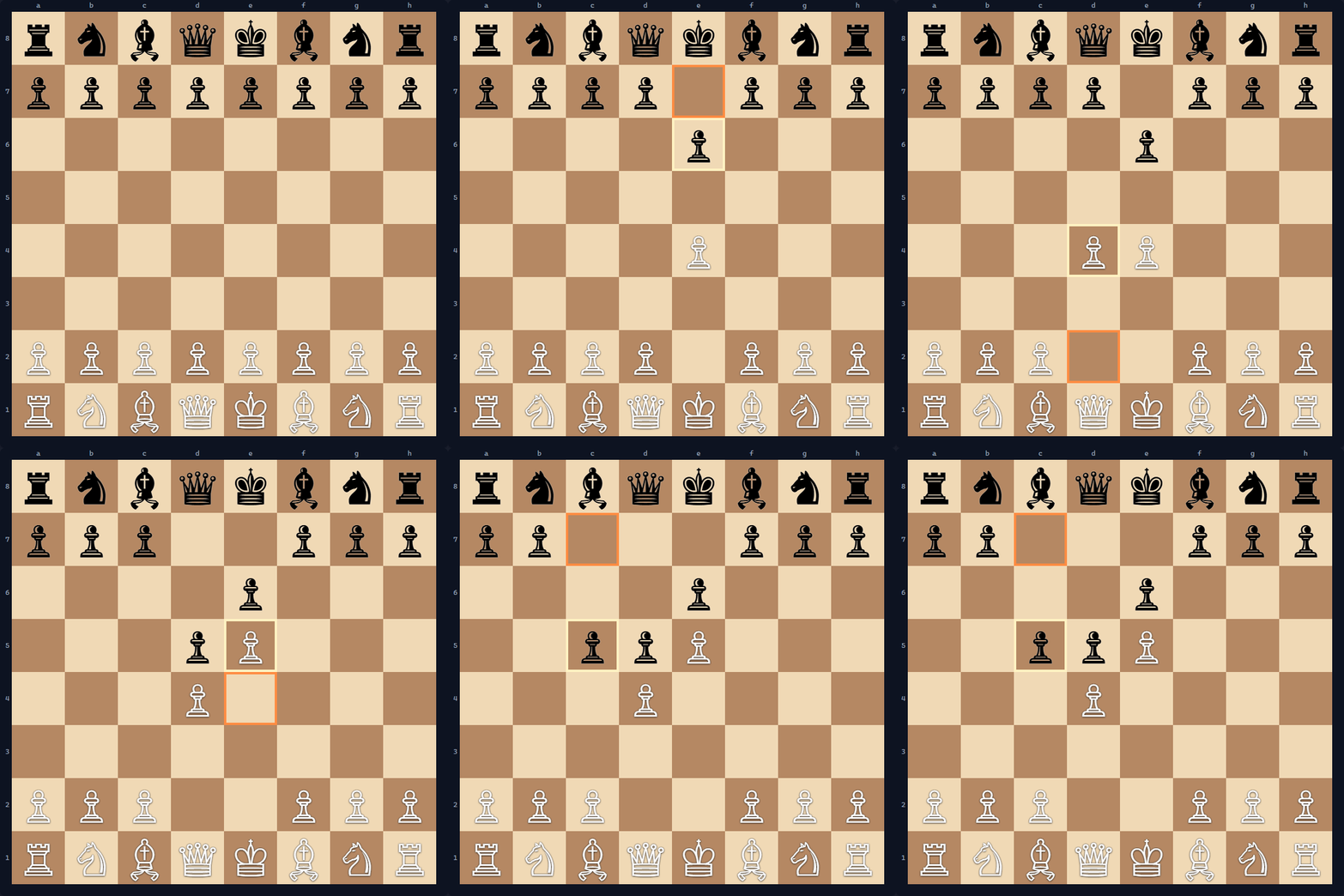
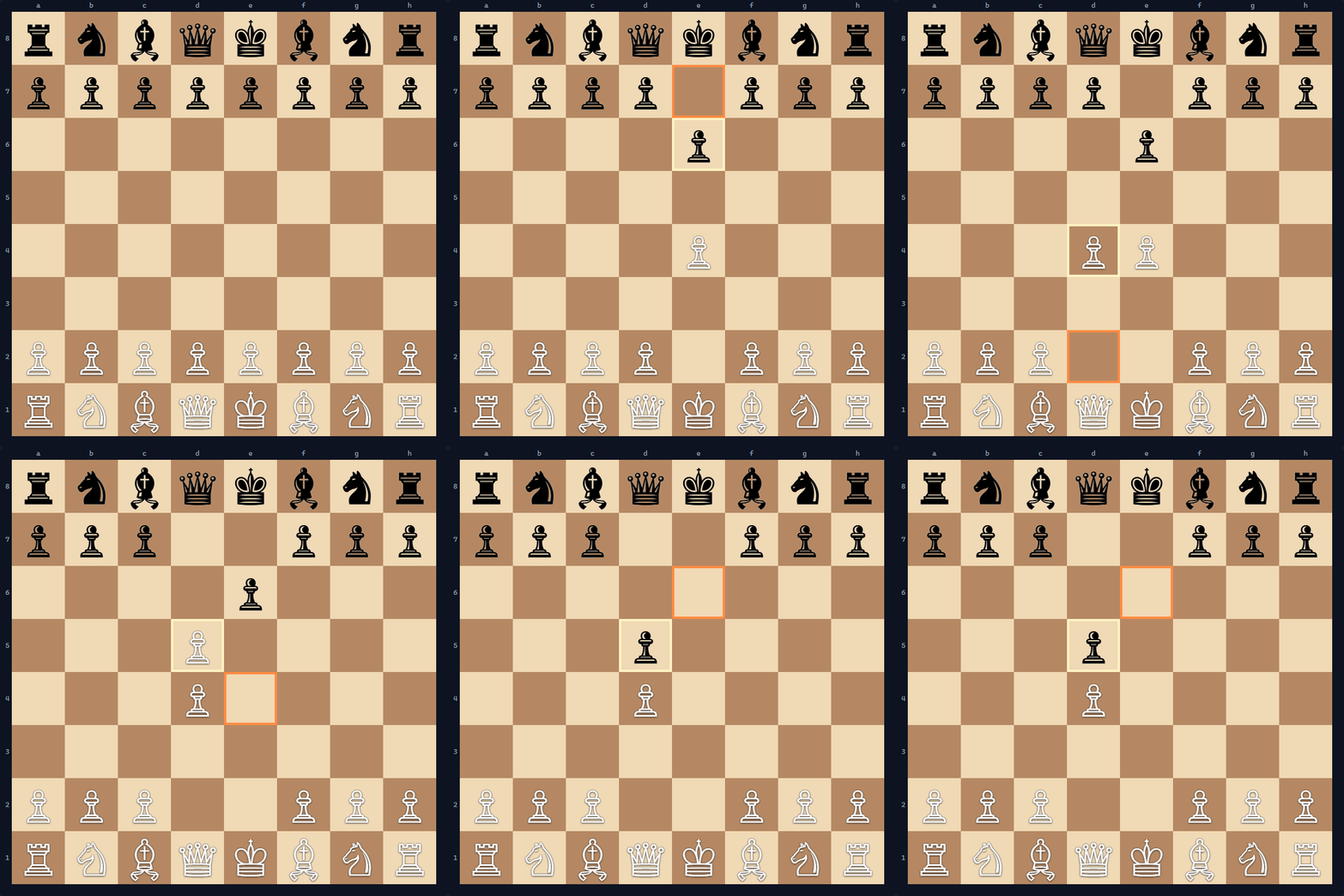
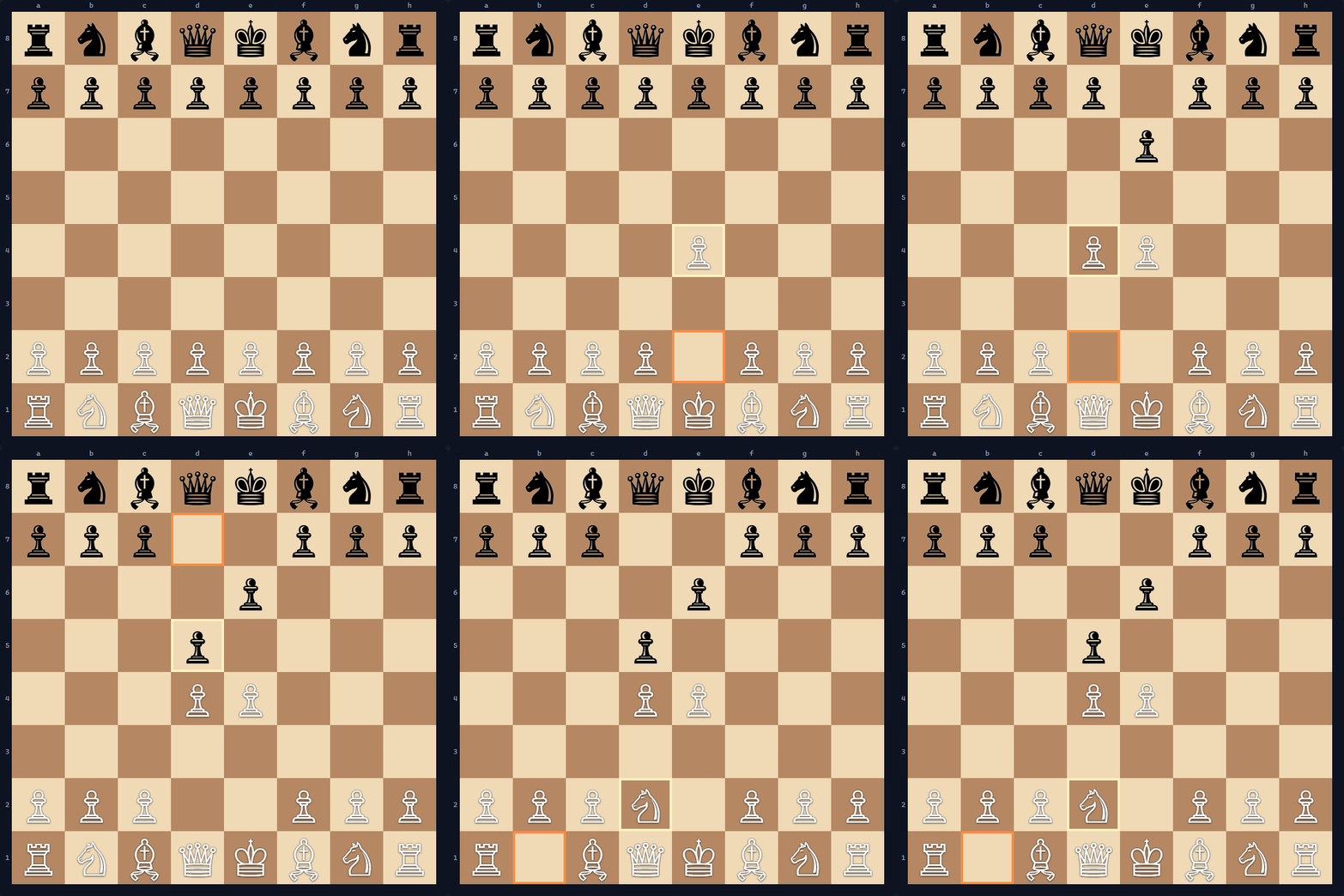
The French Defense begins with the moves 1.e4 e6 2.d4 d5. The defining trade-off Black accepts from the very first move is clear: by playing 1...e6, Black concedes the light-squared bishop's mobility in exchange for a solid central pawn chain that contests d5 from the second move. White's e4 pawn is immediately challenged, and Black's central foothold is established without the concessions inherent in 1...c5 (the Sicilian Defense) or the classical symmetry of 1...e5.
According to Forwardchess citing the Chessbase online database, the French is Black's third most common reply to 1.e4 after the Sicilian (1...c5) and 1...e5. This ranking undersells its practical importance: unlike the Sicilian's hypermodern complexity or the open-game demands of 1...e5, the French attracts positional fighters who welcome closed, imbalanced structures where pawn plans matter more than tactical fireworks. The French Defense is for players who think in terms of pawn breaks, good-versus-bad bishops, and long-term strategic pressure.
A short history — the 1834 correspondence match
The opening takes its name from a correspondence match between London and Paris in 1834. The Parisian team, led by the advocacy of Jacques Chamouillet, deployed 1.e4 e6 to notable success, and the opening was named after the winning French side. According to Forwardchess, the Parisian players "victoriously played it, thanks to team member Jacques Chamouillet who convincingly advocated for it." The match was one of the earliest recorded international chess events, and the opening born from it has remained a top-tier weapon for over 190 years.
Public video metadata alone shows how wide the French Defense's elite reach has been: Viswanathan Anand, Magnus Carlsen, Anatoly Karpov, Mikhail Tal, Viktor Korchnoi, Anish Giri, and Ian Nepomniachtchi have all played it at grandmaster level. That breadth of elite adoption confirms what generations of club players have discovered — the French is a system you can trust regardless of your opponent's strength.
The four major variations — which one suits your style?
The French Defense splits into four major variations after 1.e4 e6 2.d4 d5 (simplifychess.com). Each variation creates a distinct pawn structure and demands a different set of strategic skills. The table below summarizes the key characteristics of each line.
| Variation | Moves | Pawn Structure | Tactical Character | Recommended Player Style |
|---|---|---|---|---|
| Advance | 3.e5 | Closed, fixed pawn chain (White dark squares, Black light squares) | Positional, slow maneuvering | Players who enjoy closed centers and long-term planning |
| Exchange | 3.exd5 exd5 | Symmetrical, can lead to IQP positions | Quiet, technical | Positional players who want low-theory, safe positions |
| Tarrasch | 3.Nd2 | Semi-open, strategic | Less tactical, slow buildup | Solid, strategic players who avoid sharp theory |
| Main Line | 3.Nc3 | Open center (Winawer) or closed (Classical) | Highly tactical in Winawer, theoretical in Classical | Ambitious players comfortable with heavy theory |
Your choice of variation should match your playing style. The Classical (3...Nf6 against 3.Nc3) is the recommended starting point for club players below 1600: it teaches the fundamental pawn structures and strategic themes without exposing you to the sharpest tactics. The Winawer (3...Bb4) can be added once you cross 1600 and want more aggressive counterplay.

Advance Variation — the space grab
White's 3.e5 pushes the pawn chain forward, gaining space on the kingside and center while fixing Black's pawns on light squares. This is the variation that gives the French its most distinctive character: the pawn on e5 locks Black's light-squared bishop permanently behind the e6-d5 chain, creating the famous "bad" French bishop that defines the entire opening's strategic landscape (simplifychess.com).
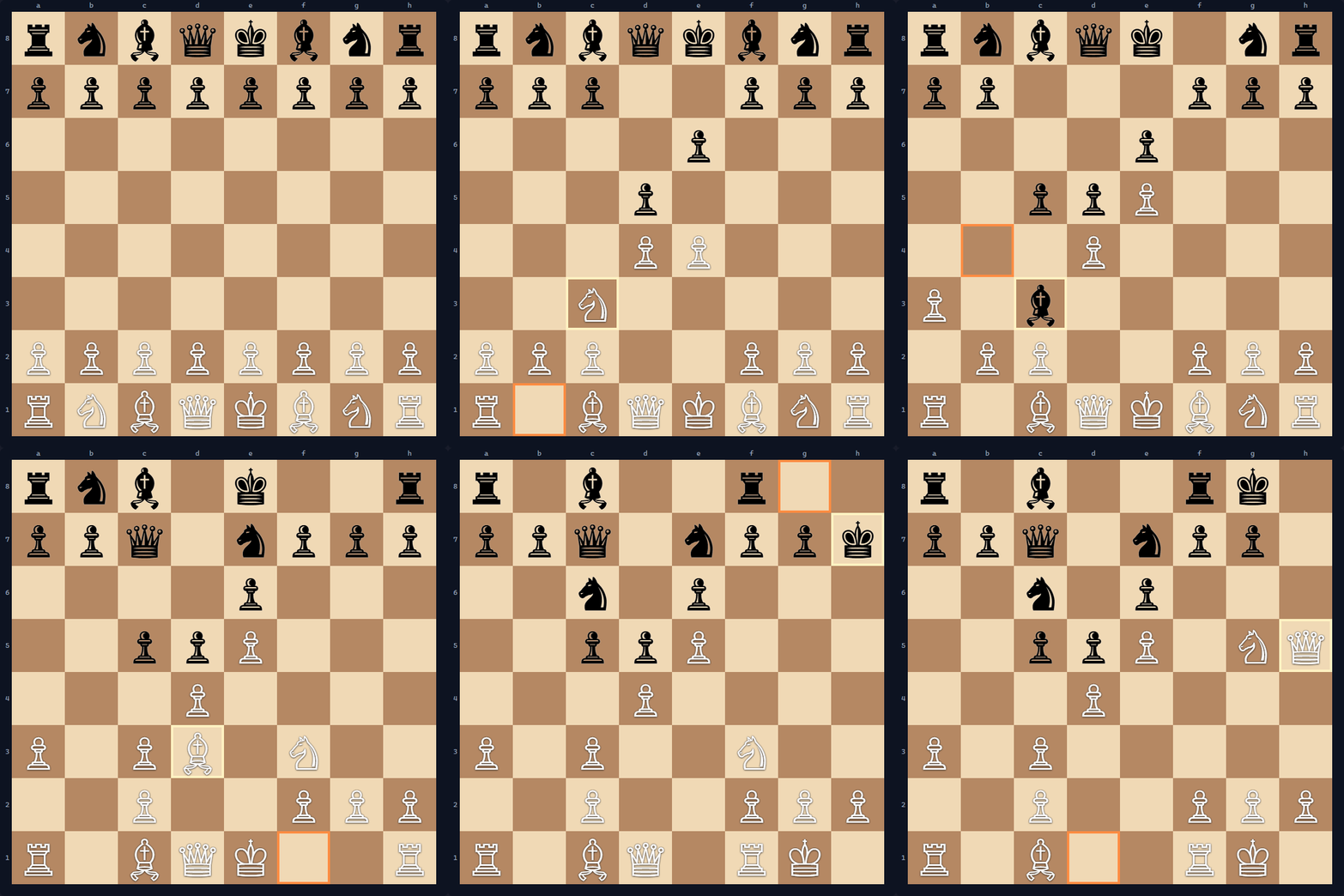
Black's main counterplay revolves around two pawn breaks: ...c5 to attack the base of White's pawn chain at d4, and ...f6 to undermine the head at e5. According to thechessworld, these are Black's primary tools for generating dynamic counterplay in the Advance. A typical club-level trap in this line, documented by chessklub, runs: 1.e4 e6 2.d4 d5 3.Nc3 Bb4 4.e5 c5 5.a3 Bxc3+ 6.bxc3 Qc7 7.Nf3 Ne7 8.Bd3 Nbc6 9.O-O O-O 10.Bxh7+. After 10...Kxh7 11.Ng5+ Kg8 12.Qh5, White threatens a decisive attack — Black must know the correct defensive resource (12...Qf5!, covering h5 and blocking the attack).
As Black, 3...c5 is the most principled response after 3.e5. It immediately challenges White's center and forces White to decide between defending d4 or transposing into sharp play with an early c3.
Exchange Variation — symmetry is not equality
The Exchange Variation (3.exd5 exd5) appears deceptively simple. White creates a symmetrical pawn structure on the third move, and many club players assume the position is equal and drawish. In practice, the symmetry masks real strategic nuances.
Major overview references agree on one practical point: White often continues 4.Bd3 aiming for a quiet game, but Black can transpose into IQP (isolated queen's pawn) positions with an early ...c5 break. After 4...Nc6 5.Nf3 Nf6 6.O-O Bd6, the position resembles a Queen's Gambit Declined Exchange Variation with colors reversed — comfortable for Black. The Exchange Variation is much rarer at master level because Black equalizes without difficulty. For club players, it serves as a solid secondary weapon: low on theory, high on strategic clarity, and perfectly adequate against lower-rated opposition.
Tarrasch Variation — the strategic battleground
White's 3.Nd2 defines the Tarrasch Variation. The key advantage for White is that 3...Bb4 is not effective — White simply replies 4.c3, forcing the bishop to retreat (simplifychess.com, corroborated by chessable.com). This avoids the pin that defines the Winawer and keeps the position under White's strategic control.
The resulting positions are strategic rather than tactical. White's knight on d2 is less aggressive than the standard post on c3, but it also supports the e4-pawn and keeps the light-squared bishop free. According to thechessworld, the Tarrasch rewards patience and positional understanding over sharp calculation.
Black's most active reply is 3...c5, leading to 4.exd5 Qxd5 (the main line) or 4.Ngf3 Nc6. After 4.exd5 Qxd5, Black develops quickly and challenges White's center. The resulting positions are balanced but require precise handling from both sides — a good choice for Black players who want a full game without the tactical overload of the Winawer.
Main Line — Winawer or Classical?
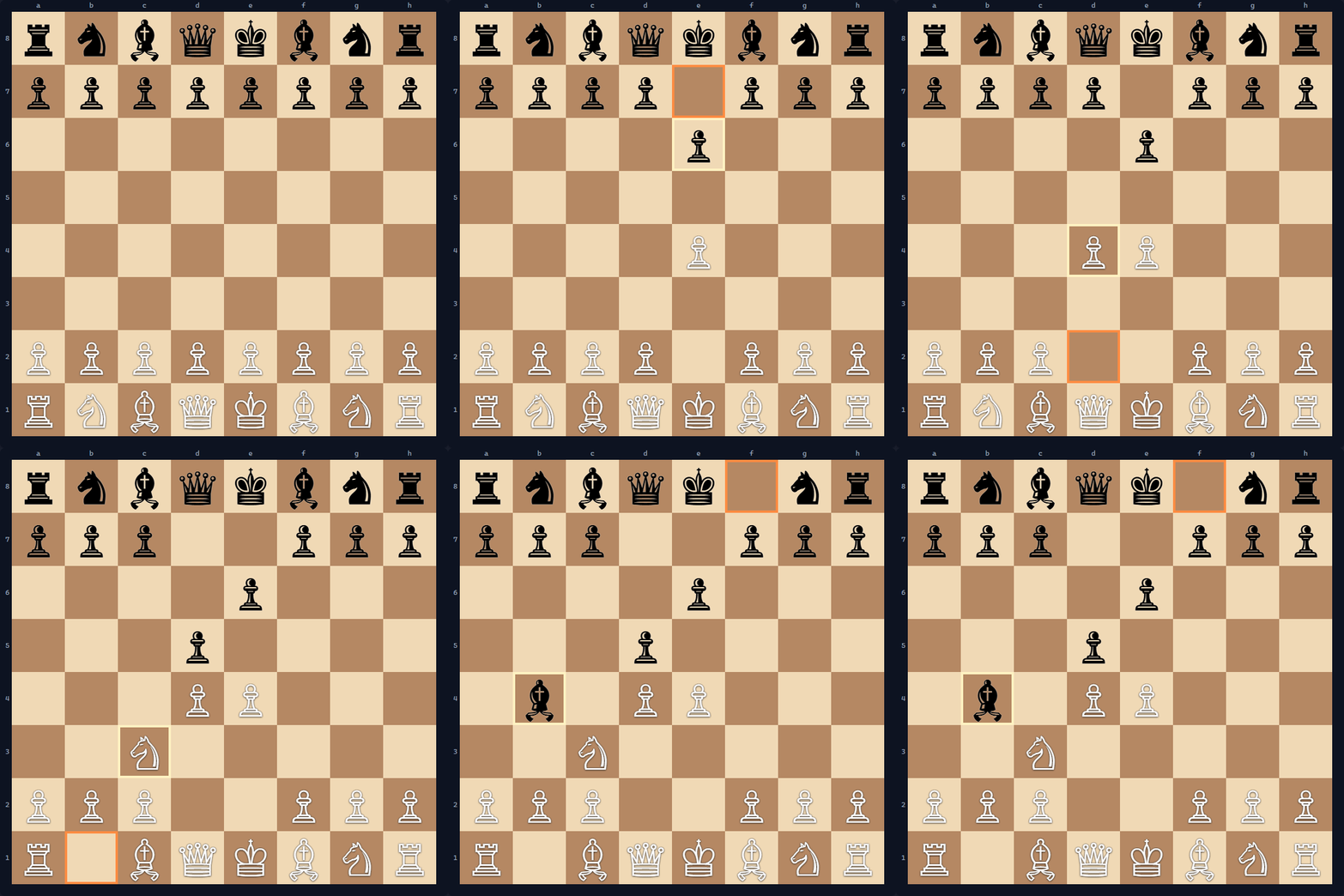
The Main Line (3.Nc3) is the most ambitious and tactical response to the French Defense (simplifychess.com). After 3.Nc3, Black faces a critical choice that determines the character of the entire game.
Winawer Variation (3...Bb4). According to Forwardchess, the Winawer "is one of the most aggressive lines in the French." Black pins the c3-knight, threatening ...Bxc3+ to double White's b-pawns. The resulting positions are imbalanced and dynamic: White gets the bishop pair and a central pawn majority, while Black targets the doubled c-pawns and seeks counterplay on the queenside. The Winawer is the choice for club players who want forcing, sharp positions with clear attacking plans.
Classical Variation (3...Nf6). The Classical is the solid alternative. After 4.e5 Nfd7 5.f4 c5 6.Nf3 Nc6 7.Be3, both sides enter a heavily theoretical tabiya known as the Steinitz Variation. Black's knight retreats to d7 (preserving the light-squared bishop), and the game revolves around the tension between White's central space advantage and Black's queenside counterplay with ...c5 and ...Qb6.
For club players, the Classical is the safer foundation. It teaches the essential French structures — the pawn chain, the bishop problem, the c5 break — without the immediate tactical commitments of the Winawer. Once you are comfortable with the Classical, the Winawer becomes a natural extension of your repertoire.
The "bad" French bishop — the central strategic theme
No discussion of the French Defense is complete without addressing its most famous characteristic: the "bad" French bishop on c8. Locked behind the e6-d5 pawn chain (and further blocked by White's e5 pawn in the Advance), Black's light-squared bishop is the single greatest strategic challenge in this opening (simplifychess.com, corroborated by chessable.com).
Black has three main activation plans (chessable.com):
- ...b6 and ...Ba6. Trade off the bishop for White's knight on c6 or bishop on d3. This is the most common solution and often leads to a slight weakening of Black's queenside dark squares.
- ...Bd7 and ...Be8 (sometimes ...g6 and ...Bh6). Re-route the bishop to the kingside via e8. This is slower but more flexible, keeping the option of ...Bd7-c6 to pressure e4.
- The ...f6 break. Dissolve the e5 pawn entirely, freeing the c8-bishop and opening lines for Black's other pieces. This is the most dynamic approach but also the riskiest, as it weakens Black's kingside.
This strategic challenge is the key difference between the French and its cousin, the Caro-Kann Defense (1.e4 c6 2.d4 d5). In the Caro-Kann, Black develops the light-squared bishop to f5 before ...e6, solving the problem before it arises. In the French, you accept the challenge and must find creative ways to activate the bishop later.
Practical tip: If you can activate your c8-bishop to a useful square before move 20, you have won the strategic battle. Every exchange and every pawn break in the French should be evaluated through this lens.
A practical club-player question follows: what order should you study all this in? A phased approach works best. Start with the Classical French (3...Nf6 against 3.Nc3) as your foundation — it teaches the core pawn structures and strategic themes. Add 3...c5 against the Advance Variation next. Once you are comfortable with these systems, learn the Winawer (3...Bb4) as your first advanced weapon.
For deeper study, Chessable offers several French-Defense-specific video courses, as reviewed on en.chessbase.com, while The French Defence PowerBook 2024 and PowerBase 2024 provide database-heavy preparation material. One more system is worth knowing: the King's Indian Attack (1.e4 e6 2.d3). According to chessable.com, it was a favorite of Bobby Fischer and gives White a separate anti-French route away from main-line theory.
Frequently asked questions
Is the French Defense good for beginners?
Yes. The French teaches pawn structure thinking and positional play from the very first moves. The Classical Variation is accessible for beginners, though the Winawer can be sharp for absolute beginners. Start with the Classical.
What is the difference between the French Defense and the Caro-Kann?
Both prepare ...d5 against 1.e4. The French plays 1...e6 first, blocking the light-squared bishop on c8. The Caro-Kann plays 1...c6, keeping the bishop free for development to f5. This trade-off — bishop activity versus central solidity — is the fundamental distinction.
Why is the French Defense bishop "bad"?
The c8-bishop is locked behind the e6-d5-e5 pawn chain in the Advance variation. Activating it via ...b6-Ba6, ...Bd7-Be8, or the ...f6 break is Black's main strategic challenge.
What is White's best response to the French Defense?
No single reply refutes the French. 3.Nc3 is the most ambitious (leading to the Winawer or Classical). 3.Nd2 (Tarrasch) is the safest. 3.e5 (Advance) is the most space-gaining. The King's Indian Attack (1.e4 e6 2.d3) is a separate anti-French weapon.
Is the French Defense passive?
No. The Classical offers solid central play, and the Winawer creates imbalanced attacking chances. The "passive" label comes from the closed center — not from Black's actual counterplay potential.
Sources and further reading
- chess.com — French Defense opening page: https://www.chess.com/openings/French-Defense. Used for: opening overview, main variations (Advance, Exchange, Tarrasch, Classical, Winawer), and historical framing.
- simplifychess.com — French Defense (How To Play It, Attack It, And Counter It): https://simplifychess.com/french-defense/. Used for: four major variations classification and per-variation strategic plans.
- chessable.com — French Defense: https://www.chessable.com/blog/french-defense/. Used for: long-form variation treatment, King's Indian Attack, and strategic plans for both colors.
- forwardchess.com — Chess Openings: The French Defense: https://forwardchess.com/blog/chess-openings-the-french-defense/. Used for: 1834 London–Paris correspondence match naming origin, notable player list, and variation breakdown.
- chessklub.com — French Defense — A Complete Guide for Beginners: https://chessklub.com/chess-openings/french-defense/. Used for: beginner-oriented variation overview and the Bxh7+ trap sequence.
- thechessworld.com — French Defense: Complete Guide for Both Colors: https://thechessworld.com/articles/openings/french-defense-complete-guide-for-both-colors/. Used for: pawn structure breakdown and Black's strategic plans for the bad bishop.
- en.chessbase.com — The French Defence course review: https://en.chessbase.com/post/the-french-defence-a-powerful-opening-but-what-s-the-best-way-to-study-it. Used for: Chessable course listing and study-resource recommendations.