
What Is the Fried Liver Attack?
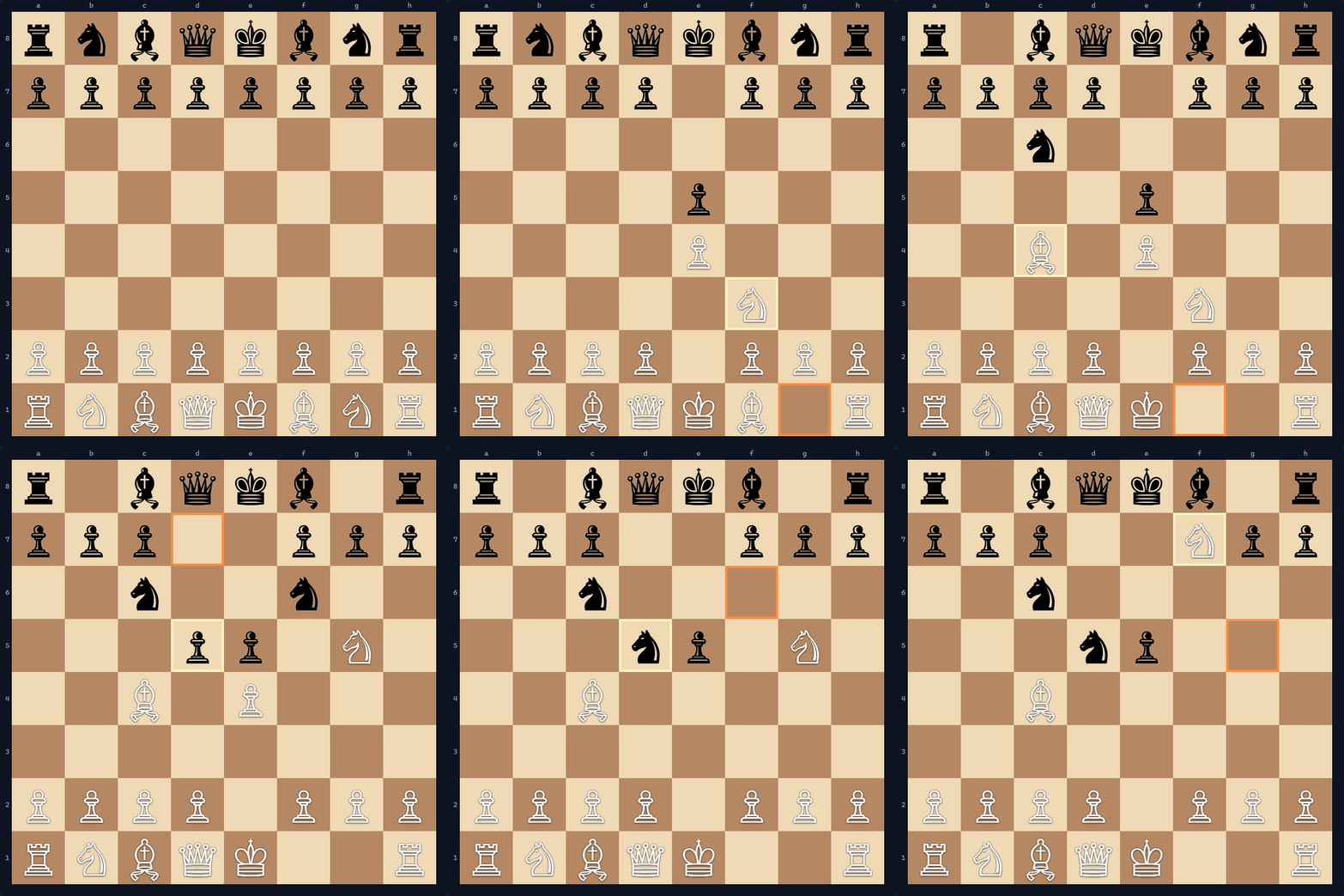
The Fried Liver Attack is a sharp attacking line for White in the Italian Game. White sacrifices a knight on f7 to drag Black's king into the open, then chases it with Qf3+ and rapid development. The line only becomes possible when Black plays the natural-looking but frequently punished move 5…Nxd5.
It is important to distinguish the Fried Liver from its precursor: 4.Ng5 is called the Knight Attack, and it only becomes the Fried Liver Attack proper after 6.Nxf7. If Black avoids 5…Nxd5 — by playing 5…Na5 (Polerio Defense) or 5…Nd4 (Fritz Variation) — the Fried Liver never materializes. As the House of Staunton guide puts it, "The Fried Liver Attack proper can only commence if Black makes a natural and frequently played error: 5…Nxd5."

Why it matters for club players: The Fried Liver teaches core attacking skills — exploiting an exposed king, coordinating pieces in an attack, and converting a material deficit into a winning initiative. Chessreps notes that the attack is "extremely effective in club and online play," and the Chessable blog confirms that top grandmasters including Aronian, Duda, and Jobava have all played it in recent years.
The Defining Sacrifice — 6.Nxf7
After 5…Nxd5, White's knight leaps to f7. The move simultaneously attacks Black's queen and rook, giving Black no choice but to accept the sacrifice with 6…Kxf7. Refusing is not an option — both major pieces hang.
White immediately follows up with 7.Qf3+, forcing the king to move again. Black has four possible responses, and only one offers a realistic chance to survive:
- 7…Ke6 — Black's best option. The king protects the d5-knight and stays close to the action.
- 7…Ke8 — Retreating to safety, but abandoning the d5-knight. White simply recaptures with 8.Bxd5 and emerges a clean pawn up with a dominant position.
- 7…Kg8 — Returning to the back rank, but this walks into a forced checkmate.
- 7…Qf6 — Blocking the check with the queen. White can exchange queens and remain a pawn up with the safer king.
| Black response | What it means | Practical verdict |
|---|---|---|
| 7...Ke6 | The king protects the d5-knight and stays near the center. | Best practical try for Black. |
| 7...Ke8 | Black retreats but gives up the d5-knight. | White wins material and keeps pressure. |
| 7...Kg8 | The king returns to the back rank. | Walks into the forcing mating line shown below. |
| 7...Qf6 | The queen blocks the check. | White can trade queens and keep the safer position. |
White invests a whole knight, but the compensation is enormous. Black loses castling rights in almost every branch, the black king becomes a target, and White's pieces develop with gain of time while Black's queenside stays asleep.
Practical callout: Before playing 4.Ng5, check whether your opponent knows how to defend. At club level, many Black players instinctively play 5…Nxd5 without thinking — and that is exactly what the Fried Liver attacker is counting on.
The Main Line — Black Plays 7…Ke6
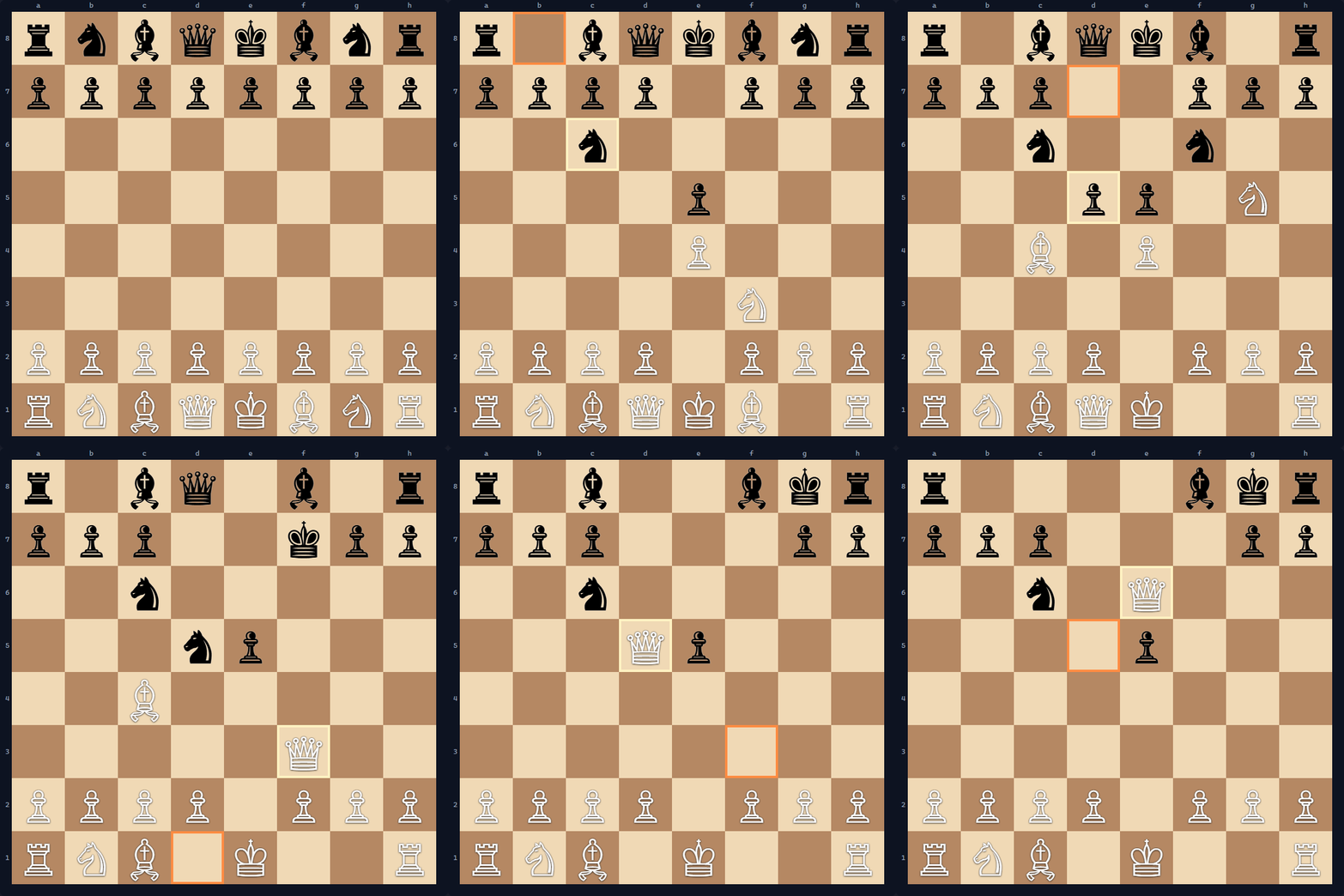
The move 7…Ke6 keeps the knight on d5 defended and gives Black the best fighting chance. According to Chessreps, this is the critical main line of the entire Fried Liver complex.

White continues 8.Nc3, piling pressure on the pinned knight on d5. Black's most principled response is 8…Nb4, a multi-purpose move that protects d5, frees the c6-square for a pawn push, and threatens a disruptive …Nxc2+. This is the line that Simplify Chess identifies as Black's best counter.
White castles (9.O-O) to remove the king from the center. Now …Nxc2 is not a real threat — the knight on b4 is still needed to defend d5. Black must play 9…c6 to reinforce the pinned knight.
And then comes the breakthrough: 10.d4. White opens the center while every piece joins the attack. As Chessreps describes it, "castles and opens the center with d4, when every White piece joins the hunt while Black's queenside sleeps." The black king on e6 remains dangerously exposed, and at club level opponents often crack within a few moves.
King Retreats — 7…Ke8 and 7…Kg8
Two of Black's king moves are clearly losing, and a third (7…Qf6) is only slightly less grim. These are the positions every Fried Liver attacker should recognize to finish the game efficiently.
7…Ke8 — Abandoning the knight
When Black retreats to e8, the d5-knight is left undefended. White simply plays 8.Bxd5, recovering the sacrificed material with interest. Black's king is still exposed, White has an extra pawn, and the position offers Black no compensating activity. Chessreps calls this line a clear win for White.
7…Kg8 — The 10-move checkmate
This is the dream finish for every Fried Liver attacker. The sequence runs:
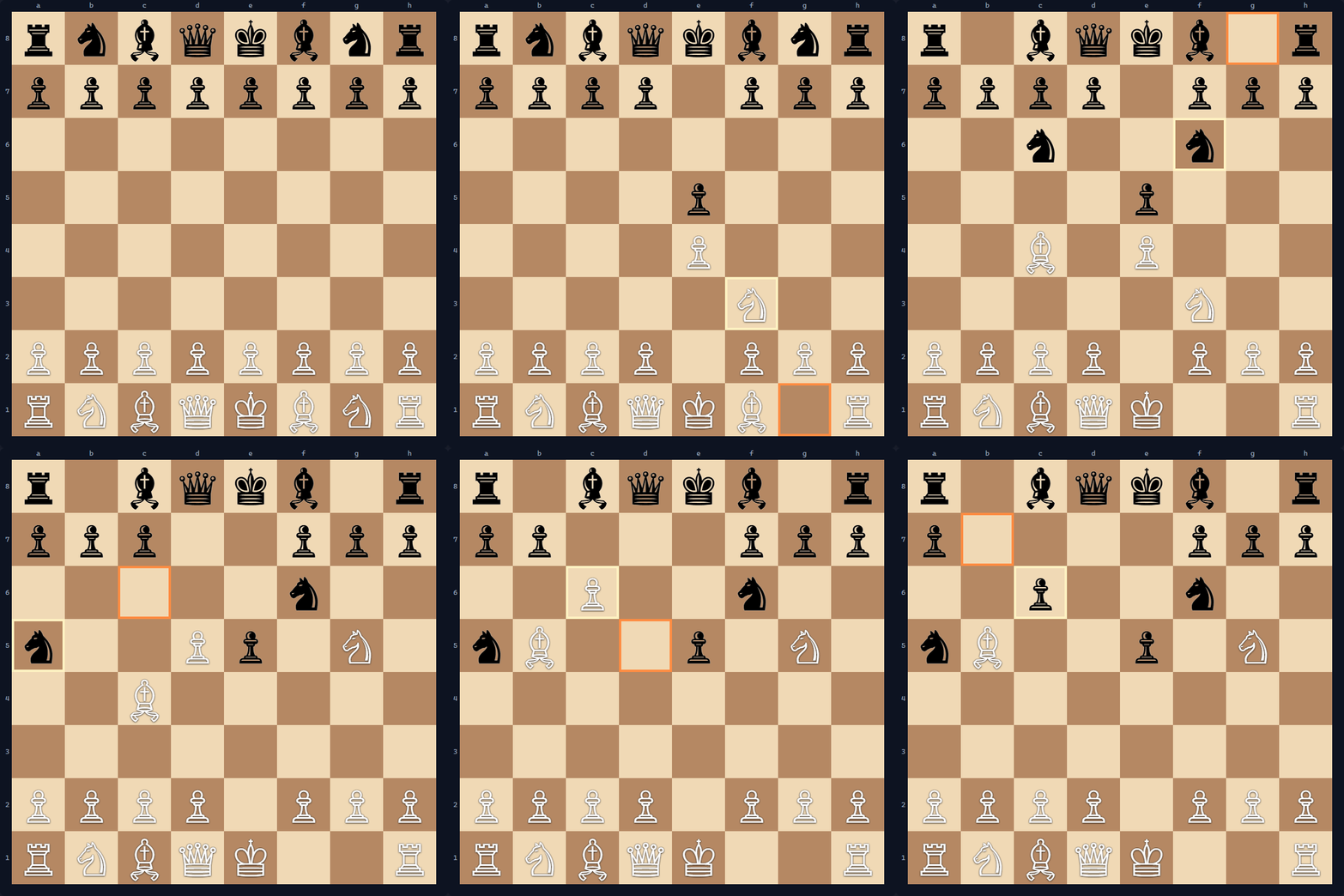
1.e4 e5 2.Nf3 Nc6 3.Bc4 Nf6 4.Ng5 d5 5.exd5 Nxd5 6.Nxf7 Kxf7 7.Qf3+ Kg8 8.Bxd5+ Qxd5 9.Qxd5+ Be6 10.Qxe6#
Black loses in ten moves — a stark illustration of the danger White creates after the knight sacrifice. According to the House of Staunton guide, this is one of the most instructive checkmate patterns in the opening.
7…Qf6 — Desperate blocking
Throwing the queen in the way only delays the inevitable. White can exchange queens and remain a pawn up with the safer king and better development.
Three Sub-Variations After 7…Ke6
From the 7…Ke6 main line after 8.Nc3, Black has three distinct knight moves, each with a different character. Simplify Chess categorizes all three.
Nd4 Variation (sideline)
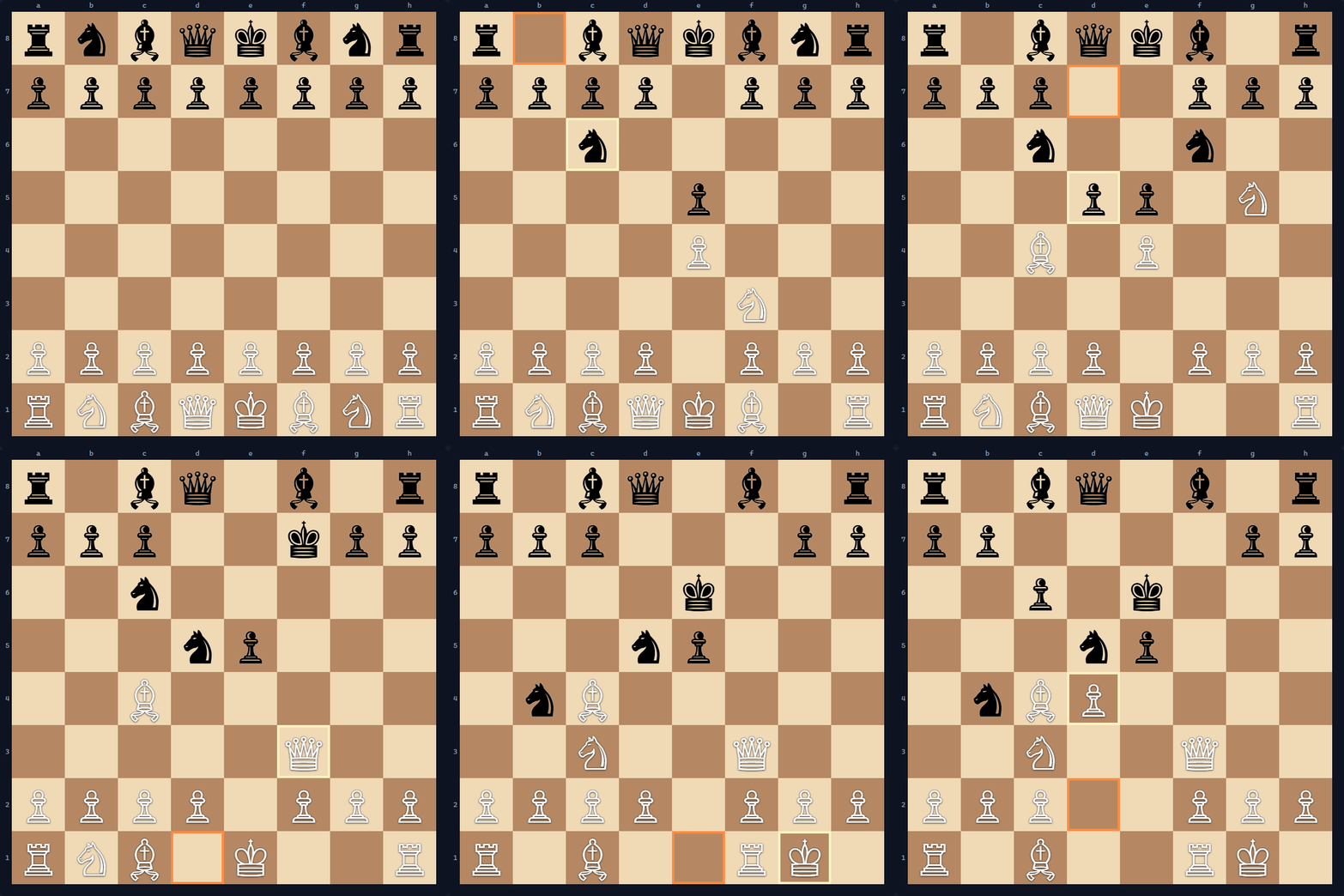
1.e4 e5 2.Nf3 Nc6 3.Bc4 Nf6 4.Ng5 d5 5.exd5 Nxd5 6.Nxf7 Kxf7 7.Qf3+ Ke6 8.Nc3 Nd4
Black counterattacks the white queen and the pawn on c2. Simplify Chess describes this as a sideline that requires White to play perfectly. The queen is under attack and c2 hangs — but White has defensive resources, and once the threats are parried, Black's exposed king remains the decisive factor.
Ne7 Variation (passive)
1.e4 e5 2.Nf3 Nc6 3.Bc4 Nf6 4.Ng5 d5 5.exd5 Nxd5 6.Nxf7 Kxf7 7.Qf3+ Ke6 8.Nc3 Ne7
Black defends the knight on d5 with the other knight. This is a solid but passive setup — the knight on e7 does little to challenge White's initiative, and Black's remaining pieces stay bottled up on the kingside.
Nb4 Variation (best for Black)
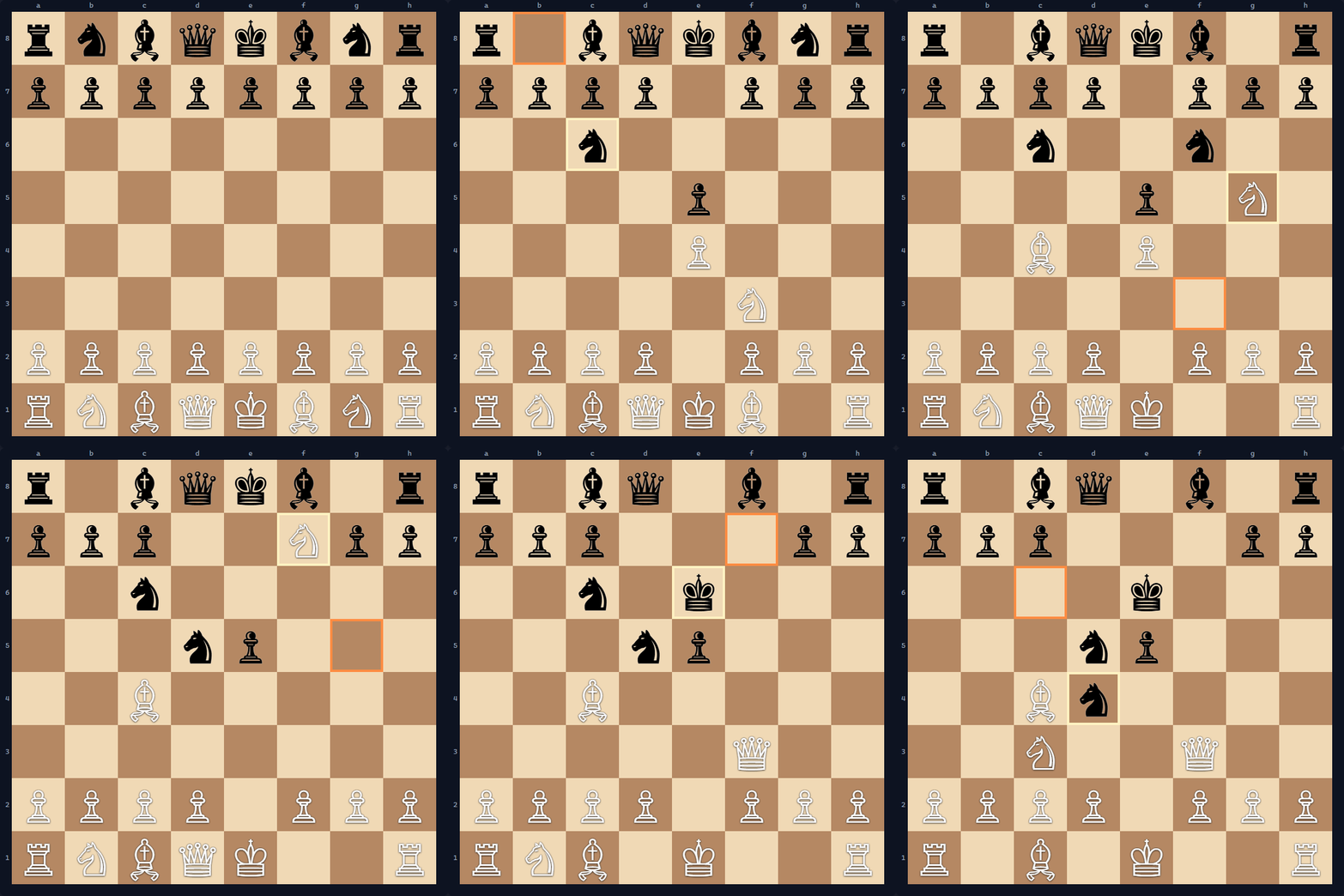
1.e4 e5 2.Nf3 Nc6 3.Bc4 Nf6 4.Ng5 d5 5.exd5 Nxd5 6.Nxf7 Kxf7 7.Qf3+ Ke6 8.Nc3 Nb4
This multi-purpose move protects the d5-knight, frees the c6-square for …c6 to reinforce d5, and threatens …Nxc2+. Simplify Chess rates this as Black's best counter, and it leads to the most complex and double-edged play. White needs precise play to maintain the initiative.
The Polerio Defense — Black's Best Answer
The most reliable way for Black to handle the Knight Attack (4.Ng5) is to refuse the Fried Liver entirely. Instead of capturing on d5 with 5…Nxd5, Black plays 5…Na5, kicking the bishop on c4.
This is the Polerio Defense, named after the 16th-century Italian analyst Giulio Cesare Polerio. Chessreps calls it "theory's main defense." Black gambits a pawn in exchange for fast development and open lines. The critical line runs:
1.e4 e5 2.Nf3 Nc6 3.Bc4 Nf6 4.Ng5 d5 5.exd5 Na5 6.Bb5+ c6 7.dxc6 bxc6
White's bishop retreats — either to d3 or e2 (8.Bd3 or 8.Be2). White has an extra pawn, but Black gets rapid development, the bishop pair, and active piece play. The Chessable blog emphasizes the key principle: "The only time it's safe for Black to play …Nxd5 is after the bishop has moved away from the a2-g8 diagonal." By playing 5…Na5, Black forces the bishop to move before considering a recapture on d5.
For players who want an alternative, the Fritz Variation (5…Nd4 6.c3 b5) offers another way to sidestep the Fried Liver, but the Polerio is the established main line at every level.
The Traxler Counterattack — Double-Edged Chaos
Instead of playing the standard 4…d5, Black can meet the Knight Attack with 4…Bc5 — the Traxler Counterattack. Black ignores the threat to f7 entirely and aims the dark-squared bishop at f2, inviting chaos.
The opening is named after Karel Traxler, a Czech player who employed it in the late nineteenth century. In American chess literature, the same line is known as the Wilkes-Barre Variation.
White has two main options:
The safe route: 5.Bxf7+
Chessreps describes this as "widely considered White's safest route." White wins a pawn and avoids the dangerous mating nets that follow the alternative. After 5…Kxf7 6.Nxf7, White's material advantage is real, and the complications are manageable. This is the recommended choice for practical play.
The dangerous route: 5.Nxf7
Accepting the challenge can backfire spectacularly. The House of Staunton guide gives the following trap:
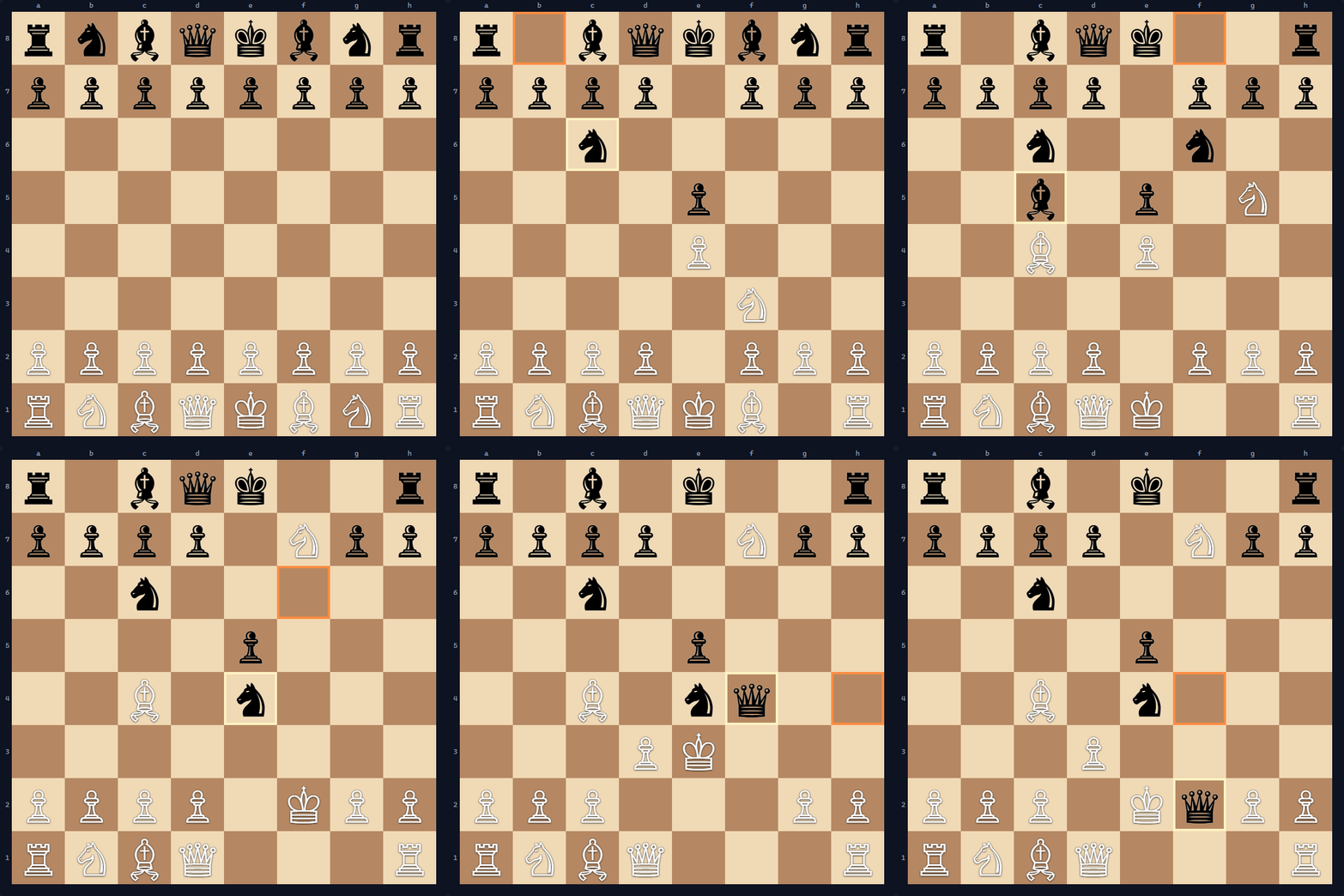
5.Nxf7 Bxf2+ 6.Kxf2 Nxe4+ 7.Ke3 Qh4 8.d3 Qf4+ 9.Ke2 Qf2#
Black delivers checkmate with queen and knight while White's king is hunted across the board. This sequence has caught many unprepared White players, particularly in blitz and rapid formats.
The Traxler is a serious weapon for Black at club level, but it requires precise knowledge — and from White's perspective, the simple 5.Bxf7+ avoids all the danger while preserving a material advantage.
History and Etymology of the Fried Liver Attack
The name "Fried Liver Attack" comes from the Italian "fegatello," a dish of liver cooked over hot coals. Chessreps explains the origin vividly: "Black's king ends up as dead as a piece of fried liver." The opening is still called the Fegatello Attack in much of the chess world.
The knight sacrifice on f7 has a surprisingly long pedigree. Chessreps notes that "Italian analysts studied the knight sacrifice on f7 in the late 16th and early 17th centuries." Giulio Cesare Polerio, the namesake of the Polerio Defense, examined these positions centuries before modern opening theory existed.
According to the Chessable blog, the earliest known Fried Liver game in the chessgames.com database dates back to 1851 — over 170 years ago. And despite its age, the opening remains relevant today. The Chessable blog confirms that Levon Aronian, Jan-Krzysztof Duda, and Baadur Jobava have all played the Fried Liver Attack in top-level competition within the last few years.
FAQ — Fried Liver Attack
Is the Fried Liver Attack a good opening?
Yes, it is perfectly playable and extremely effective at club level. When Black plays 5…Nxd5, White gets a massive attack that most opponents struggle to defend. The main risk is that prepared opponents avoid it with 5…Na5. Chessreps rates it as "one of the most practical attacking weapons below master level."
How do you survive the Fried Liver Attack as Black?
Two reliable approaches: (1) Avoid it entirely by playing 5…Na5 (Polerio Defense) or 5…Nd4 (Fritz Variation). (2) If you enter the Fried Liver, 7…Ke6 gives you the best chance, and you need to know the Nb4-c6 setup to hold the position.
Why is it called the Fried Liver Attack?
The name comes from the Italian "fegatello," meaning liver cooked over hot coals. The image is deliberately graphic — Black's king ends up as exposed and helpless as a piece of meat on a grill.
What is the difference between the Knight Attack and the Fried Liver?
4.Ng5 is the Knight Attack — the precursor. The Fried Liver Attack proper begins only after 5…Nxd5 6.Nxf7. If Black plays 5…Na5 or 5…Nd4, the Fried Liver never happens.
Do grandmasters play the Fried Liver Attack?
Yes. According to the Chessable blog, Levon Aronian, Jan-Krzysztof Duda, and Baadur Jobava have all played the Fried Liver Attack in top-level games within the last few years.
Sources
- Chess.com — Fried Liver Attack opening guide
- Chessable — Fried Liver Attack
- 365Chess — Fried Liver Attack
- Simplify Chess — Fried Liver Attack
- Lichess → Fried Liver Attack study