Why Play the Italian Game?
The Italian Game puts a bishop outside the pawn chain from move three. This is its defining advantage over more positional alternatives. The bishop on c4 eyes the f7-pawn directly, putting immediate pressure on Black's position and forcing early decisions.
At master level, the Italian Game shows the highest White win rate (39%) among all main third-move options after 1.e4 e5 2.Nf3 Nc6, with a relatively low drawing percentage of 28%. For club players who enjoy sharp, dynamic positions, this opening rewards aggressive play and accurate calculation.
The Italian Game is also accessible to beginners. The strategic ideas — developing pieces, controlling the center, targeting weak squares — are clearer here than in more complex systems. A new player can reach playable positions quickly without memorizing deep theory.
The Three Main Black Responses
When Black meets 3.Bc4, three responses dominate play. These three branches are the central navigation points for anyone studying the Italian Game.
The most popular is the Giuoco Piano (3...Bc5), which translates from Italian as "quiet game." Despite the name, the Giuoco Piano is anything but quiet — it leads to rich strategic battles with long-term planning. The name refers to the symmetric, balanced development both sides pursue rather than an absence of conflict.
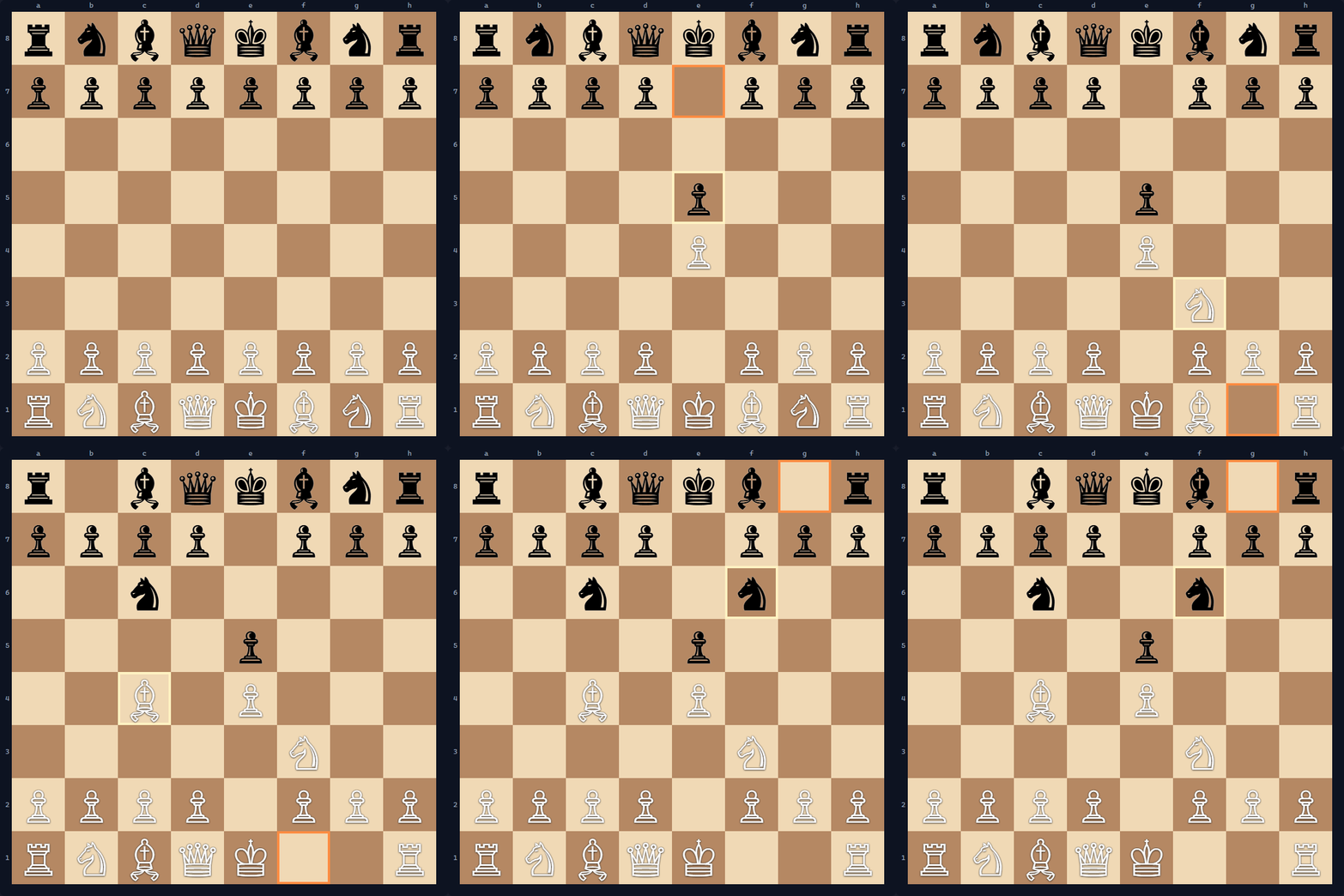
The Two Knights Defense (3...Nf6) attacks White's e4 pawn immediately, steering the game into sharper territory. This line has spawned some of chess's most famous attacks, including the Fried Liver Attack.
The Hungarian Defense (3...Be7) is the most solid but passive option. Black prevents the Fried Liver Attack and aims for a cramped but defensible position. It is rarely seen at higher levels but can surprise unprepared opponents.

Practical takeaway: the Italian Game becomes useful when you choose one branch and understand the development plan behind it, not just the move order.
| Black response | Character | Choose it in study when... |
|---|---|---|
| Giuoco Piano (3...Bc5) | Balanced development and long-term plans. | You want classical positions with room to improve piece coordination. |
| Two Knights Defense (3...Nf6) | Sharper play that attacks e4 immediately. | You are ready to calculate tactics such as the Fried Liver Attack. |
| Hungarian Defense (3...Be7) | Solid but passive setup. | You want to avoid the sharpest attacks and surprise an unprepared opponent. |
Giuoco Piano: The Quiet Game
The Giuoco Piano arises after 3...Bc5. White's fourth move divides the line into three distinct branches.
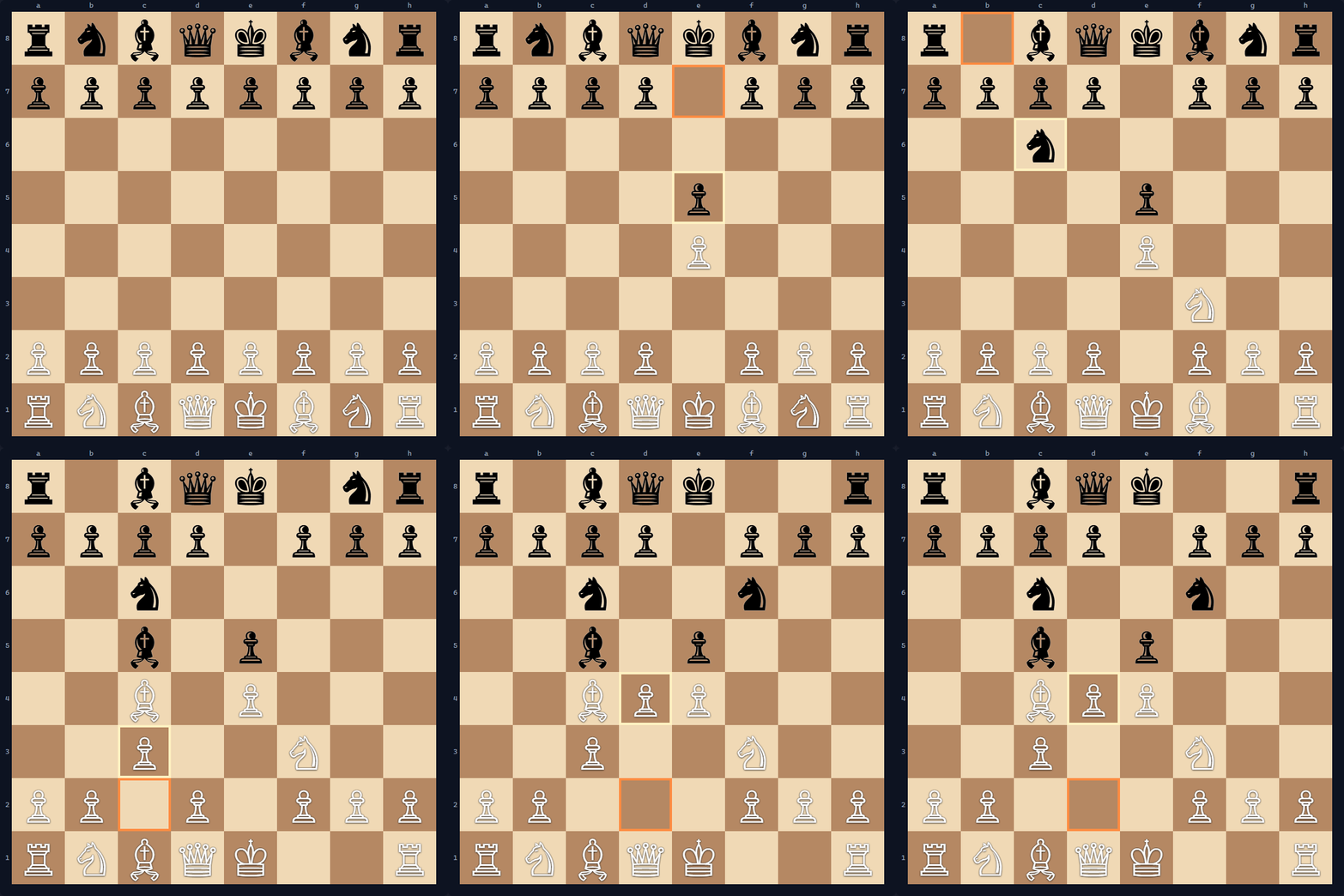
The Main Line (4.c3) prepares central expansion with d4. Black typically responds with 4...Nf6, and the game proceeds into a rich strategic struggle. White builds a pawn center with c3 and d4, while Black challenges it with ...d5 or seeks counterplay on the queenside.
The Giuoco Pianissimo (4.d3) takes a slower approach. White solidifies the center without advancing pawns, aiming for a positional advantage through piece placement rather than pawn structure. The name means "very quiet game" in Italian, and that description fits — these positions reward patient maneuvering rather than tactical fireworks.
The Evans Gambit (4.b4) is the sharpest option. Introduced by Captain William Davies Evans in the 1820s, White sacrifices the b4-pawn to distraction Black's bishop on c5, gain central control, and open lines toward Black's king. At club level, the Evans Gambit remains dangerous because Black must know specific defensive moves to survive. At master level, it is seen less often — White's compensation is sufficient for equality but rarely more.
The Evans Gambit: Sharp and Dangerous
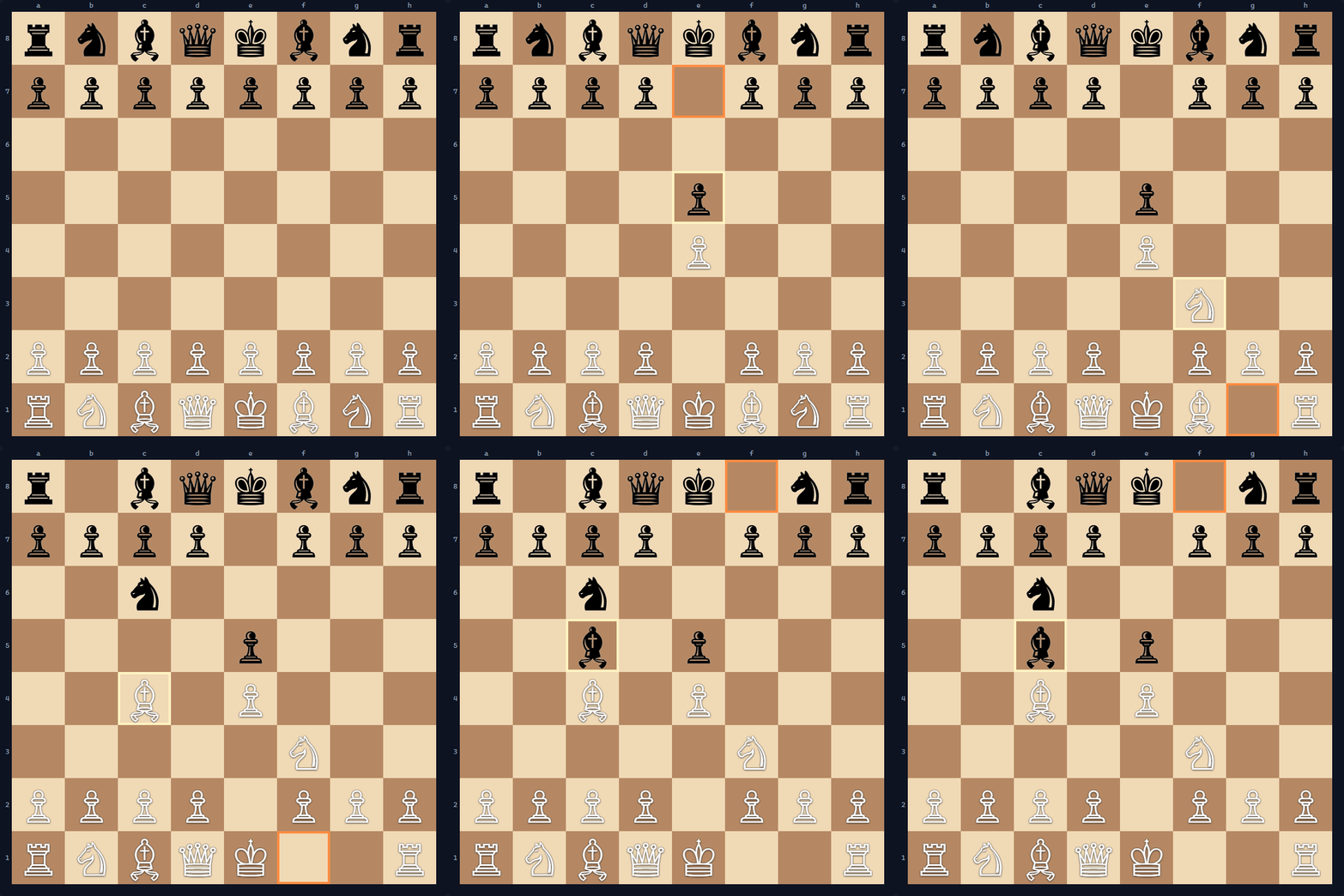
The Evans Gambit begins with 4.b4, offering a pawn for activity. After Black accepts with 4...Bxb4, White continues 5.c3 to reclaim the tempo lost by the pawn sacrifice while preparing d4.
The strategic idea is clear: White wants to dominate the center and attack. The open b-file threatens to cause further disruption, and Black's bishop on b4 becomes a target. If Black declines the gambit with 4...Ba7, White retains a spatial advantage and comfortable development.
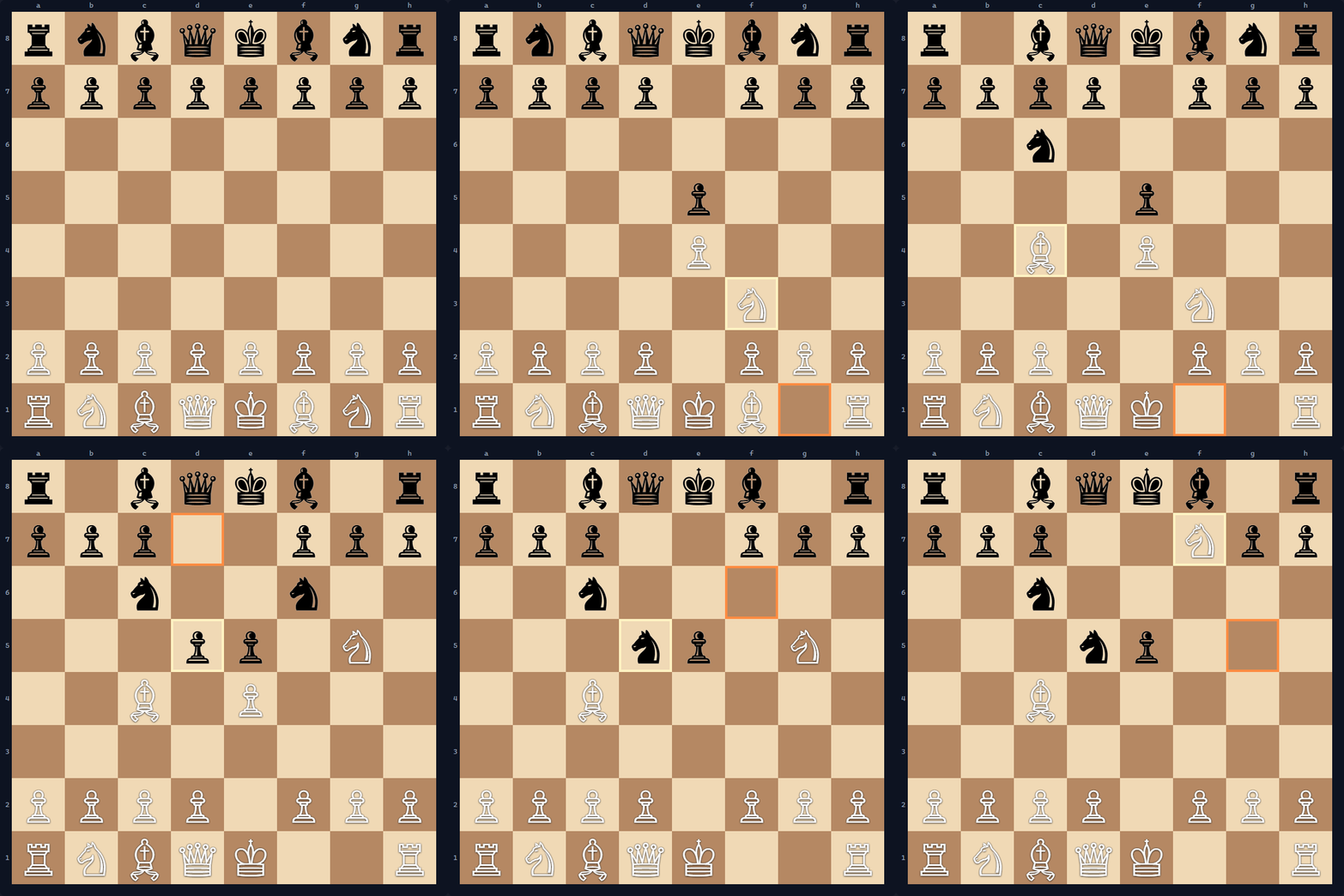
Within the Evans Gambit, the Greco Gambit (4.c3 Nf6 5.d4 exd4 6.cxd4 Bb4+ 7.Nc3 Nxe4) represents the most aggressive interpretation. White builds a full pawn center, allows Black to check on b4, and then sacrifices the e4-pawn to open the position dramatically.
The Møller Attack (9.d5) is the famous continuation that turns the Greco Gambit into a genuine assault. Instead of recapturing on c3, White pushes the pawn forward, hitting the c6-knight and opening the e-file against Black's uncastled king. This line has been analyzed for centuries and remains a testing ground for tactical skill.
Two Knights Defense: Sharp Counter-Strike
The Two Knights Defense (3...Nf6) strikes at White's e4-pawn immediately. This is Black's sharpest response, refusing to enter the symmetric Giuoco Piano structure.
White's two main options are 4.Ng5 and 4.d4. The first leads to the Fried Liver Attack and its dangerous Traxler Counterattack (4...Bc5 is the sharpest, 4...d5 is more measured). The second, 4.d4, challenges the center without entering the tactical complications of the Ng5 lines.
The Two Knights Defense suits players who enjoy sharp, double-edged positions. Theory extends deep in these lines, but the underlying ideas — piece coordination, king safety, central control — are accessible to players willing to study the main ideas rather than memorize every variation.
The Italian Game in Modern Chess
The Italian Game remains popular at all levels in 2024. At the club level, it is one of the most common responses to 1.e4 e5. At the top level, players like Anish Giri and Hou Yifan have used it in classical play, though it is seen less frequently than at amateur levels because professional players often steer into more forcing lines.
What makes the Italian Game enduring is its balance. It is neither too sharp nor too dull. Players who enjoy open positions with tactical chances find it rewarding. Players who prefer strategic maneuvering find that the Giuoco Pianissimo and Main Line offer long-term plans worth developing.
The opening also serves as a gateway to deeper chess study. The tactical themes in the Evans Gambit — pawn sacrifices for development, piece coordination, open lines — recur throughout chess. Learning them in the Italian Game builds skills that transfer to every other opening system.
Key Strategic Themes
The Italian Game teaches several fundamental chess concepts clearly.
Bishop on c4 targets f7. This is the opening's signature idea. The f7-square is Black's weakest point before castling, protected only by the king. Every Italian Game player should understand how to exploit this weakness.
Piece development comes first. The Italian Game rewards fast development. White should aim to castle by move eight or nine while maintaining central control. Moving the same piece twice or bringing the queen out early squanders the opening's natural advantages.
Central control and pawn structure matter. Whether playing the open Giuoco Piano or the solid Giuoco Pianissimo, understanding how pawn advances affect piece coordination is essential. The advance ...d5 by Black challenges White's center; meeting it correctly requires positional judgment.
Sidelines worth knowing. Beyond the three main lines, the Italian Game has several lesser-known responses. The Bird's Attack (5.b4) is named after Henry Edward Bird and aims to gain queenside space while disrupting Black's normal development. The Rosentreter Gambit (4.d4) sacrifices a pawn for rapid piece activity and was named after Arthur Rosentreter, a German player. Both are sharp but rarely seen at higher levels.
Common Mistakes to Avoid
The Italian Game punishes careless play. Four errors appear frequently.
Moving the same piece twice in the opening wastes tempo and lets Black develop freely. In the Italian, where piece activity matters more than material, this mistake is especially costly.
Delaying castling invites tactical complications. If Black manages to open the center before White's king reaches safety, the bishop on c4 becomes a liability rather than an asset.
Playing without a plan also hurts. The Italian Game has clear plans for both sides — White should know whether to push d4, attack on the kingside, or simply complete development before making positional claims. Aimless play in sharp lines leads to losing positions.
Accepting gambits without understanding the compensation is another common trap. The Evans Gambit and Greco Gambit offer material, but Black must have adequate activity or piece coordination. Capturing pawns without a plan in these positions often leads to a cramped, passive game where White's lead in development evaporates.
Frequently Asked Questions
What is the Italian Game?
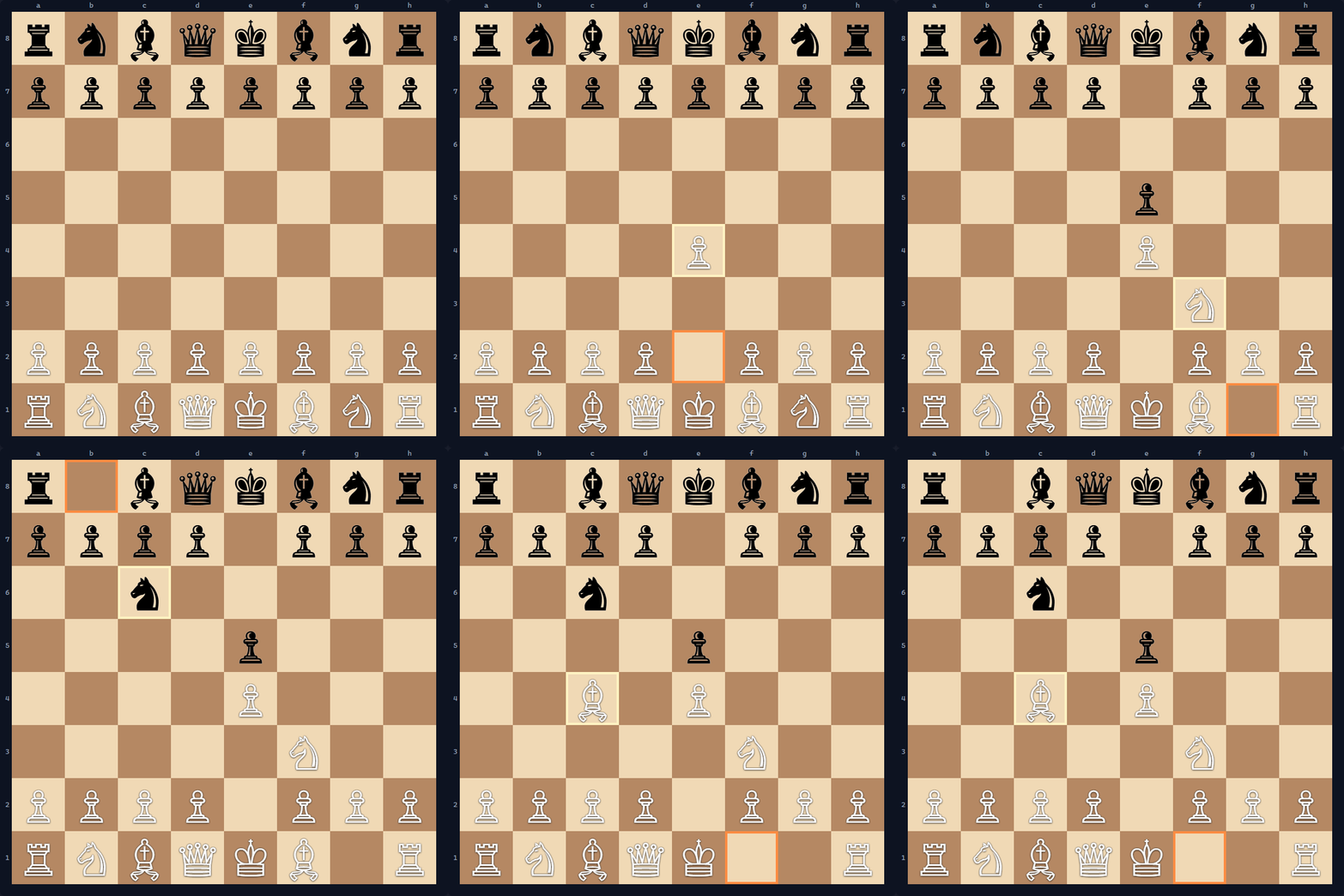
The Italian Game is a chess opening that begins 1.e4 e5 2.Nf3 Nc6 3.Bc4. White develops the bishop outside the pawn chain immediately, targeting the f7-pawn and preparing for open, tactical play.
Is the Italian Game good for beginners?
Yes. The strategic ideas are clearer than in complex openings, and beginners can reach playable positions without deep theory. It teaches fundamental skills like piece development and center control.
What is the Giuoco Piano?
The Giuoco Piano is the most popular response to 3.Bc4: 3...Bc5. The name means "quiet game" in Italian, though the positions are often sharp and tactical. It branches into the Main Line (4.c3), Giuoco Pianissimo (4.d3), and Evans Gambit (4.b4).
What is the Evans Gambit?
The Evans Gambit is a pawn sacrifice (4.b4) introduced by Captain William Davies Evans in the 1820s. White offers a pawn to distract Black's bishop, dominate the center, and open lines for attack. It is dangerous at club level but rarely seen at master level.
Italian Game vs Ruy Lopez — which is better?
Neither is objectively better. The Ruy Lopez offers deeper theory and more sustained pressure. The Italian Game is more accessible and leads to open positions faster. Both are used at the highest levels.
Sources
- 365chess.com — Ultimate Guide to Winning with the Italian Game: https://www.365chess.com/chess-openings/Italian-Game. Used for: main line (Giuoco Piano), Giuoco Pianissimo, Evans Gambit, Bird's Attack, Rosentreter Gambit.
- simplifychess.com — Italian Game: https://simplifychess.com/italian-game/. Used for: three major categories (Hungarian Defense, Two Knights Defense, Giuoco Piano).
- chessklub.com — Master the Italian Game Opening: https://chessklub.com/italian-game-opening/. Used for: historical origin (Domiano, Polerio, Greco), Giuoco Piano, Two Knights Defense.
- chess.com — Italian Game opening page: https://www.chess.com/openings/Italian-Game. Used for: opening overview, Giuoco Piano, Giuoco Pianissimo, Evans Gambit, famous games.
- houseofstaunton.com — Winning With The Italian Game: https://www.houseofstaunton.com/blogs/chess-openings/the-italian-game. Used for: Italian origin, master-level stats (39% wins, 28% draws).
- chessreps.com — Italian Game: Learn & Train It Free: https://www.chessreps.com/opening/italian-game. Used for: Giuoco Piano Center Attack (Greco Gambit), Moller Attack, Two Knights Defense.
- simplifychess.com — Giuoco Piano: https://www.simplifychess.com/giuoco-piano/index.html. Used for: three Giuoco Piano variations (Main Line, Evans Gambit, Giuoco Pianissimo).
- chess.com — Giuoco Piano / Chess Opening: https://www.chess.com/article/view/giuoco-piano-chess-opening. Used for: Giuoco Piano overview, 16th-century origin, Steinitz-Morphy-Anderssen era.