Important point: an equal engine evaluation does not make the King's Gambit a bad weapon. It means both sides must play accurately from the first moves.
What the King's Gambit is and who should play it
The defining idea of the King's Gambit is structural: White sacrifices a flank pawn to deflect Black's e5 pawn, opens the f-file for a rook, and builds a rapid development-and-attack position. The opening is sometimes called "the violent, blood-thirsty sibling of the Queen's Gambit" — and the framing is apt. The KG is a romantic-era attacking weapon that asks both sides to play precise tactical chess from move three.
Historically the opening is one of the oldest recorded in chess. The 1560 game between Ruy Lopez de Segura and Giovani Leonardo Da Cutri is the oldest preserved KG game, and the opening was a mainstay of the Romantic era: Gioachino Greco developed the early theory in the 1600s, and 19th-century masters like Alexander McDonnell, Howard Staunton, Paul Morphy, and Adolf Anderssen built their reputations partly on KG attacks. The most famous KG game of all is the Anderssen-Kieseritzky London 1851 "Immortal Game," which is still studied today.
The KG fell out of top-level favor in the early 20th century as defensive concepts improved. In 1961 Bobby Fischer wrote the famous article titled "A Bust to the King's Gambit," arguing for the solid 3...d6 defense.
Engines have since confirmed the sober verdict: with best play Black is fine. But an equal evaluation is not the same as a refutation, and modern grandmasters have continued to play the KG. Garry Kasparov, Ian Nepomniachtchi, and Magnus Carlsen have all used the gambit in shorter time controls, and HouseofStaunton reports a 54% White win rate among 1000-1600 players in one club-level database snapshot.
The KG is best suited to attacking players who like sharp open positions and are happy to study concrete variations. If you enjoy the tactical mess of gambit play, the KG is one of the best choices in 1.e4 e5. If you prefer quiet positional systems or are still building a stable 1.e4 repertoire, the Italian Game or the Ruy Lopez may serve you better.
Base moves and the first decision
The base moves are 1.e4 e5 2.f4. After 2.f4, Black has three principled responses:

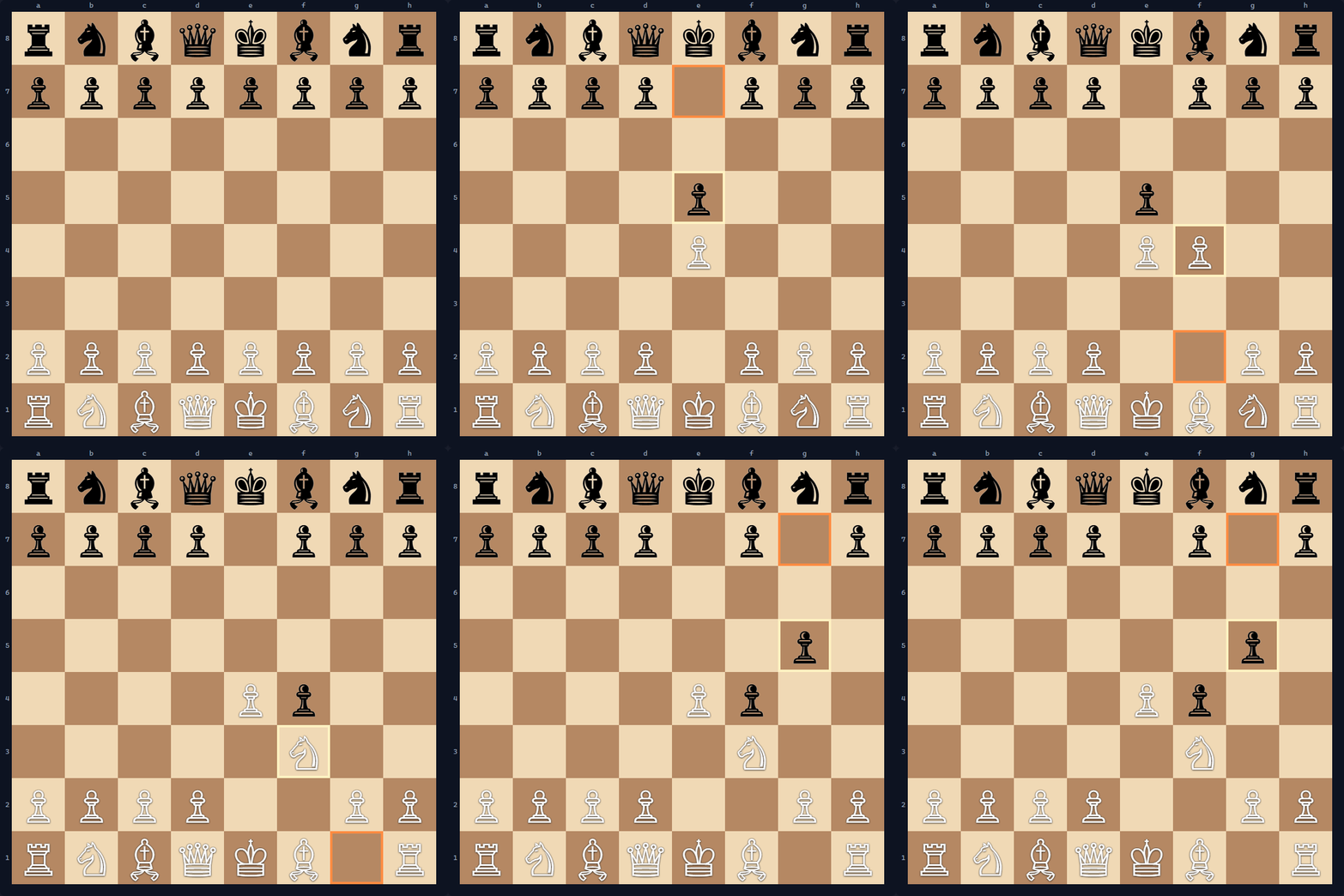
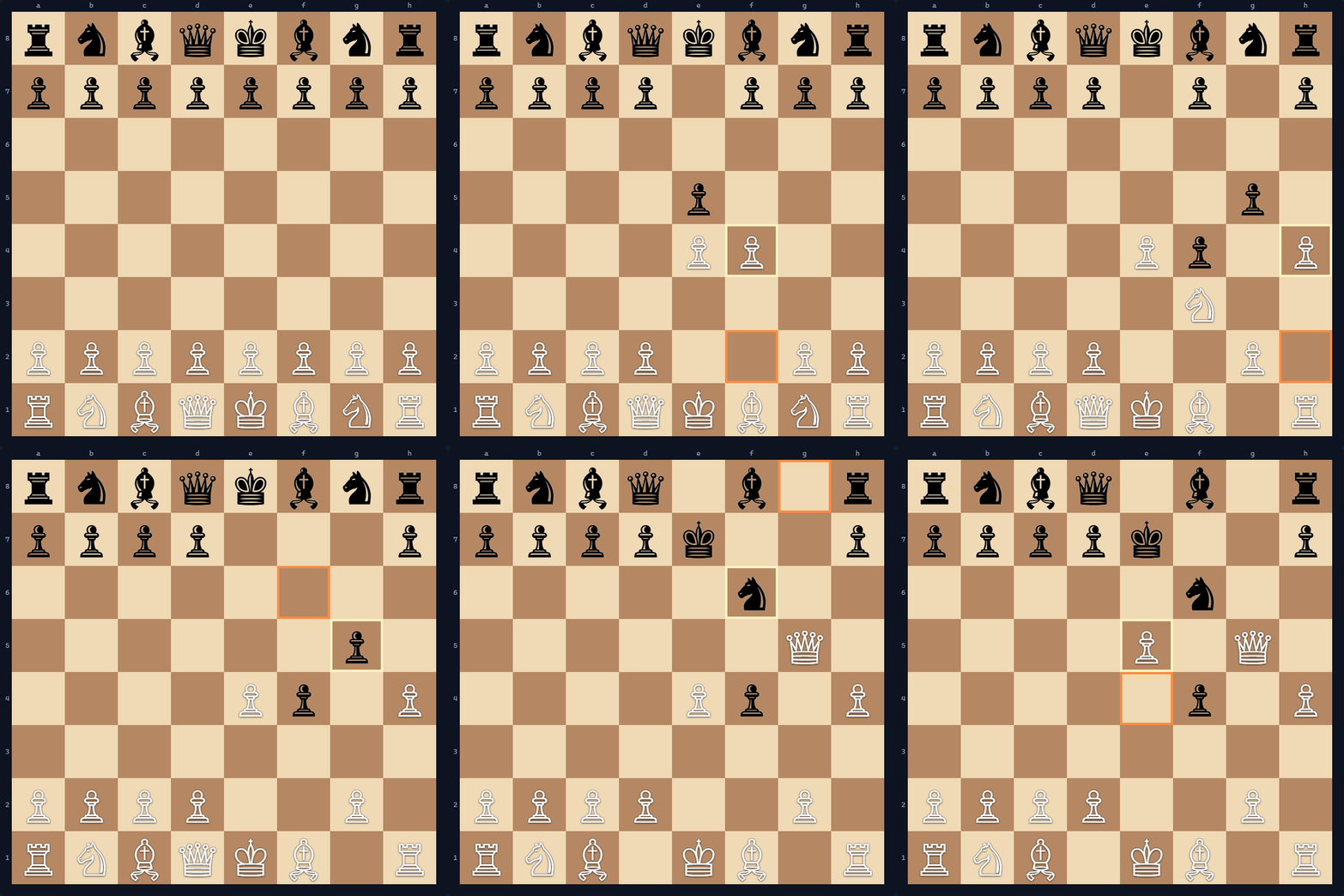
- 2...exf4 — King's Gambit Accepted (KGA). Black takes the pawn and enters the sharp main line. According to 365chess, at master level the KGA is played about 75% of the time. After 3.Nf3 (the King's Knight Gambit), Black usually plays 3...g5.
- 2...d5 — Falkbeer Countergambit. Black strikes the center instead of taking the pawn. This is the most combative of the King's Gambit Declined lines.
- 2...Bc5 — Classical KGD. Black declines the gambit, develops the dark-squared bishop to an active diagonal, and prevents White from castling kingside.
Two more declinations (2...d6, 2...Nf6, 2...Qf6) are playable but rarer; club players who specialize in the KG should know all three main responses.
King's Gambit Accepted — the main line
3.Nf3 — the King's Knight Gambit
The most common move in the KGA is 3.Nf3, which prevents 3...Qh4+ and starts White's development. After 3.Nf3 Black has a choice:
Pay attention here: if you are just adding the KG to your repertoire, learn the positions after 3...g5 first. Most of the practical chaos starts there.
3...g5 is the Classical continuation, played in the overwhelming majority of KGA games. Black defends the f4-pawn and prepares ...g4 to attack the knight. This is the move White should know best.
3...d6 is Fischer's recommendation from his 1961 "A Bust to the King's Gambit" article. Black keeps things solid, plans to follow with ...g5 under better conditions, and avoids the razor-sharp forcing lines of 3...g5.
3...d5 is the Modern / Abbazia Defense. Black returns the pawn immediately, trading the extra pawn for clean development. One large opening database gives this setup roughly 35% White / 15% draw / 50% Black in 381 master games — Black's best statistical result against the KGA.
4.h4 — the Kieseritzky Gambit
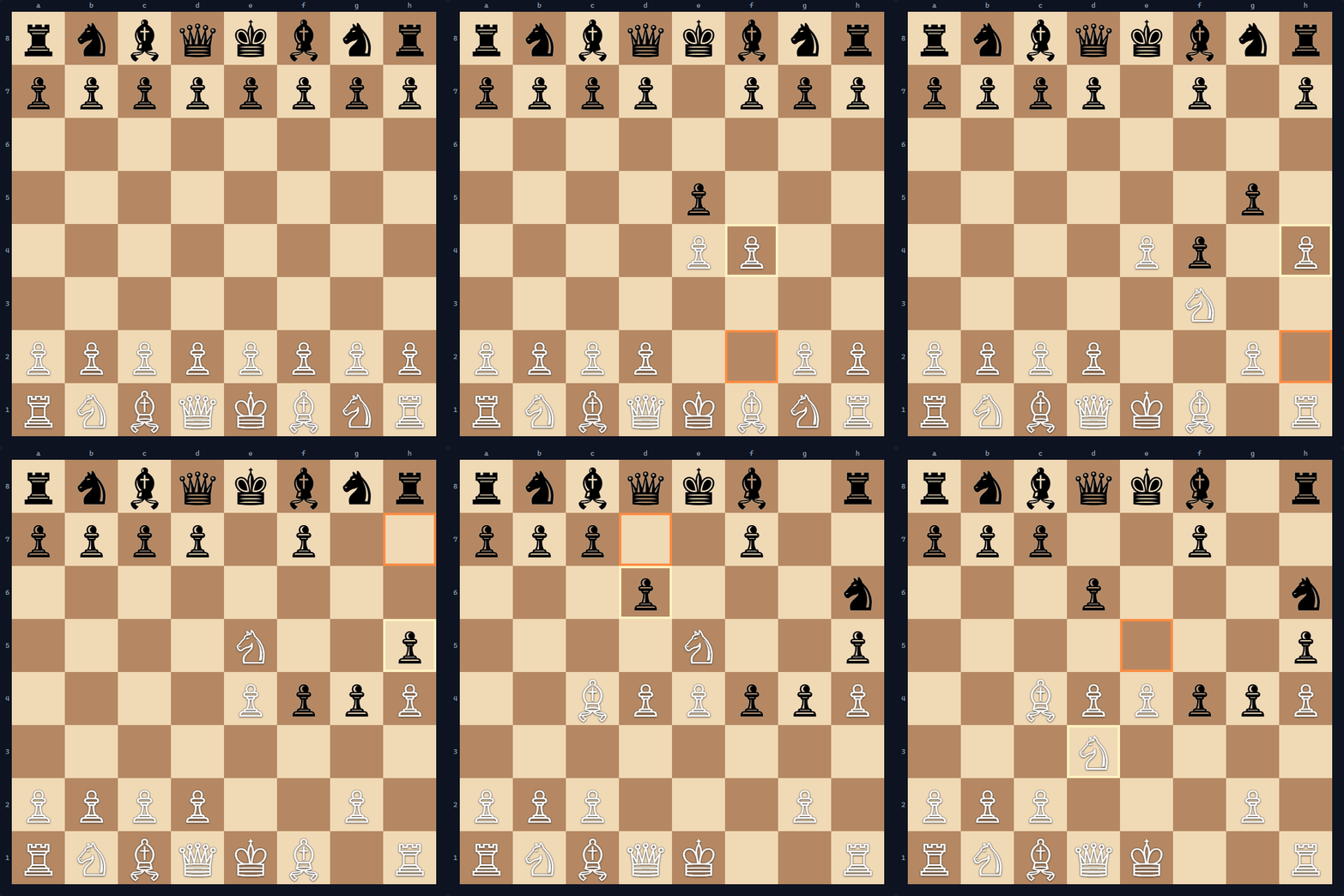
After 3...g5, White's main fourth move is 4.h4, the Kieseritzky Gambit. White immediately attacks the g5-pawn and forces Black to commit: 4...g4 kicks the knight to e5. The knight on e5 is the central feature of the line, and it pressures Black's kingside dark squares. Chessreps shows a main line 4.h4 g4 5.Ne5 h5 6.Bc4 Nh6 7.d4 d6 8.Nd3, where White has regained the f4-pawn and built a strong center.
A famous trap. After 4.h4 f6 5.Nxg5 fxg5 6.Qh5+ Ke7 7.Qxg5+ Nf6 8.e5, chessreps describes the position as a forced loss for Black. The line is technically forced: 6...Ke7 is Black's only legal response to the check, and 8.e5 hits the blockading knight. Chessreps calls 4...f6 a forced loss for Black.
4.Bc4 — the Muzio Gambit
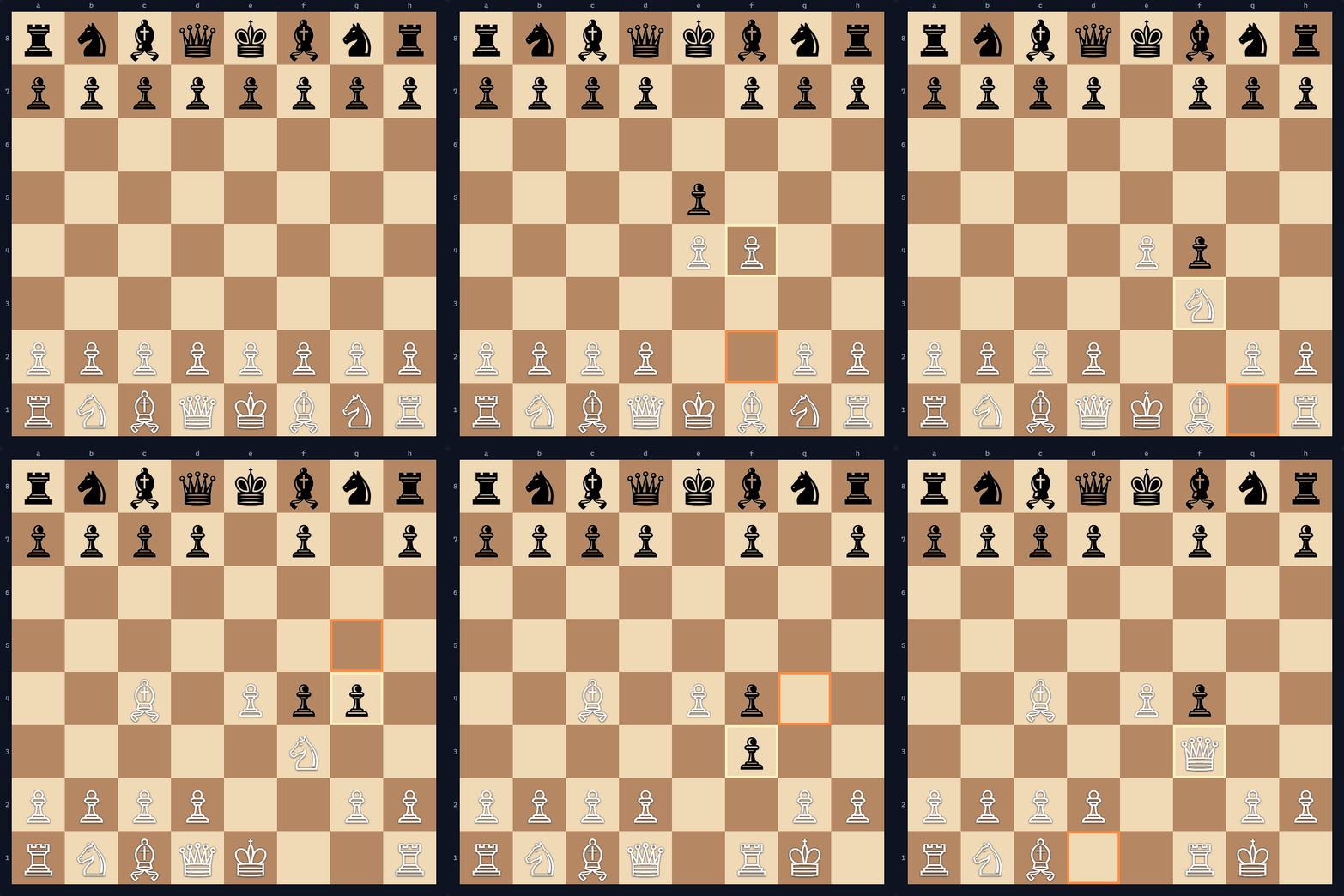
The Muzio is the sharpest of the Kieseritzky alternatives. White plays 4.Bc4, then sacrifices the knight after 4...g4 5.O-O gxf3 6.Qxf3. The resulting position is a wild attack where Black is up a piece but White has a dangerous kingside lead. The Muzio is the right choice for players who like to play for the initiative at all costs.
4.Nc3 — the Quaade Gambit
The Quaade is a quieter alternative. White plays 4.Nc3, preparing d4 and avoiding the Kieseritzky main line. The main line runs 4...Bg7 5.d4 d6 6.g3 Nc6 7.Bb5 a6.
4.d4 — the Rosentreter Gambit
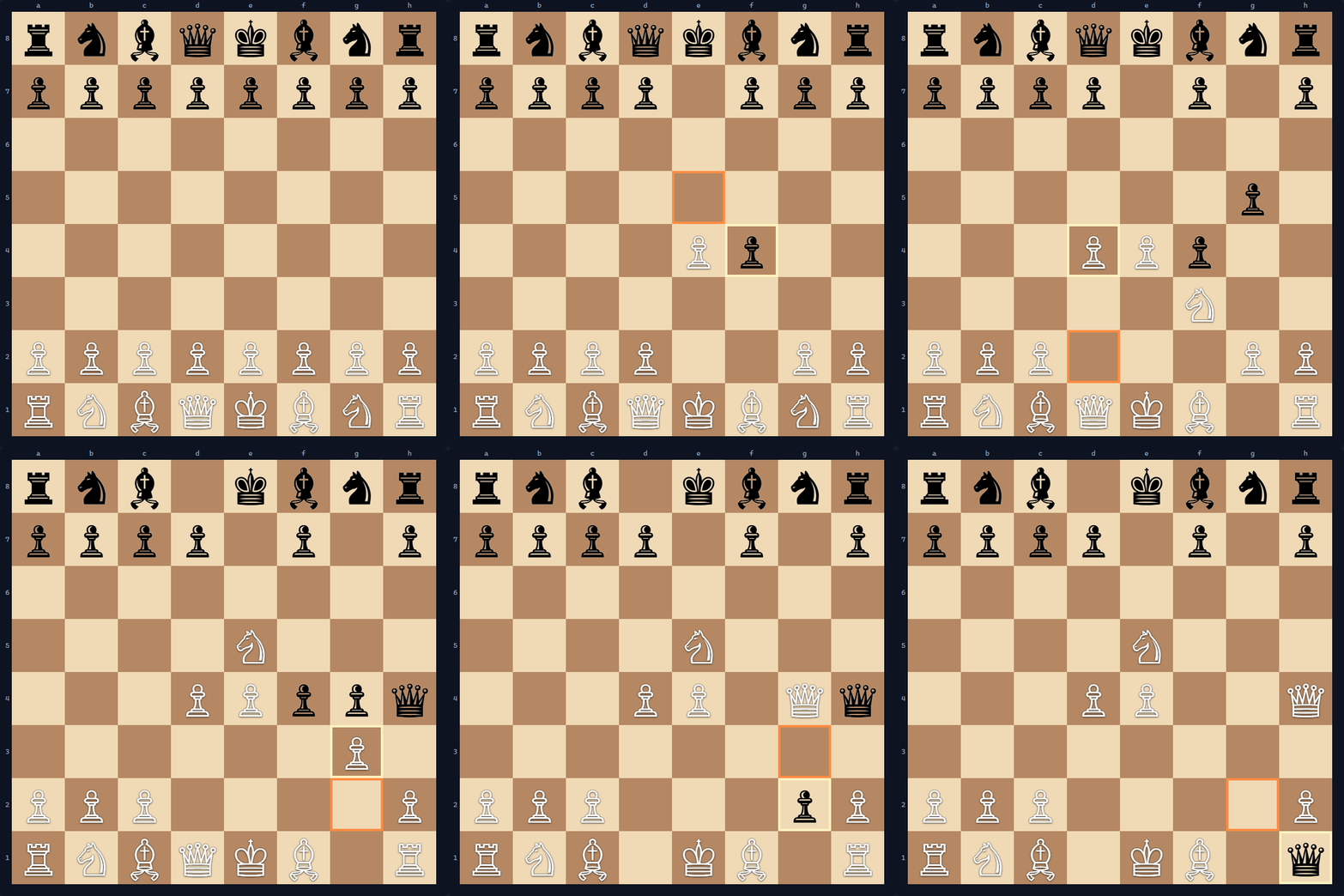
The Rosentreter is the most aggressive Kieseritzky alternative. White plays 4.d4, occupying the center. The main line 4...g4 5.Ne5 Qh4+ 6.g3 fxg3 7.Qxg4 g2+ 8.Qxh4 gxh1=Q is a wild tactical line.
3.Bc4 — the Bishop's Gambit
The Bishop's Gambit is the third main option for White after 3.Nf3. White plays 3.Bc4, allowing 3...Qh4+ and a tempo loss (4.Kf1). Black usually plays 3...Nf6 4.Nc3 c6 (the Cozio-Morphy Defense) or 3...d5 (the Bledow Variation). A large opening database gives the Cozio Variation (3.Bc4 Qh4+ 4.Kf1 d6) roughly 28% White / 21% draw / 52% Black — a serious Black edge if White is not prepared.
Secondary 3rd moves
Three other 3rd moves for White are also playable: 3.Nc3 (Mason/Keres Gambit) allows 3...Qh4+ Ke2, 3.d4 (Villemson/Steinitz Gambit) opens the center, and 3.Be2 (Lesser/Tartakower Gambit) aims for quick castling. None is as popular as 3.Nf3 or 3.Bc4.
Black's main defenses in the KGA — quick reference
| Defense | 3rd Black move | Character | Theoretical depth |
|---|---|---|---|
| Classical | 3...g5 | Kieseritzky / Muzio / Quaade / Rosentreter | Very high |
| Fischer | 3...d6 | Solid, modern | Medium |
| Modern / Abbazia | 3...d5 | Returns the pawn, easy equality | Low |
| Bonch-Osmolovsky | 3...Ne7 | Quiet, develops knight | Medium |
| MacLeod | 3...Nc6 | Prepares ...g5 with tempo | Medium |
| Schallopp | 3...Nf6 | Knight on h5 defends f4 | Medium |
| Cunningham | 3...Be7 | Threatens ...Bh4+ | Medium |
King's Gambit Declined — when Black refuses the pawn
When Black does not take the f-pawn, the position enters the King's Gambit Declined (KGD). The two main KGD lines are the Falkbeer Countergambit and the Classical Defense.
The Falkbeer Countergambit is 2...d5, striking the center. The main line 3.exd5 e4 leads to an imbalanced position. Historically the Falkbeer was considered a strong response to the King's Gambit, but it lost popularity after the development of 4.d3 for White. The Falkbeer is the right choice for Black players who want to avoid the sharpest KGA lines.
The Classical Defense is 2...Bc5, declining the gambit and developing the dark-squared bishop to an active diagonal. In practical play, this setup can make kingside castling awkward for White. The Classical is the right choice for Black players who want a quieter middlegame with full piece play.
Three more declines are playable but rarer: 2...d6 (a more closed and strategic position), 2...Nf6 3.fxe5 Nxe4 4.Nf3 Ng5 (a tactical line), and 2...Qf6 (a dubious queen sortie).
Common traps, beginner mistakes, and model games
The two most famous traps both come from the Fantasy Variation and the Kieseritzky main line.
The 4...f6 trap. In the Kieseritzky main line, the natural-looking 4...f6 loses a piece to 5.Nxg5! fxg5 6.Qh5+ Ke7 7.Qxg5+ Nf6 8.e5. Chessreps describes the position as a forced loss for Black. The line is technically forced: 6...Ke7 is Black's only legal response to the check, and 8.e5 hits the blockading knight. Chessreps calls 4...f6 a forced loss for Black.
The Bishop's Gambit 3...Qh4+ tempo loss. In the Bishop's Gambit (3.Bc4), Black usually plays 3...Qh4+ and gains a tempo. White's 4.Kf1 loses the right to castle, and Black can develop the initiative. If White is unprepared, Black often gets the easier practical game from there.
Two famous games illustrate the KG's character better than any prose:
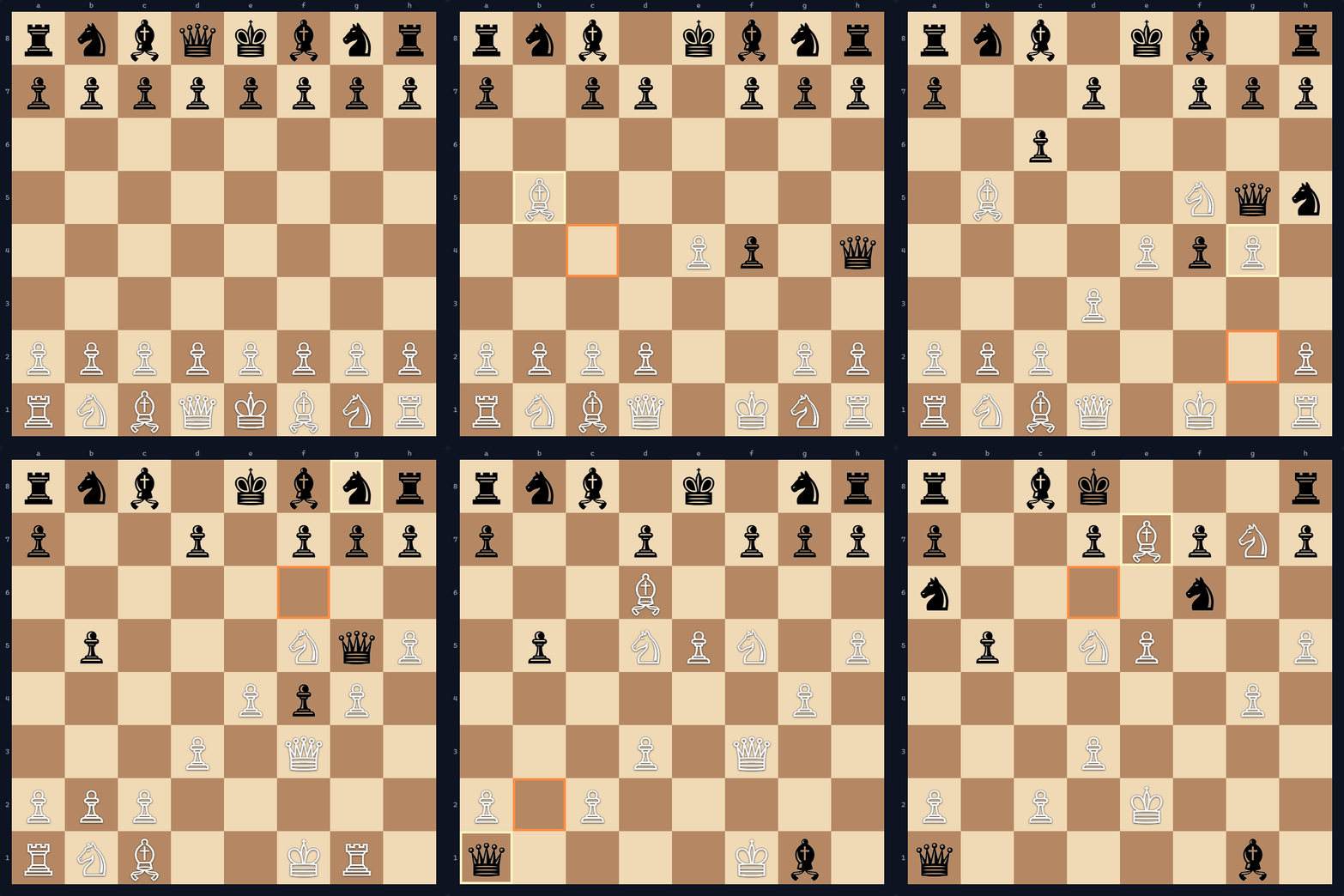
Anderssen vs Kieseritzky, London 1851 — the "Immortal Game". Anderssen plays the KGA and wins with a breathtaking combination: 1.e4 e5 2.f4 exf4 3.Bc4 Qh4+ 4.Kf1 b5 5.Bxb5 Nf6 6.Nf3 Qh6 7.d3 Nh5 8.Nh4 Qg5 9.Nf5 c6 10.g4 Nf6 11.Rg1 cxb5 12.h4 Qg6 13.h5 Qg5 14.Qf3 Ng8 15.Bxf4 Qf6 16.Nc3 Bc5 17.Nd5 Qxb2 18.Bd6 Bxg1 19.e5 Qxa1+ 20.Ke2 Na6 21.Nxg7+ Kd8 22.Qf6+ Nxf6 23.Be7# 1-0. A model of how the KG should be played at the highest level.
Spassky vs Bronstein, modern era. A modern example of the King's Knight Gambit with 3.Nf3 d5 4.exd5 Bd6, where Spassky wins a sharp tactical battle. A useful model for club players who want to see how the KG plays in contemporary practice.
Comparison — choosing your King's Gambit weapon
| Line | Starting moves | Character | Risk profile |
|---|---|---|---|
| Kieseritzky | 3.Nf3 g5 4.h4 | Classical main line, sharp | High |
| Muzio | 3.Nf3 g5 4.Bc4 g4 5.O-O gxf3 | Sacrifice for attack | Very high |
| Bishop's Gambit | 3.Bc4 | Sacrifices castling rights | Medium-high |
| Lesser | 3.Nf3 g5 4.Be2 | Quiet, positional | Low |
| Villemson | 3.Nf3 g5 4.d4 | Central break | Medium |
Practical callout — should YOU play the King's Gambit?
The King's Gambit is the right choice for tournament players who like sharp open positions, want to play for the initiative, and are happy to study concrete variations. If you prefer quiet positional play or are still building a stable 1.e4 repertoire, the Italian Game or the Ruy Lopez may serve you better.
If you do play the KG, pick one main line and learn it well. The Kieseritzky (4.h4) is the most popular and the most well-mapped; the Muzio is the most spectacular; the Bishop's Gambit is good if you want a quieter middlegame. Whichever you pick, study the Immortal Game and Spassky-Bronstein first.
Frequently asked questions
Is the King's Gambit a good opening? Yes, it is one of the oldest recorded openings and remains a sharp romantic-era weapon. HouseofStaunton reports a 54% White win rate among 1000-1600 players in one club-level snapshot; engines consider Black fine with precise defense.
Is the King's Gambit refuted? No. Engines consider Black fine with precise play, but the opening is not refuted; an equal engine verdict is not the same as a refutation.
What is the best response to the King's Gambit? There is no single best response; the classical 2...exf4 is most popular at master level. The Falkbeer Countergambit (2...d5) and the Classical KGD (2...Bc5) are also fully sound.
Should a beginner learn the King's Gambit? It rewards study; club players who like sharp attacking positions will enjoy it. Those who prefer quiet positional systems may prefer the Italian or Ruy Lopez.
What is the famous Immortal Game? Anderssen vs Kieseritzky, London 1851 — a King's Gambit Accepted, Bishop's Gambit line. The game is one of the most famous in chess history and is still studied today as a model of the opening.
Sources and further reading
For deeper study, the chess.com King's Gambit page is the cleanest single reference for variation structure and Famous Games. The 365chess KG guide is the fullest prose walkthrough. Chessreps is useful for drilling the canonical PGNs and the 4...f6 trap. Simplifychess is beginner-friendly for the strategic framing of KGA Classical / Fischer / Bishop's, and HouseofStaunton is the cited source for the club-level snapshot.
For history and model games, Wikipedia's King's Gambit article and the chesshistory.com 19th-century history page are useful background.
For a structured next step, the study "All chess gambits, sorted out" (45 chapters by a45wesley) covers 45 named gambits including the KG's related cousins.