Two openings that share a fianchetto
The King's Indian Defense (played by Black) and the King's Indian Attack (played by White) are mirror images of the same hypermodern idea. The King's Indian Defense is a hypermodern defense for Black against 1.d4: instead of occupying the center immediately with pawns, Black plays 1...Nf6 and then 2...g6 to fianchetto the g7-bishop before castling, and only later strikes back with ...e5 or ...c5.
The King's Indian Attack is a flexible opening system for White that uses the same fianchetto plan: 1.Nf3 followed by 2.g3, 3.Bg2, and 4.O-O, then 5.d3 and 6.e4 against Black's setups.
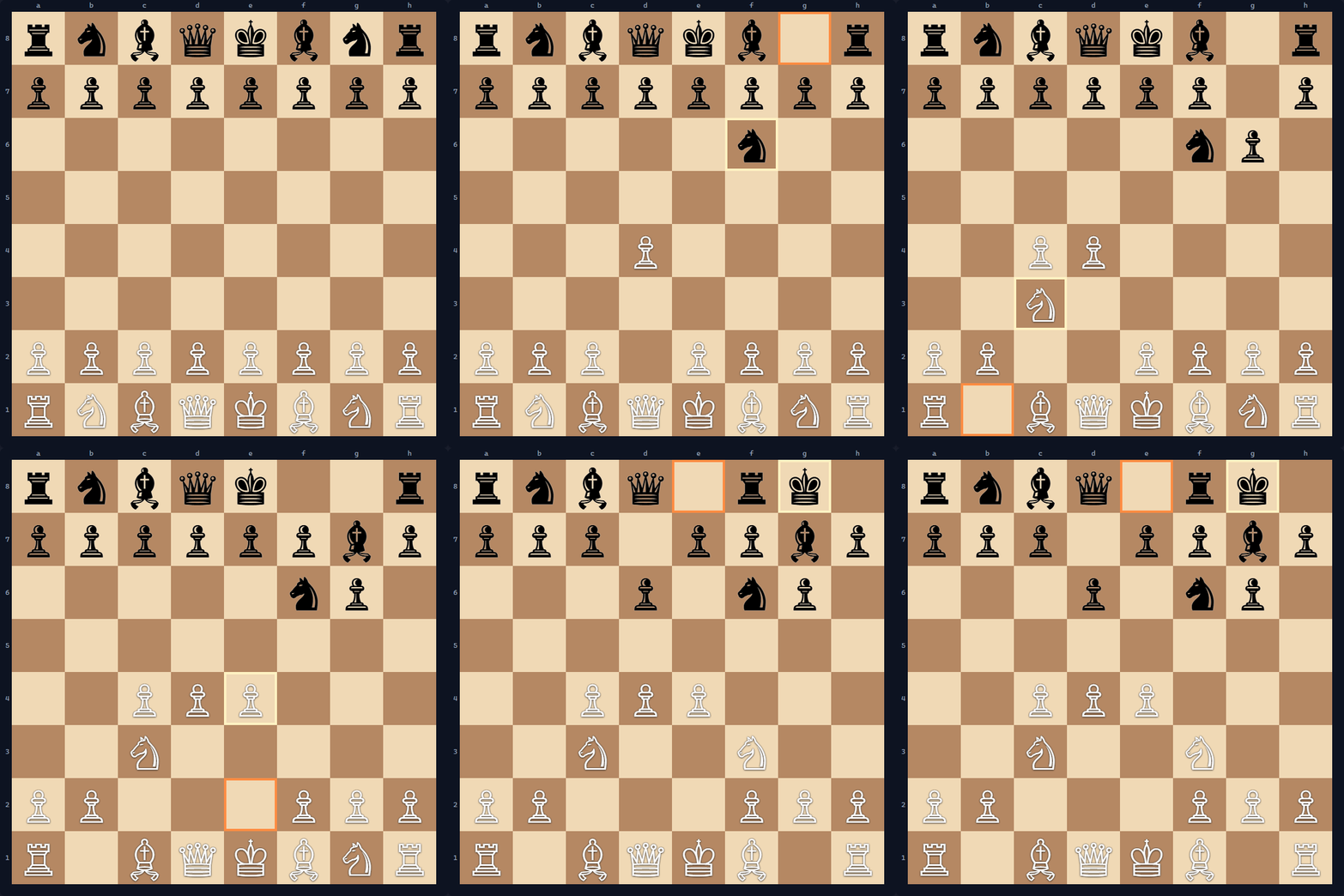
The shared DNA is the g7-bishop. In both openings that bishop is the long-term attacker — in the KID it sits on g7 and points at White's kingside center, in the KIA it sits on g2 and supports White's kingside play. The g7-bishop is the reason the KID is one of the most combative defenses to 1.d4: Black can play for a win with both colors, and the resulting positions are rarely drawn by mutual agreement.
Look at how quickly the roles separate:
- KID: Black allows White to build a center, then attacks it with ...e5 or ...c5.
- KIA: White chooses a familiar setup first, then decides where the attack should land.
- Shared core: both systems revolve around the fianchettoed bishop and timely castling.
Main idea: do not treat KID and KIA as one memorized setup. Watch the center first; the kingside attack only works when the central break is timed well.
The opening's name was proposed by Austrian master Hans Kmoch in the 1920s, who distinguished the kingside-bishop fianchetto ("King's Indian") from the queenside-bishop fianchetto ("Queen's Indian"). The KID rose to prominence in the 1950s through the games of Bronstein, Boleslavsky, Geller, Najdorf, and Gligoric, and was a mainstay of world-championship play throughout the late 20th century. Bobby Fischer used the KID as a career-long weapon, and Garry Kasparov used it as his main defense to 1.d4 for over a decade.
KID move order and main plans for Black
The standard move order for Black is 1.d4 Nf6 2.c4 g6 3.Nc3 Bg7 4.e4 d6 5.Nf3 O-O. After castling, Black is set up to strike the center with ...e5 (in the Classical main line) or ...c5 (in the Sämisch and Four Pawns lines). The flexibility of the system is one of its attractions: the same setup works against nearly every White system, and the variation is decided by White's fifth move.
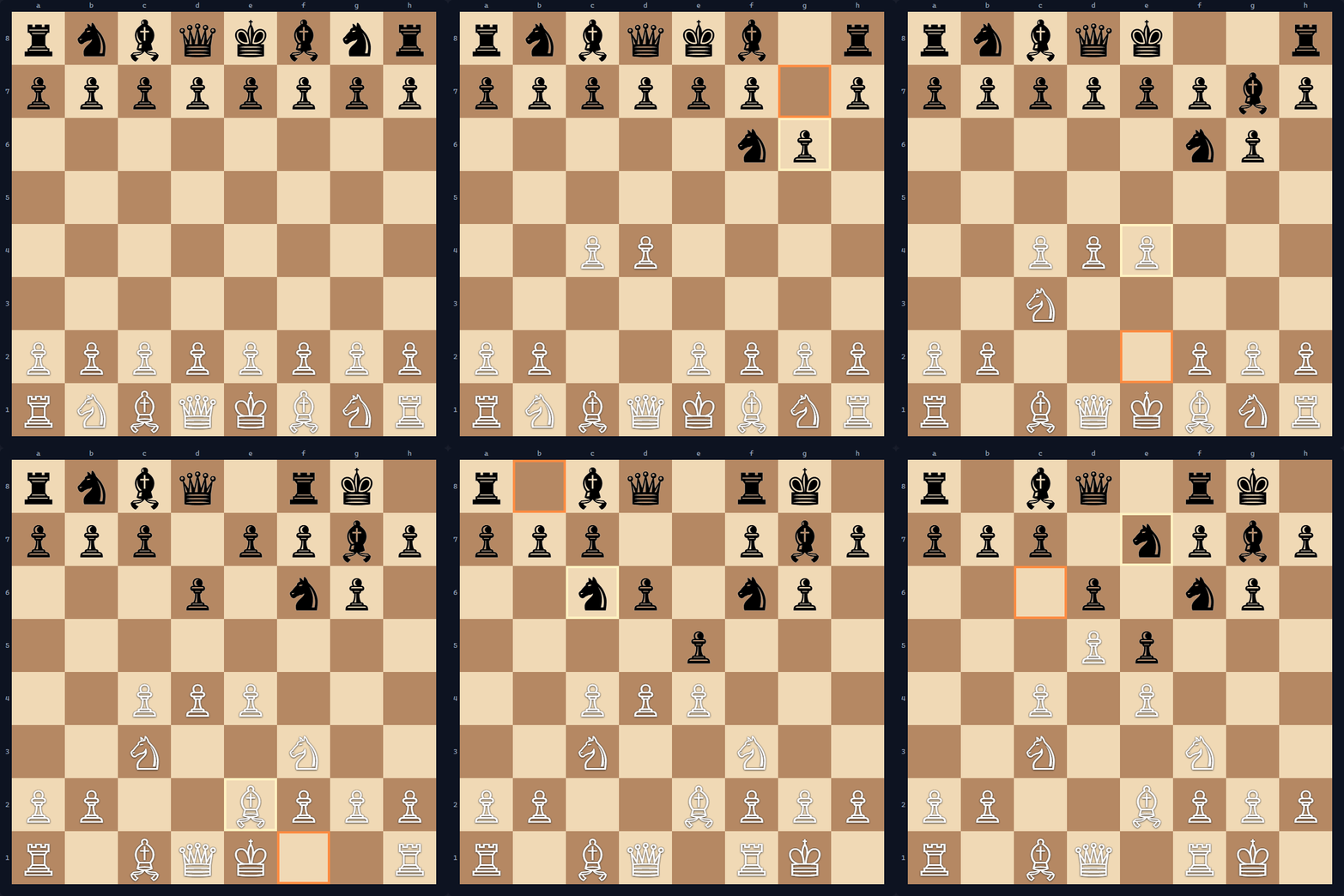
The Classical main line continues 5.Nf3 O-O 6.Be2 e5 7.O-O Nc6 8.d5 Ne7, when Black has achieved the closed Mar del Plata position: a tense, blocked structure where Black is committed to a kingside pawn storm and White is committed to a queenside pawn storm. The race is on.

KID variations to learn
The Classical (Mar del Plata) main line — 1.d4 Nf6 2.c4 g6 3.Nc3 Bg7 4.e4 d6 5.Nf3 O-O 6.Be2 e5 7.O-O Nc6 8.d5 Ne7 — is the workhorse of the KID and the most common position in serious practice. Most model games you will study (Kluger-Bronstein 1961, Korchnoi-Fischer 1970, Ljubojevic-Kasparov 1993) come from this structure. According to the cited master database, the main line shows roughly 42% White / 30% draw / 28% Black at master level — a meaningful pull to White, but the opening is far from refuted.
The Sämisch Variation begins 1.d4 Nf6 2.c4 g6 3.Nc3 Bg7 4.e4 d6 5.f3, where White reinforces the e4-pawn and prepares Be3 and Qd2. The modern antidote for Black is 5...O-O 6.Be3 c5, a pawn sacrifice that gives Black strong counterplay if White accepts.
The Four Pawns Attack is the most aggressive White system, beginning 1.d4 Nf6 2.c4 g6 3.Nc3 Bg7 4.e4 d6 5.f4. Black's response is again ...c5, striking at the e4-pawn before White can finish developing. The Modern Positional Approach (3.Nf3 with 3...O-O 4.Be2) and the Averbakh Variation (5.Be2 O-O 6.Bg5) are quieter White tries that often transpose back into main-line structures. The Makogonov Variation (5.h3) is a modern super-GM specialty used by Firouzja, Mamedyarov, Aronian, and Carlsen, and is one to watch at the top level.
Famous KID games worth knowing
Three games illustrate the KID's character better than any prose:
Kluger vs Bronstein, 1961. Bronstein's preparation is a textbook of the ...f5 kingside attack. After 9...Nd7 10...f5 Black sets up the g-pawn advance, and after 14...Kh8 the rook swings to g8 for the kingside attack. The finishing combination 26...Nh4!! 27...Bxc3+ (with discovered check) is one of the most famous tactical motifs in the opening.
Korchnoi vs Fischer, 1970. Fischer removes the knight from f6 with 10...Ne8 to enable ...f5, then uses the rook-lift 15...Rf6 17...Rg6 to add firepower along the g-file. The thematic ...g4 break opens lines, and the knight sacrifice 28...Nxh3!! is the climactic motif.
Ljubojevic vs Kasparov, 1993. Kasparov repeats the rook-lift and g-pawn advance pattern, then concludes with 29...Bxh3!! 30.gxh3 Qg1# — a striking finish that shows the danger of the white king's exposed position once Black's attack is fully mobilized.
How to play the King's Indian Attack as White
The King's Indian Attack is a flexible White system. The setup is kingside fianchetto, pawns on d3 and e4, knights on f3 and d2, bishop on g2, and the king on g1 after castling. White can reach this setup either via 1.e4 (against the Sicilian, French, or Caro-Kann) or via 1.Nf3 followed by 2.g3 and 3.Bg2 (the Barcza Opening setup).
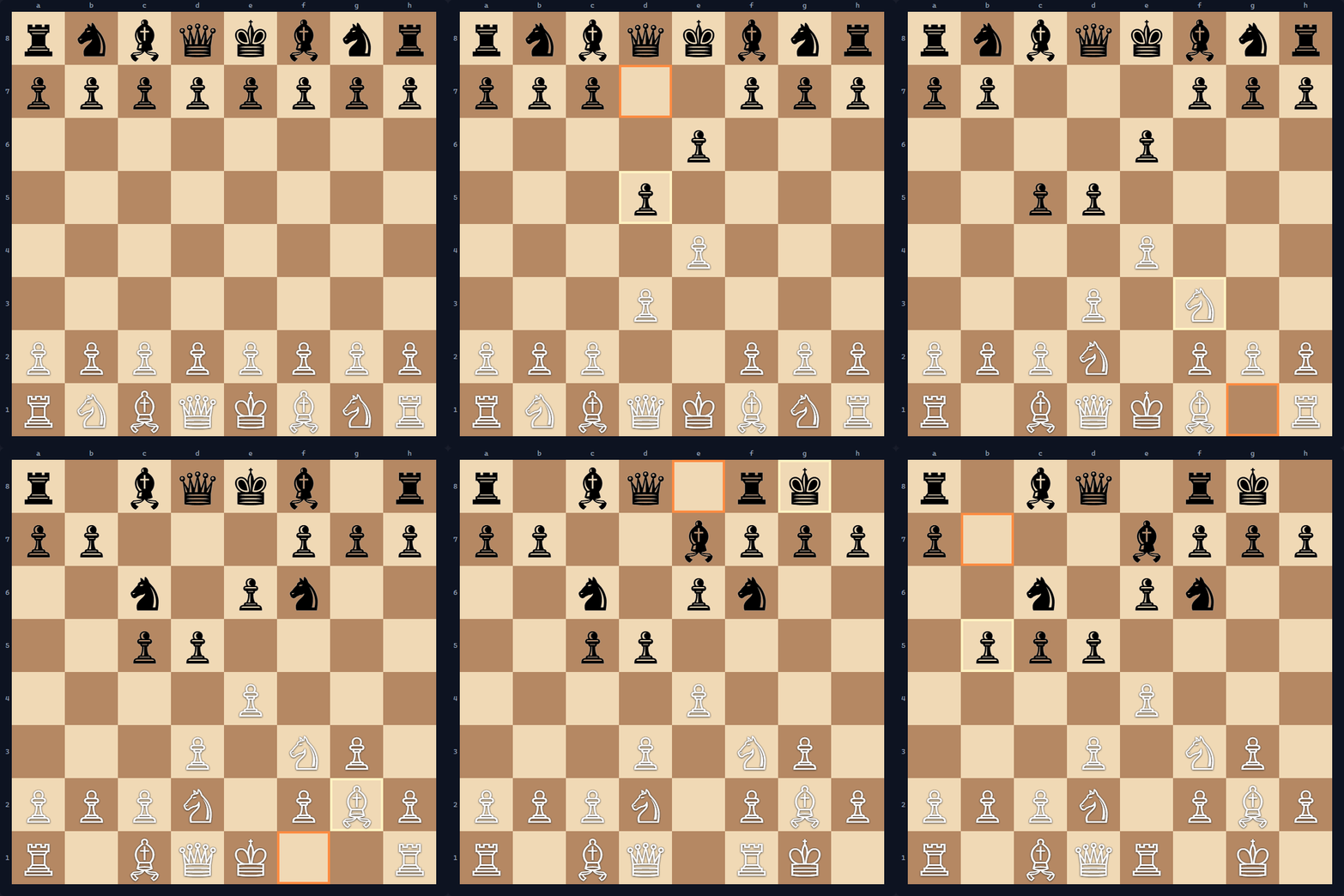
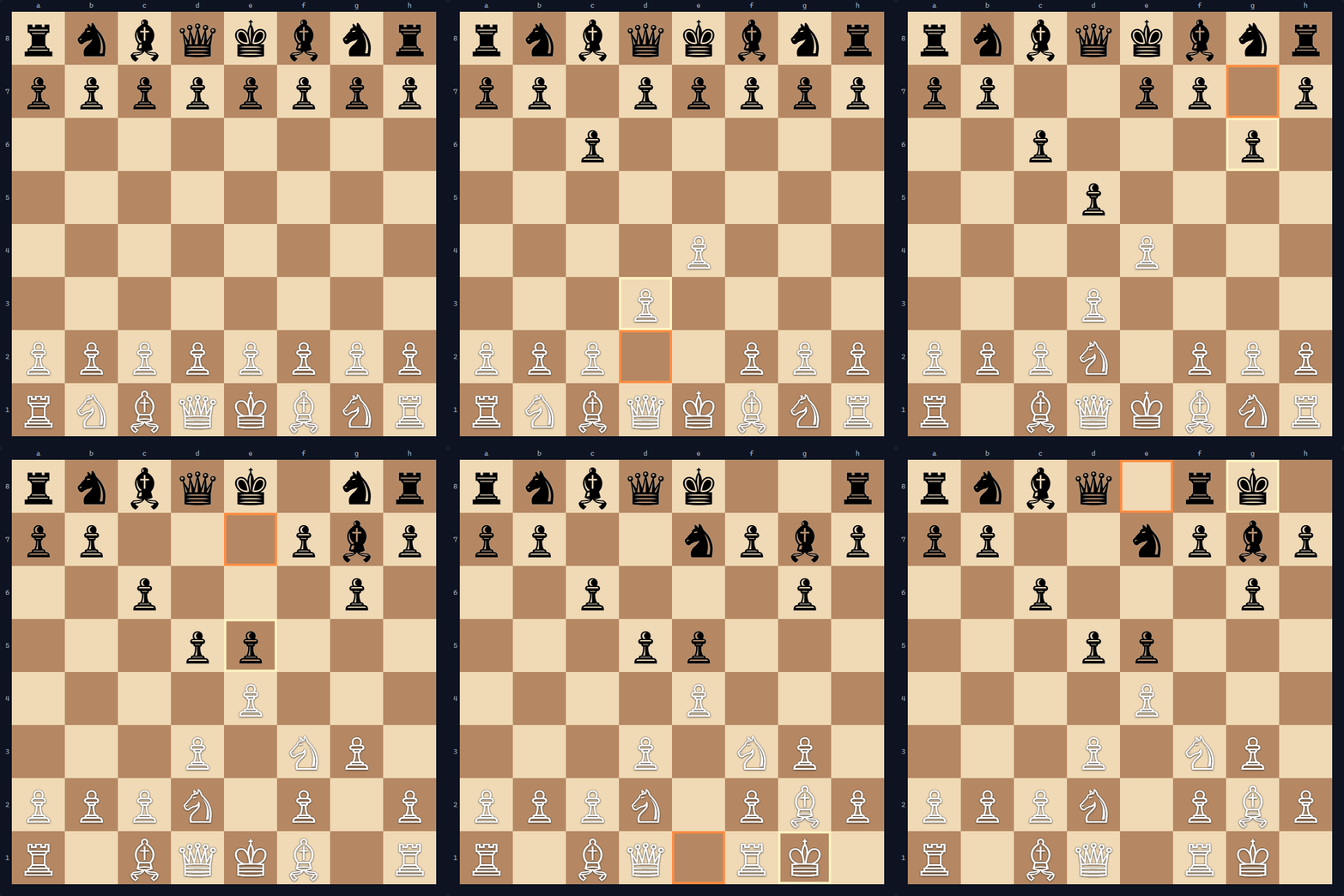
The standard KIA-vs-French line runs 1.e4 e6 2.d3 d5 3.Nd2 c5 4.Ngf3 Nc6 5.g3 Nf6 6.Bg2 Be7 7.O-O O-O 8.Re1 b5, where White's plan is to play e5, Nf1, Bf4, h4-h5, and a direct kingside attack. Against the Caro-Kann, White plays 1.e4 c6 2.d3 d5 3.Nd2 g6 4.Ngf3 Bg7 5.g3 e5 6.Bg2 Ne7 7.O-O O-O, with a similar plan.
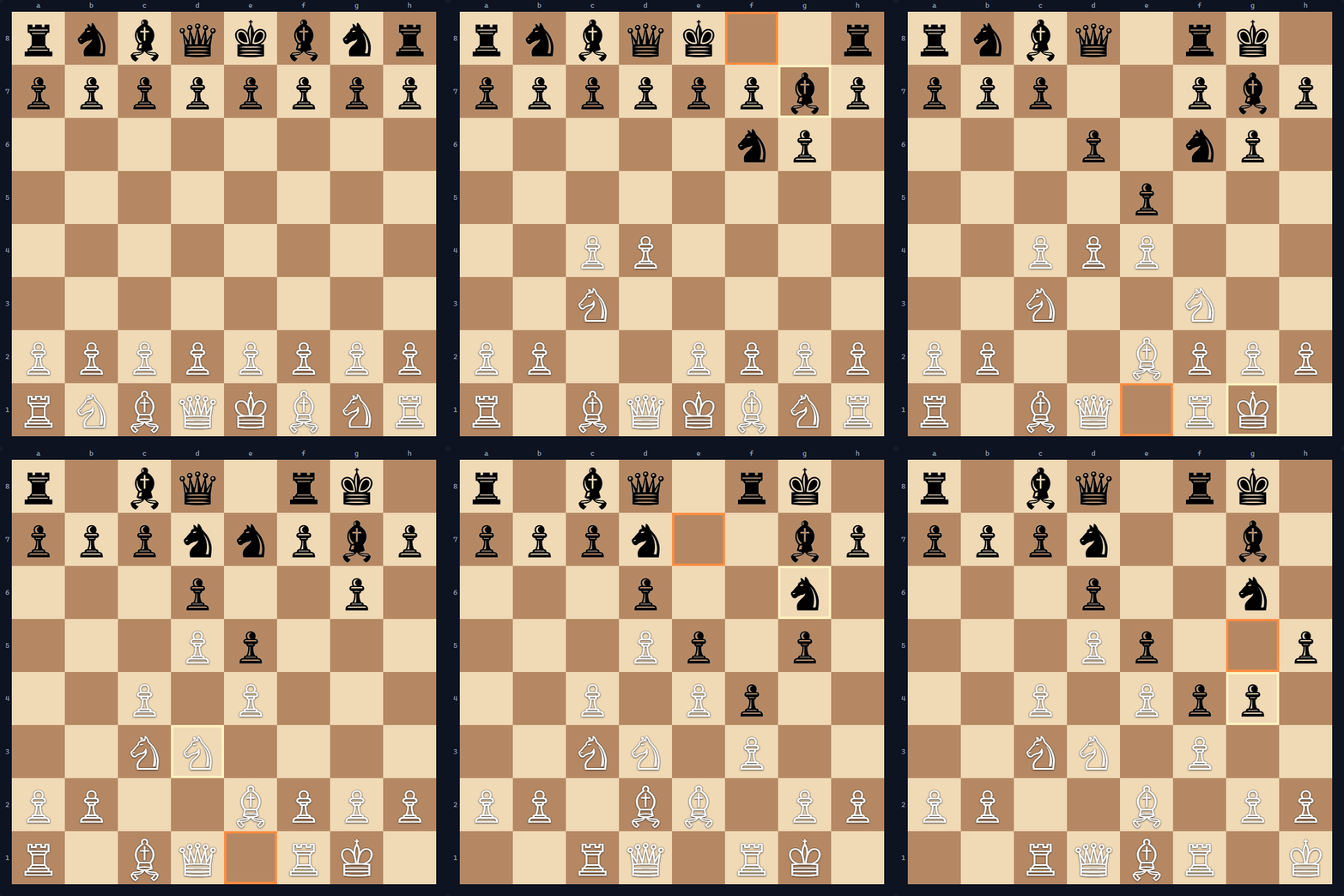
Black's main response to 1.Nf3 is the London Defense: 1.Nf3 d5 2.g3 Nf6 3.Bg2 Bf5 4.O-O e6 5.d3 h6 6.Nbd2 Be7 7.b3 O-O 8.Bb2 Nbd7 9.Re1 c6. The London Defense is a mirror of White's KIA setup and produces a closed, strategic position where neither side has an obvious path to victory.
The KIA is the right choice for White players who want one flexible setup that handles a wide range of Black defenses. It is used at the top level by Bobby Fischer, Yasser Seirawan, and Richard Rapport, and it remains one of the most popular universal systems in club play.
Comparison — KID vs KIA plans at a glance
| Side | KID (Black) | KIA (White) |
|---|---|---|
| Setup | 1...g6 ...Bg7 ...O-O | 1.Nf3 2.g3 3.Bg2 4.O-O 5.d3 6.e4 |
| First commitment | castle before any pawn break | castle before any pawn break |
| Center break | ...e5 (Classical) or ...c5 (Sämisch / Four Pawns) | e4-e5 (universal, often after h3) |
| Attack direction | kingside pawn storm ...f5-f4 and ...g5-g4 | kingside h4-h5 + Nf1 + Bf4 |
| Long-term piece | g7-bishop | g2-bishop |
| Best for | players who like to attack with both colors | players who like a flexible, universal setup |
Practical callout — pick your KID weapon
If you play Black against 1.d4, start with the Classical main line and add ...c5 setups (Sämisch and Four Pawns) when White plays 5.f3 or 5.f4. The Classical is the most common position in tournament practice and the easiest line to learn well.
If you play White against Black setups where you can fianchetto freely, learn the KIA as one flexible setup that covers many of Black's defenses. The KIA is particularly effective against the French and the Caro-Kann, where Black's structural commitments let you build a slow kingside attack with h4-h5 and Nf1-Bf4.
Whichever side you play, remember the central theme: castling early, striking the center with the right pawn break, and running a kingside attack that the g7-bishop (KID) or g2-bishop (KIA) supports.
Frequently asked questions
Is the King's Indian Defense good for beginners? It is sound but theory-heavy. Beginners who want to play the KID should start with the Classical main line; the system rewards long-term study, and the closed Mar del Plata structures are well-documented in the literature.
What is the difference between the KID and the Queen's Indian Defense? Both are hypermodern defenses to 1.d4 with a fianchetto. The KID plays the kingside fianchetto (...g6, ...Bg7) and strikes back with ...e5 or ...c5. The Queen's Indian plays the queenside fianchetto (...b6, ...Bb7) and keeps a more flexible central setup.
Should I learn the Mar del Plata or just play the Averbakh? The Mar del Plata (8.d5) is the most common and best-studied of the closed positions. The Averbakh (6.Bg5) is a solid alternative that prevents the ...e5 break and forces a Benoni-style structure. Most top players play both, depending on the opponent.
How do I counter the King's Indian Defense as White? The classical 5.Nf3 main line is the most well-mapped response. According to the cited master database, the main line shows roughly even results with a slight pull to White. Sharp tactical systems like the Sämisch and Four Pawns score well for White but require more preparation.
Is the King's Indian Defense risky? Yes. Black's attack has to be precise; otherwise the queenside deficit can cost the game. But the same is true of any sharp opening, and the KID's rewards for precise play are real.
Sources and further reading
For deeper study, the chess.com King's Indian Defense page is the cleanest single reference for variation structure and Famous Games. The 365chess KID guide gives the most complete prose treatment of the main line. Chessreps is a useful spaced-repetition trainer if you want to drill the canonical PGNs. Houseofstaunton gives the most readable Famous Games references (Kluger-Bronstein, Korchnoi-Fischer, Ljubojevic-Kasparov). Modern-chess covers Neo-Averbakh, Panno, Bagirov, Seirawan, and the Mar del Plata historical note. Chessklub gives beginner-friendly framing of the Petrosian 7.d5 closure and the Nakamura-Carlsen trap.
For the White side, the chessable King's Indian Attack blog is the cleanest single source for the KIA setup, KIA-vs-French / Caro-Kann example lines, the London Defense vs KIA, and the Fischer-Sherwin 1957 model game.
For a structured next step, the lichess KID study by FunnyAnimatorJimTV covers the opening in 35 chapters, including a Mainline Classical module, a Bayonet Attack module, a Fianchetto Variation module, and great-game references (Ljubojevic-Kasparov, Korchnoi-Williams, Anand-Nakamura, Kramnik-Kasparov, Jussupow-Kasparov, Beliavsky-Nakamura, Fulton-Gavriel, Bonafont-Gavriel).