
What Is the Modern Defense?
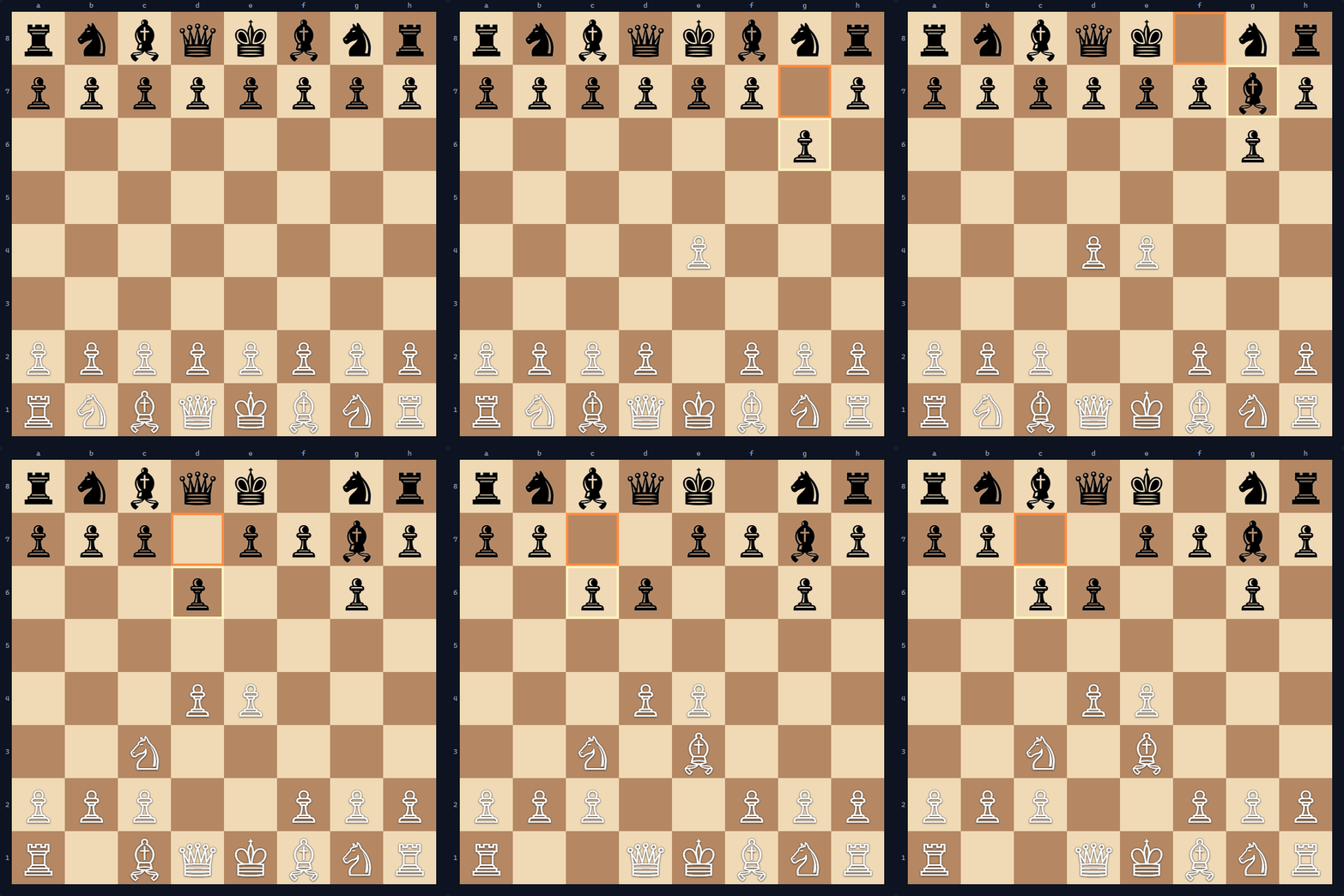
The Modern Defense begins with 1.e4 g6. After White's natural reply 2.d4, Black fianchettoes the bishop to g7 (2...Bg7). The opening is also called the Robatsch Defence and carries the ECO code B06, according to a open-source study.
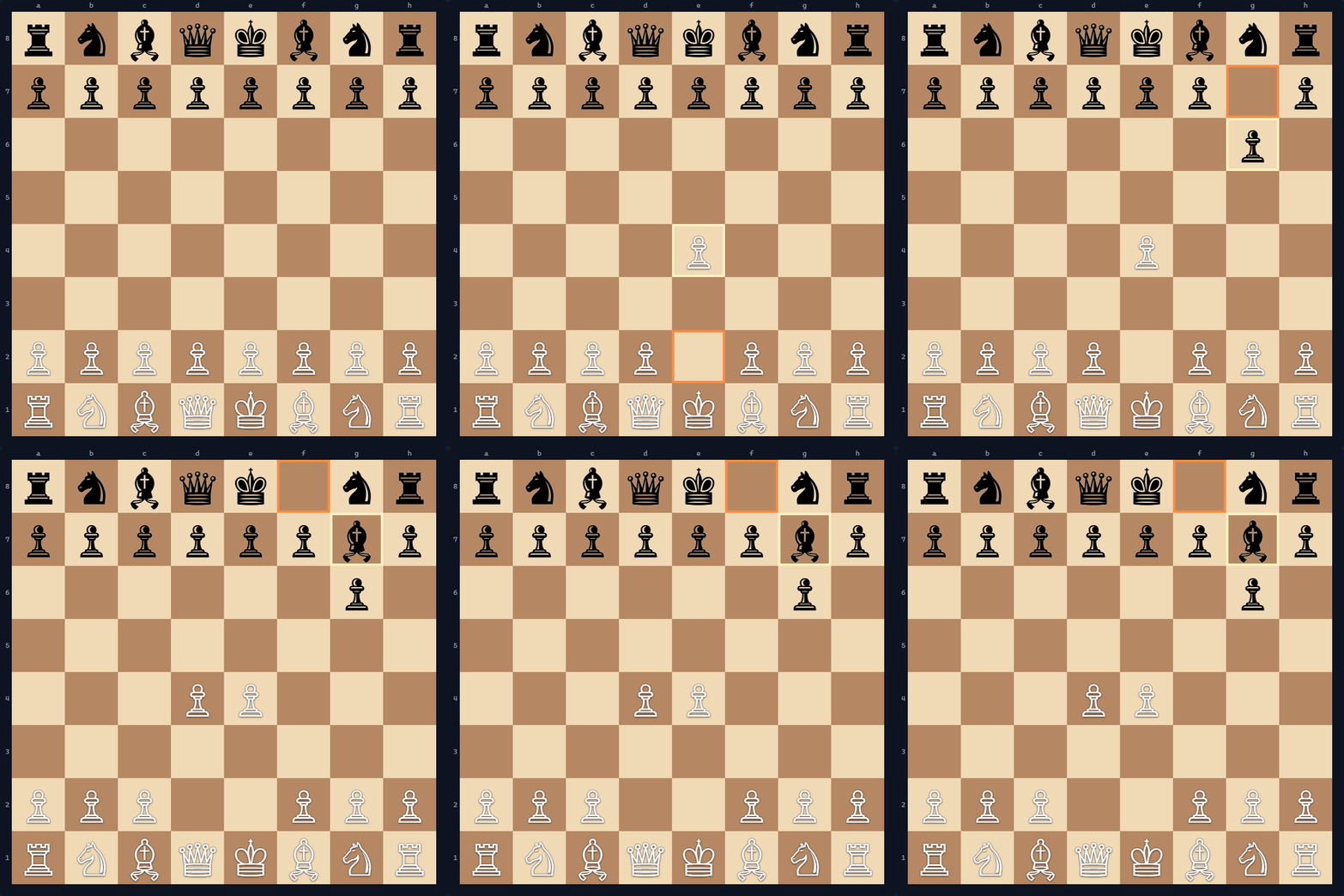
In true hypermodern style, Black allows White to occupy the center with pawns on e4 and d4, then prepares a counteroffensive. The idea is not to challenge the center immediately but to let it become over-extended. As 365chess explains: "This is a hypermodern chess opening in which Black lets White dominate the center with their e4 and d4 pawns only to attack it later in the game."

The main strategic aims for Black are to limit exchanges in the opening, target weaknesses with long-range pieces — especially the g7 bishop controlling the h8-a1 diagonal — and launch wing attacks once the center becomes closed. According to ChessBase, you can expect Black to sit back, develop pieces to build a strong defence, wait for White to castle, and then attack the side White chose.
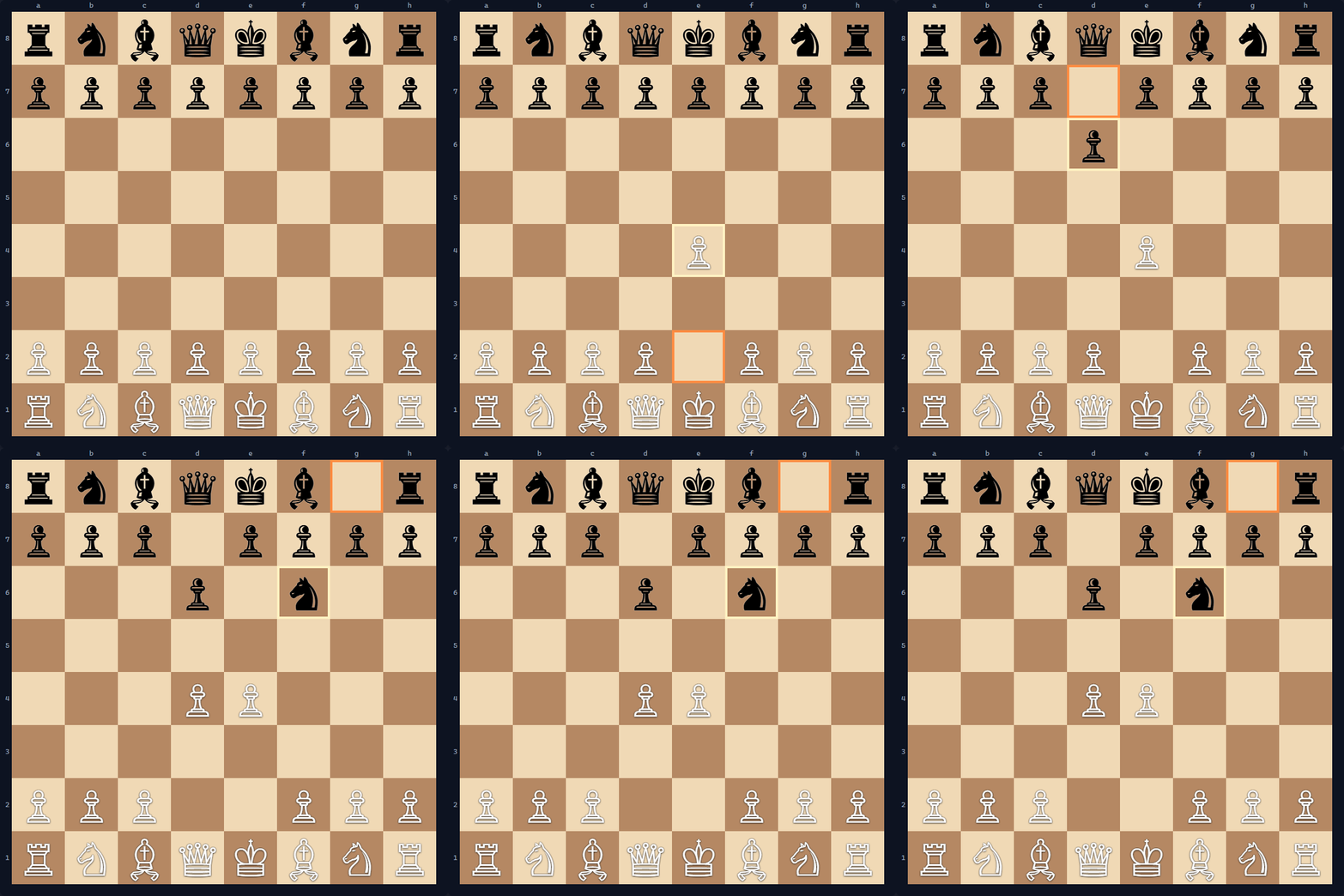
The Modern Defense is closely related to the Pirc Defense (1.e4 d6 2.d4 Nf6). The main difference is timing: in the Modern, Black keeps the knight off f6 until later. As 365chess notes, the knight is not developed to f6 until later in the opening.
Why Play the Modern Defense?
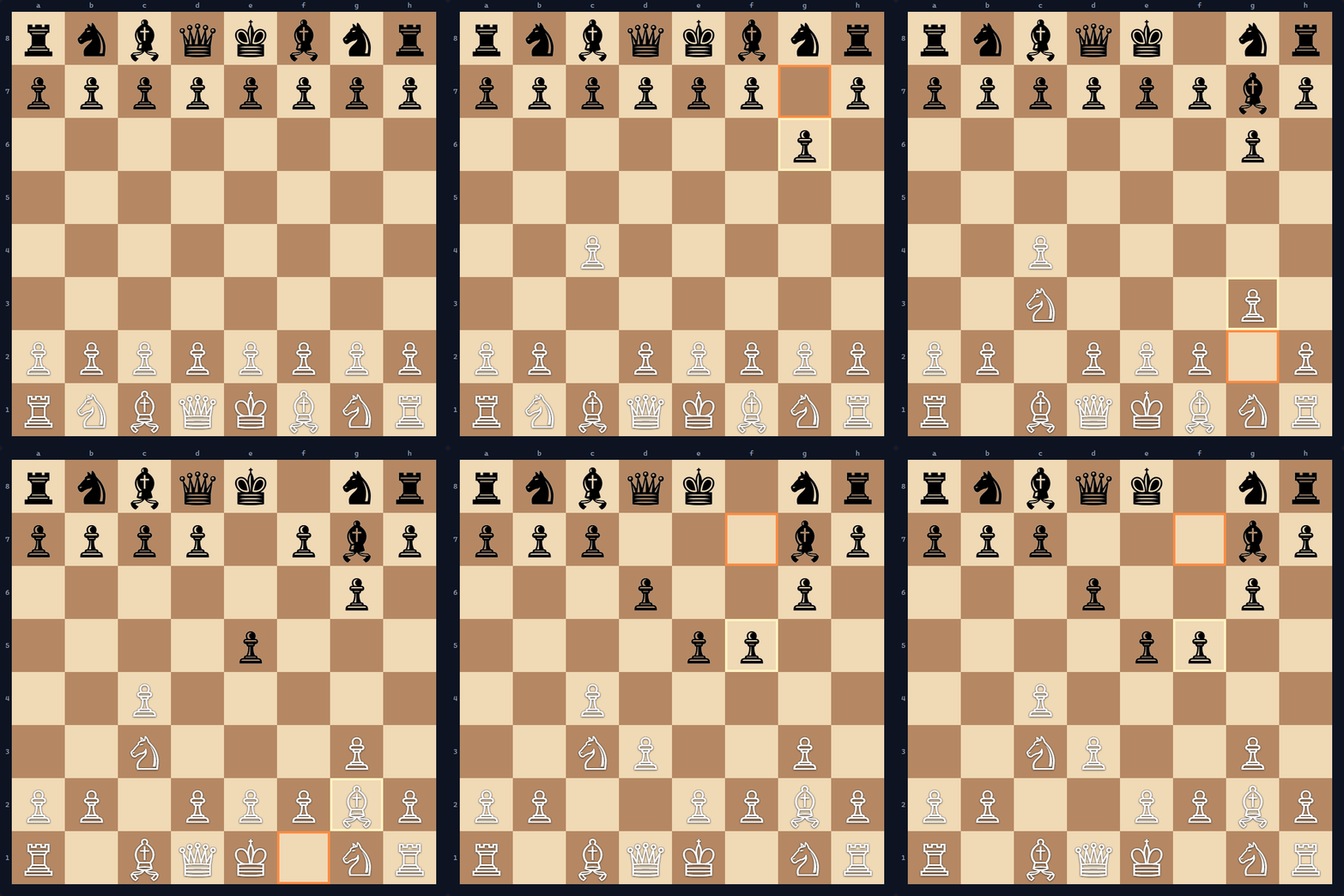
The commercial platform lists three strong reasons to adopt the Modern Defense: it is extremely flexible, requires little theory to play, and creates unbalanced positions. The opening works against any White first move — 1.e4, 1.d4, 1.Nf3, and even 1.c4, where USCF Sales demonstrates a specific line: 1.c4 g6 2.Nc3 Bg7 3.g3 e5 4.Bg2 d6 5.d3 f5.
The winning statistics offer a practical argument. In the commercial platform database of 8,117 games, Black wins roughly 30% of games, White wins about 37%, and the remaining third are drawn. ChessBase reports consistent numbers: "higher winning chances (30%), reducing White's winning chances to 37%." The relatively narrow gap makes the Modern a viable choice for players who want to play for a win with Black.
The low-theory nature suits players who prefer strategic understanding over memorization. The Chess World notes that "rather than learning and remembering exact moves and long lines, you will have to study many games, find the plans, and understand the resulting positions." As 365chess puts it, the Modern Defense is "perfect for players that are more inclined to positional chess rather than stale memorized lines."

Another advantage is White's risk of over-extending. As The Chess World observes, "White often runs the risk of over-extending while Black possesses sufficient defensive resources," meaning inaccurate play by White is punished more severely than in many other openings.
Key Variations of the Modern Defense
Standard Defense (3.Nc3 d6)
The Standard Defense is the most common continuation. After 1.e4 g6 2.d4 Bg7, White plays 3.Nc3 and Black responds 3...d6. This move keeps the position closed and prepares the pawn breaks ...e5 and ...c5.
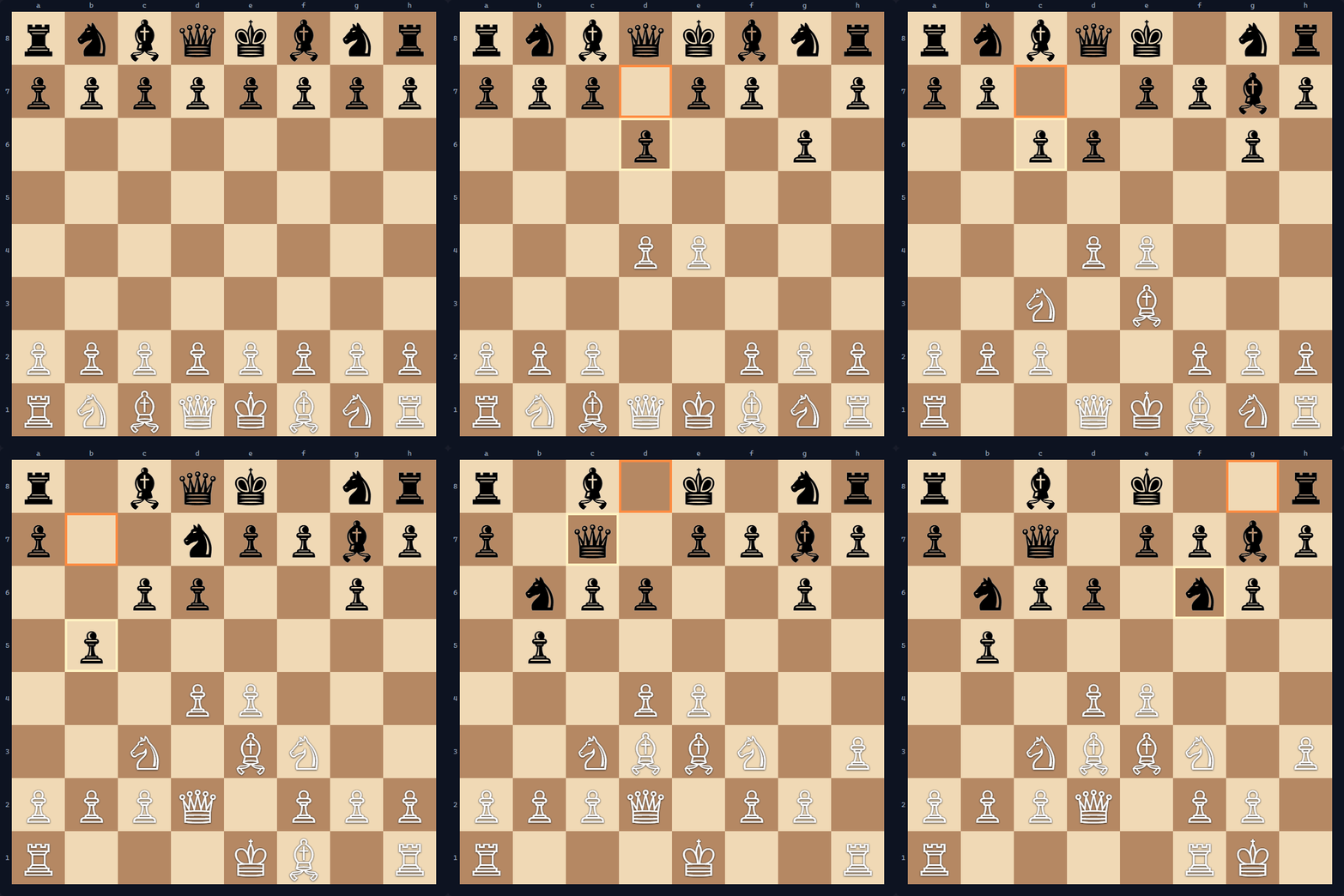
Per 365chess, the most played line runs nine moves deep: 1.e4 g6 2.d4 Bg7 3.Nc3 d6 4.Be3 a6 5.Qd2 b5 6.f3 Nd7 7.h4 h5 8.Nh3 Bb7 9.Ng5 Ngf6. Black prepares queenside expansion with ...b5, while White targets the kingside.
USCF Sales covers a slightly different setup: 1.e4 g6 2.d4 d6 3.Nc3 Bg7 4.Be3 c6 5.Qd2 Nd7. The idea is a ...Nd7-b6 maneuver after ...b5, with the queen on c7 supporting ...e5. White continues 6.Nf3 b5 7.Bd3 Nb6 8.h3 Qc7 9.0-0 Nf6, and Black has equalized.
Averbakh System (3.c4)
Russian GM Yuri Averbakh developed a system that prioritizes queenside confrontation over rapid center control. White plays 3.c4 d6 4.Nc3, claiming space on the queenside. According to ChessBase, Black can respond with 4...Nf6 (natural development) or 4...e5 (direct confrontation). From the closed position, Black proceeds with the original idea of attacking on the wings.
Modern Pterodactyl (3.Nc3 c5)
A sharp line that transposes to Benoni Defense structures. After 1.e4 g6 2.d4 Bg7 3.Nc3 c5, Black challenges White's center control immediately. According to ChessBase, this variation "significantly displeases the evaluation bar regarding efficiency for Black" but, like the Benoni, retains strong surprise value.
Austrian Attack / f4 Mega Center
White's most aggressive response. After 1.e4 g6 2.d4 Bg7 3.Nc3 d6, White plays 4.f4, placing three pawns on central squares. As 365chess notes, this gives White a "Mega Center." The critical position arises after 4...a6 5.Nf3 b5, known as the Austrian Attack main line.
Modern Defense vs. Pirc Defense
The Modern Defense and the Pirc Defense share the same DNA, but the difference in knight development creates distinct opening phases.
Pirc Defense: 1.e4 d6 2.d4 Nf6 — Black commits the knight to f6 on move two. This immediately pressures e4 and challenges White's center, but it also gives White a clear target.
Modern Defense: 1.e4 g6 2.d4 Bg7 — Black delays ...Nf6, keeping White guessing about Black's setup. The knight can later go to f6, e7, or d7 depending on how White proceeds.
As USCF Sales explains, "By starting with the Modern Defense, you can often transpose into variations of the Pirc Defense of your choosing." The transposition possibilities include the King's Indian Defense (especially against 1.d4 with 3.c4), the Dragon Sicilian, and the Hippopotamus Defense. If you want to stay in Modern territory, you must avoid moves that lead to other setups.
The Fianchetto Variation (4.g3) demonstrates this overlap. USCF Sales shows: 1.e4 g6 2.d4 d6 3.Nc3 c6 4.g3 Bg7 5.Bg2 Nf6. Black starts in Modern territory before transposing to a Pirc-like setup with ...Nf6 on move five. An excellent defensive resource is ...h6 when White advances the g-pawn — the pawn exchange on g5 leaves White with weakened kingside structure.
Strategic Ideas for Black
The Modern Defense rewards strategic understanding over tactical sharpness. Here are the key ideas Black should keep in mind.
Use the g7 bishop effectively. The fianchettoed bishop on g7 controls the long diagonal (h8-a1) and can create unexpected discovered attacks. Keeping this diagonal open is why the knight on e7 is often preferred against 1.d4 setups.
Play the knight on e7 against 1.d4. USCF Sales highlights several advantages of the Benoni-style knight on e7: it does not block the g7 bishop's diagonal, makes f5 harder for White, and can jump to f5 or d4. The line runs: 1.d4 g6 2.c4 Bg7 3.Nc3 c5 4.d5 d6 5.e4 e6 6.Nf3 Ne7.
Delay castling. As USCF Sales notes, "In the Modern Defense, there is no need to rush castling." If the queenside pawns become locked, the king can sometimes find a haven there. Opposite-side castling creates exciting attacking games.
Know the Hippopotamus Defense. A peculiar sub-variation that can arise from the Modern is the Hippopotamus Defense. As 365chess describes it, this setup involves "playing the knights to the 7th rank, playing the bishops in a fianchetto, and moving all the pawns to the 6th rank, except for the c and f pawns." It is a maximalist defensive formation that can confuse unprepared opponents.
Use older lines as surprise weapons. USCF Sales recommends exploring older variations from the 1960s and 1970s: "Unfashionable does not always mean a line is refuted; if it remains sound, you can use it to take your opponent into unfamiliar territory."
Practical Callout: When playing the Modern Defense, focus on three things in the first ten moves: keep the g7 bishop's diagonal open, decide whether to put your knight on f6 or e7 based on White's setup, and do not rush to castle. These principles will serve you better than memorizing long move sequences.
Common Traps in the Modern Defense
The Modern Defense contains several tactical pitfalls for unprepared White players. A open-source study catalogues four common traps, though the specific PGN lines require direct extraction from the interactive boards.
The most common themes involve White over-extending in the center and leaving weaknesses for Black's long-range pieces to exploit — the g7 bishop can create unexpected discovered attacks along the long diagonal. Another pattern is White advancing kingside pawns too aggressively, creating structural weaknesses that Black targets with queenside counterplay. The Modern Defense rewards patience: Black waits for White to commit, then strikes.
Model Games
Studying complete games is the best way to internalize the Modern Defense. Here are five illustrative examples spanning from 1969 to 2025.
| White | Black | Year | Result | Moves | Tournament | Key Lesson |
|---|---|---|---|---|---|---|
| Magnus Carlsen | Veselin Topalov | 2015 | 0-1 | — | Sinquefield Cup | Black's counterattack from a Modern setup |
| R Swinkels | Fabiano Caruana | 2014 | 0-1 | 30 | — | Efficient Black win demonstrating the Modern |
| Alexander Grischuk | Magnus Carlsen | 2025 | ½-½ | 72 | World Blitz | Top-level speed chess viability |
| P H Clarke | Vassily Smyslov | 1969 | 0-1 | 40 | — | Classic demonstration, long history of the opening |
| Bartosz Socko | Hikaru Nakamura | 2002 | 0-1 | — | — | Fianchetto Variation in action |
The Carlsen vs. Topalov game from the 2015 Sinquefield Cup is particularly instructive — the open-source study devotes two full chapters to it. Topalov demonstrates how to build a Modern Defense setup, wait for White's attack to stall, and strike decisively on the wing. The Grischuk vs. Carlsen game from the 2025 World Blitz (72 moves, drawn) shows the defense remains viable at the highest level in speed chess.
How to Start Playing the Modern Defense
If you want to add the Modern Defense to your repertoire, start with the Standard Defense (3.Nc3 d6) against 1.e4. This is the most tested line and will teach you the core strategic themes: delayed castling, queenside expansion, and the role of the g7 bishop.
Against 1.d4, try the Benoni-style knight-on-e7 setup. It keeps the g7 bishop's diagonal clear and gives White a different set of problems than the standard King's Indian or Grünfeld.
Keep the Fianchetto Variation (4.g3) in your back pocket as a secondary weapon. It transposes to Pirc-like positions and can catch opponents who prepared only for the Standard Defense.
The Modern Defense is low-theory but not no-theory. Study the model games above, understand the plans and structures, and you will develop a feel for when to strike. Older variations from the 1960s and 1970s remain sound — use them to take opponents into unfamiliar territory.
FAQ
Is the Modern Defense a good opening for beginners?
The Modern Defense suits players rated 1200+ who prefer strategic maneuvering over memorization. Its low-theory nature makes it accessible, but absolute beginners may find the Pirc Defense more intuitive.
What's the difference between the Modern Defense and the Pirc Defense?
Both openings are hypermodern systems for Black, but the Pirc commits the knight to f6 early (1.e4 d6 2.d4 Nf6), while the Modern delays ...Nf6 (1.e4 g6 2.d4 Bg7). The Modern offers more flexibility but requires careful transposition awareness.
Can you play the Modern Defense against 1.d4?
Yes. The Modern Defense is playable against 1.e4, 1.d4, 1.Nf3, and 1.c4. Against 1.d4, a common approach is the Benoni-style setup with the knight on e7 instead of f6, keeping the g7 bishop's diagonal unobstructed.
Is the Modern Defense still played at the top level?
The Modern Defense appears more often in speed chess than classical games at the highest level. Recent examples include Grischuk vs. Carlsen at the 2025 World Blitz Championship and Carlsen vs. Topalov at the 2015 Sinquefield Cup.
What is the main line of the Modern Defense?
The most played line, per 365chess, is: 1.e4 g6 2.d4 Bg7 3.Nc3 d6 4.Be3 a6 5.Qd2 b5 6.f3 Nd7 7.h4 h5 8.Nh3 Bb7 9.Ng5 Ngf6.
Sources
- ChessBase — "The Modern Defense and its Ideas" (2024) — https://en.chessbase.com/post/the-modern-defense-and-its-ideas
- Chess.com — Modern Defense opening page — https://www.chess.com/openings/Modern-Defense-3.Nc3-Bg7
- 365chess — Modern Defense opening guide — https://www.365chess.com/chess-openings/Modern-Defense
- USCF Sales — "Modern Defense" by Shaun Sedice — https://www.uscfsales.com/blogs/chess-strategies/modern-defense
- Lichess Study — Modern Defense interactive study — https://lichess.org/study/UYi6oQth/aisYUdxP
- Chessgames.com — Modern Defense (B06) game collection — https://www.chessgames.com/perl/chesscollection?cid=1044445
- Chesstempo — Modern Defense Standard Defense game database — https://chesstempo.com/game-database/opening/modern-defense-standard-defense/1319
- The Chess World — "5 Reasons to Play the Modern Defense" — https://thechessworld.com/articles/openings/5-reasons-to-play-the-modern-defense/