
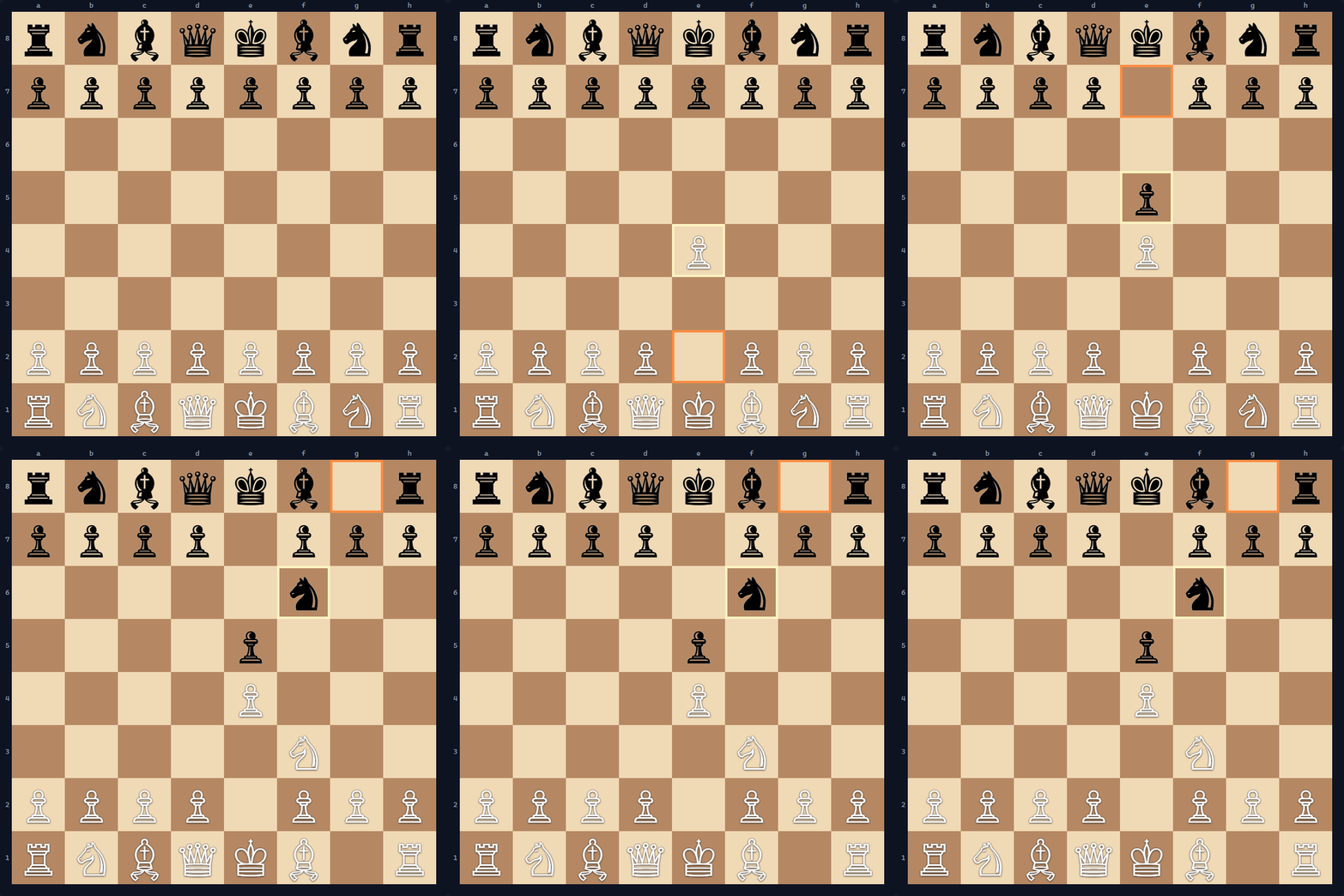
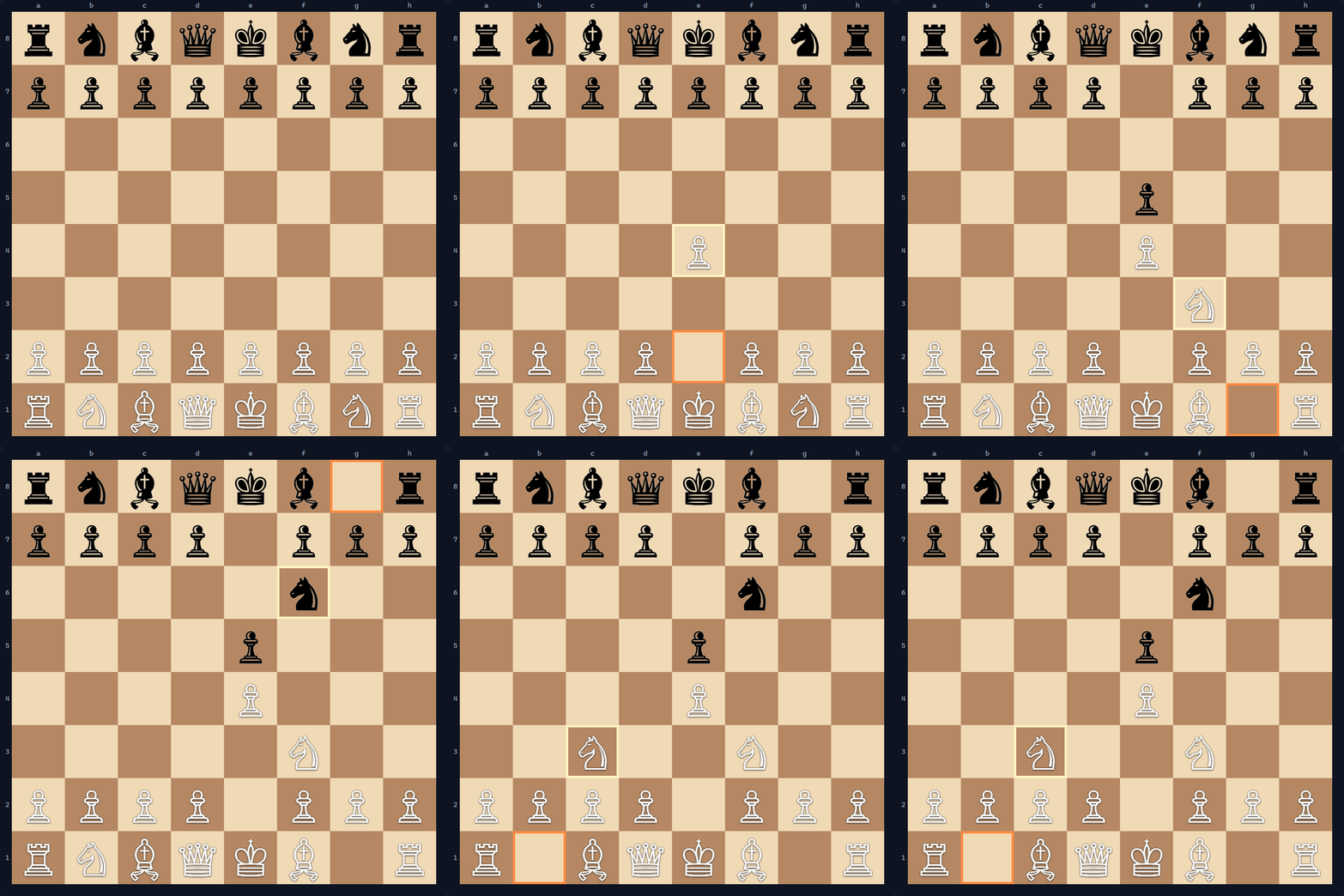
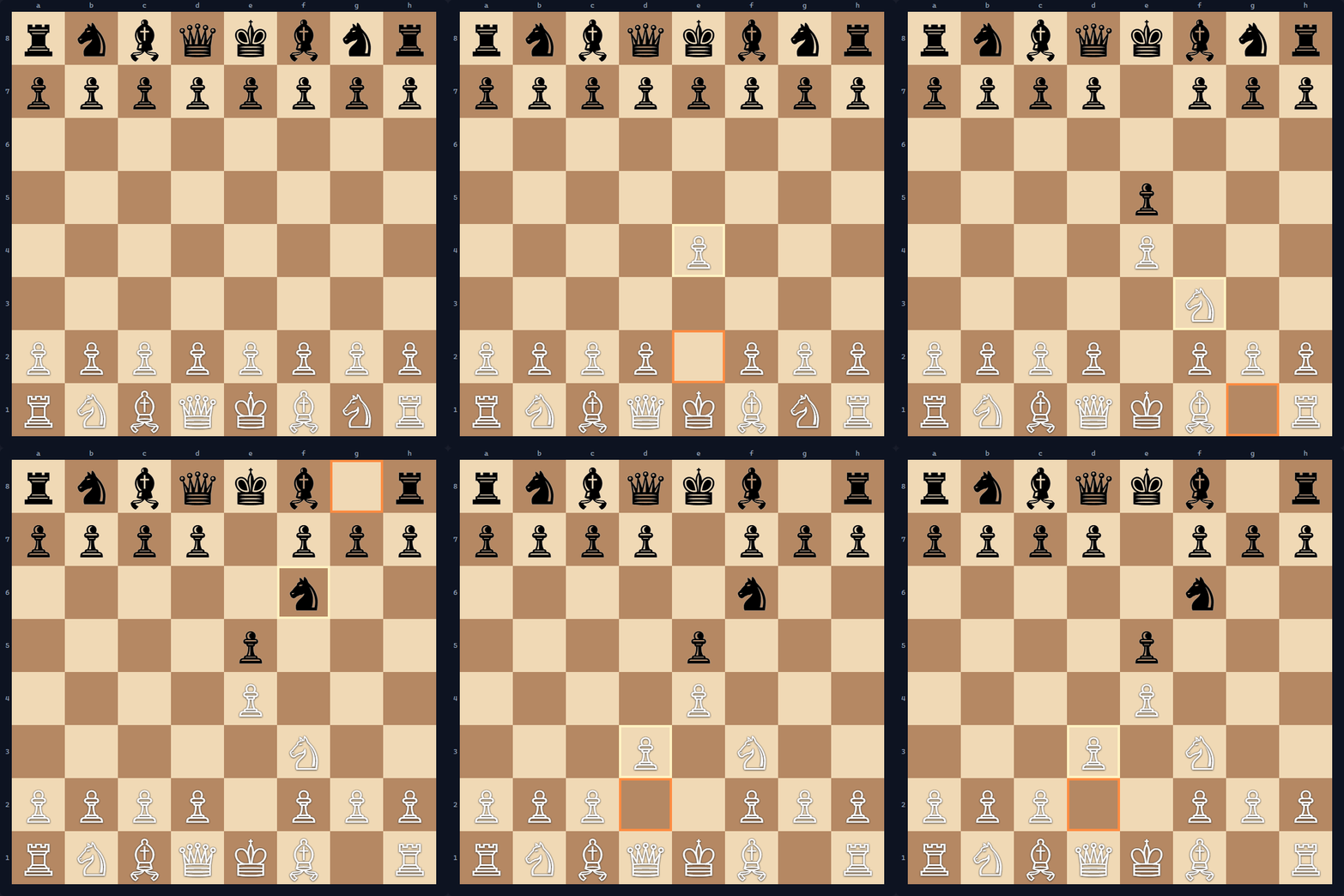
What Is Petrov's Defense?
The defining feature of Petrov's Defense is the counterattack. After 1.e4 e5 2.Nf3, most Black responses defend the e5-pawn — 2...Nc6 (Ruy Lopez, Italian, Scotch), 2...d6 (Philidor), or 2...f5 (Latvian Gambit). Petrov's Defense does something different: Black plays 2...Nf6, attacking White's e4-pawn in return.
This symmetrical approach creates an open, balanced position where Black's rapid development compensates for White's slight initiative. The opening is classified under ECO codes C41 through C43 and is also known as the Petroff Defense and Russian Game.

For Black players looking to cut down on opening study, the Petrov is a practical choice. Chessreps lists among its pros that it "avoids enormous theory of Ruy Lopez and Italian Game." Instead of preparing separate responses to each of White's options, Black can rely on a single coherent system.
A Brief History
The Petrov has a longer pedigree than most chess openings. According to Chessable, it was first mentioned in chess literature in the late 15th century by Lucena. Around 1500, the Portuguese master Pedro Damiano gave the opening serious attention.
The opening takes its name from the 19th-century Russian master Alexander Petrov. Chessable notes that Petrov was the first to realize that the correct move order after 3.Nxe5 is 3...d6 before capturing on e4. At the highest level, the Petrov has been a trusted weapon for world champions including Karpov, Kramnik, and Anand, per Chessable. Fabiano Caruana employed it undefeated in the 2018 World Championship match against Magnus Carlsen.
The Classical Main Line (3.Nxe5)
The Core Move Order
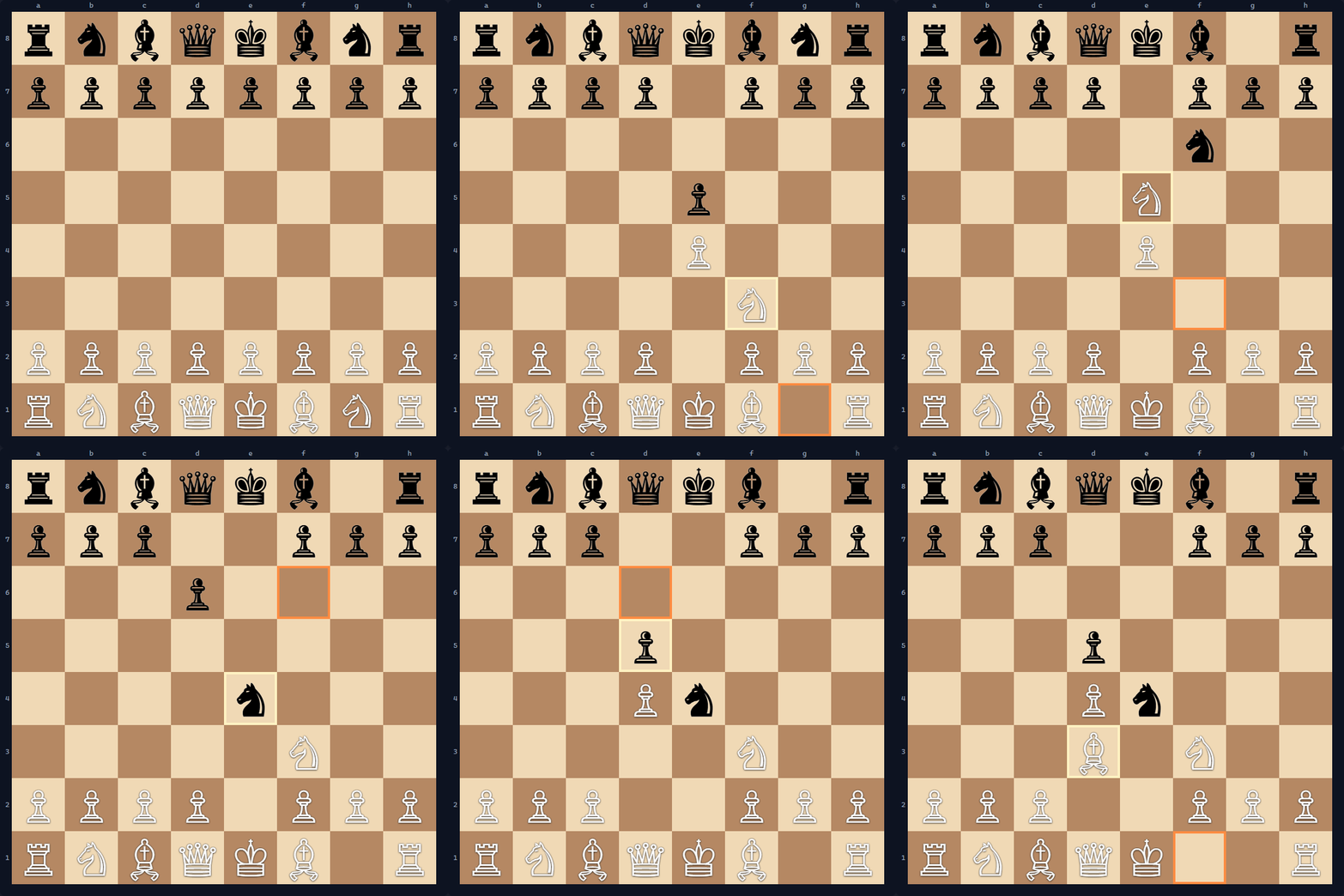
The Classical Attack — 3.Nxe5 d6 4.Nf3 Nxe4 5.d4 d5 — is the main line of Petrov's Defense and the most common continuation at every level. White takes the e5-pawn, Black recaptures on e4, and both sides settle into a symmetric but tense center.
The position after 5...d5 is where the real choices begin. White's most natural developing move is 6.Bd3, which prepares kingside castling and eyes Black's knight on e4. At this point, Black has three respectable bishop development options, as documented by the commercial platform:

- 6...Be7 — The solid choice. Black develops quietly and prepares to castle.
- 6...Bd6 — More active. Black challenges White's control of the e-file and may create threats against the kingside.
- 6...Nc6 — The flexible option. Black develops a second piece before deciding where the bishop belongs.
365chess provides the longest published line of the Classical Variation: 6.Bd3 Nc6 7.O-O Be7 8.c4 Nb4 9.Be2 O-O 10.Nc3 Bf5 11.a3 Nxc3 12.bxc3 Nc6. White uses the queenside expansion with c4 to gain space, while Black completes development and targets the weak light squares around White's position.
Strategic Ideas in the Classical
In the Classical line, White enjoys a slight development lead from the extra tempo. Black's key tasks are completing development, challenging White's center, and waiting for White to overextend. The doubled c-pawns after 11...Nxc3 12.bxc3 give Black a long-term target on c4. One of the Petrov's strengths is that Black's plans are intuitive — develop, castle, and the position largely plays itself.
The Steinitz Attack and Three Knights Game
Steinitz Attack (3.d4)
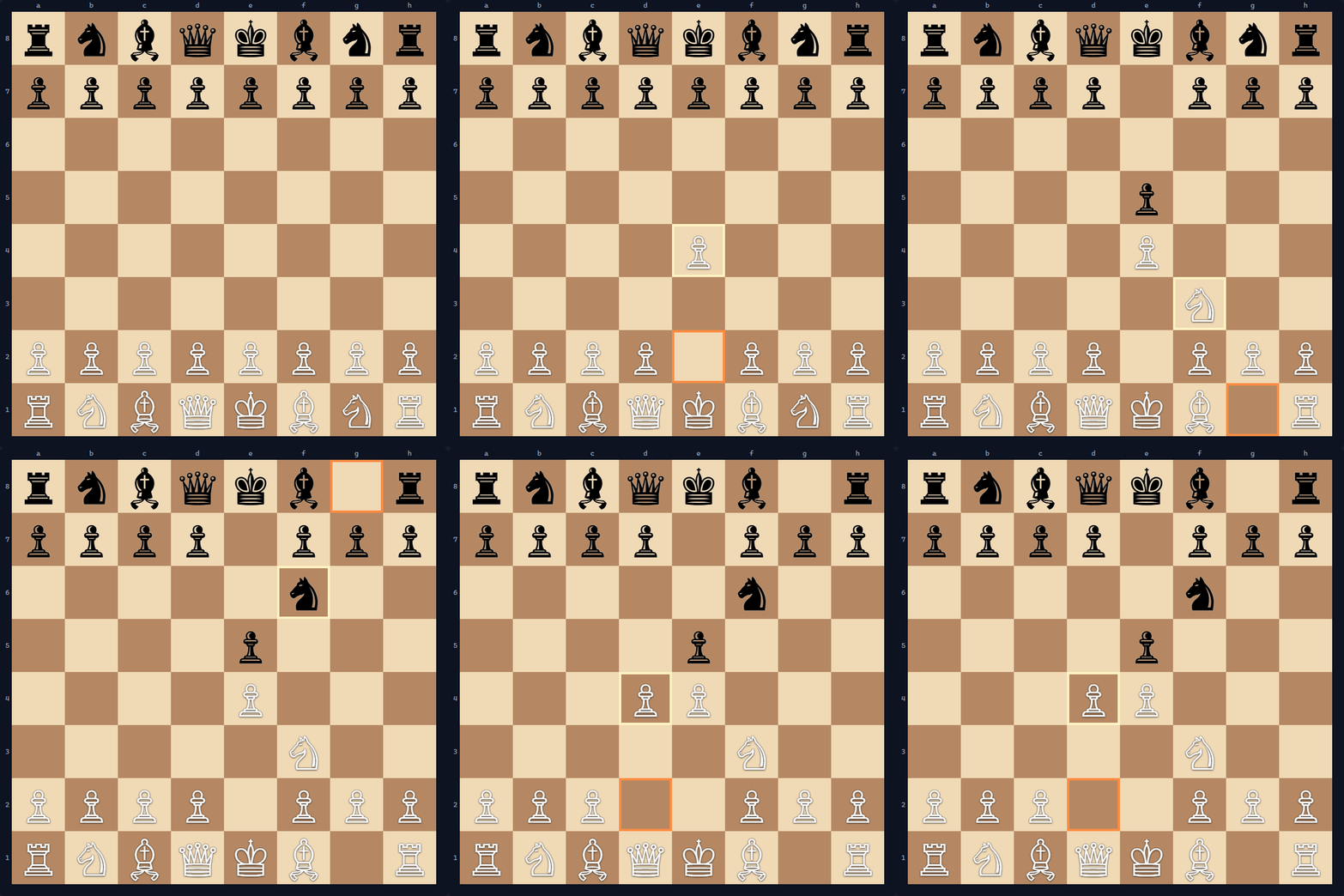
The Steinitz Attack — 3.d4 — opens the center immediately rather than capturing the e5-pawn. According to the commercial platform's dedicated Steinitz Attack page, 3...Nxe4 occurs in 86% of games, while 3...exd4 appears in about 12.5%.
When Black captures on e4, White can play 4.Bd3 or 4.dxe5, both leading to unbalanced positions. The Steinitz is sharper than the Classical line because the center dissolves quickly, creating open files for both sides. The commercial platform's statistics show 43% White wins and 36% Black wins in the 3...Nxe4 line, suggesting Black has decent practical chances.
Three Knights Game (3.Nc3)
The Three Knights Game — 3.Nc3 — is a more conservative approach. White develops a second piece instead of exchanging or opening the center. The most common Black reply, 3...Nc6, transposes to the Four Knights Game. Simplify Chess suggests that 3...Bb4 is Black's only way to stay within Petrov territory.
The Queen Trap and the 4.Qe2 Qe7 Line
After 1.e4 e5 2.Nf3 Nf6 3.Nxe5, an impatient Black player might grab the e4-pawn immediately: 3...Nxe4. This is known as the Damiano Variation, according to 365chess. The trap: 4.Qe2 Nf6?? 5.Nc6+, forking king and queen. Black loses the queen for a knight.
This trap — documented by the commercial platform, Chessreps, and Chessklub — catches beginners and blitz players regularly. The attraction is understandable: Black appears to have captured a pawn and equalized.
The safe response is 4...Qe7. Chessreps demonstrates the forcing line: 4.Qe2 Qe7 5.Qxe4 d6, and White's knight on e5 is pinned to the king. White must resolve the pin, and from here the game can go in one of two directions — both playable for Black.
Practical callout: If you are learning Petrov's Defense for the first time, memorize this sequence: 3.Nxe5 Nxe4? 4.Qe2 Qe7 — not 4...Nf6. The 4...Nf6?? trap costs the queen. Make the safe response a reflex before exploring anything deeper.
Sharp Sub-Lines: Bishop Hunt and Queen Trade
The 4.Qe2 Qe7 line can lead to two distinct types of positions, both described by Chessreps.
The Bishop Hunt
If White keeps tension with 6.d4, Black can counterattack: 6.d4 dxe5 7.dxe5 Nc6 8.Bf4 g5 9.Bg3 f5. Chessreps calls this the Bishop Hunt — Black chases the white bishop with ...g5 and ...f5, gaining kingside space while White's center remains solid but exposed. This is an aggressive line, far from the "drawish" reputation associated with the Petrov.
The Queen Trade Endgame
If White exchanges queens: 7.Qxe5 Qxe5+ 8.dxe5 Nc6 9.Bf4 Bf5. Chessreps describes this as the Queen Trade Endgame — a symmetrical position with approximately equal chances. At the club level, this endgame offers real winning chances for the player who understands it better.
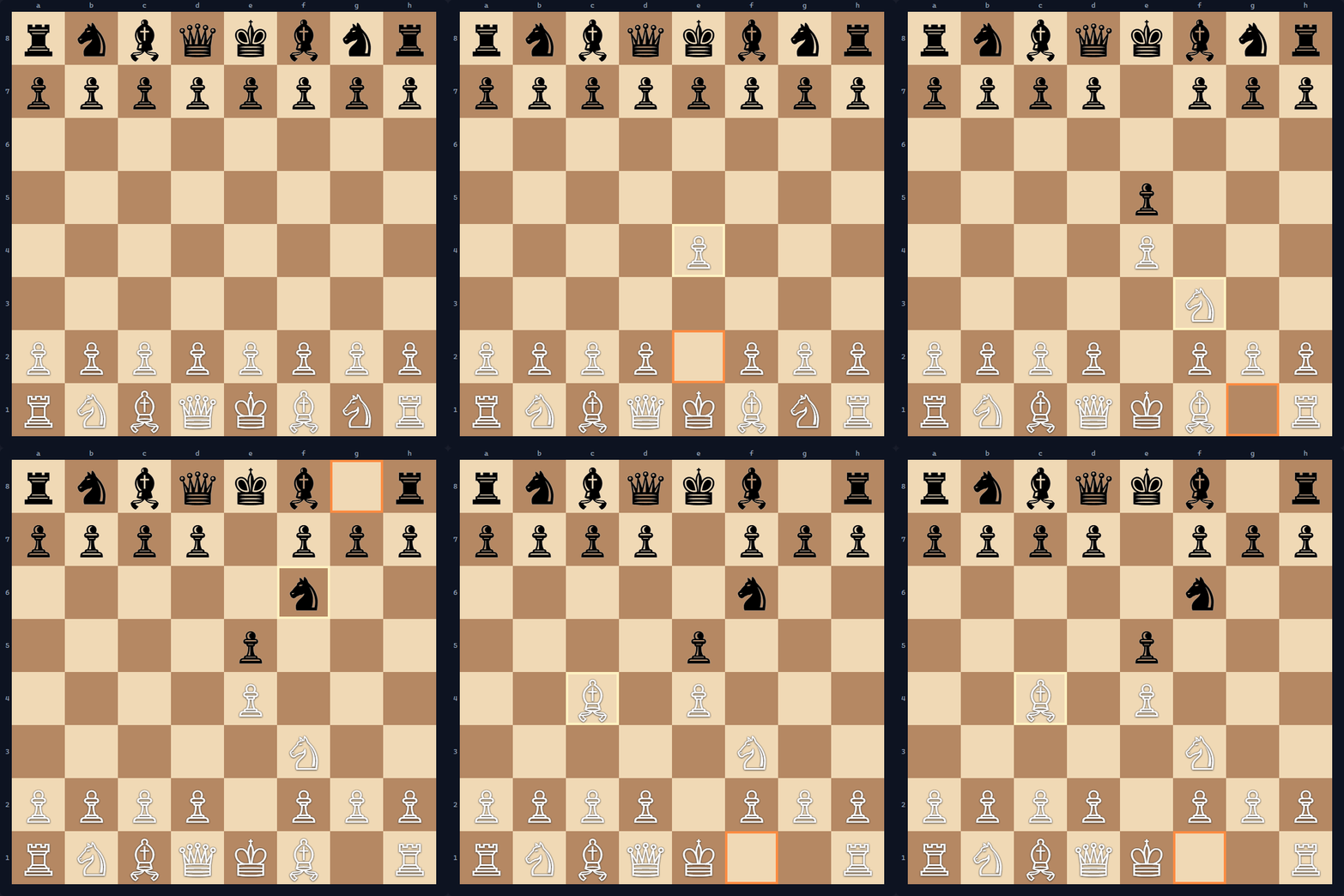
Chessreps also notes the 4.Bc4 d5 with ...Qg5 motif and quiet retreats like 4.d3 Nf6 or 4.Qf3 Ng5.
White's Sidestep Options
White does not have to play into the main lines. Several sidesteps exist:
- Italian Variation (3.Bc4): Chessklub notes that 3...Nc6 transposes to the Two Knights Defense.
- Three Knights Game (3.Nc3): Transposes to Four Knights if Black plays 3...Nc6, or stays independent with 3...Bb4.
- Quiet Variation (3.d3): White defends rather than attacks. Closed, maneuvering positions.
- Cochrane Gambit (3.Nxe5 d6 4.Nxf7): Both 365chess and Chessable describe this aggressive knight sacrifice for two pawns and initiative.
- Kaufmann Attack (5.c4): 365chess lists this queenside expansion line instead of 5.d4.
- Stafford Gambit (3...Nc6): The commercial platform notes this is popular in online blitz — a trap line, not a serious tournament weapon.
| Sidestep | What it changes | Who should consider it |
|---|---|---|
| Italian Variation (3.Bc4) | Can transpose to the Two Knights Defense after 3...Nc6. | Players who already like Italian Game structures. |
| Three Knights / 3.d3 | Develops or defends without forcing the main Petrov exchange. | Players who prefer quieter, maneuvering positions. |
| Cochrane / Kaufmann / Stafford | Moves the game toward sacrifice, queenside expansion, or trap play. | Use only when you understand the initiative and risk tradeoff. |
Pros, Cons, and Who Should Play the Petrov
Pros
- Solidity. Chessable describes the Petrov as exceptionally solid — its main line is stable and comfortable for Black.
- Less theory. Chessreps lists "avoids enormous theory of Ruy Lopez and Italian Game" as a key advantage.
- Elite-proven. Caruana's undefeated 2018 World Championship run confirms the opening's soundness at the highest level.
- Natural development. Black's moves are intuitive. Develop knights, place bishops, castle quickly.
Cons
- White's development lead. The commercial platform notes that in open positions, White has a slight development advantage.
- Drawish potential. Some lines are objectively drawish. Chessable frames the biggest challenge as "accepting that a draw with Black is not a bad result."
- Precision required. Chessreps warns that 3...Nxe4 requires precise follow-up. One inaccurate move (4...Nf6) and Black loses immediately.
- White can sidestep. 3.Bc4, 3.Nc3, and 3.d3 all bypass Petrov theory entirely.
Who Should Play It
The Petrov is ideal for club players (1200–1800 Elo) who want a solid, reliable defense against 1.e4 without memorizing separate systems for the Ruy Lopez, Italian, Scotch, and others. It suits players who trust their positional understanding over sharp tactics and are comfortable with a draw when necessary.
The Petrov may not be the best choice for players who thrive on unbalanced positions. The Sicilian Defense, French Defense, or Caro-Kann offer sharper play at the cost of more theory. But for a player looking to minimize losses and simplify preparation, the Petrov is one of the best options available.
Frequently Asked Questions
Is Petrov's Defense good for beginners?
Yes, with one important caveat. The Petrov cuts down on opening theory significantly — you learn one system instead of four or five. However, beginners must drill the 4.Qe2 Qe7 line until it becomes automatic. The queen trap (4...Nf6?? 5.Nc6+) is one of the most common opening blunders in chess, and vigilance is required every time the position arises.
Is the Petrov Defense drawish?
It depends on the level. At the master level, the Petrov has a draw rate near 45%, making it one of the drawish 1.e4 defenses. At the club level, the symmetrical positions offer real winning chances for the better-prepared player. The drawish reputation is earned at the top but should not discourage practical players.
How do you counter Petrov's Defense as White?
The Classical Attack (3.Nxe5 d6 4.Nf3 Nxe4 5.d4 d5 6.Bd3) is the most principled response. White can also try the Steinitz Attack (3.d4) for sharper play, or avoid Petrov theory entirely with the Italian Variation (3.Bc4), Three Knights (3.Nc3), or Quiet Variation (3.d3).
What is the main trap in Petrov's Defense?
The queen fork: 1.e4 e5 2.Nf3 Nf6 3.Nxe5 Nxe4 4.Qe2 Nf6?? 5.Nc6+. Black's queen is lost. The correct response is 4...Qe7, which pins White's knight and equalizes safely.
Why is it called the Russian Game?
The opening was extensively analyzed and popularized by the 19th-century Russian master Alexander Petrov (also spelled Petroff). The alternative name "Russian Game" reflects his nationality and the Russian chess school's influence on the opening's development.
Sources
- Chess.com – Petrov's Defense — overview, Classical Attack, Nimzowitsch Attack, traps, Steinitz Attack page
- 365chess – Petrov's Defense — Main moves (1–12), Classical, Steinitz, Three Knights, Quiet, Kaufmann, Italian, Damiano, Cochrane Gambit
- Chessable – Petrov's Defense — History (Lucena, Damiano, Petrov), Caruana 2018, Karpov/Kramnik/Anand, Cochrane Gambit, Nimzowitsch, FAQ
- Chessreps – Petrov's Defense — 4.Qe2 Qe7 tabiya, Bishop Hunt, Queen Trade Endgame, Bc4 d5 with ...Qg5, Quiet Retreats, pros/cons
- Simplify Chess – Petrov's Defense — Three categories of White third moves, Classical plans, Three Knights 3...Bb4
- Chessklub – Petrov's Defense — Italian Variation transposition to Two Knights Defense
Ready to add Petrov's Defense to your repertoire? Explore more opening guides, analysis tools, and training resources at Chess Openings, Defenses and Attacks.