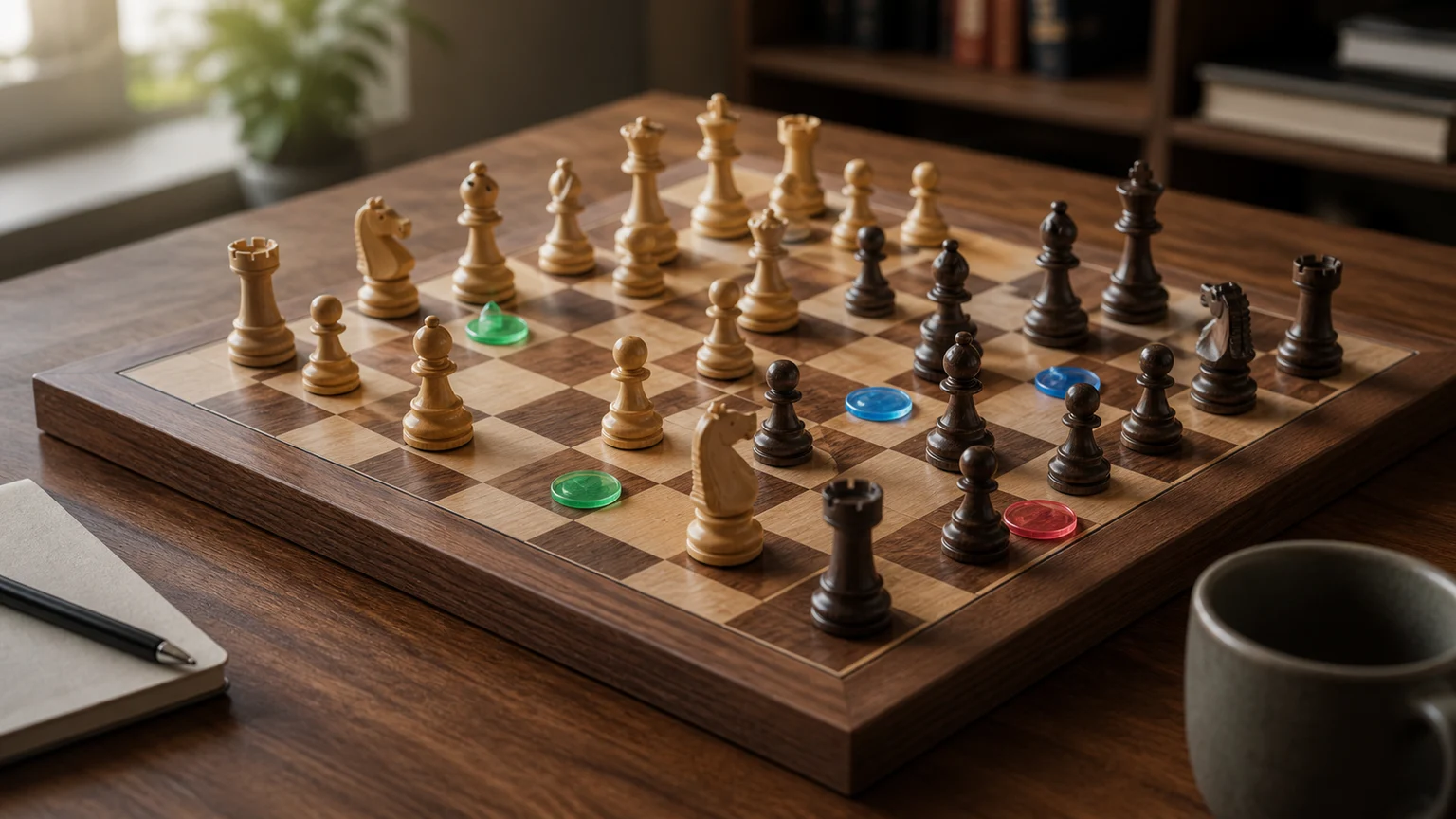
Positional Understanding: How to Choose a Plan After Opening
After the opening the board becomes quieter, but there are no fewer decisions
The lack of a clear plan is the main reason for chaotic moves that slowly but surely worsen your position. We start moving pieces without any purpose: we move the knight back and forth, make random openings with pawns, or simply wait for the opponent to blunder. At this time, an experienced opponent gradually accumulates small positional advantages: he occupies open lines with his rooks, places knights at outposts and organizes an attack on our weak squares.
Positional awareness is the ability to “read” the board and hear what a particular pawn structure requires. A strategic plan is not about calculating options 10 moves ahead, but about choosing the right direction of attack. Once you learn to evaluate a position based on objective factors (safety of kings, activity of pieces, pawn weaknesses), you will stop depending on inspiration and begin to make logical, systematic decisions that lead to victory.
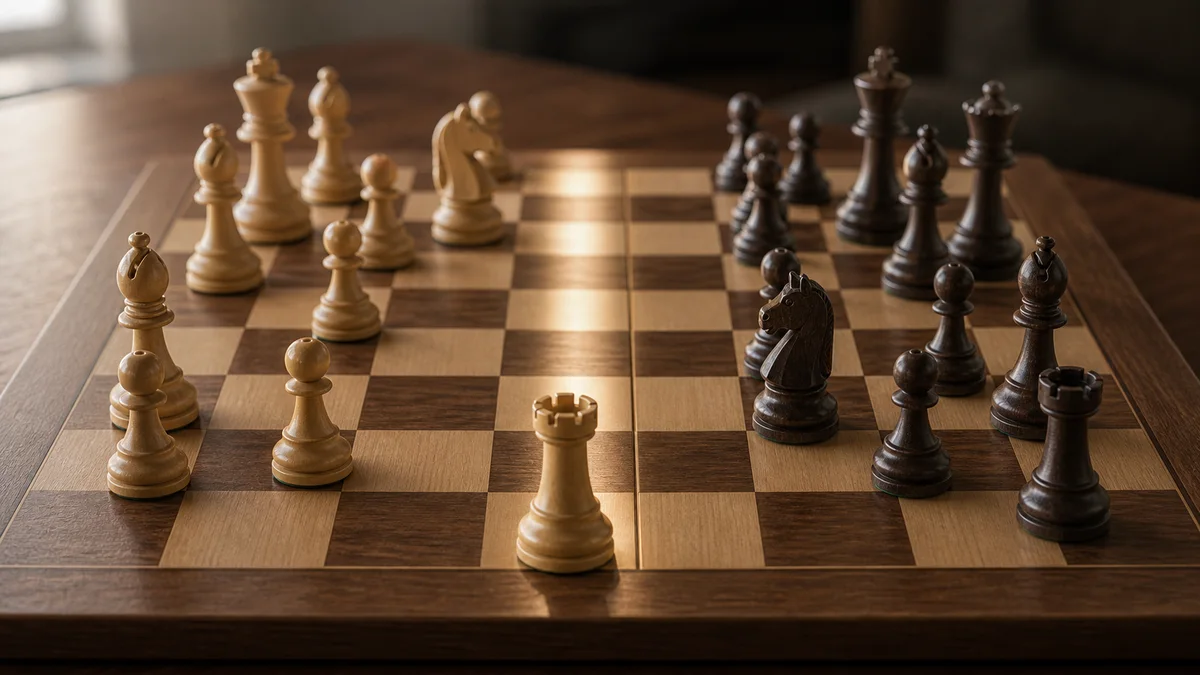
What to do when the "debut is over"
When the opening is over, make a quick assessment of the position based on five factors: safety of kings, material balance, activity of pieces, presence of open lines and pawn structure. Based on this assessment, choose one of three plans: attack on the kingside, breakthrough in the center, or positional pressure on the queenside. Move pawns only to open lines or create outposts for pieces.
Never launch an attack without assessing the position. A hasty attack with a weakened king or passive pieces will lead to a quick collapse. Your strategy should flow logically from the features of the board.
Let's look at the key elements of assessing a position and the algorithm for choosing the right strategic plan.
Position assessment: king, material, pawns, activity, weaknesses
The great Wilhelm Steinitz, the first world chess champion, proved that the game plan should be a direct consequence of the assessment of the position. The assessment consists of permanent (static) and temporary (dynamic) factors:
- Material balance: Who has the material advantage? If you have an extra pawn or piece, your plan is simple: change pieces (but not pawns) and go to a winning endgame.
- Security of Kings: Whose king is more securely protected? The king without pawn cover is the main target for attack.
- Piece activity: What are the capabilities of your bishops and knights? Active pieces control important fields, passive pieces are tied to protecting weaknesses.
- Weak squares and open lines: Are there squares in the opponent's camp that pawns cannot defend? Open lines are highways for your rooks to invade.
- Pawn structure: The general framework of a position that determines the plans of the parties.
Plan from pawn structure
The pawn structure is the skeleton of a chess position. Shapes are muscles that are attached to the skeleton. It is the pawns that determine where on the board it will be cramped and where it will be spacious, and on which flank you should develop your activity.
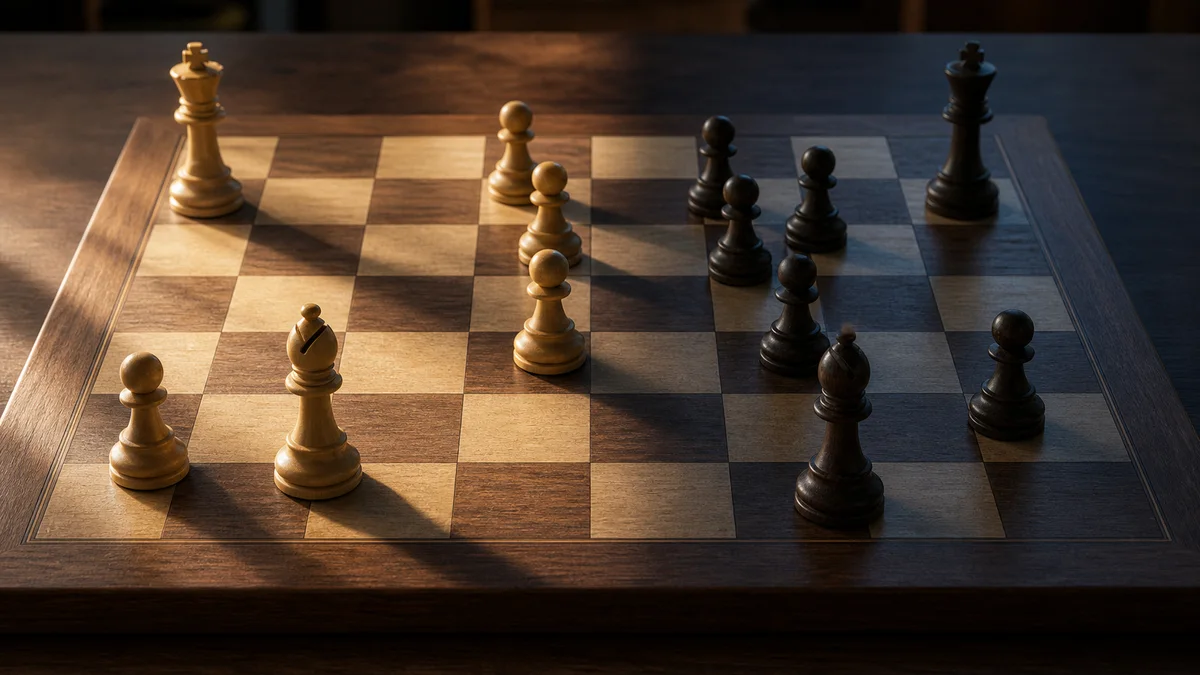
If the pawn center is locked (for example, in the French Defense), the game is transferred to the flanks. You must attack where the tip of your pawn chain points. If the center is open, the pieces have maximum mobility and tactical awareness comes to the fore.
Never change the pawn structure unless absolutely necessary. Remember: a pawn cannot move back, and any advance it makes creates irreversible changes on the board.
Bad figure as a source of plan
Sometimes the best plan in the middlegame is to improve the position of a single piece. A textbook example is a “bad bishop”, which is locked in by its own pawns and does not take part in the fight. The light-squared bishop in the French Defense or the dark-squared bishop in the King's Indian often find themselves as extras while the other pieces are fighting hard in the center.
A great strategic plan is to find a way to activate such a bad figure:
- Carry out a pawn explosion to open the diagonal for the bishop.
- Transfer the piece through a long maneuver to the other flank (for example, transferring the knight along the route Nd1-Nf2-Nd3).
- Exchange your bad piece for your opponent’s good piece. Once all your pieces start working in harmony, the overall strength of your position increases exponentially.
When to change queens
The queen is the most powerful and dangerous piece on the board. The transition to the endgame with the exchange of queens radically changes the nature of the fight. Beginners often change queens just like that, depriving themselves of chances to attack.
Trading queens is beneficial to you in the following situations:
- Your king is under a dangerous attack from your opponent (without queens, attacking the king is much more difficult).
- You have a material advantage (simplifying your position brings victory closer).
- The opponent has an isolated or backward pawn (in the endgame, these weaknesses become easy prey for your rooks).
- The opponent's king is more active than yours and is ready to rush into the center in the endgame.
Avoid trading queens if you have a worse pawn structure or if you are making a direct attack on your opponent's king.
Numbered plan selection algorithm after debut
To avoid getting confused in the middlegame, use the following step-by-step algorithm when choosing a game plan:
- Define the type of center: Open (no pawns in the center), closed (pawn chains are blocked) or mobile.
- Find weaknesses in the opponent's camp: Write down weak pawns, open lines and weak squares.
- Identify your worst figure: Find the figure that does the least useful work and come up with a plan to improve it.
- Check the safety of the king: If your king is weakened, take care of prevention (strengthening the defense).
- Select the target of attack: Select a target (weak pawn or king) and pull your active forces there.
Checklist for evaluating a position before choosing a plan
Use this checklist during critical moments of the game to choose a strategic path:
- [ ] Material: Is the material balance equal?(If not, we build a plan against defending or realizing an advantage).
- [ ] King Security: Is my king protected? Is something threatening the opponent's king?
- [ ] Activity of figures: Are all my light figures developed? Are there “bad” figures?
- [ ] Open Files: Are the open files occupied by my rooks?
- [ ] Weak fields: Are there outposts for my horses in the opponent’s territory?
- [ ] Pawn Weaknesses: Does your opponent have doubled, isolated, or backward pawns?
Reference table of plans depending on the structure of the center
The table below summarizes the main types of pawn centers and classic strategic plans for them:
| Center type | Description of the structure | Character of the fight | Master Strategic Plan | Examples of openings |
|---|---|---|---|---|
| Closed Center | Pawns d4/e5 of white against d5/e6 of black | Agile, flanking play | Attack on the flank, undermining the opponent's pawn chain | French Defense, Caro-Kann Defense |
| Open Center | Central pawns exchanged | Dynamic, tactical | Occupying files with rooks, attacking with pieces in the center | Open options for the Spanish Party |
| Isolated Pawn | One of the sides has a lone pawn on d4/d5 | Asymmetrical | For the pawn owner: attack with pieces. For the opponent: blockade and endgame | Queen's Gambit Accepted |
Finale: a plan as a way to avoid asking a position for inspiration
Chess is a rational game. A player who acts according to a plan (even if not the most ideal one) always defeats one who makes chaotic moves in the hope of a sudden tactical mistake by his opponent.
Having a plan organizes your thinking. You stop wasting time in time pressure on random searches and know exactly where to move the knight and which line to open with the rook. Think of the board as a geometric map, with pawns showing roads and pieces building forts. Positional understanding will transform chess from a chaotic struggle into a beautiful logical system, where every move you make has a conscious purpose, and your rating steadily rises.
Practical Toguz Arena links
- Play from the shared play entry after choosing the chess product in the platform flow.
- Read the chess rating hub for adjacent rating, time-control and review articles.
- Check the chess fair-play page before using engine help or outside notes during rated practice.
Sources and limitations
- FIDE Laws of Chess are the rule context for legal moves, castling, checks and game-end conditions.
- Mark Glickman's Glicko system overview is the rating-context source for online uncertainty and rating movement.
- Limitation: the strategic plans in this article are training heuristics, not forced wins and not a guaranteed rating increase.