What the gambit actually is
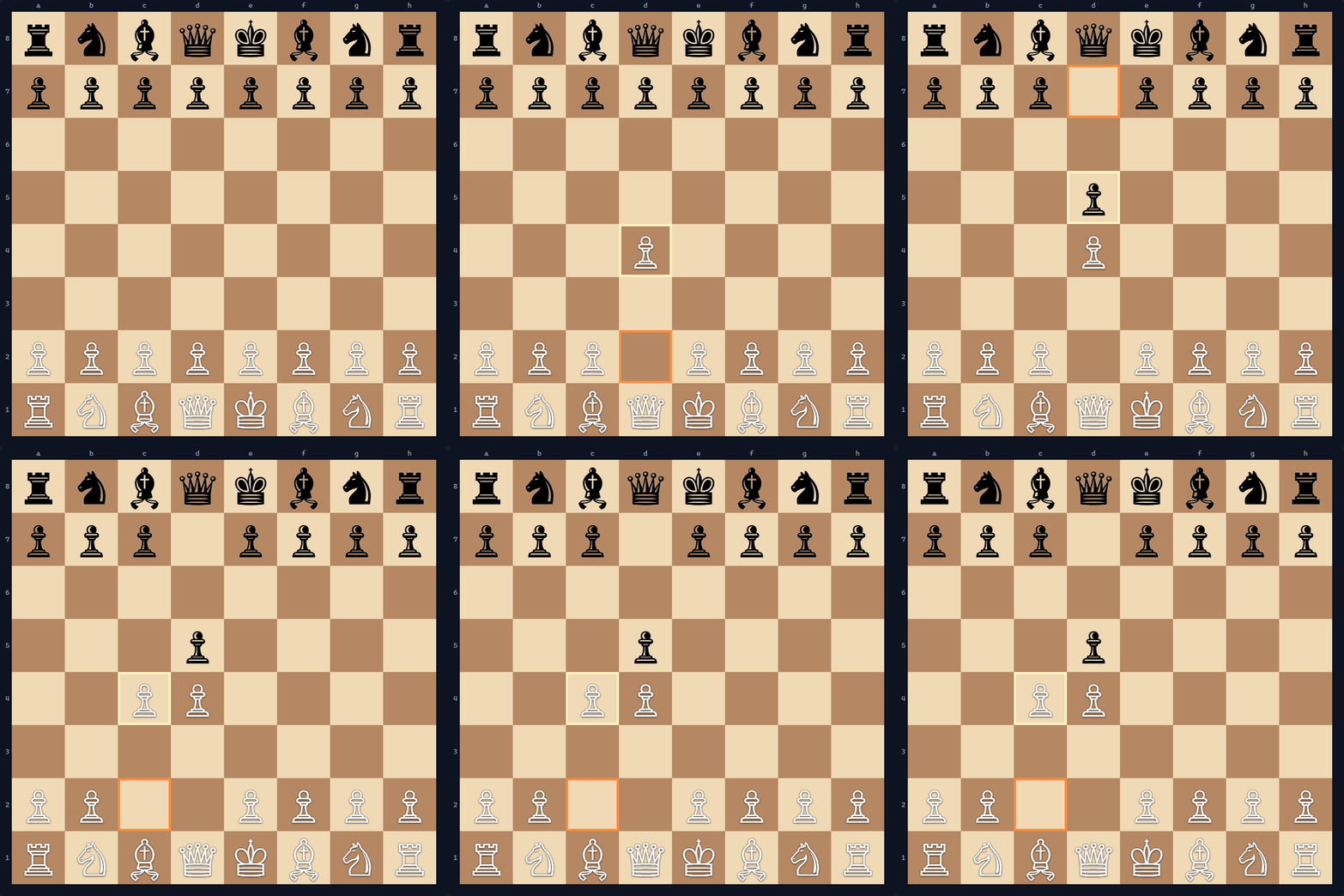
The Queen's Gambit opens with two moves: White plays 1.d4 and Black plays 1...d5, then White pushes the c-pawn to c4 on move two. The second move is the heart of the gambit. White offers the c-pawn, knowing that if Black takes with 2...dxc4, White can usually regain the pawn within a few moves while keeping a strong center.
The "gambit" name is historical. In modern chess, a true gambit is an opening where the sacrificed material remains at risk for a long time. The Queen's Gambit is closer to a deferred capture: White gives up a wing pawn, Black holds it for a few moves, and then White takes it back. The opening occurs in roughly one of every eight games, by two independent estimates.
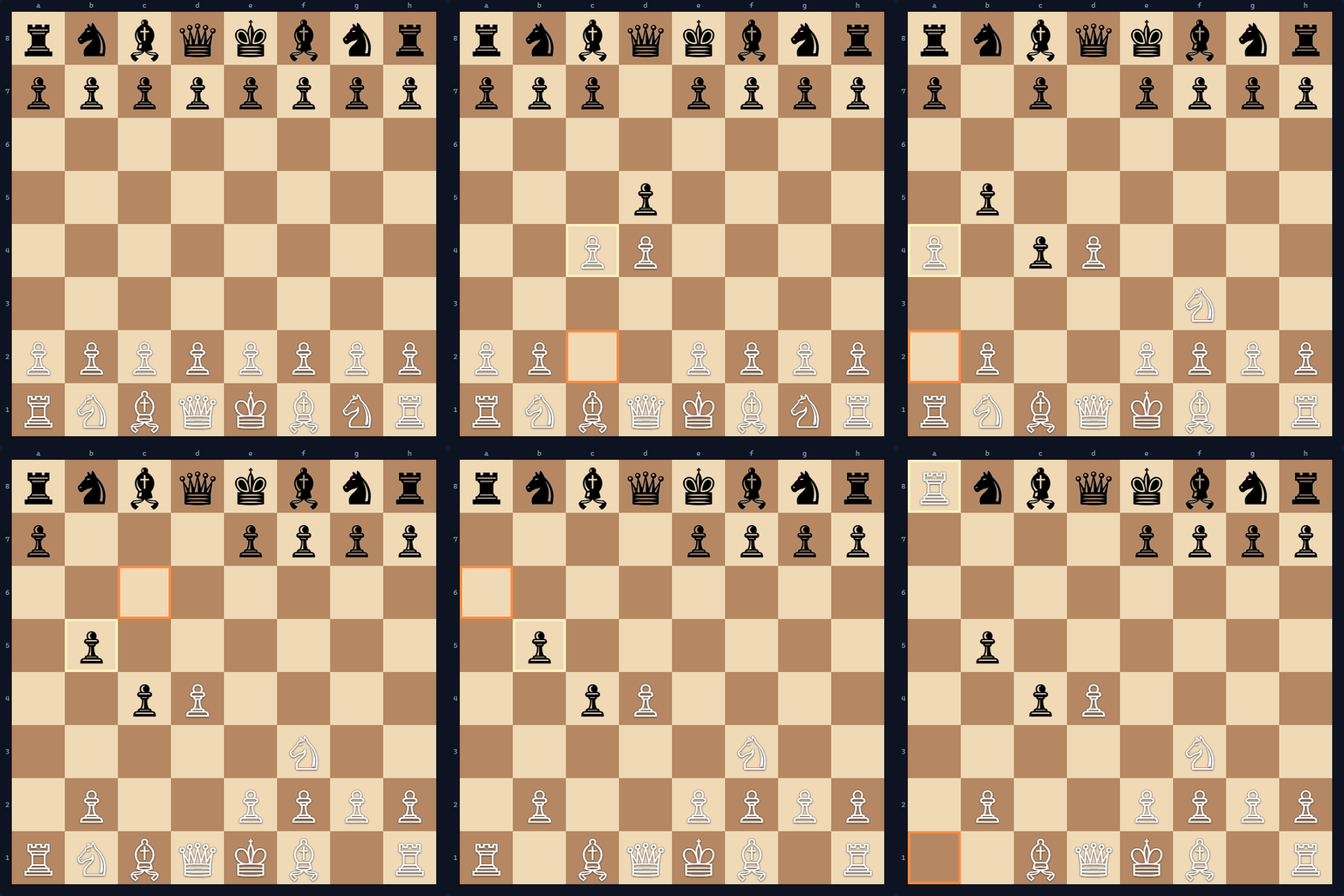
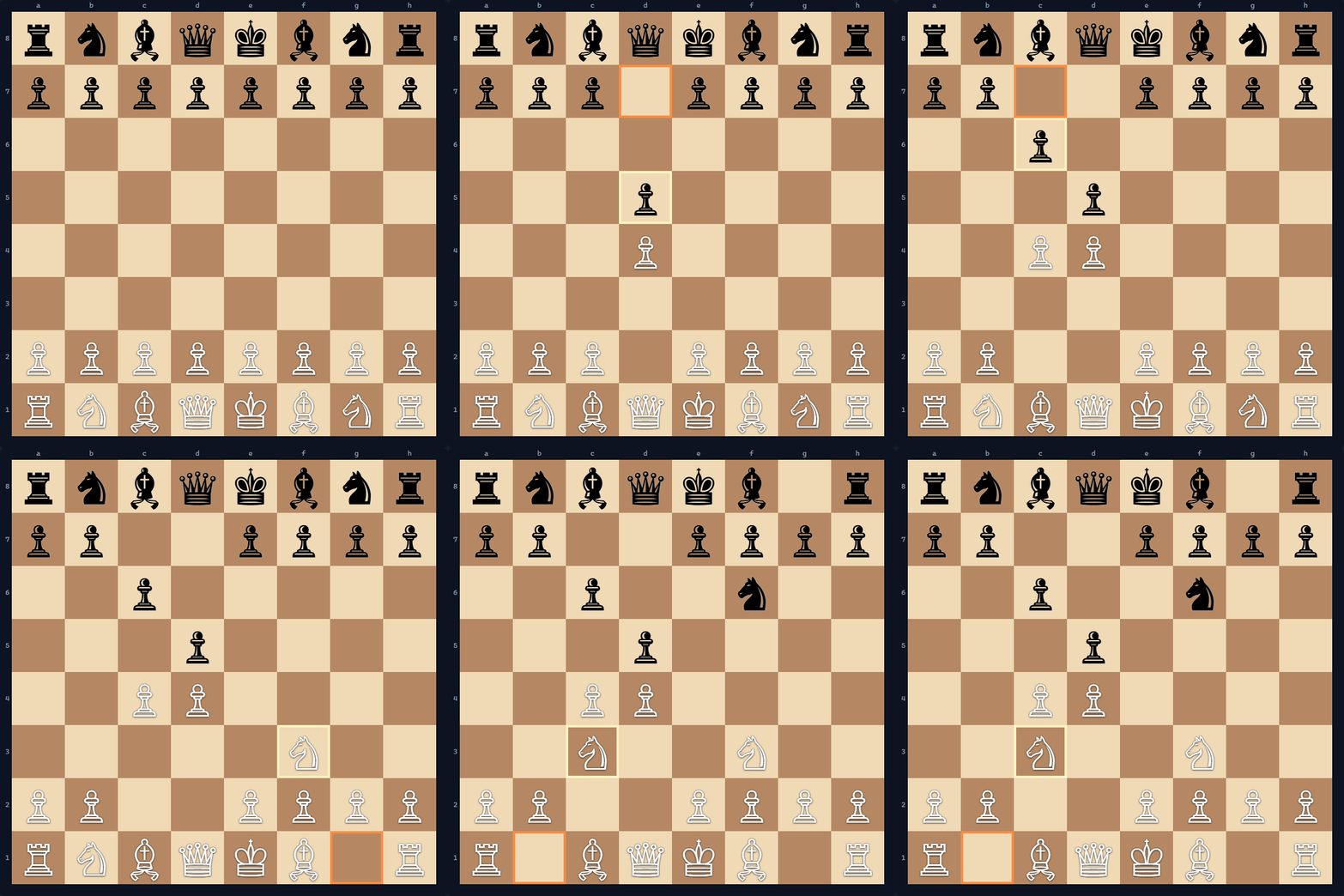
The simplest way to see why Black cannot keep the pawn is to look at a typical line. After 2...dxc4 3.Nf3, White prepares to recapture on c4 while developing normally. If Black tries to defend the c-pawn with ...b5, White breaks the queenside open with 4.a4, and Black's structure collapses. If Black develops normally, White plays e3 and Bxc4 and is up a tempo on the clock.
Black's three main responses
After 1.d4 d5 2.c4, Black has three principled options. Each leads to a different kind of position and a different set of plans for both sides.
| Response | Structural type | Typical game | Master win rate (B/D/W) |
|---|---|---|---|
| 2...dxc4 — QGA | Open, tactical | Concrete attacking chances for both sides | 26% / 36% / 38% |
| 2...e6 — QGD | Closed, positional | Long maneuvering battles | (most-played, not in our snapshot) |
| 2...c6 — Slav | Solid, structural | Clear plans, well-defined theory | 21% / 39% / 40% |
The QGD is the most-played of the three at the master level, with the QGA in third place. For club players, the choice often comes down to temperament: tactical players tend to prefer the QGA, positional players the QGD, and those who want a self-contained repertoire the Slav.
Queen's Gambit Accepted (2...dxc4). Black takes the pawn and gives up the center. The resulting positions are open and tactical, with both sides fighting for initiative. White usually recaptures on c4 within a few moves and keeps a lead in development. The QGA is sound and playable, but it requires Black to handle active counterplay rather than quiet defense.
Queen's Gambit Declined (2...e6). Black declines the pawn and reinforces d5. The QGD is the most-played of the three at the top level, with at least ten named sub-variations, and is the response you will see most often in tournament play. It is a positional, long-term-pressure system that rewards patient maneuvering.

Slav Defense (2...c6). Black declines the pawn with the c-pawn instead of the e-pawn, keeping the light-squared bishop free. The Slav is technically a separate opening in its own right, with its own theory. It is a strong choice for club players because it has clear plans and avoids some of the more cramped positions of the QGD.
The win rates above are from the cited opening explorer. The Slav stat is from the same source and is the most reliable of the three.
The Queen's Gambit Declined
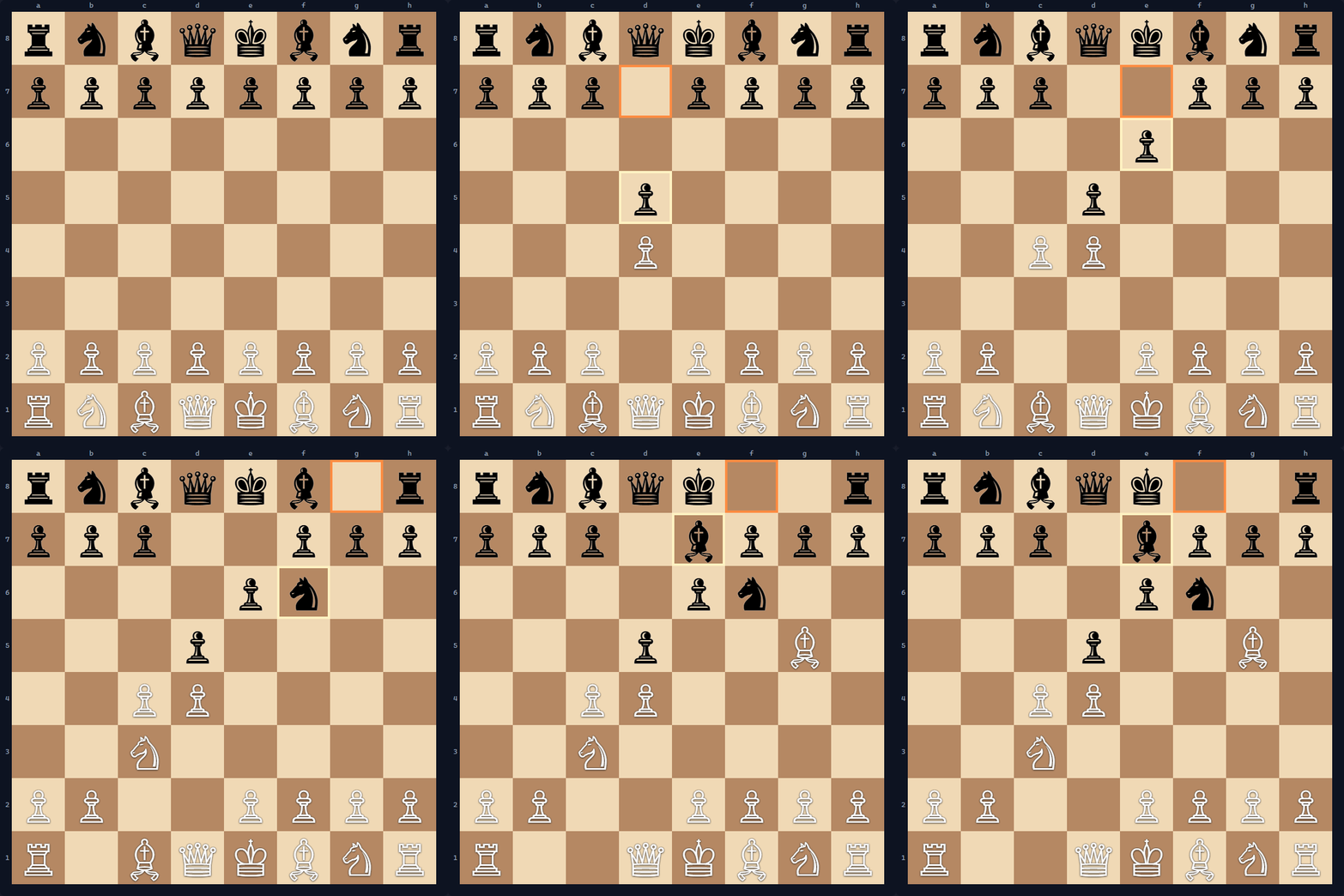
The QGD is the most-played of the three responses, and the Orthodox Line (1.d4 d5 2.c4 e6 3.Nc3 Nf6) is the starting position for the whole QGD tree. From there, the game can go in many directions, and the sub-variation names are the way players navigate the theory.
The most-played sub-variations are the Tarrasch Defense (3...c5), the Tartakower Variation, the Cambridge Springs Defense (4.Bg5 Nbd7), and the Exchange Variation (after dxc5). The Tarrasch is the most aggressive, challenging White's center immediately with ...c5 and leading to dynamic play around an isolated queen's pawn. A quote attributed to Siegbert Tarrasch and often repeated in QGD discussions captures the spirit: "He who fears an isolated queen's pawn should give up chess!"
The Tartakower and the Cambridge Springs are slower, more positional systems. The Tartakower builds a solid structure with a delayed Bb7. The Cambridge Springs counterattacks by pinning White's c3-knight with ...Nbd7, leading to complex tactical positions. The Exchange Variation is the simplest of the four, leading to symmetrical pawn structures and a quieter game. Other named sub-variations — the Classical Variation, the Vienna, the Ragozin, the Janowski — appear at lower rates and are covered in dedicated QGD resources.
The Queen's Gambit Accepted
The QGA leads to open, tactical positions. The most ambitious White reply is 3.e4, the Central Variation, which builds a full pawn center and forces Black to prove the early capture was worth it. The main line runs 1.d4 d5 2.c4 dxc4 3.e4 e5 4.Nf3 exd4 5.Bxc4 Nc6 6.0-0 Be6 7.Nbd2 Bxc4 8.Nxc4.
This is the kind of position where both sides have to play precisely. After 5.Bxc4, White is temporarily a pawn down but far ahead in development, with the bishop trained on the f7-square. Black's most principled response is 3...e5, striking the center before White consolidates, and then 6...Be6 to trade off White's dangerous bishop. White recaptures with the knight, rounds up the d4-pawn, and keeps the more comfortable game thanks to better-placed pieces.
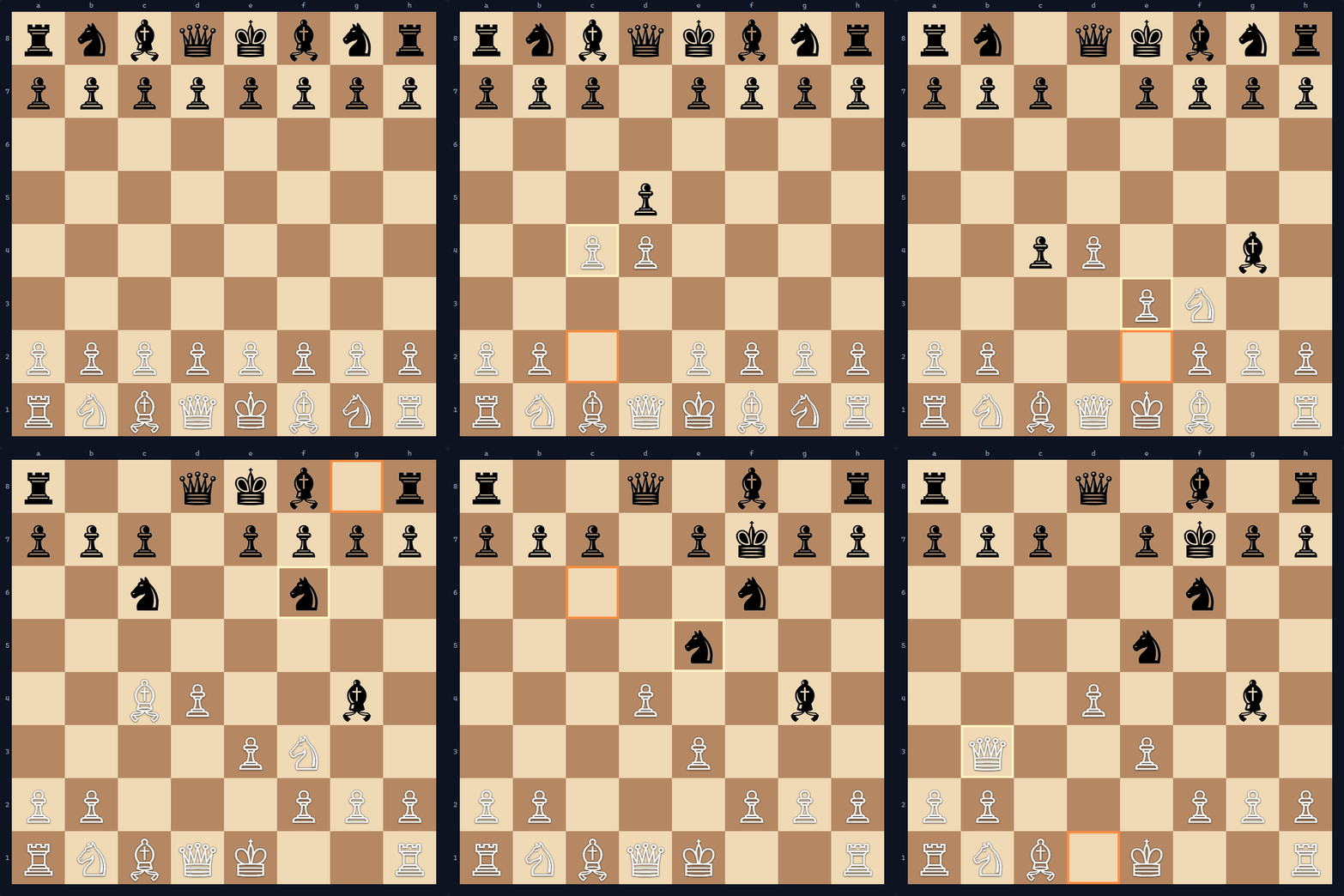
Two tactical motifs define the QGA. First, the line 3...b5 is tactically vulnerable. After 4.a4 c6 5.axb5 cxb5 6.Nc3 a6 7.Nxb5 axb5 8.Rxa8, the a-file pin means Black never gets the rook back for fair value, and White emerges a clean exchange up. Second, the line 3...Bg4 falls to a sharp combination. After 4.Nf3 Bg4 5.Bxc4 exd4 6.Bxf7+ Kxf7 7.Ne5+ Ke8 8.Qxg4, the bishop on g4 is lost and White's attack more than compensates for the sacrificed material.
House of Staunton's analysis identifies five named Black 3rd-move options in the QGA: 3...e5 (McDonnell Defense), 3...Nf6 (Alekhine System), 3...Nc6 (Modern Defense), 3...c5 (Rubinstein Defense), and 3...b5 (Greco Variation). The McDonnell and the Modern Defense are the most commonly played; the others are sharp specialist lines.
Offbeat Black responses
In addition to the three main responses, Black has several rarer but fully playable options. The Albin Countergambit (2...e5) is the most interesting: Black offers a pawn of their own to disrupt White's center. The main line continues 3.dxe5 d4, with Black keeping the d4-pawn as a wedge. It is rare at the top level — masters consider it too risky — but it produces unusual positions that are popular at the club level.
The Chigorin Defense (2...Nc6), the Baltic Defense (2...Bf5), the Symmetrical Defense (2...c5), the Marshall Defense (2...Nf6), and the Alekhine Variation (2...g6) round out the offbeat options. None of these are mainline at the top level, but all are legal and lead to playable positions. For practical purposes, focus on the three main responses.
A brief history
The earliest known record of the Queen's Gambit comes from the Göttingen manuscript, written around 1490. In the 17th century, masters Alessandro Salvio and Gioachino Greco analyzed the opening. The QG gained real prominence after the 1873 Vienna tournament, when 1.d4 openings entered elite practice more broadly.
In the modern era, the QG remains a top-level mainline. As of the cited April 2021 snapshot, eight of the world's top ten players had the Queen's Gambit as one of their most-played White openings: Magnus Carlsen, Ding Liren, Levon Aronian, Anish Giri, Alexander Grischuk, Wesley So, Shakhriyar Mamedyarov, and Teimour Radjabov. The current top-10 list may differ, but the broader point — that the QG is still elite-mainline — is unlikely to have changed.
How to learn the Queen's Gambit
If you are adding the QG to your repertoire, a practical five-step plan is to pick a 3rd-move system, pick a Black response to prepare against, play thirty games with your chosen line, review every game with an engine, and re-study the line every three months.
For White, the choice of 3rd-move system is the first decision. 3.e4 (Central Variation) gives an open, tactical repertoire. 3.Nf3 is the most popular recapture and leads to classical, slow-maneuvering positions. 3.e3 is the quietest, leading to solid pawn structures. For most club players, 3.Nf3 is the easiest to learn because the resulting positions follow clear plans. 3.e4 is more ambitious and rewards players who can handle tactical complications.
For Black, the choice of response is the second decision. The QGD is the most-played and the most varied — you will see it most often. The Slav is a strong second choice with cleaner plans. The QGA is a third option that requires comfort with tactical positions.
For club players: what to actually learn first. Do not try to learn all ten QGD sub-variations before playing your first game. Pick the Orthodox Line (1.d4 d5 2.c4 e6 3.Nc3 Nf6) and play it until you know it. Then add the Tarrasch as a second weapon. The other sub-variations can wait. The QGA's 3.e4 main line is the next priority, because it is the most common reply in club play. Aim for two White systems and one Black response before you go wider.
FAQ
Is the Queen's Gambit a real gambit?
No, in the modern sense. White offers the c4-pawn, but Black cannot safely hold the extra pawn against accurate play. White usually regains the pawn with a strong center or a lead in development. The name is historical: the opening was categorized as a gambit in older chess literature, even though the sacrifice is rarely permanent.
What is the best response to the Queen's Gambit?
The most popular choice at the top level is the Queen's Gambit Declined (2...e6), which keeps the d5-pawn and leads to rich positional play. The Slav Defense (2...c6) is the second most popular and a separate opening in its own right. The Queen's Gambit Accepted (2...dxc4) is the third most popular and leads to open tactical play. For club players, the Slav is a strong choice because it has clear plans and avoids the cramped positions of the QGD.
Should I accept or decline the Queen's Gambit?
Both openings are fully sound, and their win rates at the master level are very close. The QGA tends to lead to more open, tactical games; the QGD tends to lead to slower, positional maneuvering. The choice depends on the type of chess you want to play. If you are a tactical player, the QGA gives you open positions and concrete attacking chances. If you are a positional player, the QGD gives you long strategic battles.
What is the Albin Countergambit?
The Albin Countergambit (1.d4 d5 2.c4 e5) is a sharp Black response where Black offers a pawn of their own to disrupt White's center. The main line continues 3.dxe5 d4, with Black aiming to keep the d4-pawn as a wedge. It is rare at the top level — masters consider it too risky — but it is one of the best-scoring lines among non-professional players because the positions are unusual.
Where this leads
The Queen's Gambit sits in a larger network of 1.d4 openings. For a survey of the whole 1.d4 family, see the chess openings hub. If you are also playing 1.e4, the Sicilian Defense and the Caro-Kann Defense are the most popular Black responses at the top level.
Sources
This article draws on the following pages, accessed 2026-06-30:
- chess.com — Queen's Gambit: https://www.chess.com/openings/Queens-Gambit. Starting position, three main responses, master win rates, history, and full PGN of the four famous games.
- 365chess.com — Queen's Gambit Complete Guide: https://www.365chess.com/chess-openings/Queens-Gambit. QGD sub-variation list, alternate Black defenses, three additional great games.
- chessreps.com — Queen's Gambit Accepted: https://www.chessreps.com/opening/queens-gambit-accepted. 3.e4 main line, 3...Bg4 Bxf7+ combination, 3...b5 collapse, 3...e6 returning the pawn, 3...Nf6 Alekhine System.
- House of Staunton — Queen's Gambit Accepted For White: Step-By-Step: https://www.houseofstaunton.com/blogs/chess-openings/the-queens-gambit-accepted-for-white-step-by-step. QGA 5 main Black 3rd-move options (McDonnell, Alekhine System, Modern, Rubinstein, Greco).
- chessable.com — Queen's Gambit Opening — How to Play as White and Black: https://www.chessable.com/blog/queens-gambit-black-white/. Where the pieces go, the Tarrasch quote, and the Is-it-a-real-gambit FAQ.
- simplifychess.com — Queen's Gambit: https://simplifychess.com/queens-gambit/. Plain-language description of the three main responses and the structural plans.
- forwardchess.com — Chess Openings: The Queen's Gambit Accepted: https://forwardchess.com/blog/chess-openings-the-queens-gambit-accepted/. The 1886 Steinitz–Zukertort "9 of 20 games" figure, book recommendations.
- chessklub.com — The Queen's Gambit — A Complete Guide: https://chessklub.com/chess-openings/the-queens-gambit/. 1490 Göttingen manuscript date, frequency claim.