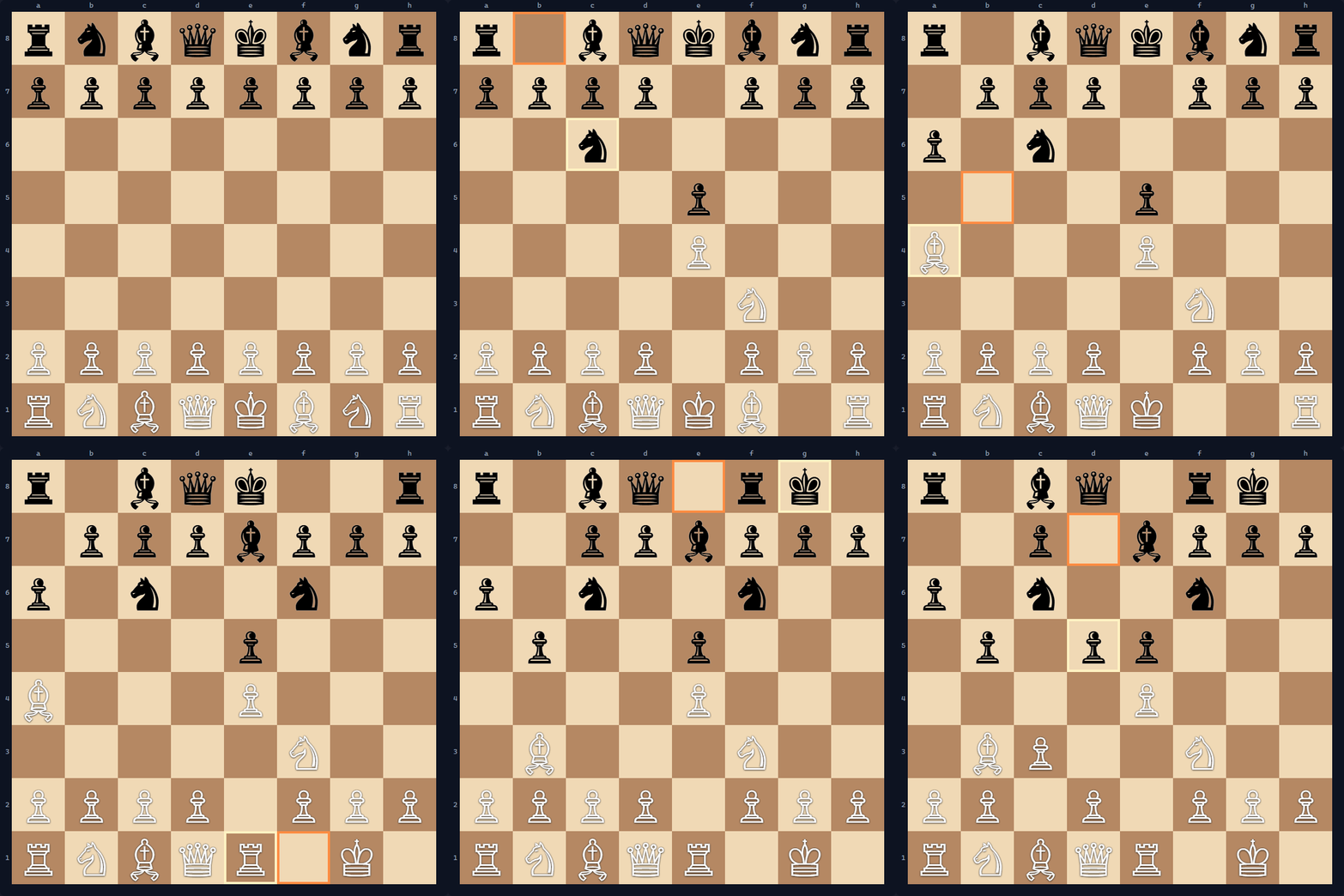
The Critical Idea: Attacking the c6-Knight
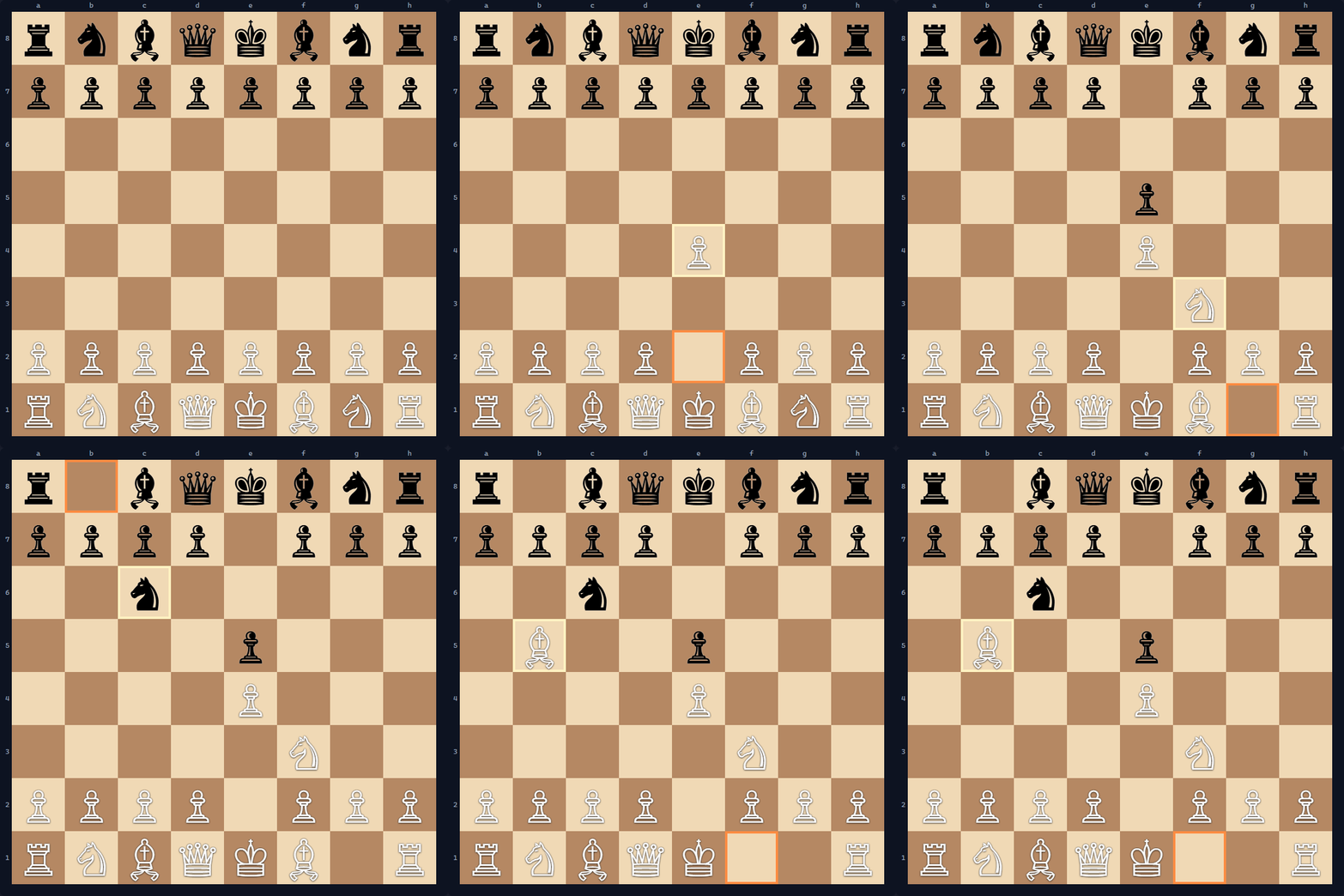
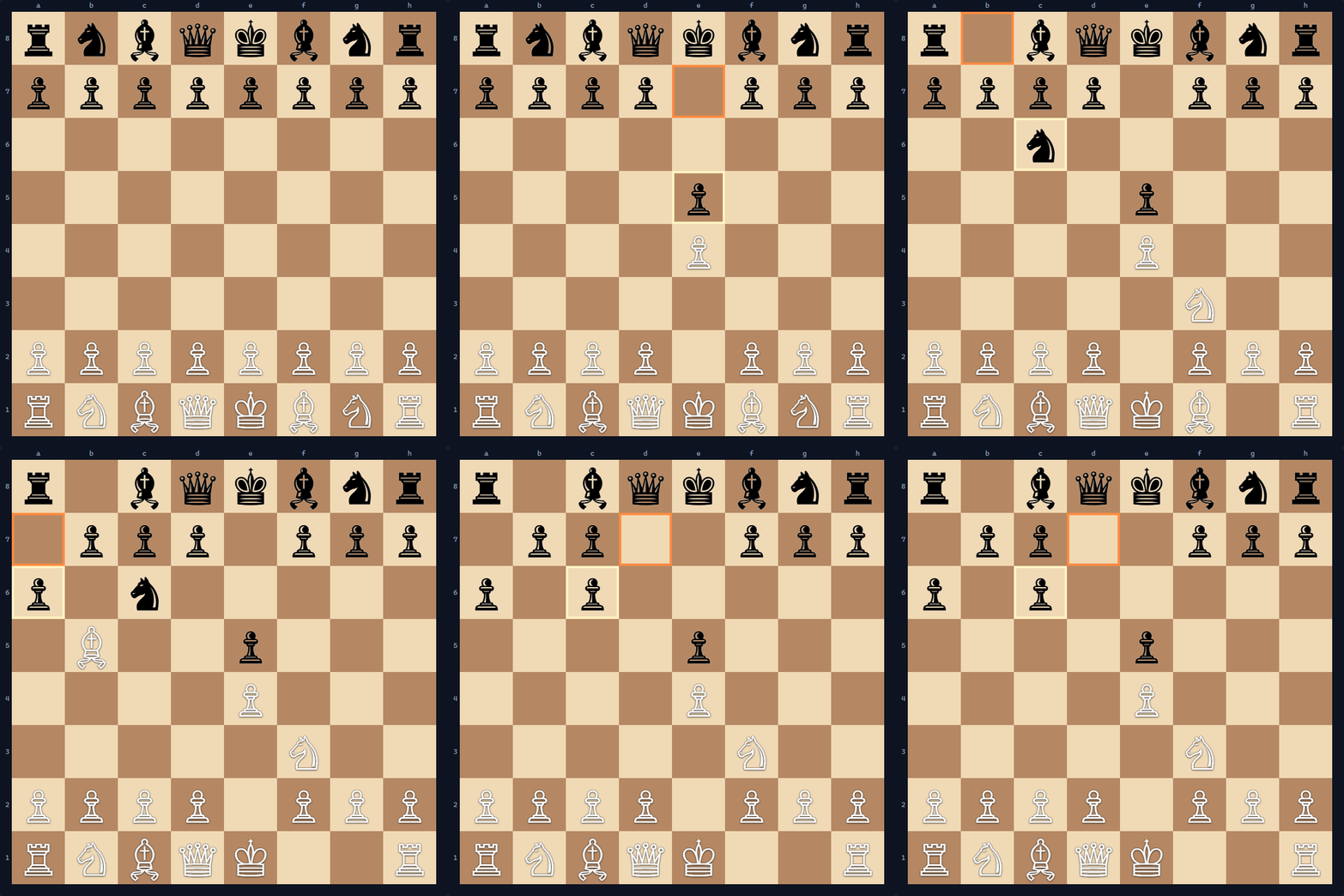
What makes the Ruy Lopez distinctive is 3.Bb5. Unlike the Italian Game (3.Bc4), which targets the f7-pawn directly, the bishop on b5 attacks the c6-knight — the defender of the e5-pawn. White indirectly pressures e5 by threatening to win the defender. If Black captures on c6, White regains the pawn with favorable central control after recapturing with the bishop. The strategic aim is control of the central squares d4 and e4, and the long-term goal is to break Black's central structure or force weaknesses through piece pressure.
The Ruy Lopez became the dominant 1.e4 e5 opening not because it wins immediately but because it creates problems Black must solve accurately. Despite being analyzed in 1561, the Ruy Lopez only became universally popular in the late 1800s, when Wilhelm Steinitz demonstrated that positional pressure and development were more effective than direct attacks.
The Closed System: The Main Line
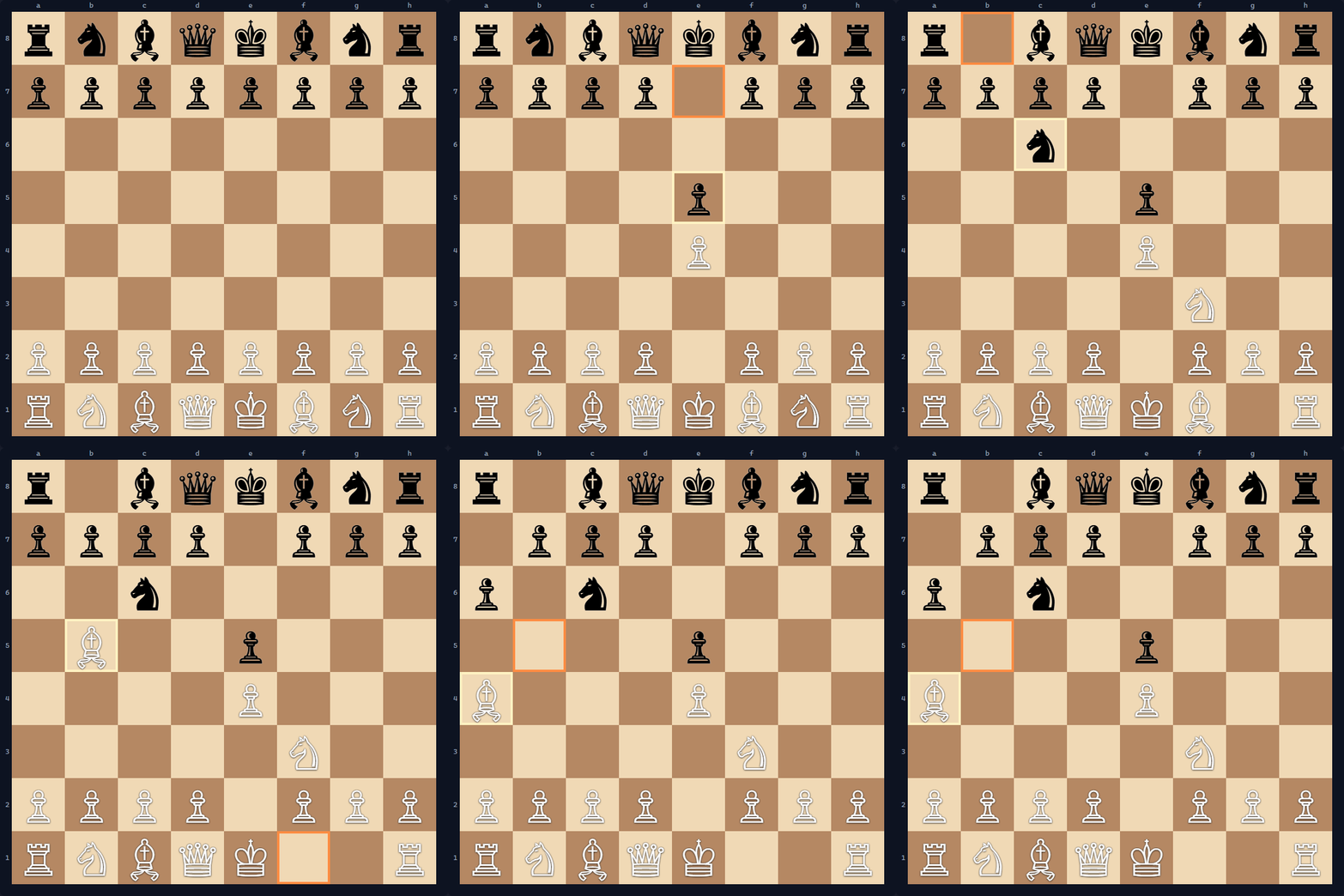
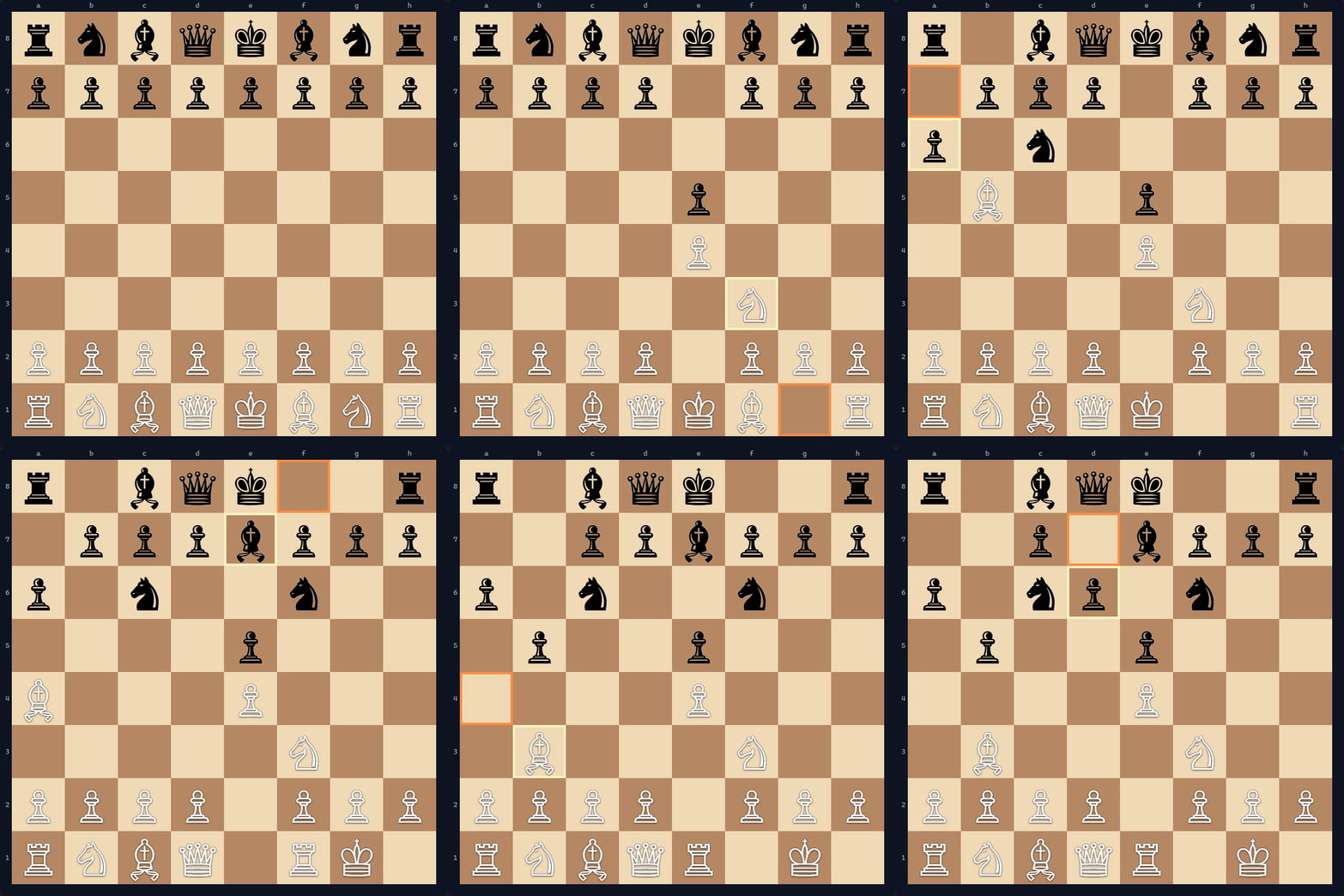
The Closed System arises after 3...a6 4.Ba4 Nf6 5.O-O Be7. This move order — avoiding the exchange on c6 and playing ...a6 to force the bishop back — is considered Black's most reliable setup. After White castles and Black places the bishop on e7 inside the pawn chain, the game enters the main line: 6.Re1 b5 7.Bb3 d6 8.c3.
At this point, the Closed System branches into several sub-variations named after the players who popularized them.
Chigorin Variation (9.h3 Na5): Black moves the knight to a5 to exchange it for White's bishop on b3, obtaining the bishop pair. This prepares ...c5 to challenge the center and gives Black active piece play in exchange for structural concessions.
Breyer Variation (9.h3 Nb8): Black reroutes the knight via b8 to d7, supporting the e5-pawn from the flank. The idea is to complete development without committing the bishop on c8, keeping options open for ...Ba6 or ...Bb7.
Zaitsev Variation (9.h3 Bb7): Black develops the bishop to b7 to pressure e4. Favored by Anatoly Karpov and developed by his trainer Igor Zaitsev, this line leads to complex play with mutual chances. As noted by 365chess.com and uscfsales.com, the Zaitsev Variation has a known draw-by-repetition line (11.Ng5 Rf8 12.Nf3 Re8 13.Ng5) if White wants to force a draw.

Karpov Variation (9.h3 Nd7): Black places the knight on d7 to support e5 and maintain flexibility. This line was a favorite of Anatoly Karpov, who preferred solid, human-friendly positions over sharp tactical complications.
Other closed sub-variations include the Pilnik (9.d3), Yates (9.d4), Kholmov (9...Be6), and Smyslov (9...h6). The sheer depth of theory in the Closed System is one reason many players turn to the Berlin Defense or Open Variation instead.
The Berlin Defense: Solid and Drawish
The Berlin Defense (3...Nf6) gained worldwide popularity after Vladimir Kramnik used it to defeat Garry Kasparov in the 2000 World Championship match. By meeting 3.Bb5 with 3...Nf6, Black immediately trades the c6-knight, forcing a position with an early queen exchange and reduced material. The resulting endgame — where Black accepts doubled c-pawns but gets the bishop pair and solid structure — is technically drawish but practically challenging to play for both sides. Chess fans call this line the "Berlin Wall."
The Berlin Defense appeals to players who want a reliable drawing weapon with Black against the Ruy Lopez. It requires less theoretical knowledge than the Closed System and leads to positions where understanding general principles matters more than memorization.
The Marshall Attack: Black's Sharpest Counter
The Marshall Attack arises from the Closed main line after the moves 1.e4 e5 2.Nf3 Nc6 3.Bb5 a6 4.Ba4 Nf6 5.O-O Be7 6.Re1 b5 7.Bb3 O-O 8.c3 d5. By breaking with 8...d5, Black sacrifices a pawn to open lines against White's uncastled king. This pawn gambit was developed by Frank Marshall and first used against José Raúl Capablanca in 1918, when Marshall famously lost after declining a draw offer earlier in the game.
The Marshall remains one of Black's most dangerous attacking weapons in the Ruy Lopez. White must know specific defensive moves to weather the storm, or risk being overwhelmed on the kingside. Many players avoid the Marshall by entering the Exchange Variation or the Anti-Marshall lines with 8.a4.
The Exchange Variation: Structural Compensation
The Exchange Variation (4.Bxc6) trades the bishop for the c6-knight immediately. White doubles Black's c-pawns, giving Black a potential target while White aims for a pawn majority on the kingside. The Exchange Variation is considered drawish but is a practical choice for players who want to avoid heavy theory while maintaining a small edge.
In this variation, if White manages to advance the d-pawn to d4 and exchange it for Black's e5-pawn, the resulting endgame favors White. simplifychess.com, citing former World Champion Max Euwe's book, states that such an exchange is generally considered winning for White in the endgame. This claim should be verified against Euwe's original text before using as a primary tactical claim.
Other Black Responses
Beyond the Closed System and Berlin, Black has several sharper options.
Schliemann-Jaenisch Gambit (3...f5): Black strikes at the center immediately with 3...f5, accepting structural weaknesses for active piece play. This gambit is aggressive but risky — White can accept the pawn or decline it and gain a spatial advantage.
Arkhangelsk Variation (5...b5 6.Bb3 Bb7): Black fianchettoes the light-squared bishop with ...b5 and ...Bb7. The resulting open positions suit tactical players. In this line, White wins 39% of games, draws 30%, and Black wins 30% — roughly balanced.
Steinitz Defense (3...d6): A solid, passive option where Black bolsters e5 without committing the knight to c6. It is rarely seen at higher levels but can surprise unprepared opponents.
| Black setup | Main idea | Practical risk |
|---|---|---|
| Schliemann-Jaenisch Gambit | Immediate ...f5 strike against the center. | Active but structurally risky if White handles the gambit well. |
| Arkhangelsk Variation | ...b5 and ...Bb7 create open tactical play. | Balanced results in the cited line, but both sides must calculate. |
| Steinitz Defense | Solid support of e5 with ...d6. | Less ambitious and often passive, but useful as a surprise. |
Strategic Plans for Both Sides
White's main plans in the Ruy Lopez involve securing a strong central pawn structure, completing piece development, castling, and advancing d4 (supported by c3) to challenge Black's e5-pawn. The d4 advance is the key break in the Closed System — it opens lines and puts pressure on Black's position.
Black's objectives vary by line but generally include challenging White's central control, generating queenside counterplay with ...a6 and ...b5 to kick the bishop, and, in some lines, castling queenside for a mutual attack. In the Closed System, Black's ...a6 and ...b5 plan is fundamental — it gains space and forces the bishop to retreat.
One key strategic element in the Ruy Lopez is the timing of ...d5. In the Closed System, Black eventually needs to break in the center, and ...d5 is the most common pawn break. White must decide whether to allow it or try to prevent it with c3. If White plays c3 early, Black may instead try ...Na5 or ...Nd4 to challenge the bishop on b3. Understanding these timing issues is what separates strong Ruy Lopez players from weaker ones.
Famous Games in the Ruy Lopez: Classic Encounters
The Ruy Lopez has been featured in some of chess's most memorable games. Emanuel Lasker defeated José Raúl Capablanca in their 1914 encounter using the opening. Viktor Korchnoi and Anatoly Unzicker contested it in 1974. Garry Kasparov faced Anatoly Karpov using the Ruy Lopez throughout their legendary 1990 World Championship match. Most recently, Viswanathan Anand played it as White against Magnus Carlsen in the 2013 World Championship. Studying these classic games helps players understand the strategic plans and timing that separate successful Ruy Lopez play from failed attempts.
These games demonstrate the Ruy Lopez's staying power — it appears at every level of chess and has never been refuted.
Frequently Asked Questions
What is the Ruy Lopez opening?
The Ruy Lopez is a chess opening that begins 1.e4 e5 2.Nf3 Nc6 3.Bb5. White attacks the c6-knight with the bishop, creating sustained pressure on Black's e5-pawn. It is one of the oldest and most analyzed openings in chess.
Is the Ruy Lopez good for beginners?
The Ruy Lopez is better suited to intermediate and advanced players. Beginners can start with the Italian Game to learn similar ideas with less theory required. The Ruy Lopez rewards precise play and understanding of positional concepts.
What is the Berlin Defense?
The Berlin Defense is the move 3...Nf6 against the Ruy Lopez, leading to an early queen exchange and a drawish endgame. It became famous when Vladimir Kramnik used it to beat Garry Kasparov in the 2000 World Championship.
What is the Marshall Attack?
The Marshall Attack is the pawn sacrifice 8...d5 from the Closed main line of the Ruy Lopez. Black gives up a pawn to open lines against White's king. It was developed by Frank Marshall in 1918.
Why is the Ruy Lopez called the Spanish Torture?
The nickname "Spanish Torture" comes from the fact that Black has difficulty achieving equality in the Ruy Lopez. White's sustained positional pressure grinds Black down over time.
How old is the Ruy Lopez?
The Ruy Lopez dates to 1561, when the Spanish priest Ruy López de Segura published analysis of the opening in his book. However, it did not become universally popular until the late 1800s, when Wilhelm Steinitz demonstrated the power of positional play. It has been a cornerstone of classical chess ever since.
Practical takeaway: the Ruy Lopez rewards understanding pressure on e5, piece maneuvers and patient plans more than memorizing long branches.
Sources
- chess.com — Ruy Lopez opening page: https://www.chess.com/openings/Ruy-Lopez-Opening. Used for: opening overview, main variations (Closed, Berlin, Exchange, Open, Schliemann, Marshall), history (Ruy Lopez de Segura 1561), famous games.
- 365chess.com — Master the Ruy Lopez Opening: https://www.365chess.com/chess-openings/Ruy-Lopez. Used for: historical background, Closed Defense sub-variations, secondary lines, White and Black plans.
- simplifychess.com — Ruy Lopez: https://simplifychess.com/ruy-lopez/. Used for: Berlin Defense, Exchange Variation (Euwe's endgame reference), Arkhangelsk Defense.
- chessreps.com — Ruy Lopez: Learn & Train It Free: https://www.chessreps.com/opening/ruy-lopez. Used for: early-d4 repertoire, pros/cons, Berlin Defense, FAQ.
- chessstrategyonline.com — Introduction to the Ruy Lopez: https://www.chessstrategyonline.com/content/tutorials/introduction-to-the-chess-openings-ruy-lopez. Used for: historical framing (Steinitz, Kramnik-Kasparov 2000), model games.
- USCF Sales blog — Master The Ruy Lopez by Shaun Sedice: https://www.uscfsales.com/blogs/chess-openings/ruy-lopez. Used for: Closed Ruy Lopez analysis (Chigorin, Breyer, Zaitsev).
- PSU blog — Chess Openings For Beginners: The Ruy Lopez: https://sites.psu.edu/chessopeningsforbeginners/the-ruy-lopez/. Used for: beginner-oriented Morphy Defense and Exchange Variation.