
The Scotch is open, but it is not random. Every early capture changes development speed, so count tempi before chasing tactics.
A Brief History — From Edinburgh to Kasparov
The Scotch Game traces its name to one of the most famous correspondence matches of the 19th century. In 1824, the Edinburgh Chess Club faced the London Chess Club in a match played by mail. The opening 1.e4 e5 2.Nf3 Nc6 3.d4 appeared in several games of that match, and the name stuck. According to the commercial platform (single source), the opening was first recorded even earlier — by Ercole del Rio in his 1750 chess treatise, making it older than many of the openings it competes with today.
For roughly 150 years, the Scotch existed as a respectable but quiet sideline. That changed in the 1990s when Garry Kasparov, then world champion, revived the Scotch at the highest level. He introduced it against Anatoly Karpov in their 1990 world championship match, scoring a win and a draw. According to the New In Chess book The Scotch Game: A Repertoire for White by Alexei Bezgodov and Vladimir Barsky (2023, single source), Kasparov went on to play the Scotch in twenty tournament games, winning twelve and drawing eight — without a single loss. The revival was so effective that the Scotch has remained a staple of elite play ever since.
The list of elite players who have employed the Scotch reads like a who's who of modern chess: Magnus Carlsen, Vladimir Kramnik, Levon Aronian, Vasily Ivanchuk, Teimour Radjabov, Hikaru Nakamura, Anish Giri, Ian Nepomniachtchi, and Alexander Morozevich, among others. When a world champion like Carlsen chooses the Scotch in serious games, it is a clear signal that the opening is both sound and dangerous.
The Starting Position — Why 3…exd4 Is Your Only Move
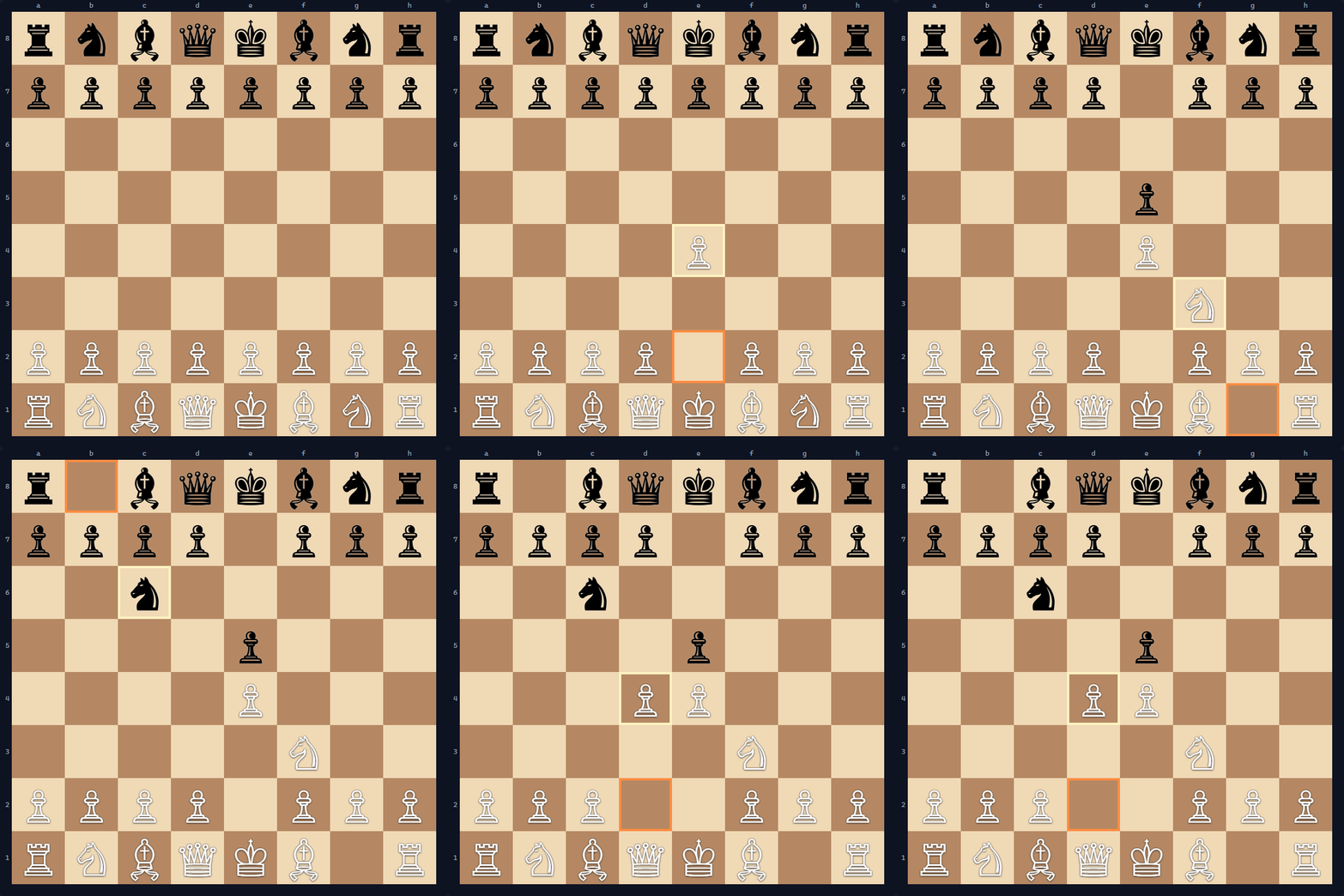
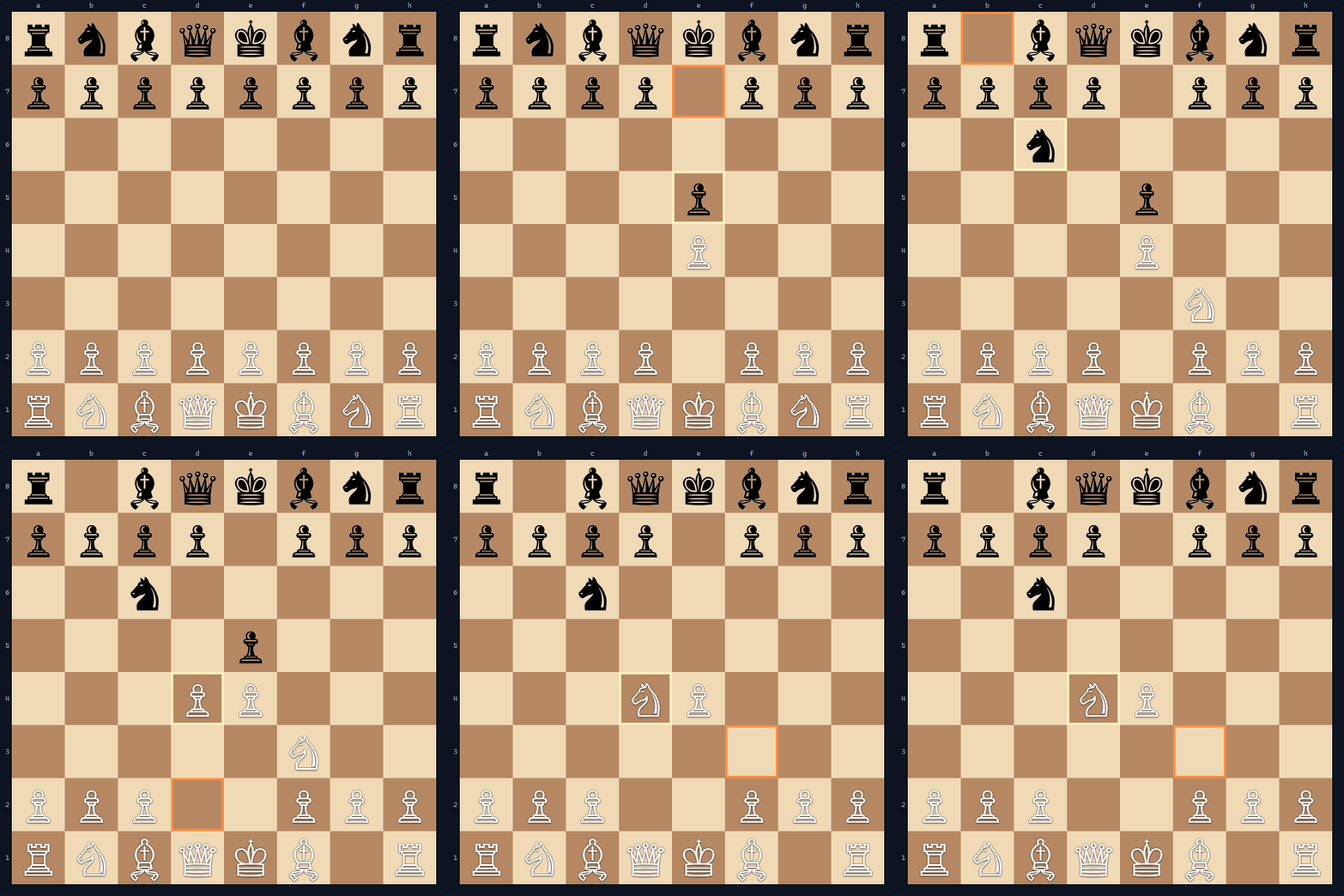
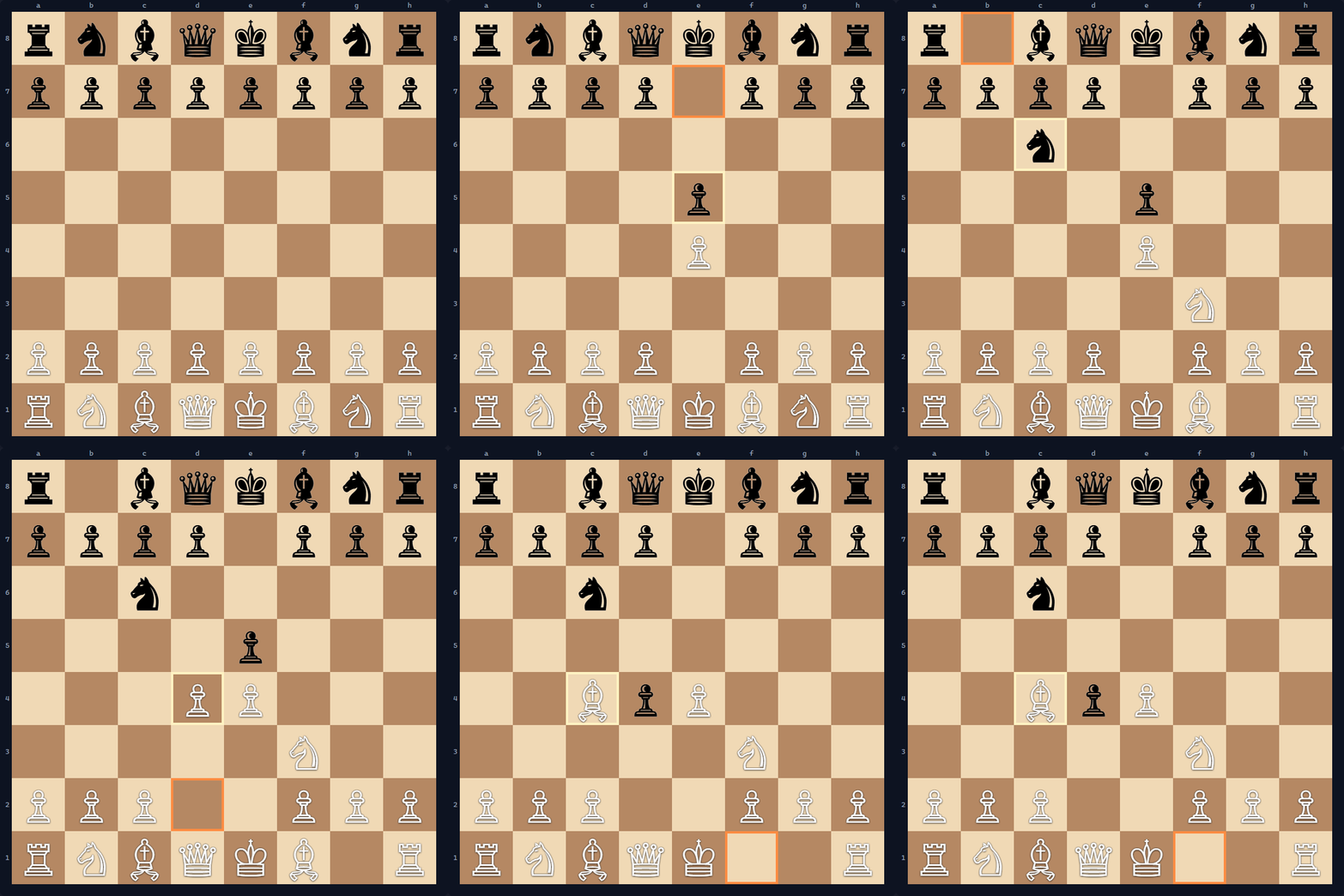
After 1.e4 e5 2.Nf3 Nc6, White's third move defines the character of the game. The Ruy Lopez (3.Bb5) maintains central tension and targets Black's knight on c6. The Italian Game (3.Bc4) aims at the vulnerable f7-square. The Scotch (3.d4) does something different: it challenges Black's central pawn immediately, demanding a response.
Black's only good reply is 3…exd4. Every alternative leads to an inferior position. If Black tries 3…Nf6, White plays 4.dxe5 Nxe4 5.Bc4 Bc5 6.Qd5, and Black's knight is hanging while White threatens checkmate on f7, according to Chessreps. Other attempts like 3…d6 or 3…Bb4 are similarly unpleasant for Black.
After 3…exd4, White has three meaningful options:

| White's Choice | Character | Best for |
|---|---|---|
| 4.Nxd4 (Main Line) | Positional-tactical, solid | Standard play, all time controls |
| 4.Bc4 (Scotch Gambit) | Aggressive, sacrificial | Blitz/rapid, surprise value |
| 4.c3 (Göring Gambit) | Aggressive, sacrificial | Rapid, club-level surprise |
The first option, 4.Nxd4, is the main line and the subject of most of the theory. The two gambit options are covered later in this guide.
The Schmidt Variation — The Modern Main Line
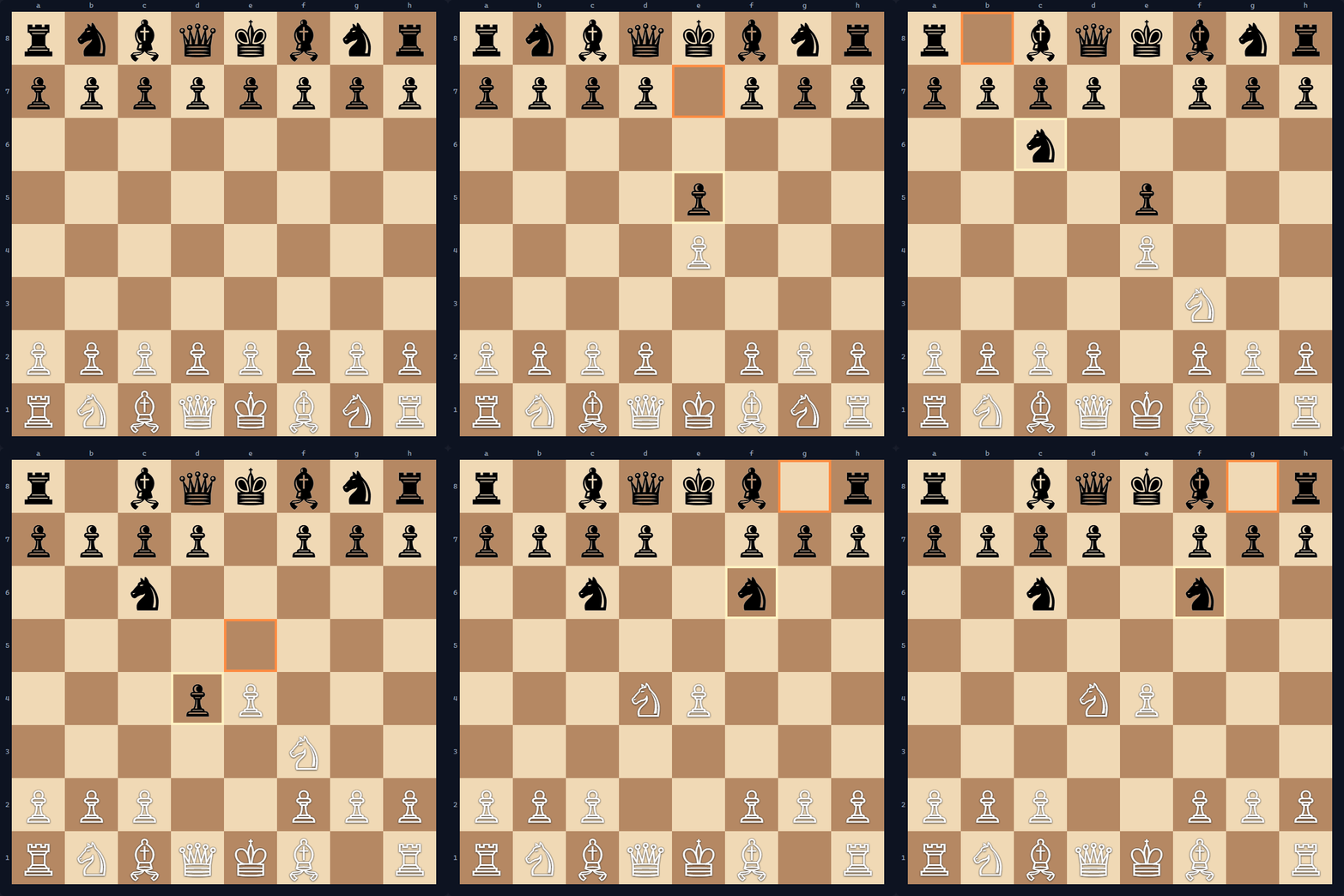
Black's most popular response to 4.Nxd4 is 4…Nf6, known as the Schmidt Variation. It is the top choice at master level because it develops naturally and attacks the e4-pawn. The position is already rich with possibilities, and most Scotch games begin from this point.
The modern main line owes its shape to Garry Kasparov's innovation: instead of defending the e4-pawn with f3 or Nc3, Kasparov played 5.Nxc6, exchanging a pair of knights and opening the b-file for Black's rook. This leads to the Mieses System, the most theoretically significant sub-variation of the Scotch.
The main line runs: 5.Nxc6 bxc6 6.e5 Qe7 7.Qe2 Nd5 8.c4 Ba6 9.b3. White gains a clear space advantage with the pawn wedge on e5 and c4, while Black relies on the two bishops and the open b-file for counterplay. The knight on d5 is a beautiful outpost for Black but can be challenged with White's queenside expansion.
For club players, the Mieses System is the most practical line to learn as White. The plans are unusually clear for an Open Game: White pushes on the queenside with c4 and b3, develops the bishop to b2 or a3, and castles queenside. Black typically castles kingside and seeks counterplay via …c5 or …f6 breaks. Knowing these strategic themes is more valuable than memorising deep theoretical lines — most club players will reach playable positions where understanding the plans matters more than raw memorisation.
The Classical Variation (4…Bc5)
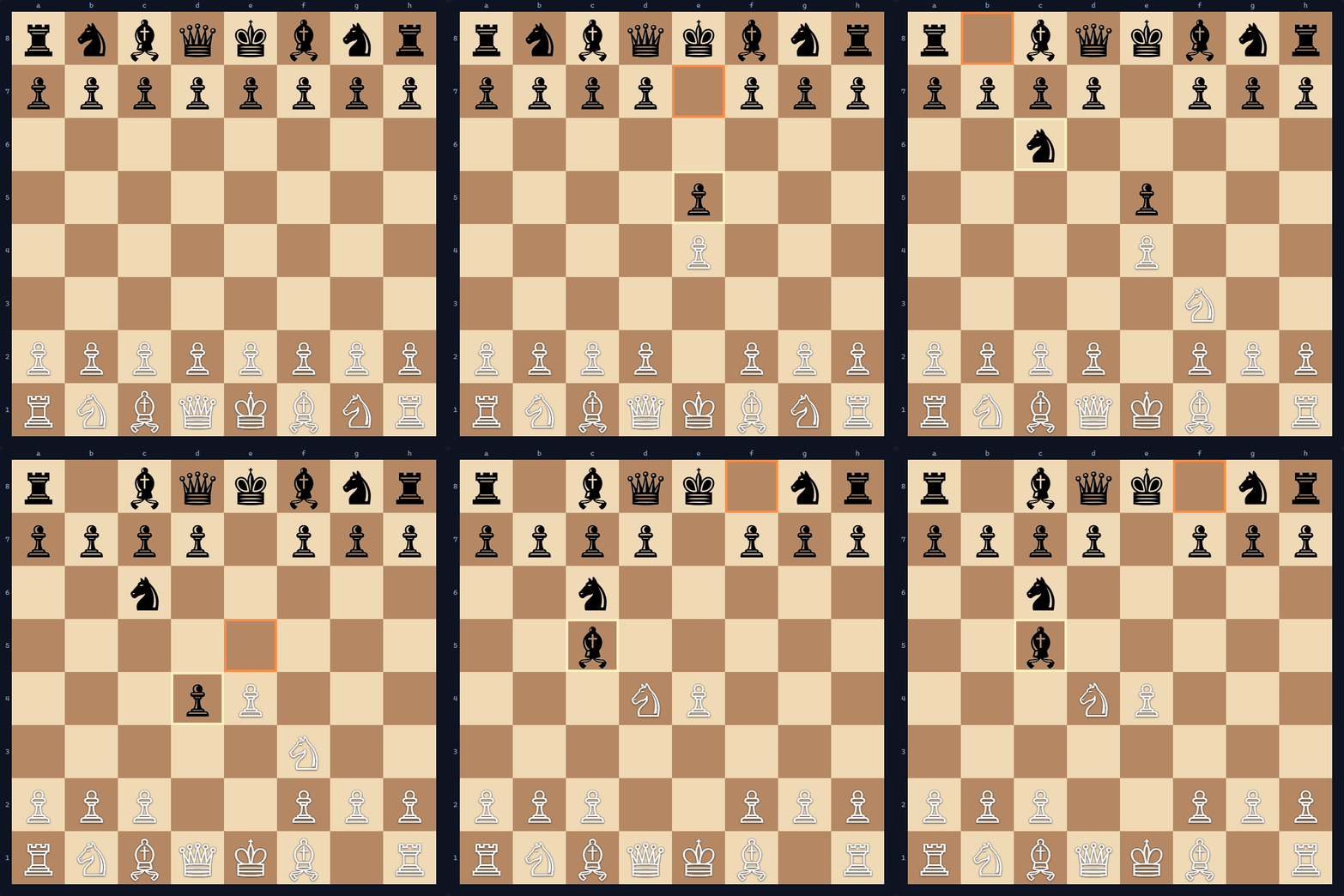
The Classical Variation — 4…Bc5 — is the second major option for Black and the most direct. Instead of developing the knight and attacking the e4-pawn, Black immediately attacks the knight on d4 with the bishop. This approach has been played by everyone from 19th-century romantics to modern grandmasters.
White has two main replies. The most ambitious is 5.Nxc6 Qf6, when Black attacks both the undefended knight on c6 and the f2-pawn. White must navigate carefully to avoid losing a piece. The alternative is 5.Nb3, retreating the knight to a safe square. This gives White a solid but less ambitious position, with the knight on b3 eyeing the c5-square.
The Classical Variation tends to be sharper than the Schmidt. Black's bishop on c5 can become a target for White's d2-d4 advance, but it also exerts strong pressure along the a7-g1 diagonal. For Black, the Classical is an excellent choice if you want active piece play from the very first moves. For White, knowing the key tactical sequence after 5.Nxc6 Qf6 is essential — the natural-looking 6.Nd4? loses to 6…Qxf2+.
The Steinitz Variation and Other Sidelines
The Steinitz Variation — 4…Qh4 — is the most aggressive Black can be in the opening moves. Black brings the queen out early, pinning the knight on d4 to the undefended h2-square and threatening to win a pawn. It looks menacing, but White gets comfortable development in return.
After 4…Qh4, White can play 5.Nc3 Bb4 6.Qd3 or the simpler 5.Be2, threatening to trap the queen if she takes on d4. The consensus among sources is that White gets a pleasant position with a lead in development, while Black's queen becomes a target.
A few other sidelines deserve a mention:
- 4…Bb4+ (Malaniuk Variation) — Listed by the commercial platform as an uncommon but distinct line. Black checks from b4 before committing to a plan.
- 4…Qf6 — A tactical sideline where Black attacks d4 and f2 simultaneously. Chessreps gives the line 5.Nb5 Bc5 6.Qe2 Bb6 7.N1c3, when White's knight on b5 is annoying for Black.
- 4…Nxd4 (Lolli Variation) — This capture is considered a mistake. After 5.Qxd4, White has a dominating queen in the centre and Black has no compensation for the loss of central control.
For club players, learning the reply to 4…Qh4 is worth the time — it appears more often than you would expect at club level, especially against the Scotch. The Lolli and Qf6 lines are rare enough that you can handle them with general principles.
Gambit Lines — Scotch Gambit and Göring Gambit
Not every Scotch player recaptures with 4.Nxd4. Two gambit lines offer White the chance to sacrifice a pawn for rapid development and attacking chances.
The Scotch Gambit (4.Bc4) sacrifices the d4-pawn. After 4…exd4, White can play 5.c3 or 5.0-0, trusting that the lead in development and open lines will compensate for the pawn deficit. According to the New In Chess book (single source), this gambit appeared in two games of the original 1824 Edinburgh–London correspondence match — so it is nearly as old as the opening itself. At the club level, the Scotch Gambit scores well because Black must know precise defensive moves to survive.
The Göring Gambit (4.c3) is an alternative approach where White offers the pawn immediately. After 4…exd4, the idea is 5.cxd4. Black can accept the pawn or transpose to a quieter line with 5…d5. The Göring Gambit is less common than the Scotch Gambit but perfectly playable, especially in rapid and blitz games.
| Gambit | Sacrifice | Development | Theory Depth | Club Suitability |
|---|---|---|---|---|
| Scotch Gambit (4.Bc4) | d4-pawn | Very fast, attacking | Moderate | Excellent in blitz/rapid |
| Göring Gambit (4.c3) | c-pawn | Fast, central control | Light | Good for surprise value |
For club players, the Scotch Gambit is a legitimate weapon in faster time controls. The main line (4.Nxd4) remains the most reliable choice for standard play, but having the Scotch Gambit as a weapon for blitz or against weaker opposition is a practical way to expand your repertoire without extra study.
Is the Scotch Game Right for You?
The Scotch trades the slow-burn complexity of the Ruy Lopez for immediate clarity. Every variation has clear strategic themes, and the early exchange of central pawns means that the game takes on an open, tactical character from move three. Here is how the Scotch compares to its main alternatives as White against 1…e5:
| Aspect | Scotch Game | Ruy Lopez | Italian Game |
|---|---|---|---|
| Theory required | Moderate | Very deep | Moderate |
| Central character | Open, dynamic | Closed, strategic | Semi-open |
| Tactical risk | Moderate | Low-moderate | Moderate |
| Club-level results | Strong | Good | Strong |
| Space advantage | Clear | Gradual | Moderate |
Pros: The Scotch forces an open tactical game, which rewards calculation over memorisation. It requires far less theory than the Ruy Lopez. White typically gains a space advantage with the e5-pawn wedge in the Mieses System. Development is straightforward — White's pieces find natural squares.
Cons: The early release of central tension removes one of White's strategic trumps. The knight on d4 can become a target (Black attacks it with …Bc5, …Qf6, and …Nc6). With accurate play, Black can equalise in the main lines. As Chessable puts it, "the benefits it affords to White, it also affords to Black" (single source).
For club players, the practical choice is clear. Learn the Mieses System against the Schmidt Variation, know the basic plans against the Classical, and keep the Scotch Gambit in your back pocket for blitz games. That covers the vast majority of Scotch games you will face, and according to Chessreps (single source), the Scotch requires far less theory than the Ruy Lopez. If you want a sound, active, and enjoyable opening as White against 1…e5, the Scotch is an excellent choice.
Frequently Asked Questions
Is the Scotch Game sound at the master level?
Absolutely. The Scotch has been played by Garry Kasparov, Magnus Carlsen, and Vladimir Kramnik, among many other world-class players. Kasparov's twenty-game streak without a single loss is strong evidence that the opening holds up against the best preparation in the world.
What is the best way to play against the Scotch as Black?
The Schmidt Variation (4…Nf6) is the most popular and principled response at all levels. It develops naturally, attacks the e4-pawn, and leads to the Mieses System, where Black enjoys the two bishops and solid counterplay. The Classical Variation (4…Bc5) is the most ambitious alternative.
Why did Kasparov choose the Scotch over the Ruy Lopez?
Kasparov introduced the Scotch in his 1990 world championship match against Karpov to avoid Karpov's immense preparation in the Ruy Lopez. The Scotch offered a fresh, tactical battleground where preparation mattered less and creativity mattered more — a lesson that club players can still apply today.
Is the Scotch Gambit a good weapon for club players?
Yes, especially in faster time controls. The Scotch Gambit (4.Bc4) is sound enough for serious play and sharp enough to catch unprepared opponents. In standard time controls, 4.Nxd4 is the more reliable choice.
Sources
- 365Chess.com — "Scotch Game" opening page: https://www.365chess.com/chess-openings/Scotch-Game. Used for variation descriptions and main ideas.
- Chessreps.com — "Scotch Game" training page: https://www.chessreps.com/opening/scotch-game. Used for pros/cons and strategic plans for both sides.
- Chess.com — "Scotch Game" opening encyclopedia: https://www.chess.com/openings/Scotch-Game. Used for history, variations, and famous games.
- New In Chess / Bezgodov & Barsky — The Scotch Game: A Repertoire for White (2023, ISBN 978-1-949859-58-4): https://www.newinchess.com/media/wysiwyg/product_pdf/3772.pdf. Used for historical background and Kasparov statistics.
- Chessable Blog — "The Scotch Game": https://www.chessable.com/blog/the-scotch-game/. Used for narrative coverage, model game reference, and FAQs.