What Is the Sicilian Defense?
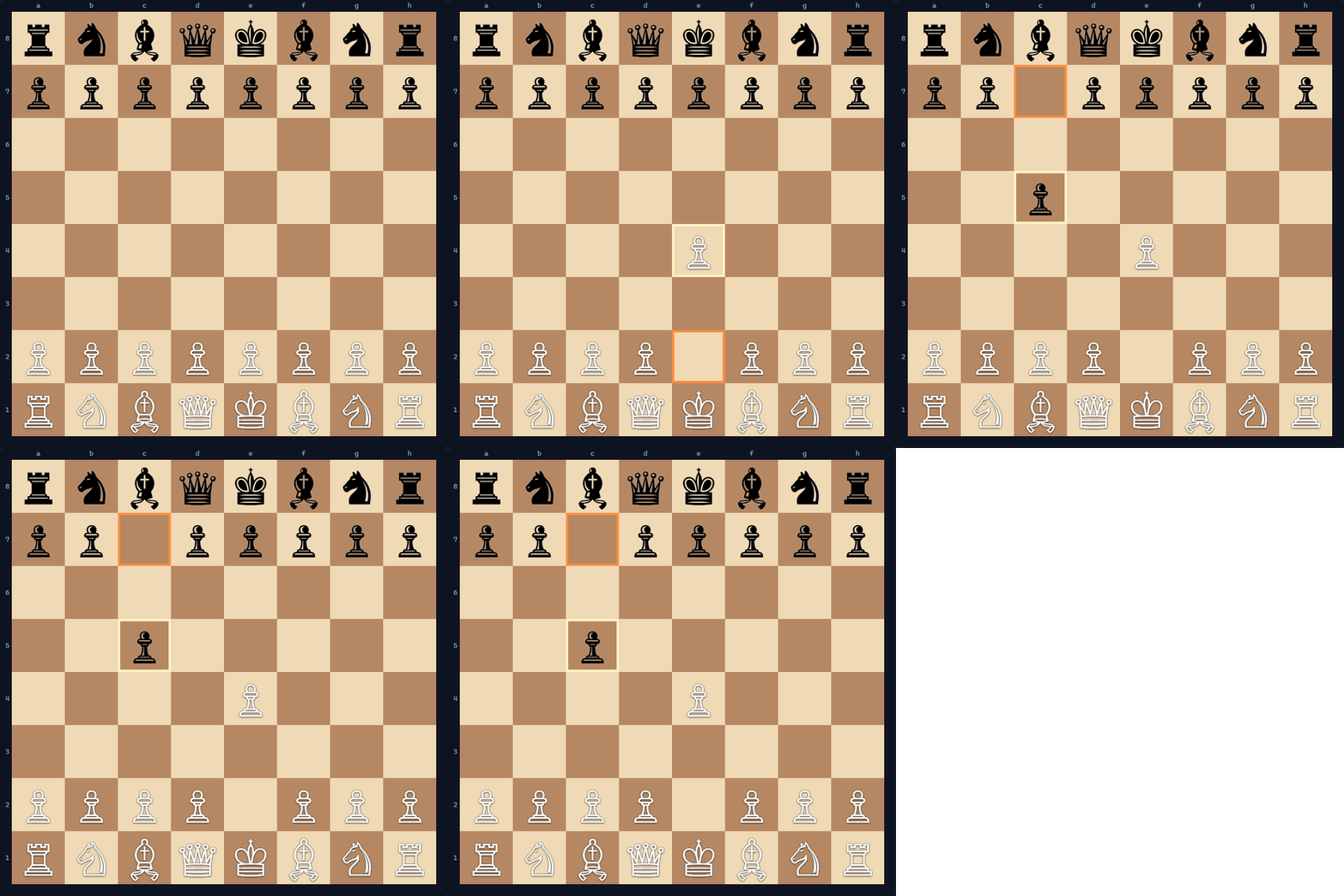
The Sicilian Defense begins with the moves 1.e4 c5. Black immediately challenges White's central space from the flank rather than head-on. This is the fundamental idea: the c-pawn will later be traded for White's d-pawn, leaving Black a central pawn majority on the d- and e-files and a half-open c-file for the rook.
Why asymmetry matters. Playing 1...e5 keeps the position balanced — White's advantage is only the extra move. The Sicilian changes this: 1...c5 creates an imbalanced fight with distinct plans for both sides. According to chess history sources, 1...c5 is considered the best-scoring response to 1.e4 by computer analysis.
This combative opening is positionally sound despite its sharp reputation. It rewards preparation and tactical awareness while offering Black genuine winning chances — something few other defences to 1.e4 can claim at the highest level.
Who Has Played the Sicilian Defense?
The Sicilian has been tested by nearly every world champion of the last century. Bobby Fischer and Garry Kasparov made it their primary weapon with Black, turning the opening into the dominant response to 1.e4 in master-level chess. Viswanathan Anand, Vladimir Kramnik, and Magnus Carlsen also relied on the Sicilian at various points in their careers — a line-up that tells you everything about the opening's competitive credentials.
Chess history sources note that the Sicilian was first documented by Giulio Polerio in his 1594 manuscript, making it one of the oldest recorded openings. First world champion Wilhelm Steinitz disliked it, and José Raúl Capablanca once dismissed Black's position as "full of holes." But the modern era — driven by Fischer and Kasparov — transformed the Sicilian into the fighting opening it is today.
The Open Sicilian — Core Move Order
The Open Sicilian is the theoretical main line and the gateway to almost all sharp Sicilian play. The move order:
1.e4 c5 2.Nf3 d6 3.d4 cxd4 4.Nxd4 Nf6 5.Nc3

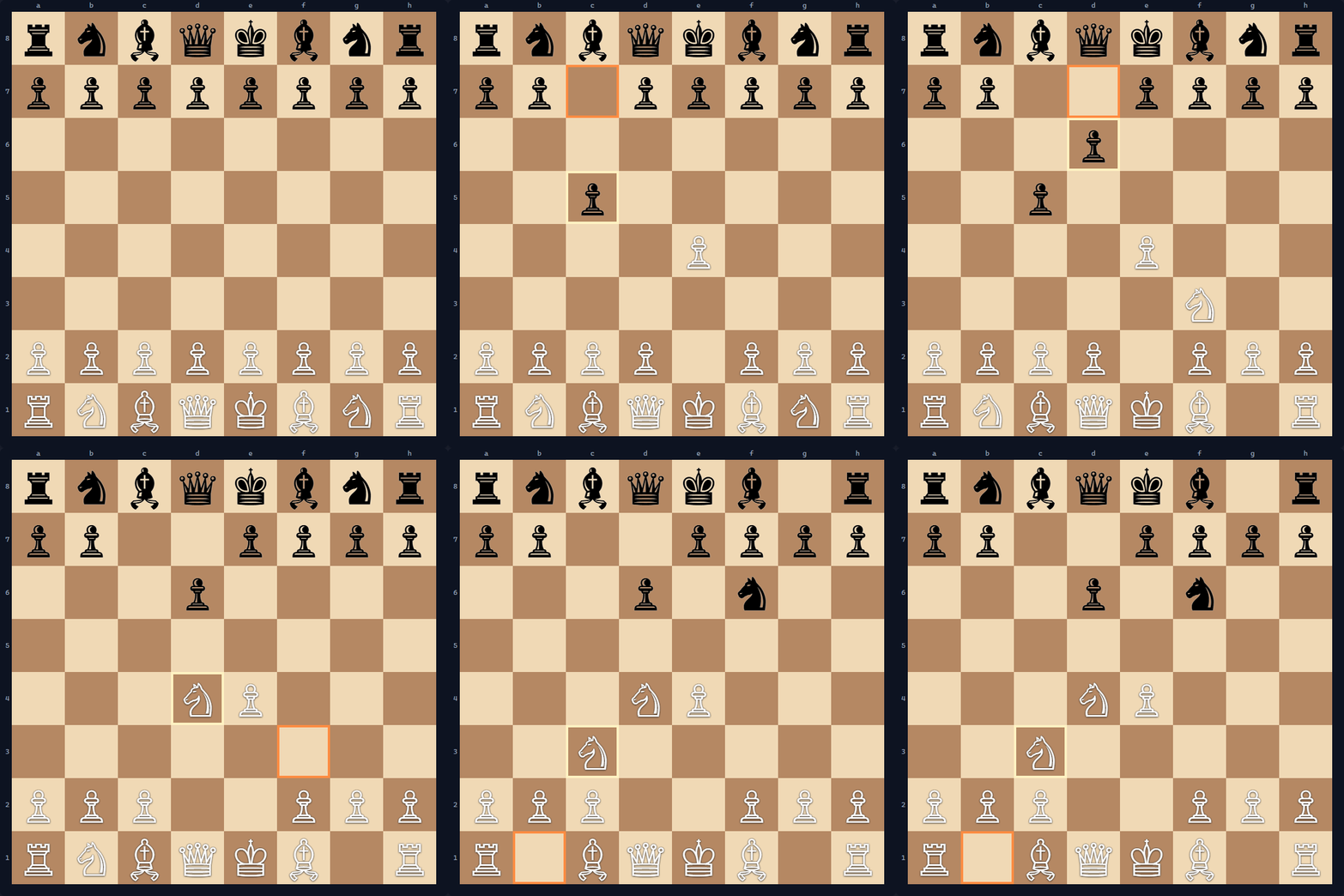
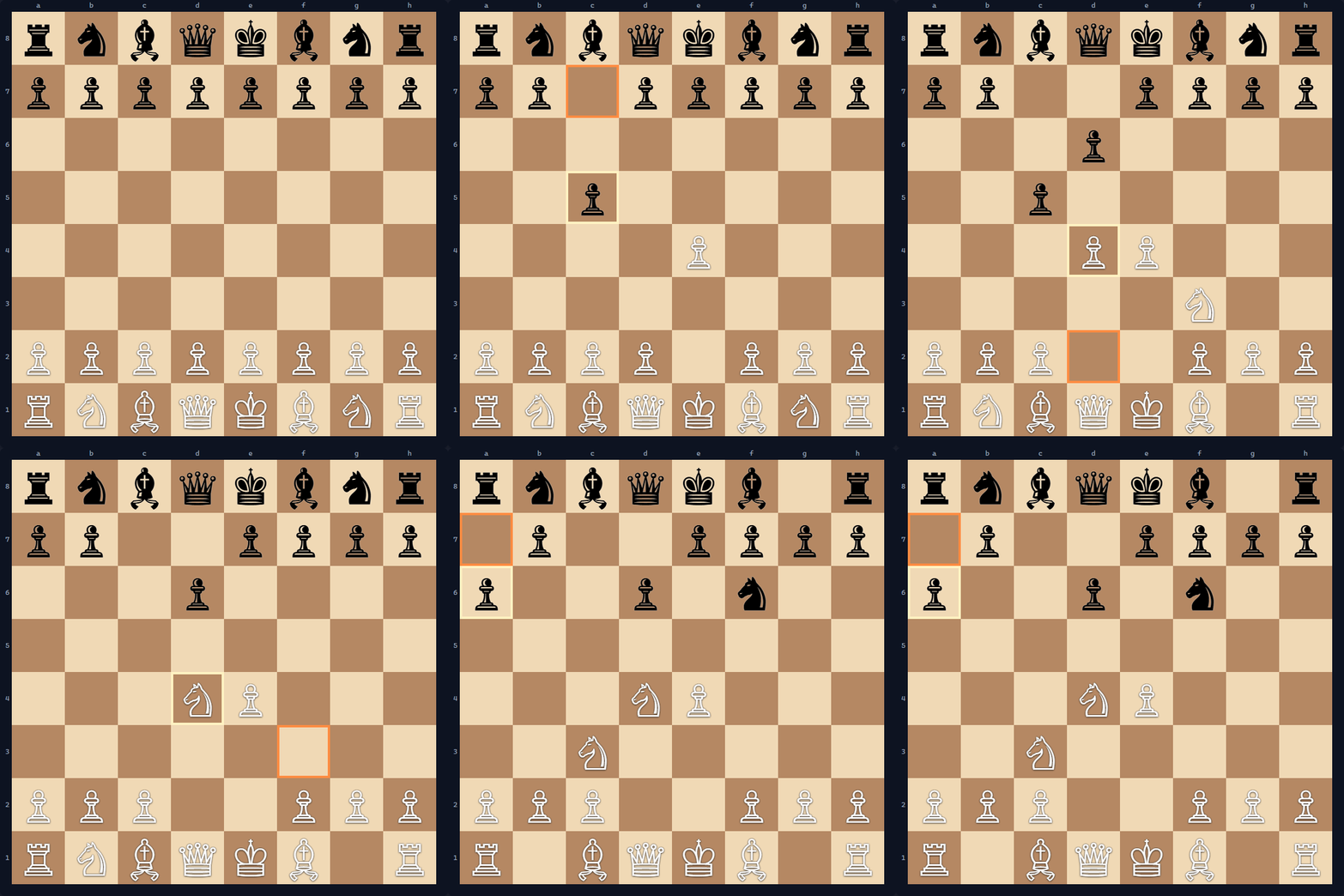
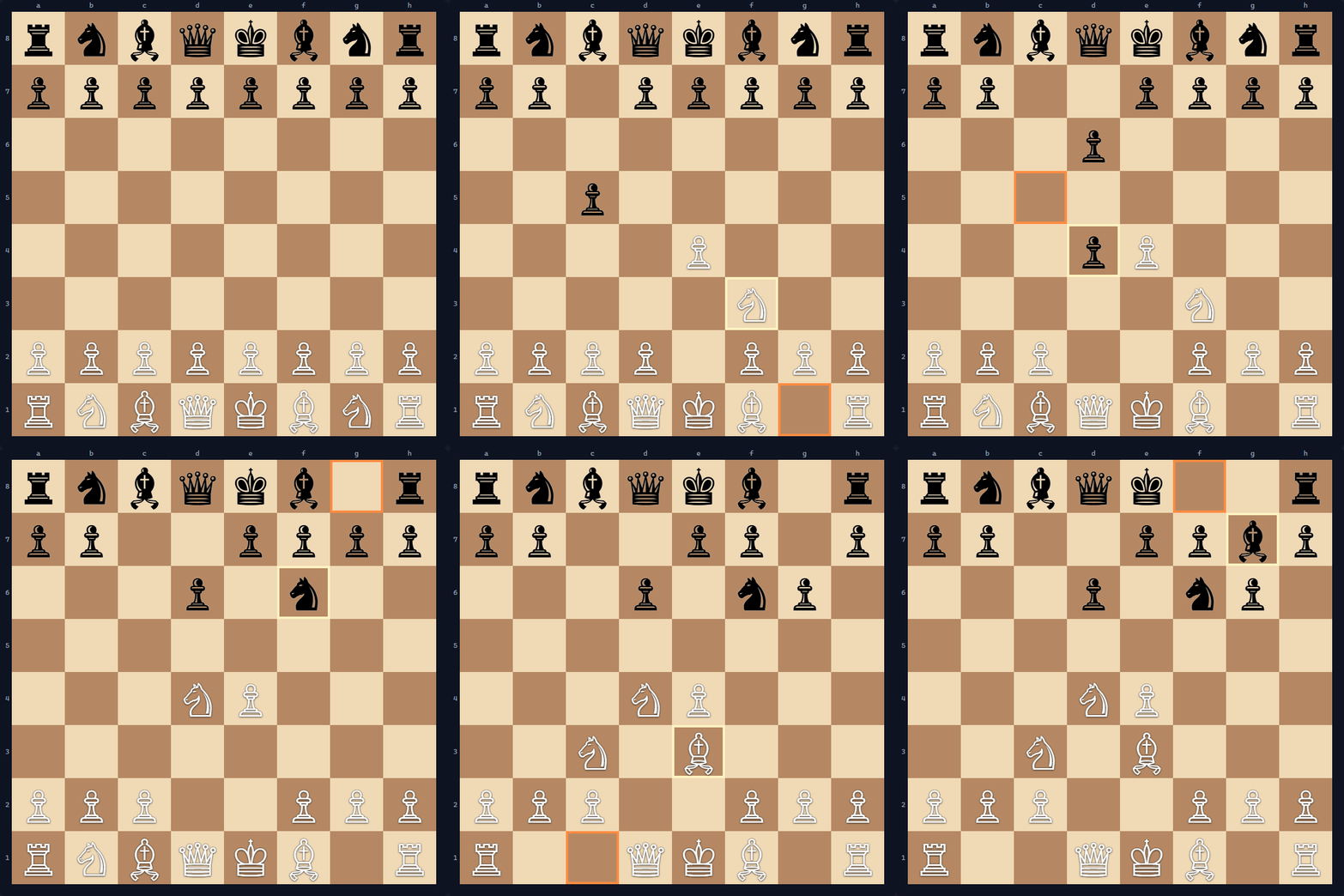
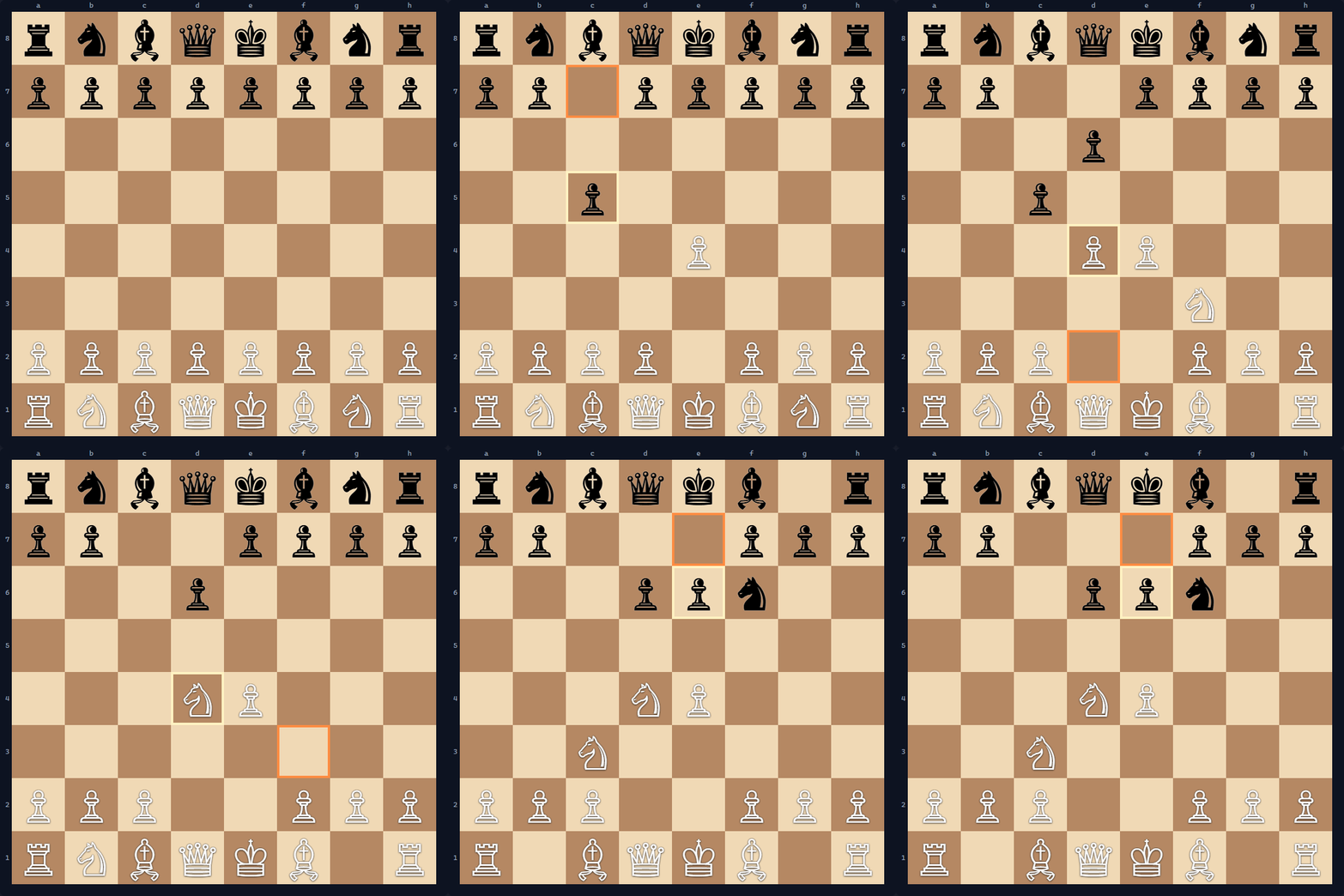
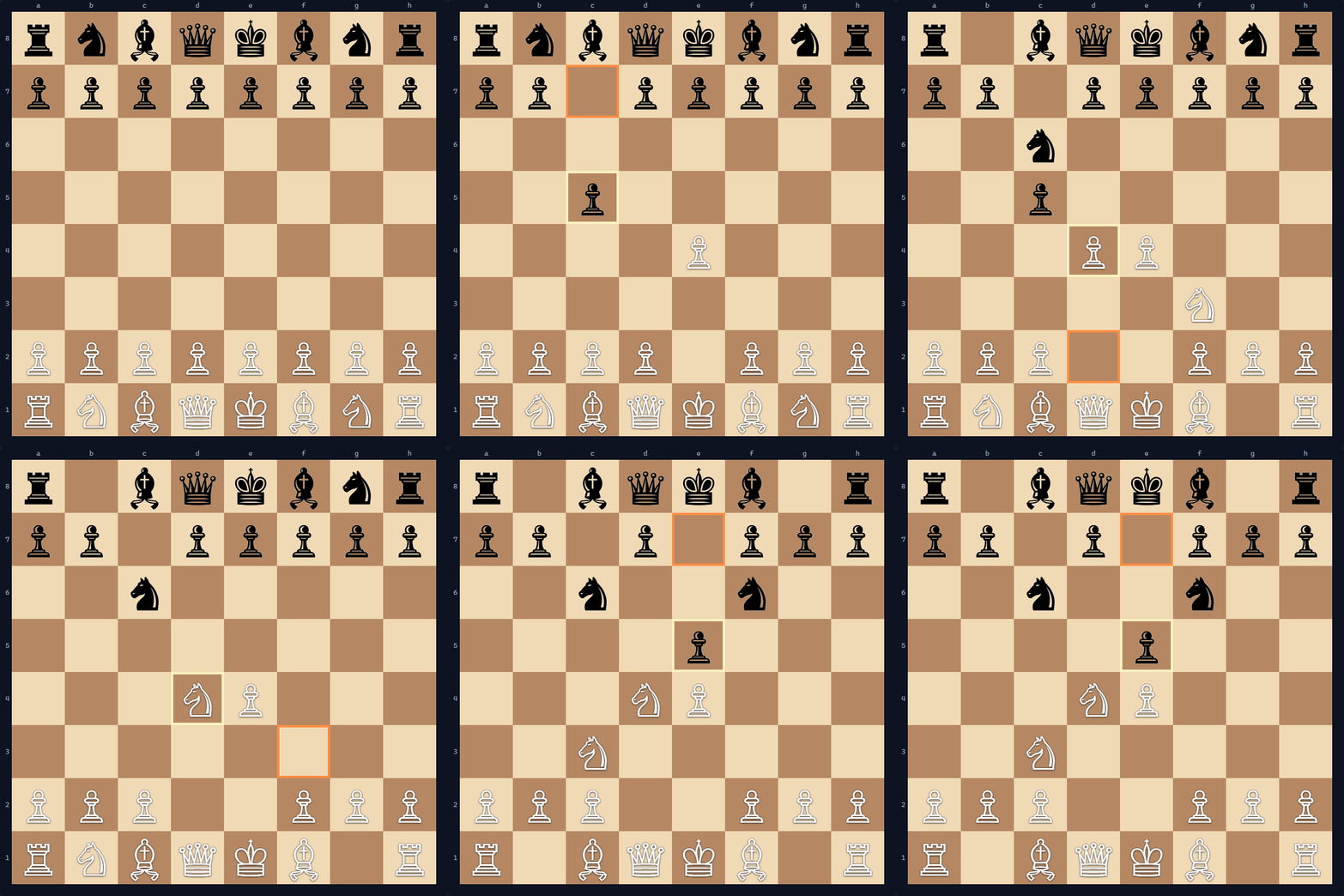
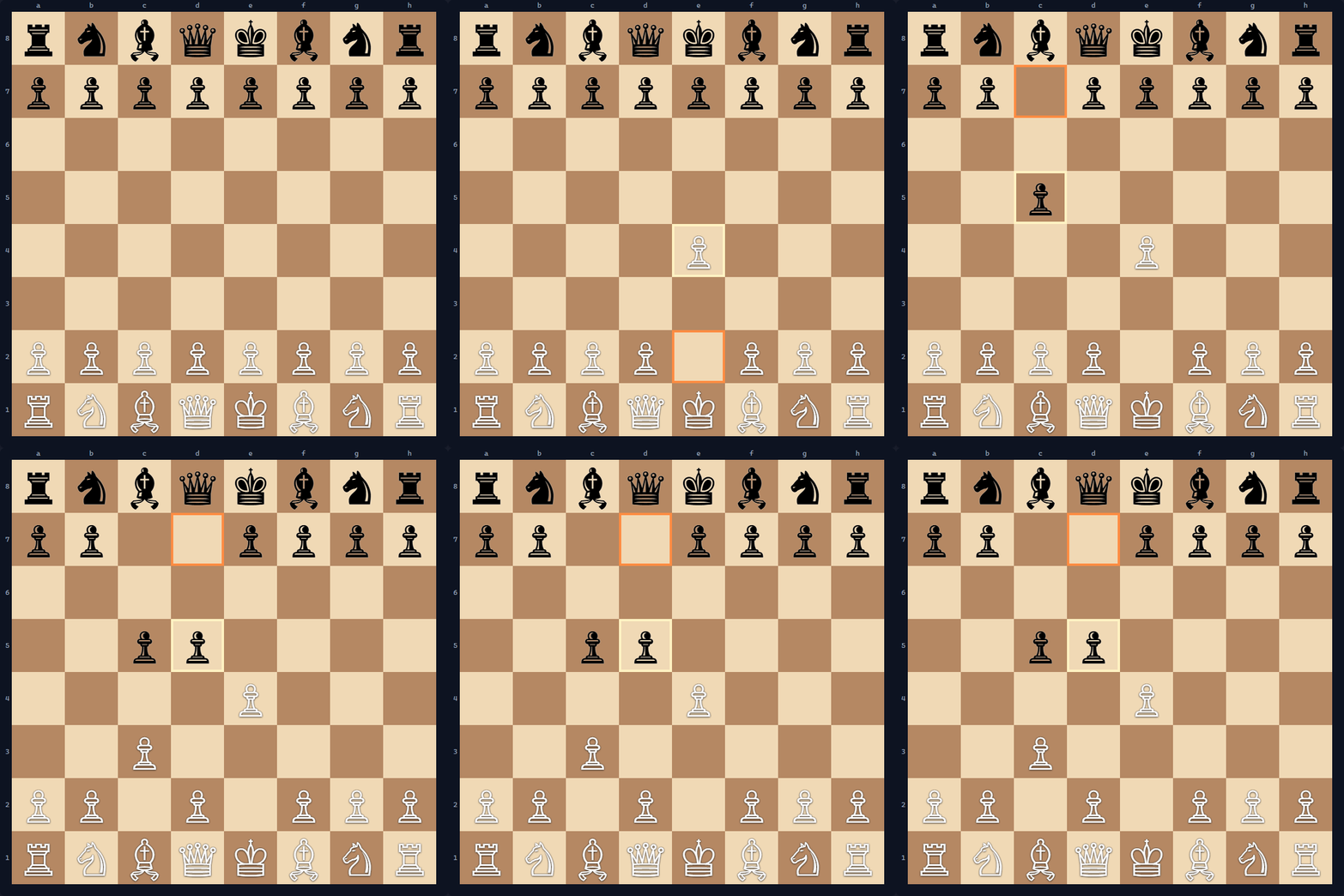
White sacrifices time to establish a knight on d4 and open the centre. Black reaches move 5 with a solid position and a critical choice: which variation to enter. Each variation is defined by Black's fifth move, and that single move dictates the character of the entire game.
| After 5.Nc3, Black's next move decides the variation |
|---|
| 5...a6 → Najdorf |
| 5...g6 → Dragon |
| 5...e6 → Scheveningen |
| 5...Nc6 followed by ...d6 → Classical |
Why does White accept this? The Open Sicilian gives White active piece play and kingside attacking chances. In return, Black gets clear counterplay on the c-file and a central pawn majority. It is a fair trade — and the reason the Sicilian has survived centuries of testing.
Major Open Sicilian Variations
There are seven major Open Sicilian variations that every club player should recognise. The first four are the classic set; the remaining three are modern additions that have proven their worth at grandmaster level.
Variation Comparison
| Variation | Key Moves (after 1.e4 c5 2.Nf3) | Core Idea | Style | Famous Player |
|---|---|---|---|---|
| Najdorf | 2...d6 3.d4 cxd4 4.Nxd4 Nf6 5.Nc3 a6 | Prevent Bb5+, prepare e7-e5 | Flexible, sharp | Garry Kasparov |
| Dragon | 2...d6 3.d4 cxd4 4.Nxd4 Nf6 5.Nc3 g6 | Fianchetto Bg7, race to checkmate | Aggressive, tactical | Viswanathan Anand |
| Classical | 2...Nc6 3.d4 cxd4 4.Nxd4 Nf6 5.Nc3 d6 | Develop naturally, challenge d4-knight | Solid, balanced | — |
| Scheveningen | 2...d6 3.d4 cxd4 4.Nxd4 Nf6 5.Nc3 e6 | "Small centre" with pawns on e6 and d6 | Positional, flexible | Anatoly Karpov |
| Sveshnikov | 2...Nc6 3.d4 cxd4 4.Nxd4 Nf6 5.Nc3 e5 | Early ...e5 creates d5 outpost for White | Sharp, theoretical | Vladimir Kramnik |
| Kan | 2...e6 3.d4 cxd4 4.Nxd4 a6 | Flexible, delay committing the king's knight | Positional, cautious | — |
| Taimanov | 2...e6 3.d4 cxd4 4.Nxd4 Nc6 | Solid development, often ...Qc7 | Positional, less theory | Mark Taimanov |
Najdorf Variation
The Najdorf (5...a6) is the most popular at every level. Black's a6 prevents Bb5+ and prepares e7-e5. From here, the game branches into dozens of well-analysed lines — a lifetime study for serious tournament players. Kasparov scored many of his most famous wins with it.
Dragon Variation
The Dragon (5...g6) is the sharpest Sicilian. Black fianchettoes the bishop to g7, controlling the long dark diagonal. The critical test is the Yugoslav Attack (Bc4, Be3, Qd2, O-O-O, h4-h5), where both sides attack on opposite wings. According to 365chess, the Dragon has three sub-systems: the Yugoslav Attack, Classical Dragon, and Levenfish Attack.
Classical and Scheveningen
The Classical Variation (...Nc6) is Black's most natural development — the knight goes to its best square and challenges White's d4-knight immediately. It is solid without being passive.
The Scheveningen (...e6) creates a "small centre" with pawns on e6 and d6. Black's position is compact and flexible but can come under heavy pressure from White's kingside attack, especially the Keres Attack (5...e6 6.g4).
Sveshnikov, Kan, and Taimanov
The Sveshnikov (5...e5 after ...Nc3) creates immediate tension. Black accepts a backward d-pawn and a d5 hole for active piece play — Kramnik's primary weapon.
The Kan (2...e6 3.d4 cxd4 4.Nxd4 a6) is the most flexible. Black delays the king's knight, favouring manoeuvring over tactics.
The Taimanov (2...e6 3.d4 cxd4 4.Nxd4 Nc6) sits between the Kan and Classical — natural development with less theory than the Najdorf or Dragon.
For club players: what to learn first. Pick one variation — Najdorf for sharp play, Dragon for attacking chess, Kan or Taimanov for positional games. Learn the first ten moves and three model games before branching out. Spend the rest of your study time on tactics — the Sicilian rewards the better player, not the better memoriser.
Anti-Sicilian Systems — What White Plays to Avoid Theory
Not every White player is willing to enter the Open Sicilian's deep waters. Anti-Sicilian systems avoid move 3.d4 and keep the position within manageable boundaries. For Black, knowing how to handle these systems is essential — you will face them often at club level.
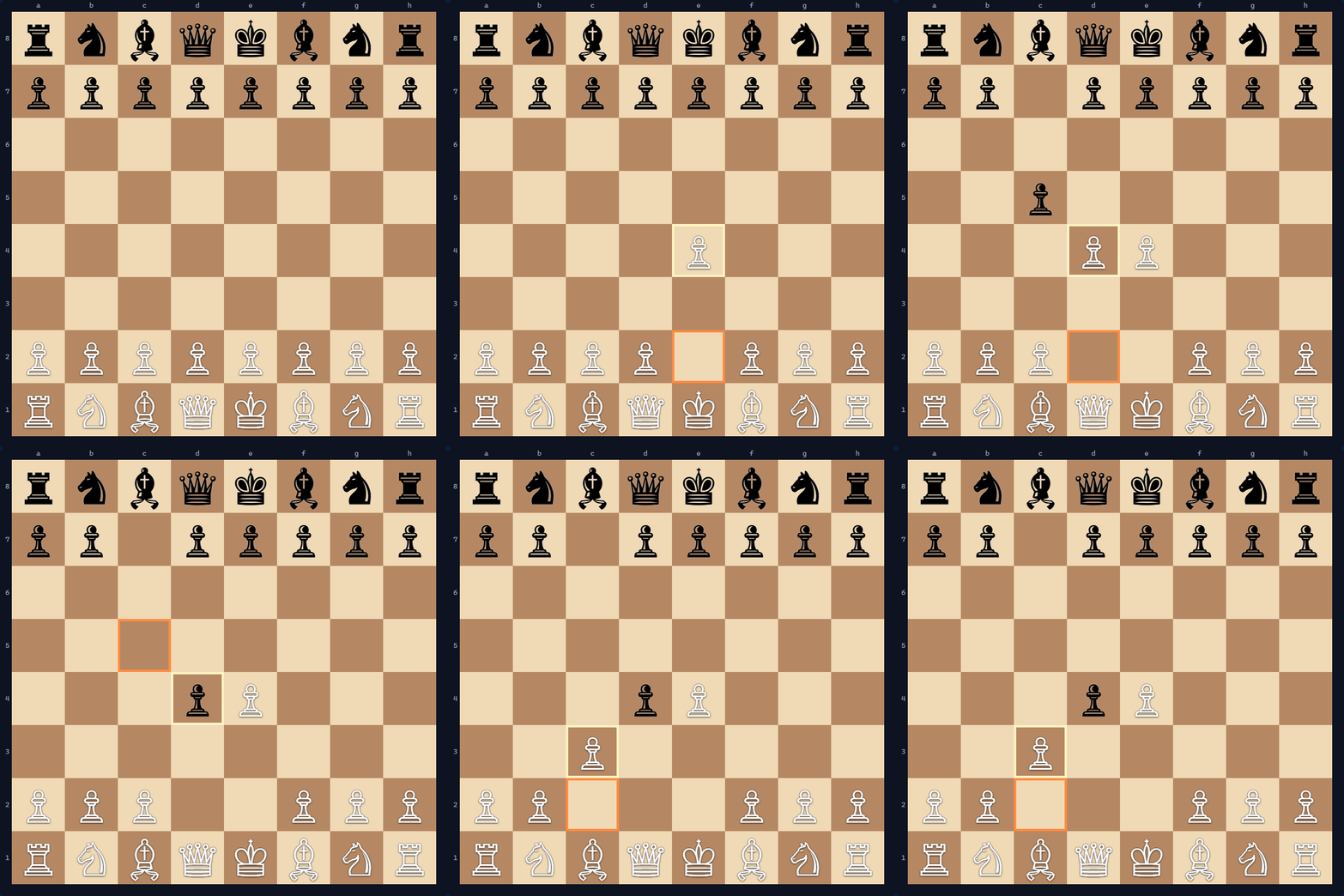
Alapin Variation (2.c3): White prepares d4 in one move. Black responds with ...d5 or ...Nf6 for comfortable equality. The most popular Anti-Sicilian at club level.
Closed Sicilian: White avoids d4 and builds a kingside attack (Be3, Qd2, O-O-O, h4-h5). Black prepares queenside counterplay with ...e6, ...d6, ...Nc6, ...Nge7. More dangerous than it looks — White's attack can overwhelm a passive Black.
Grand Prix Attack (2.Nc3 3.f4): White aims for a direct kingside checkmate. Black's standard response ...d5 or ...e6 then ...d5 neutralises it.
Smith-Morra Gambit (2.d4 cxd4 3.c3): White sacrifices a pawn for rapid development. Black can accept (...dxc3) and defend accurately, or decline. Dangerous against unprepared opponents but not critical.
Rossolimo and Bowdler: The Rossolimo (1.e4 c5 2.Nf3 Nc6 3.Bb5) is a respected positional line. The Bowdler (1.e4 c5 2.Bc4) is a beginner-level approach — Black equalises easily.
Open Sicilian vs Anti-Sicilian — Which Should White Choose?
| Factor | Open Sicilian | Anti-Sicilian |
|---|---|---|
| Theory depth | Heavy (often exceeding 10 moves) | Light (typically 5–8 moves) |
| Winning chances for White | Higher with preparation | Lower but practical |
| Risk for White | Can lose quickly if unprepared | Safer, fewer losing lines |
| Time investment | Significant study required | Minimal study needed |
| Best for | Tournament players (typically 1500+) | Club players, limited study time |
For White players deciding between the two approaches, the answer depends on your goals. If you have time to study and want maximum winning chances, the Open Sicilian is the honest choice. If you play for fun or face the Sicilian only occasionally, pick one Anti-Sicilian system — the Alapin is the most practical option — and learn it well enough to avoid losing.
For Black, the message is clear: expect Anti-Sicilians. At club level, you will face the Alapin and Closed Sicilian as often as the Open Sicilian. Make sure your repertoire covers both.
Common Mistakes and How to Avoid Them
The Sicilian punishes players who treat it casually. Here are the most common mistakes at club level:
For Black — underestimating the asymmetry. Because the Sicilian is unbalanced, a single tactical oversight can collapse your position. Know the key tactical motifs in your chosen variation: the "fishing pole" sacrifice on e6 in the Najdorf, the h-file attack in the Dragon, the d5 breakthrough in the Classical.
For Black — not knowing Anti-Sicilian move orders. Many club players study only the Open Sicilian and panic at 2.c3 or the Grand Prix. Spend 30% of your Sicilian study time on Anti-Sicilian responses.
For White — playing too passively. The Sicilian punishes passive play. If you choose the Open Sicilian, commit to Nf3, d4, and the initiative — or Black's central majority and c-file pressure will outlast you.
Learning too many variations at once. Pick one variation, learn the first ten moves, and play it in online blitz games. Add a second only when comfortable with the first.
Frequently Asked Questions
Is the Sicilian Defense good for beginners?
The Sicilian requires significant opening study. Beginners (generally below 1200 rating) may find the [Caro-Kann Defense](/blog/chess/caro-kann-defense/) or [French Defense](/blog/chess/french-defense/) more forgiving — the sharp Sicilian positions punish players who do not know the tactical motifs. If you are new to chess, start with a solid defence and return to the Sicilian when you reach around 1400–1500.
What is the most aggressive Sicilian variation?
The Dragon Variation leads to the sharpest play. Both sides castle on opposite wings and launch all-out attacks — White throws pawns at Black's king while Black's fianchettoed bishop controls the long diagonal. The Yugoslav Attack is one of the most tactical systems in all of chess.
How do you counter the Sicilian Defense as White?
You have two broad choices: the Open Sicilian (2.Nf3 + 3.d4) for sharp theoretical battles, or Anti-Sicilian systems (Alapin, Closed, Grand Prix Attack, Smith-Morra Gambit) to avoid deep theory. See the comparison table above for which fits your style.
What is the Najdorf Variation?
The Najdorf (1.e4 c5 2.Nf3 d6 3.d4 cxd4 4.Nxd4 Nf6 5.Nc3 a6) is the most popular Sicilian line. Black's a6 prevents Bb5+ and prepares to challenge White's centre with e7-e5. It was Garry Kasparov's favourite weapon with Black.
Putting It Into Practice
The Sicilian is a lifelong companion for players who enjoy fighting chess. Start with one variation, learn the first ten moves, play 20–30 online games, and review each with an engine. Once you understand the pawn structures, the Sicilian will reward you for years to come.
Sources
- 365chess - Sicilian Defense Complete Guide: https://www.365chess.com/chess-openings/Sicilian-Defense. Used for main line move order, variation names, Dragon sub-systems, Closed Sicilian description.
- Chessreps - Sicilian Defense Repertoire: https://www.chessreps.com/opening/sicilian-defense. Used for pros/cons, asymmetry explanation, plans section.
- Chess.com - Sicilian Defense Opening: https://www.chess.com/openings/Sicilian-Defense. Used for starting position, champion adopters, Alapin description.
- Simplify Chess - Sicilian Defense Guide: https://simplifychess.com/sicilian-defense/. Used for four classic variations overview, Classical and Scheveningen descriptions.
- Chessklub - Sicilian Defense Learner's Guide: https://chessklub.com/chess-openings/sicilian-defense/. Used for history (Polerio, Steinitz, Capablanca), modern champions.
- House of Staunton - Sicilian Defense: https://www.houseofstaunton.com/blogs/chess-openings/sicilian-defense. Used for win-rate data and practice recommendations.
- The Chess World - Sicilian Defense Playing Against It: https://thechessworld.com/articles/openings/sicilian-defense-playing-against-it-complete-guide/. Used for Open vs Anti-Sicilian framework, Alapin, Closed, Grand Prix, Smith-Morra descriptions.