Tactics is the moment when position speaks louder than plan
Chess tactics are the moment of truth. This is a flash of lightning that instantly changes the assessment of a position. If the strategic plan is the slow laying of rails, then tactics is the train itself, flying at full speed. Grandmaster Richard Teichmann once said that chess is 90% tactical, and at the amateur level this is absolutely true. Without the ability to see the geometric motifs of figures, any positional plans lose their meaning.
Learning tactics is like learning a foreign language. First, you learn individual letters and words (motifs), then you put them together into simple phrases (two-move combinations), and finally you begin to fluently read complex tactical texts on a real board. Seeing the tactical motive one move before your opponent makes it is the main skill that insures your rating against drops and brings easy victories in most online games.
What motives to teach first
To quickly increase your chess rating, focus on mastering five basic tactical motifs: fork (double strike), pin (and x-ray), exposed attack, distraction (or enticement) and checkmate on the last rank. Regular training of these patterns through solving problems with full calculation of options in the mind teaches you to see weak geometric connections on the board and find winning combinations in real games.
Studying tactics must be structured. Simple chaotic problem solving without understanding the underlying motives is ineffective. The brain must learn to classify positions based on geometric features.
Below is a detailed analysis of the key tactical motives that are most often found in rating games.
Fork and double strike
A fork (or double strike) is a situation where one of your pieces or pawns simultaneously attacks two (or more) of your opponent's pieces. Most often, this trick is performed by knights because of their unique trajectory of movement (“L-shaped” move), but pawns, queens, and even kings can make forks. The danger of a horse fork is that it is impossible to defend against it by blocking the line of attack - the attacked piece must either retreat or the knight must be destroyed.
The family fork is especially destructive when the knight simultaneously attacks the opponent’s king and queen. At this moment, the rules of the game oblige you to defend the king (to escape from check), which is why the queen is inevitably lost on the next move.
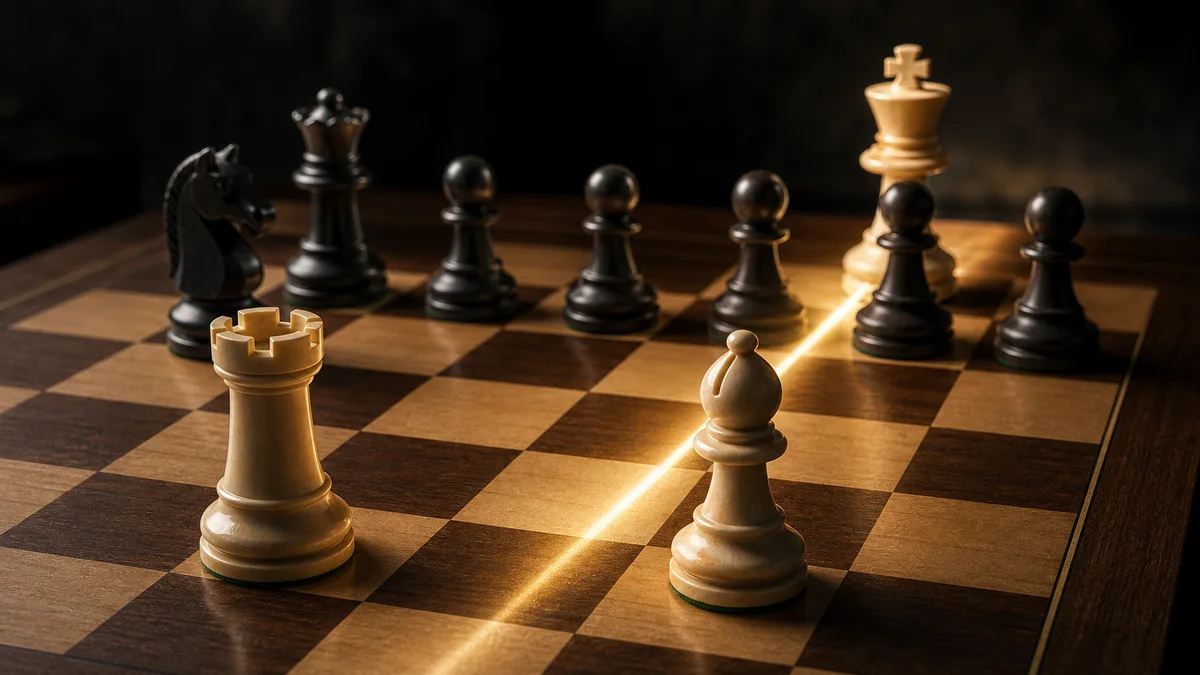
To avoid blundering forks, always keep track of which of your pieces are on squares of the same color (for horse forks) or on the same rank/diagonal (for queen and bishop double strikes).
Ligament and x-ray
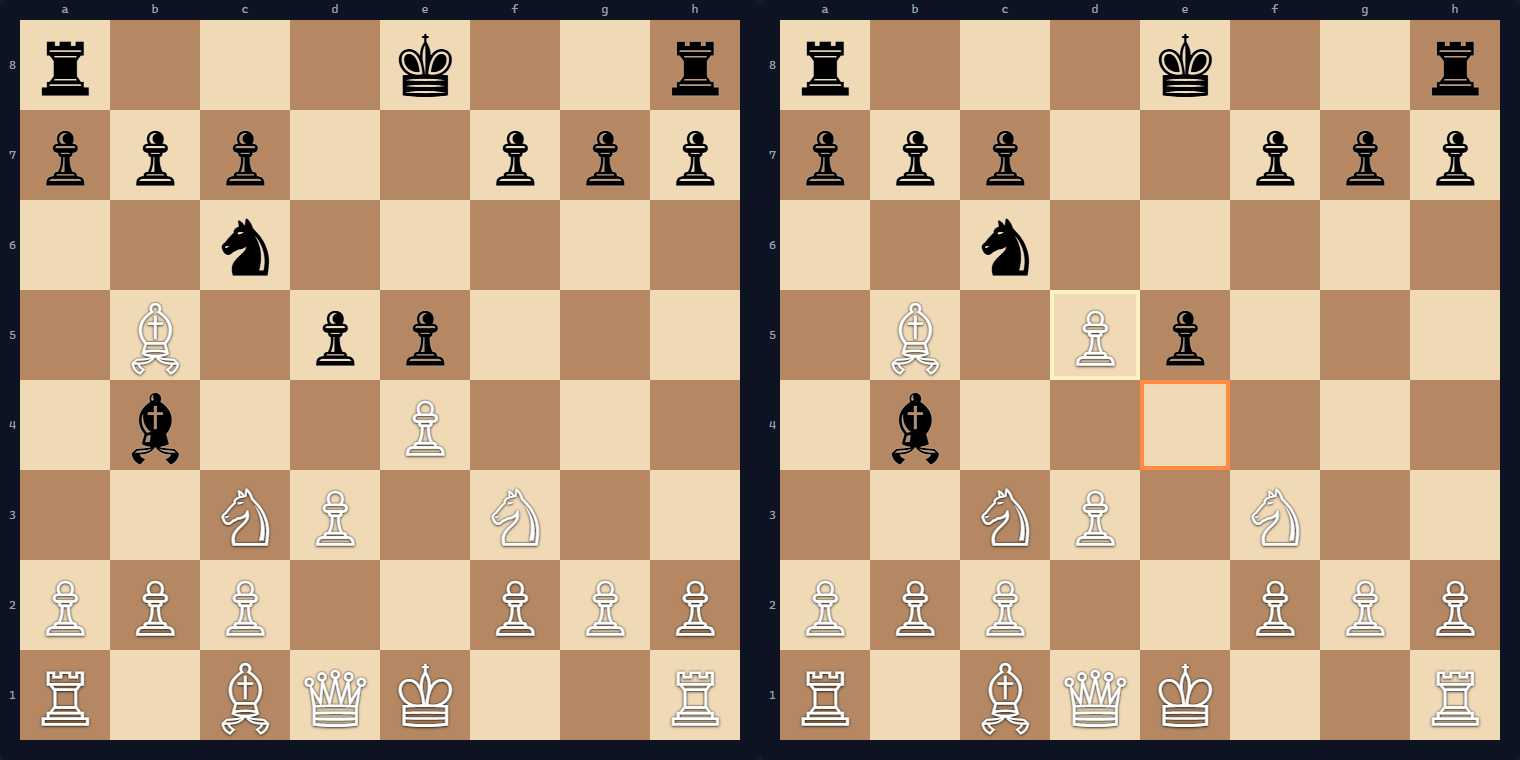
A pin is a restriction on the mobility of an opponent's piece due to the fact that its departure would expose a more valuable piece behind to attack. A linear piece (bishop, rook or queen) shoots across a diagonal or vertical line on which two enemy pieces stand. A pin can be “absolute” if there is a king behind (in this case the pinned piece is physically not allowed to move according to the rules of chess), and “relative” if there is a queen or rook behind.
X-ray is a close motif when a long-range piece defends its field or attacks a target through the opponent’s pieces standing in front.
A connected piece loses its power: it can no longer fully protect other fields. Remember the golden rule of tactics: “Attack the pinned piece with all your might, especially with pawns, since it cannot escape.”
Revealed assault and battery
An exposed attack occurs when one of your pieces retreats from the line of action of another of your long-range pieces, opening the way for it to attack. This motif has enormous destructive power, since the retreating piece makes its own move (for example, attacking the opponent’s queen), and the exposed piece declares check to the king. The opponent is forced to spend tempo defending the king, losing the queen on the other flank.
If the retreating piece itself declares check at the same time as the opening piece, this is called a “double check”.It is impossible to defend against a double check or to capture the attacking piece; the only legal way to defend is to move the king.
A battery is the formation of two long-range pieces on the same line (for example, a queen and a bishop on the diagonal, or two rooks on a file) to repeatedly increase pressure on a key point in the opponent’s position.
Distraction, enticement and overload
These three motives fall into the category of distractions that destroy harmony in the opposing camp:
- Distraction: You sacrifice a piece on one flank to force your opponent's defending piece to leave its post. Once the defender moves away, you deal the killing blow elsewhere.
- Enterment: You lure your opponent's piece (often a king) onto a disadvantageous square where it falls under a forced checkmate or double strike.
- Overload: A situation when one opponent’s piece is forced to defend several important points or pieces at once. You hit one of the points, forcing the overloaded defender to choose what to give up.
Mate on the last line and stalemate
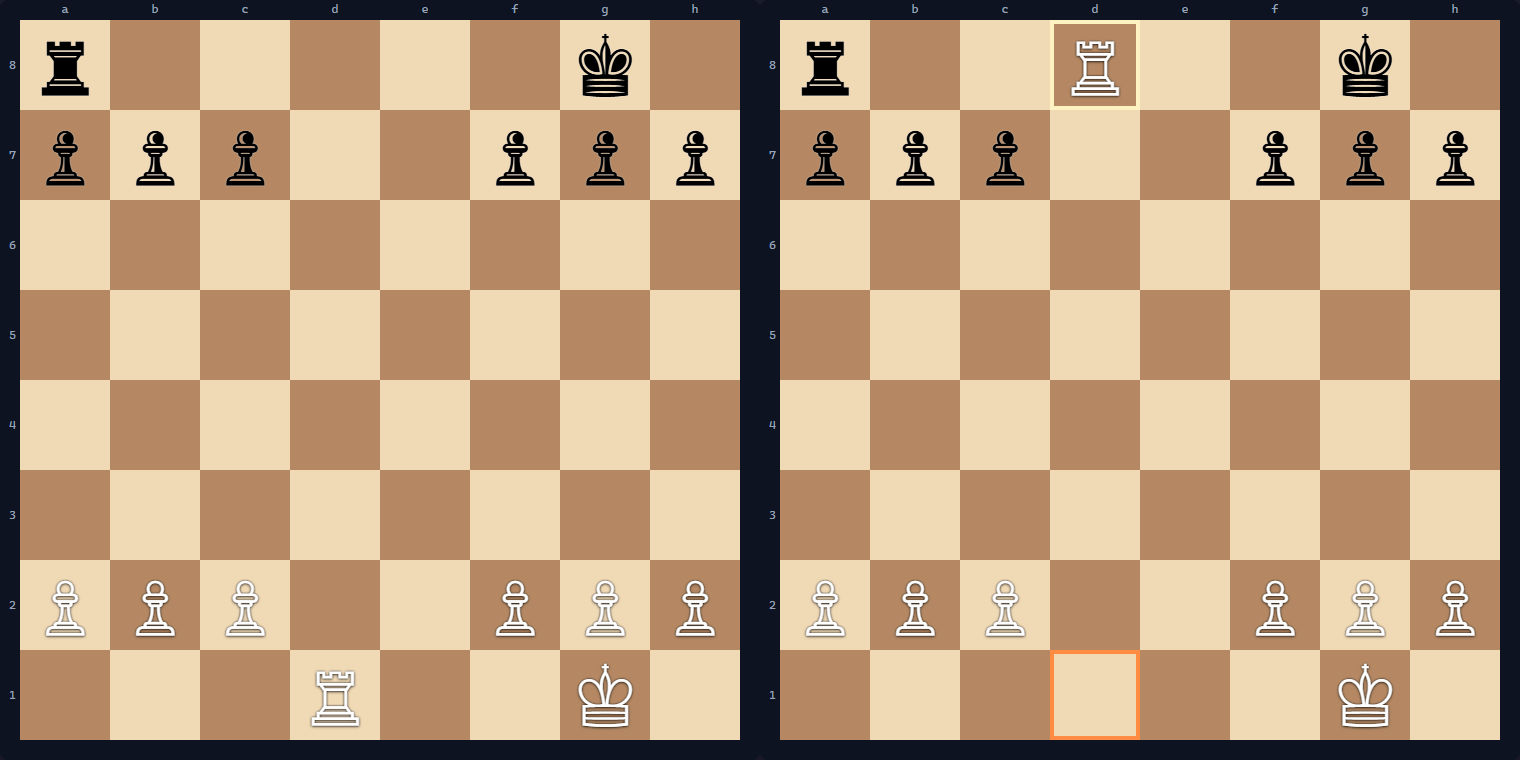
Checkmate on the last (eighth for white or first for black) line is a classic blunder for beginning players. The opponent's king castles and finds himself locked behind his own pawn wall (pawns f7-g7-h7).If the opponent has not made a “window” (moving one of the pawns one square forward), any rook or queen that penetrates the last line declares instant checkmate, from which it is impossible to defend.
Stupid checkmate is a rare but beautiful tactical ending that a knight delivers. The opponent's king finds himself completely trapped by his own pieces on the edge of the board and suffocates (“hides”) from the knight's check, not having a single free square to retreat.
How to train motives without guessing
The main mistake when solving tactical problems online is the “poke” method. The player sees the position, makes the first intuitive move, the computer writes “error”, and the player simply tries other options. This does not develop the calculation of options, but only reinforces the habit of guessing.
To train tactics correctly, follow the numbered algorithm:
- Evaluate the material: Count the pawns and pieces of both sides.
- Find checks, captures and threats: These are forced moves that the opponent must calculate first.
- Identify the tactical motive: Ask yourself: Are there pinned pieces, overloaded defenders, or undefended squares on the board?
- Calculate the options in your mind: Count the line to the end (to checkmate or material advantage).
- Make a move only after calculation: If you don’t see the winning ending in your head, continue to think without touching the mouse.
Glossary of tactical motives and practical tasks
The table below contains key tactical terms and exercises for you to solve on your own:
| Tactical motive | The essence of the idea | Practical FEN for analysis | Problem solution |
|---|---|---|---|
| Double Strike (Fork) | Simultaneous attack of two targets with one piece | 3r2k1/ppp2ppp/8/2N5/3n4/8/PPP2PPP/3R2K1 b - - 0 1 |
Black plays 1... Ne2+! (pawn fork/check), white king leaves, black takes rook 2... Rxd1# |
| Pin (Pin) | Limiting a piece's move due to a threat to the king/queen | r3k2r/ppp2ppp/2n5/1B1pp3/1b2P3/2NP1N2/PPP2PPP/R1BQK2R w KQkq - 2 7 |
White plays 1.exd5! — the knight on c6 is tied by the bishop on b5 and cannot take the pawn |
| Checkmate on the last line | Attack of a king trapped by his own pawns | 6k1/ppp2ppp/8/8/8/8/PPP2PPP/3R2K1 w - - 0 1 |
White goes 1. Rd8# - classic checkmate on the last line |
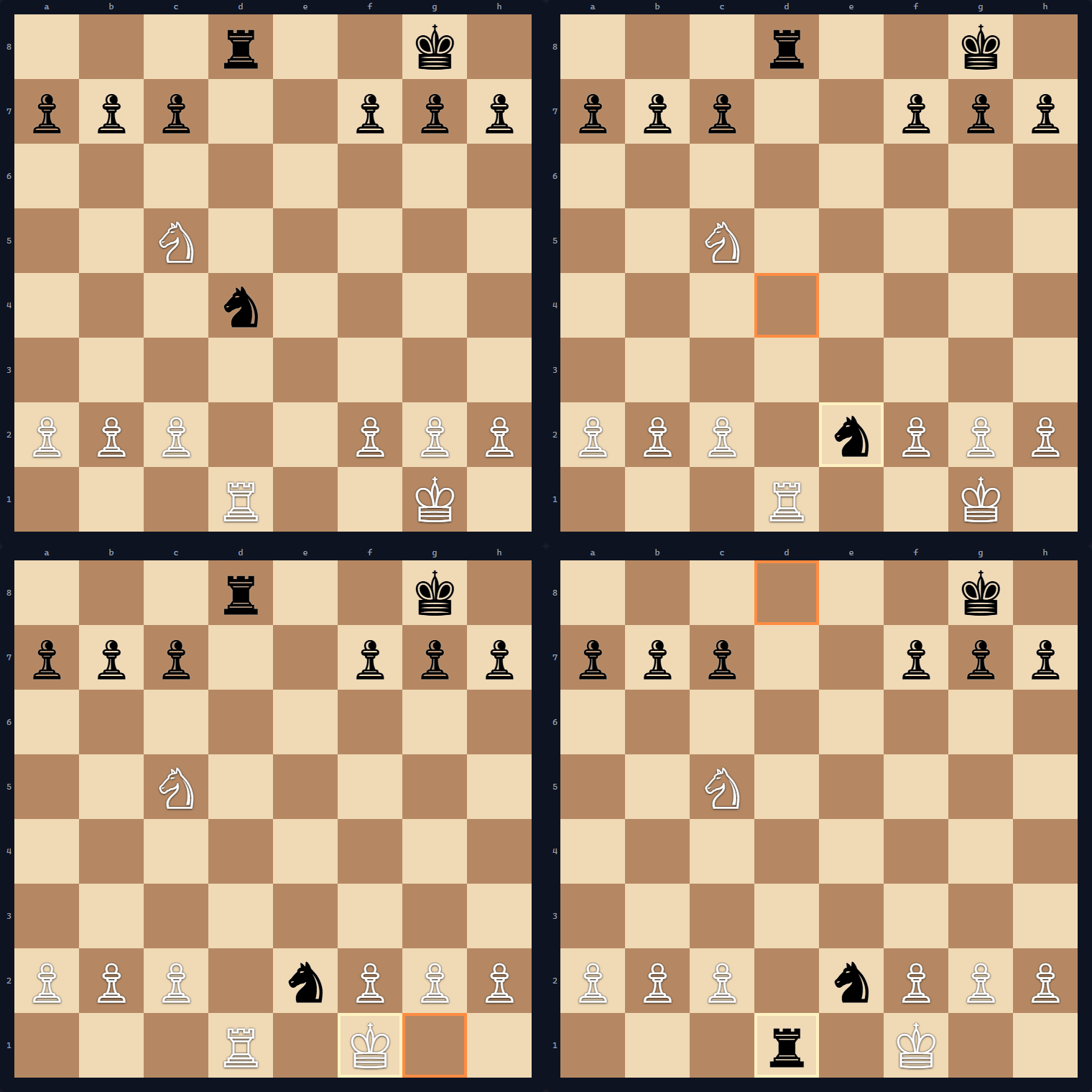
Note: All FEN positions are legal, verified according to the FIDE Laws of Chess rules and can be played on any demo board.
Final: see the motive before it becomes the opponent's move
Tactical vision is not an innate gift, but a trained skill. The more problems you solve using the correct method, the more densely the visual patterns of the geometry of the board are deposited in your memory.
Over time, a qualitative transition will occur: you will begin to see tactical motives not when they have already appeared on the board, but 2-3 moves before they appear. You will begin to smell the tactics—noticing exposed pieces, overloaded defenders, and weak diagonals. This skill will protect your rating from stupid blunders and allow you to punish your opponents for the slightest carelessness, turning each game into a demonstration of the strength of your tactical calculation.
Practical Toguz Arena links
- Play from the shared play entry and review missed tactics after real games.
- Open the chess hub for adjacent guides on rating mistakes, bots and post-game analysis.
- Check the chess fair-play page before using engine help during a tactical training session.
Sources and limitations
- FIDE Laws of Chess are the rule reference for legal move, check and checkmate context.
- Mark Glickman's Glicko system overview is the rating-context source for why tactical improvement should be measured across a pool of games, not one puzzle.
- Limitation: tactical motifs are training categories; no list of motifs can promise a specific rating gain.