What Is a Blunder in Chess?
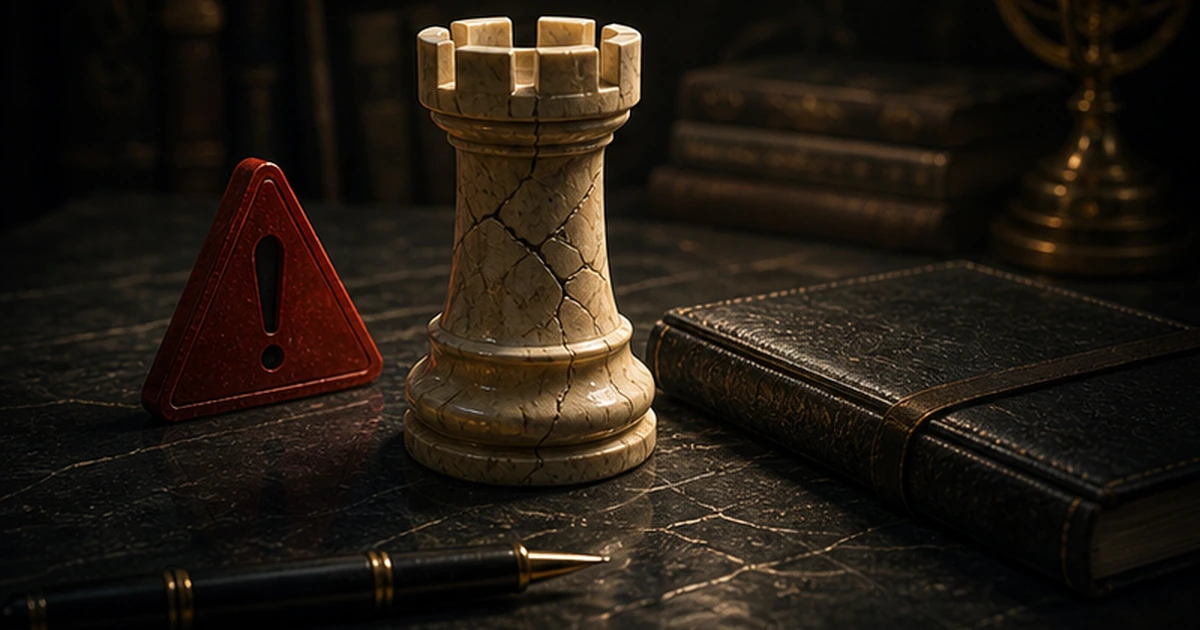
A blunder happens when a player makes a move that negatively affects their position in a significant way — not a small slip, but a decisive error that costs material, allows checkmate, or leaves you in a strategically lost position. It might mean leaving a piece unguarded, falling for a simple tactic, or moving your king into a dangerous square by accident. Failing to capitalise on an opponent's mistake is also sometimes classed as a blunder.
The word "blunder" carries weight because it signals that the game has fundamentally changed. Before the blunder, the position may have been equal or favourable. After it, you're fighting for survival.
Blunder vs Mistake vs Inaccuracy — What's the Difference?
Not every bad move is a blunder. Chess players and engines distinguish between three levels of error: inaccuracies, mistakes, and blunders. Understanding the difference helps you gauge how serious each error really is.
Inaccuracy
An inaccuracy is a move that's not among the best options but doesn't hurt your position much. It changes the engine evaluation by roughly 0.5 to 1 point — a small dip that's usually recoverable. In human terms, you played a slightly imprecise move: a good plan but not the best execution.
Mistake
A mistake is a more serious error, losing around 1 to 2 points of evaluation and giving your opponent a tangible advantage. It often results from missing a tactical idea or choosing the wrong plan entirely. You might still defend and draw, but you're no longer playing for a win. A mistake is marked with a single question mark (?) in chess notation.
Blunder
A blunder is the most severe error — a decisive mistake that changes the outcome of the game. In engine terms, it shifts the evaluation by more than 2 points. In chess notation, it gets the double question mark (??). A blunder typically loses material outright, allows checkmate, or converts a winning position into a losing one. Recovery is rare unless your opponent blunders right back.
Comparison Table
| Feature | Inaccuracy | Mistake | Blunder |
|---|---|---|---|
| Evaluation change | ~0.5–1 point | ~1–2 points | More than 2 points |
| Impact on game | Minor — slightly worsens position | Noticeable — opponent gains a clear advantage | Severe — can lose the game outright |
| Recoverable? | Usually yes | Possibly, with good defence | Rarely — game often decided |
| Typical cause | Imprecise move in a complex position | Missing a tactical opportunity | Hanging a piece, walking into mate |
| How often at beginner level | Multiple times per game | Several times per game | A few times per game |
| How often at GM level | Almost every game | Occasionally | A few times per year |
The evaluation ranges above are based on approximate classification; different engines and platforms may use their own thresholds.
Why Do Blunders Happen?
Blunders follow patterns, and most fall into a few predictable categories. Understanding these is the first step to preventing them.
Time Pressure
Time pressure is the single biggest blunder magnet. When your clock is running low, your brain switches from careful calculation to rapid pattern-matching — and mistakes happen. Even world champions have thrown away winning positions because they had seconds on the clock and played on instinct instead of calculation.
Lack of Focus
Losing concentration for just one move can turn a winning game into a loss. ChessMood founder GM Avetik Grigoryan notes that most blunders happen when a player's mind wanders — even for a second. The famous Cuban world champion José Capablanca once played Ba6 in a winning position and immediately lost a piece to Qa4 because he was distracted by a woman entering the playing hall.
Overconfidence
When playing against a much weaker opponent, it's tempting to relax and play quickly. ChessMood warns that "when playing against someone much weaker, we calculate lazily." The result is often a piece hung to a simple tactic you'd have spotted instantly against a stronger player.
Chess Blindness
Chess blindness — or tunnel vision — happens when you focus so much on your own plan that you miss what your opponent is doing. You might be setting up a checkmate while your opponent quietly prepares a discovered attack on your queen. Ask two questions before every move: "What will my opponent play?" and "Does my opponent have any checks?"
Famous Chess Blunders (Even Grandmasters Make Them)
If you've ever felt embarrassed about hanging a piece, take comfort: even world champions have made catastrophic blunders.
Chigorin vs Steinitz (1892 World Championship): In the final game of their World Championship rematch, Mikhail Chigorin had a chance to force a draw and reach a tiebreak. Instead, he played a terrible move that allowed Wilhelm Steinitz to deliver checkmate instantly. One move cost him the World Championship.
Ju Wenjun vs Goryachkina: Women's World Champion Ju Wenjun played Kg4 in a dominating position. The blunder turned a certain win into a draw — a reminder that one careless king move can undo hours of good play.
Karjakin vs Nielsen (2005): Sergey Karjakin played Kg5 in a complicated middlegame, receiving double question marks. It stands as a textbook grandmaster-level blunder.
Callout: If grandmasters — players who have trained for decades — can blunder in World Championship games, you shouldn't feel bad about mistakes in your club games. The goal isn't to eliminate blunders entirely; it's to make fewer of them than your opponent does.
How to Reduce Blunders — Practical Tips
Blunder prevention is a skill you can train. Here are the most effective strategies drawn from grandmaster advice.
Use a Pre-Move Checklist
Before every move, scan for threats, evaluate your intended move, and calculate your opponent's best response. House of Staunton adds two specific questions: "What will my opponent play?" and "Does my opponent have any checks?" If you can't answer both confidently, don't move yet.
Warm Up Before Playing
ChessMood's GM Grigoryan recommends solving tactics for 5 to 10 minutes before starting a session. This activates your pattern recognition and puts your brain in "chess mode." Players who jump straight into rated games without warming up are far more likely to blunder early.
Stay Hyper-Focused
Control your mind, eliminate distractions, play only your game, look at the whole board, and treat every move as if it's the most important one in the game.
Sharpen Your Tactics Regularly
Blunders often happen because you don't recognise a tactical pattern quickly enough. Regular tactic-solving builds the neural connections that let you spot pins, forks, discovered attacks, and mating threats automatically.
How Do Chess Engines Label Blunders?
Chess engines measure move quality by comparing the evaluation before and after a move. The difference is called centipawn loss:
- Inaccuracy: ~0.5 to 1 point change. The position is slightly worse.
- Mistake: ~1 to 2 point change. The opponent has a clear advantage.
- Blunder: More than 2 point change. The game has swung decisively.
These ranges are approximate; different engines and platforms may use their own thresholds.
In chess notation, inaccuracies get a single question mark (?), mistakes get a question mark (though usage varies), and blunders get the double question mark (??).
Why Post-Game Analysis Matters
The single most effective way to reduce blunders over time is to analyse your games afterward. Most online platforms offer analysis tools that flag blunders, mistakes, and inaccuracies automatically. Look for patterns: Do you blunder most often in time pressure? In the opening? When you're winning?
Before looking at the engine evaluation, try to find your blunders yourself. Training your own eye to spot mistakes carries directly into your next game.
Frequently Asked Questions
What is the difference between a blunder and a mistake in chess?
A mistake gives the opponent an advantage but may not be immediately decisive. A blunder is more severe — it typically loses material, allows checkmate, or changes the outcome of the game. In engine terms, a mistake loses ~1–2 points of evaluation, while a blunder loses more than 2.
What does ?? (double question mark) mean in chess notation?
The double question mark (??) is the standard symbol for a blunder. It sits at the bottom of the error hierarchy: inaccuracy (?) < mistake (?) < blunder (??).
How many centipawns is a blunder?
There's no universal threshold, but a blunder is generally any move that changes the engine evaluation by more than 2 pawns (200 centipawns) or causes a decisive shift.
Do grandmasters ever blunder?
Absolutely. Petrosian blundered his queen against Bronstein. Karjakin played a double-question-mark Kg5. Chigorin allowed instant checkmate in the 1892 World Championship. Even world champions make game-losing moves — what sets them apart is how thoroughly they analyse each one.
How can I stop blundering in chess?
Use a pre-move checklist, warm up with tactics, stay focused, and analyse every game afterward to identify your recurring blunder patterns.
Conclusion
Blunders are a universal part of chess. They happen to beginners who hang their queen on move six, and they happen to grandmasters in World Championship matches. The players who improve fastest aren't the ones who never blunder — they're the ones who learn from every mistake.
Build the habit of a pre-move checklist. Warm up before serious games. Stay focused from the first move to the last. And after every game, take a few minutes to find where things went wrong. Over time, those habits will turn your double question marks into learning opportunities.
Sources
- Chess.com — "Blunder — Chess Terms" — https://www.chess.com/terms/chess-blunder
- ChessMood (GM Avetik Grigoryan) — "How to Stop Blunders: The Ultimate Grandmaster Guide" — https://chessmood.com/blog/stop-blunders-in-chess
- House of Staunton — "What Is a Blunder in Chess?" — https://www.houseofstaunton.com/blogs/chess-matches/what-is-a-blunder-in-chess
- USCF Sales — "Blunders in Chess and How to Avoid Them" — https://www.uscfsales.com/blogs/chess-matches/blunders-in-chess-how-to-avoid-them
- World Chess — "Chess Blunder" — https://worldchess.com/chess-terms/chess-blunder